
hair removal
Eyebrow Threading: Why This Old Technique Still Wins
Last updated: November 13, 2026
Eyebrow threading is a hair removal method that uses twisted cotton thread to lift and pull hairs out at the root. It gives sharp, clean lines without chemicals or heat. Most people feel quick pinches rather than steady pain, and results last two to five weeks.
It suits sensitive skin better than many other methods.
What Is Eyebrow Threading and How Does It Work?
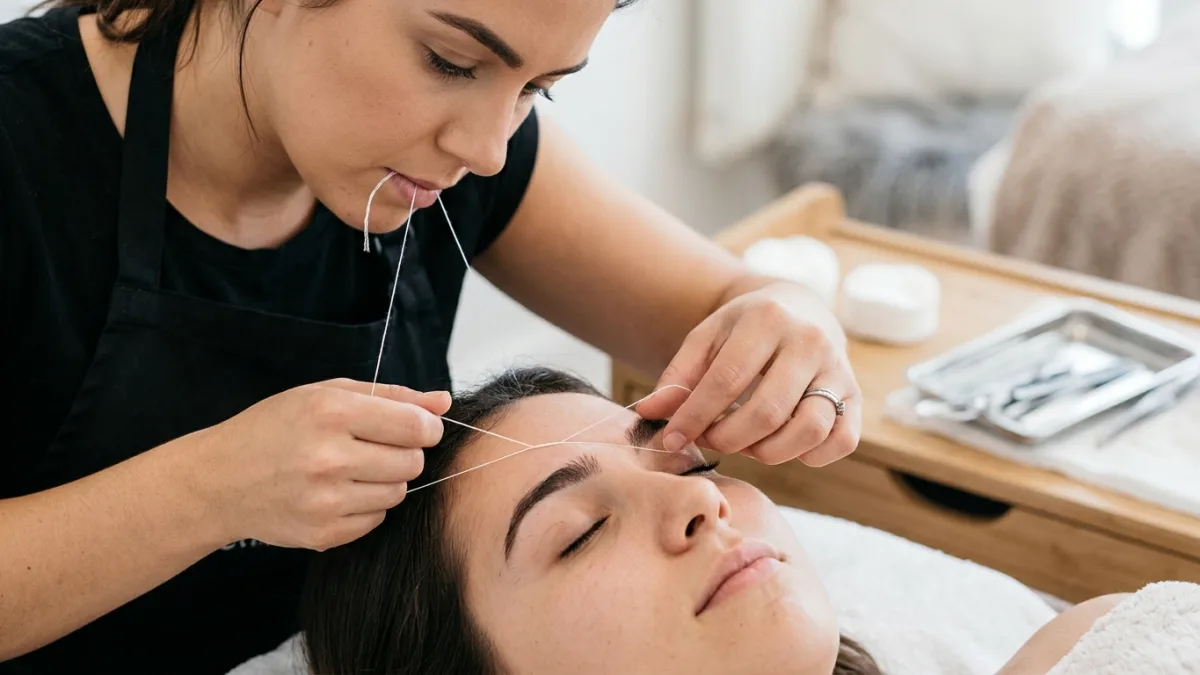
Eyebrow threading is a hair removal technique that began centuries ago in South Asia and the Middle East. A technician twists a thin strand of cotton thread and rolls it across the skin. The twisted thread catches each hair and lifts it straight out of the follicle.
There’s no wax, no chemicals, and no blade involved.
This method has grown popular because it shapes brows with real care. Threading can remove one hair at a time, which makes it easier to build sharp, even arches. That’s one reason eyebrow threading keeps its loyal fans even as newer beauty tools hit the market.
The Thread-Twisting Technique Explained
The technique behind eyebrow threading relies on friction and tension, not force. The technician holds one end of the thread in their teeth and the other in one hand. They twist the middle section into a tight loop, then glide it along unwanted hairs.
Each pass traps several hairs and pulls them from the root in one motion.
Follicle (the small pocket under the skin where each hair grows from its root) removal is what makes threading last longer than methods that only cut hair at the surface. Because the hair comes out at the root, it takes weeks to grow back visibly.
This is also why eyebrow threading can feel more effective than tweezing one hair at a time.
Threading works on fine, short hairs that other methods can’t handle. Wax often can’t grip hairs shorter than a quarter inch, but a trained technician can thread hairs of nearly any length. That range is part of why eyebrow threading stays a go-to choice for brow shaping.
Threading vs. Waxing vs. Tweezing
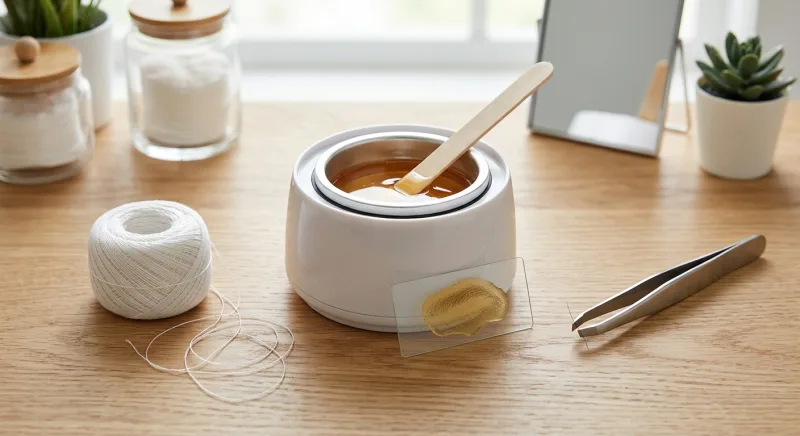
Threading, waxing, and tweezing all pull hair from the root, but they work in different ways. Waxing (a method that spreads warm or cold adhesive over the skin to grip and remove hair in one pull) covers a wider area per pass than threading does.
Tweezing targets one hair at a time, which takes longer but allows precise, spot-by-spot corrections.
Eyebrow threading sits between these two. It’s faster than tweezing but more exact than waxing. Since no product touches the skin, eyebrow threading tends to suit reactive or acne-prone skin better than wax, which can irritate or pull on soft facial skin. (American Academy of Dermatology, AAD)
If you’re weighing hair removal methods beyond the eyebrows, it helps to see the full picture. A broader hair removal comparison can show how threading fits alongside shaving, waxing, and laser-based options for other parts of the body.
Does Eyebrow Threading Hurt?
Eyebrow threading causes brief, sharp pinches rather than steady pain. Most people say it is quick and bearable, especially next to waxing’s longer pulling feel. Discomfort varies by person, skin sensitivity, and how much hair is pulled out in one sitting. (American Academy of Dermatology, AAD)
The feel of eyebrow threading comes in short bursts as the thread catches each hair. There’s no heat and no sticky stuff peeling off skin, which many people find gentler overall. Skin doctors note that threading causes little irritation, which makes it a good pick for people with sensitive or acne-prone skin, though a skilled tech matters for avoiding uneven results. (American Academy of Dermatology, AAD)
Pain Level Compared to Other Methods
Waxing tends to pull on a wider patch of skin at once, which some people find more intense than threading’s quick snaps. Tweezing isolates single hairs, so each pull is small but repeated many times.
Eyebrow threading falls somewhere between the two, trading a slightly longer session for more even results across the brow line.
At-home IPL (Intense Pulsed Light, a light-based technology that targets hair pigment to slow future growth) devices work differently. They don’t pull hair at all. Instead, they use light energy aimed at the hair’s pigment, which feels more like a warm snap than a pinch.
That’s a very different sensation from eyebrow threading, since no thread or wax ever touches the skin.
Factors That Affect Discomfort
Several things shape how eyebrow threading feels. Thicker, rougher brow hair tends to pull harder than fine hair. Skin that’s freshly exfoliated or sunburned will likely feel more tender during the process.
Hormone shifts, like those around a period, can also make skin more reactive to any hair removal method.
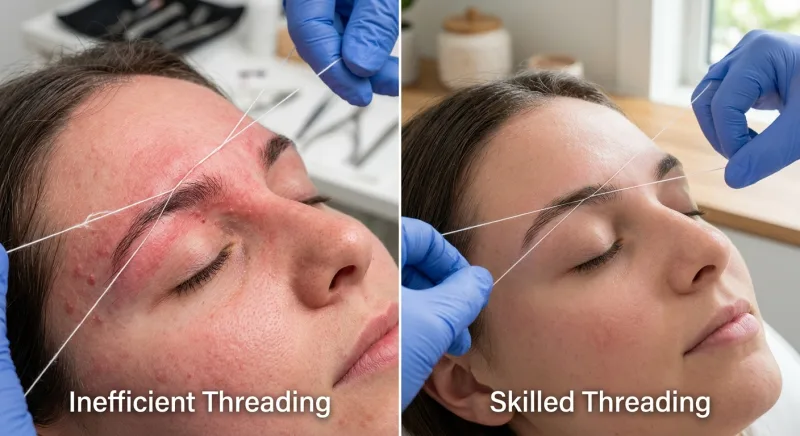
Technician skill matters more than most people think. A skilled threader works fast and keeps an even pull, which cuts down redness and repeat passes. A newer or rushed technician may go over the same spot twice, which can turn a quick pinch into lasting soreness after eyebrow threading sessions. (Cleveland Clinic)
| Method | Pain Level | Typical Duration of Results | Precision |
|---|---|---|---|
| Eyebrow Threading | Quick, sharp pinches | About 4 to 5 weeks | Very high, hair-by-hair control |
| Waxing | Brief but stronger pulling | Several weeks, varies by area | Moderate, covers wider strips |
| Tweezing | Small, repeated pinches | Several weeks, varies by hair | Very high, one hair at a time |
| At-Home IPL | Warm snapping sensation | Varies with consistent use over time | Covers broader areas, less detail work |
How Long Does Eyebrow Threading Last?
Eyebrow threading results usually last about four to five weeks before new growth shows. That’s longer than shaving and often close to waxing. The exact time frame depends on your own hair growth cycle and how much hair came out at your last visit. (American Academy of Dermatology, AAD)
Typical Regrowth Timeline
Anagen Phase (the active growing stage of a hair follicle before it rests and later sheds) length differs by body area, and eyebrow hair has a much shorter growing phase than scalp hair. That shorter cycle is just why eyebrows grow back on a faster, clearer timeline than hair removed elsewhere on the body. (PMC, National Institutes of Health)
Because of that faster cycle, most people book eyebrow threading visits every four to five weeks to stay ahead of regrowth. Waiting longer means stray hairs come back slowly rather than all at once, so brows can look a bit uneven before your next visit.
How to Extend Results Between Sessions
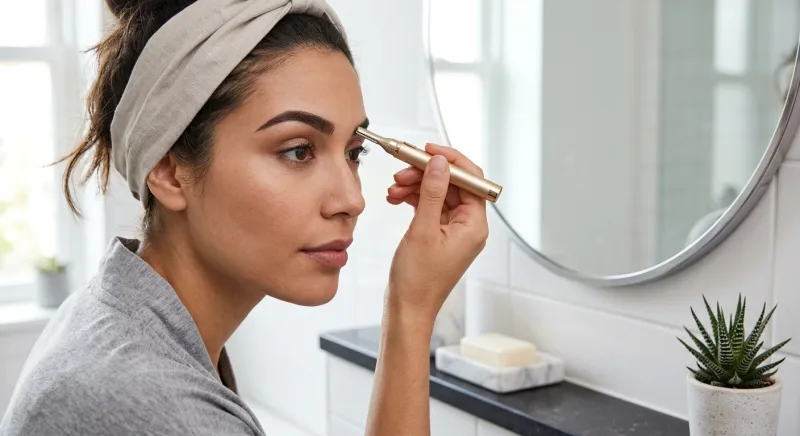
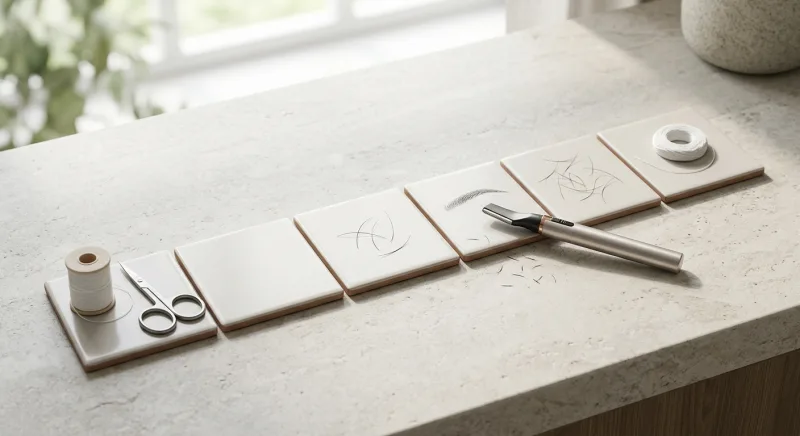
Some people use a precision trimmer between visits to fix stray hairs without changing the overall shape. This isn’t a stand-in for eyebrow threading, but it’s a light-touch way to keep a clean look in the weeks between salon trips.
Eyebrow threading vs. other hair removal methods
Picking a brow method often comes down to skin type, pain tolerance, and how much upkeep you want. Eyebrow threading is one of several common options, each with its own trade-offs. A side-by-side look makes the differences easier to weigh.
| Method | How it works | Typical regrowth time | Best for |
|---|---|---|---|
| Eyebrow threading | Twisted cotton thread lifts and pulls hair from the follicle | About 4 to 5 weeks | Sensitive or acne-prone skin, precise shaping |
| Waxing | Warm wax grips hair and removes it when pulled off | About 3 to 4 weeks | Larger areas, faster sessions |
| Tweezing | Individual hairs pulled one at a time | About 2 to 3 weeks | Small touch-ups, spot corrections |
| At-home IPL device | Pulsed light reduces hair growth over repeated use | Varies; often longer-term with ongoing sessions | Specific Fitzpatrick skin types, as labeled by the device |
Eyebrow threading tends to appeal to people who want sharp, clean lines without chemicals touching the skin. Waxing can cover more ground quickly but may irritate thinner skin around the brow bone. Tweezing works well for small fixes but takes longer for a full reshape.
At-home IPL devices are built to cut hair long-term, not for quick shaping. They’re approved for over-the-counter use and usually work best on certain skin and hair color pairs, so check the label before trying one near the brows. (U.S. Food & Drug Administration)
None of these ways is best for everyone. The right pick depends on how sensitive your skin is, how much care you want, and how often you will book visits or do upkeep at home. A pro can help you weigh these points before you pick a longer-lasting method. (American Academy of Dermatology)
Side effects and skin reactions compared
A study of salon treatments, including threading, waxing, facials, and laser hair removal, found skin reactions do happen with these services. Acne-like breakouts, which look like small pimples, were the top problem, showing up in 25.4% of cases studied. (PMC, Journal of Cutaneous and Aesthetic Surgery, 2020)
The same study also tracked dark patches of skin, called hyperpigmentation, after salon treatments. This showed up in 14.7% of the cases checked, a reminder that even routine beauty treatments can at times leave a mark if skin isn’t cared for well after. (PMC, Journal of Cutaneous and Aesthetic Surgery, 2020)
| Method | Common side effects | Typical severity |
|---|---|---|
| Eyebrow threading | Redness, minor bumps, rare folliculitis | Mild, short-lived |
| Waxing | Redness, irritation, folliculitis | Mild to moderate |
| Tweezing | Ingrown hairs, follicle irritation | Mild |
| At-home IPL device | Temporary redness, rare burns if misused | Mild to moderate, device-dependent |
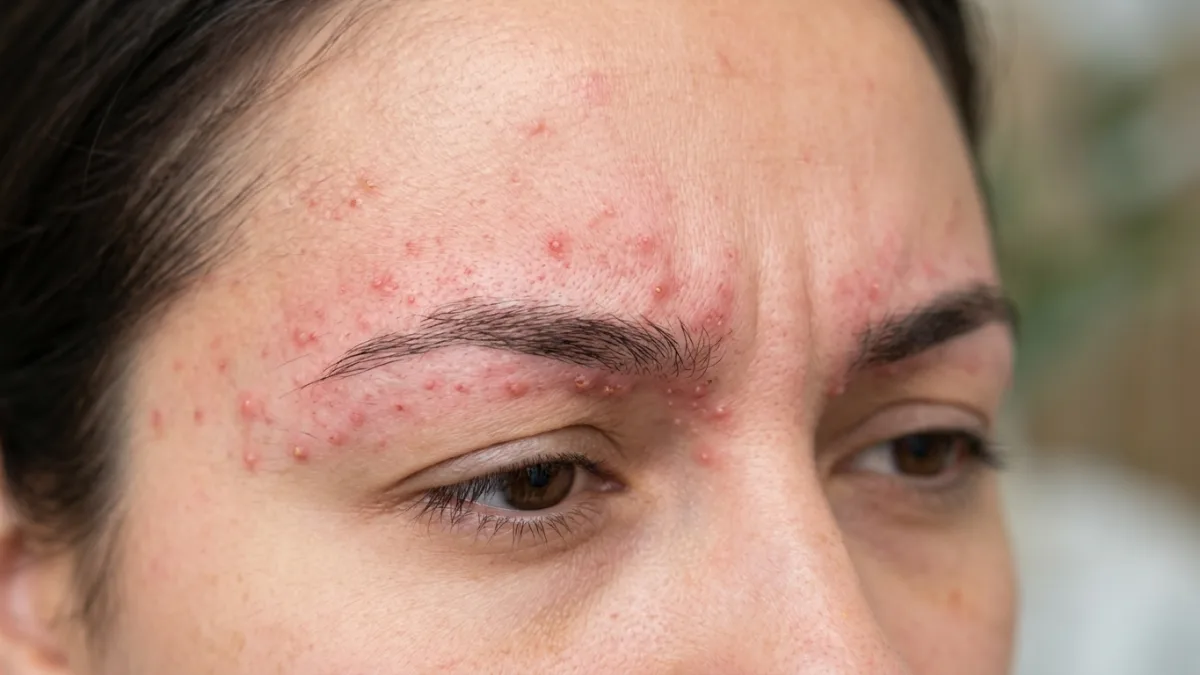
Folliculitis, a swelling of the hair follicles, can show up as redness, itching, and small bumps after almost any hair removal method. This includes eyebrow threading, waxing, and tweezing, since all three pull hair right from the follicle. (Cleveland Clinic)
Ingrown hairs are another shared risk across these methods. They happen when a hair curls back into the skin instead of growing out, and they’re one reason aftercare matters so much after eyebrow threading or any plucking-based method. (PMC, National Institutes of Health)
Despite these possible reactions, eyebrow threading remains known as a low-problem choice overall. Case reports do show rare issues like lasting redness, folliculitis, dark spots, and even skin infections tied to dirty tools, which is why picking a clean, skilled technician matters so much. (Indian Journal of Dermatology, PMC)
Is eyebrow threading safe for sensitive skin?
Eyebrow threading is often urged for sensitive or acne-prone skin since no chemicals or hot wax touch the face. It causes little irritation next to other methods, though results still rest a lot on the skill of the person doing the threading. (American Academy of Dermatology, AAD)
A skilled technician lowers the odds of uneven brows, stray hairs, or tiny bumps after your visit. If you have very touchy skin, saying so before your visit lets the technician work more gently around the brow bone. (American Academy of Dermatology, AAD)
Even with careful technique, some redness right after eyebrow threading is normal. It often fades in an hour or two. Telling your technician about past reactions helps them adjust pressure and speed to fit your skin.
Why eyebrow regrowth looks different from other hair
People often notice that their eyebrows grow back on a different schedule than leg or arm hair. This isn’t random. Eyebrow hair follows its own set growth pattern, apart from hair on other parts of the body.
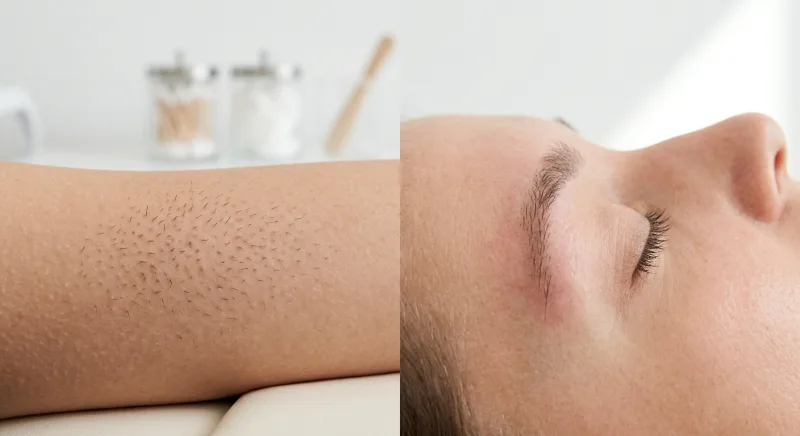
Eyebrow hair has a much shorter active growth phase, called the anagen phase, than hair on the scalp. This shorter cycle shows why eyebrow regrowth after eyebrow threading follows its own faster, surer path compared to hair elsewhere on the body. (PMC, National Institutes of Health)
Because of this shorter growth phase, eyebrows tend to fall out and grow back on a tighter cycle. That’s part of why most people can expect clear regrowth within four to five weeks after eyebrow threading, rather than the many-month wait seen with scalp hair. (American Academy of Dermatology, AAD)
Genes also play a role in how thick or thin your eyebrows grow back. Some people see fuller growth after a few rounds of eyebrow threading, while others find their brows stay about the same thickness over time.
How often should you really book eyebrow threading?
Most people book eyebrow threading every four to five weeks, matching the natural regrowth cycle of brow hair. Going much sooner rarely makes sense, since there’s often not enough new growth to clean up yet.
Some people stretch appointments to six weeks if their regrowth is slower or if they prefer a fuller brow shape between visits. Others with faster regrowth might book eyebrow threading closer to the four-week mark to keep lines crisp.
Tracking your own regrowth pattern over a few cycles helps you find the best spacing. Everyone’s hair grows at a slightly different pace, so your own eyebrow threading schedule may look a bit different from a friend’s.
Frequently asked questions
Is eyebrow threading painful?
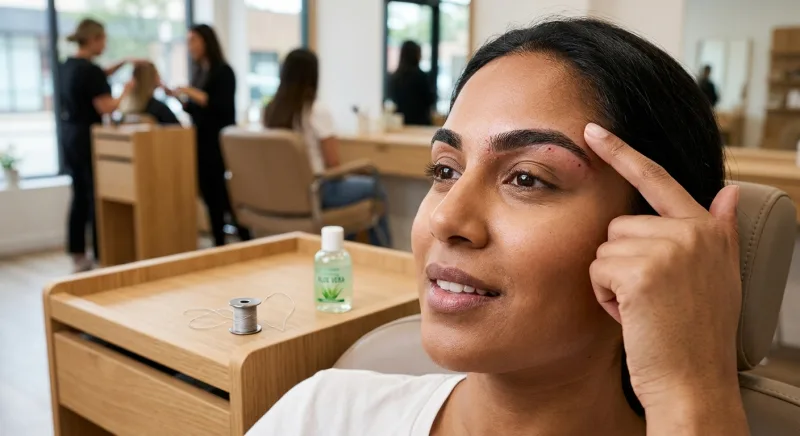
Most people feel quick, mild pinches rather than real pain. Eyebrow threading pulls hair from the root, so some discomfort is normal. It usually fades fast once the session ends, and many clients find it easier to handle than waxing or plucking.
How long does eyebrow threading last?
Results usually last about four to five weeks before hair starts to grow back. This makes threading one of the longer-lasting hand hair removal choices next to shaving, since it pulls out the whole hair and not just the top. (American Academy of Dermatology, AAD)
Is eyebrow threading safe for sensitive skin?
Threading causes little irritation overall, which makes it a good pick for sensitive or acne-prone skin. Still, it needs a skilled technician, since uneven pressure or poor skill can lead to uneven brows or ingrown hairs. (American Academy of Dermatology, AAD)
Can eyebrow threading cause skin problems?
It can, though bad cases are rare. One study of people with skin reactions after salon treatments like threading found acne-like breakouts in 25.4% of cases, making it the most common issue found. (PMC, Journal of Cutaneous and Aesthetic Surgery, 2020)
Why does my skin look darker after eyebrow threading?
Dark patches can show up after repeat rubbing or irritation. In the same study, facial dark spots showed up in 14.7% of cases tied to salon treatments, including threading. It’s usually short-term and fades with gentle skin care over time. (PMC, Journal of Cutaneous and Aesthetic Surgery, 2020)
Why does eyebrow regrowth happen faster than other hair removal methods?
Eyebrow hair has a much shorter growth phase than scalp hair. That shorter cycle explains why brows grow back on a faster, clearer timeline than hair removed from other parts of the body, which shapes how often eyebrow threading needs repeating. (PMC, National Institutes of Health)
Can eyebrow threading cause bumps or redness?
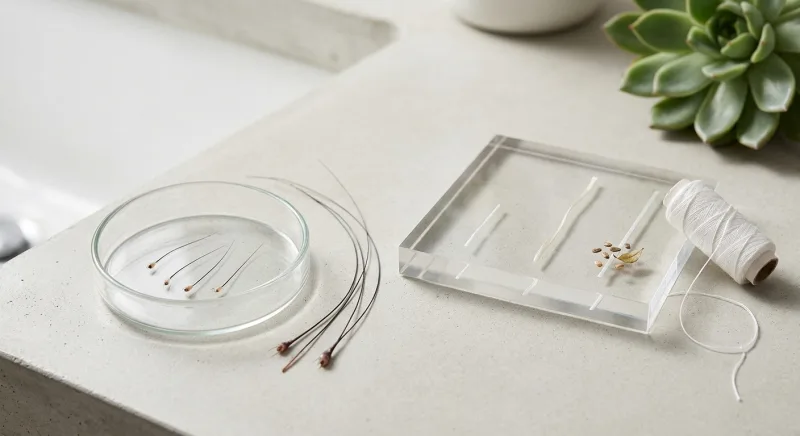
Yes, mild redness and small bumps are common right after a session. This looks like folliculitis, a kind of irritation tied to hair removal that shows up as redness, itching, and small raised bumps on the skin. (Cleveland Clinic) (ScienceDirect, Seminars in Cutaneous Medicine and Surgery)
Who should avoid eyebrow threading?
Not everyone is a good fit for every hair removal method. People with very touchy skin, open cuts, or active breakouts near the brow area should check with a skin doctor first. A trained pro can judge whether eyebrow threading suits your skin and hair type. (American Academy of Dermatology)
Key statistics
- In a 12-month prospective study of patients who developed dermatoses after beauty-parlor procedures such as threading, waxing, facials, and laser hair reduction, acneiform eruptions were the most common complication, found in 25.4% of cases. (PMC, Journal of Cutaneous and Aesthetic Surgery, 2020)
- In the same study of 102 patients who developed skin reactions after parlor procedures including threading, hyperpigmentation of the face occurred in 14.7% of cases. (PMC, Journal of Cutaneous and Aesthetic Surgery, 2020)
Expert insights
There is much more control with threading,
Jaimineey Patel, Head of training at Blink Brow Bar
you get both the expediency of waxing, because threading can remove multiple hairs at one time, and the precision of tweezing, because you can target individual hairs.
Shobha Tummala, Owner of three threading studios in New York
References
- Threading results typically last about 4 to 5 weeks before hair regrows, making it one of the longer-lasting manual hair removal methods compared to shaving. — American Academy of Dermatology, AAD · AAD is the leading professional dermatology organization in the U.S.; its public patient-education page compiles guidance from board-certified dermatologists.
- Threading causes little irritation, making it an option well-suited for people with sensitive or acne-prone skin, though it requires a skilled practitioner to avoid uneven brows or ingrown hairs. — American Academy of Dermatology, AAD · Federal/professional-society patient resource citing board-certified dermatologist guidance on hair removal methods.
- Although threading is widely regarded as a low-complication technique, dermatology case reports document potential adverse effects such as erythema, folliculitis, hyperpigmentation, and even molluscum contagiosum from unhygienic practice. — Indian Journal of Dermatology, PMC · Peer-reviewed dermatology journal article hosted on PubMed Central, NIH, a primary medical literature source.
- Eyebrow hair has a much shorter growth (anagen) phase than scalp hair, which explains why eyebrow regrowth after removal follows a faster, distinct timeline compared to other hair on the body. — PMC, National Institutes of Health · Peer-reviewed review hosted on PubMed Central, NIH, a federal biomedical research agency repository
- At-home IPL hair removal devices are FDA-regulated for over-the-counter use and are generally indicated only for specific Fitzpatrick skin types, which supports the article’s guidance on choosing at-home devices based on skin type. — U.S. Food & Drug Administration · Official FDA 510, k clearance documentation, a federal regulatory agency
- Not everyone is a good candidate for certain longer-lasting hair removal methods, and a qualified professional should assess suitability before treatment, especially for different skin and hair types. — American Academy of Dermatology · Professional medical association representing board-certified dermatologists
- Hair removal methods like waxing and tweezing can cause folliculitis and skin irritation, which is relevant to post-threading bumps and redness. — ScienceDirect, Seminars in Cutaneous Medicine and Surgery · Peer-reviewed dermatology journal article on hair removal pearls and pitfalls
- Folliculitis after hair removal appears as redness, irritation, itching, and bumps on the skin, which aligns with the redness and bumps readers may notice after eyebrow threading. — Cleveland Clinic · Nonprofit academic medical center health information resource
- Ingrown hairs and related skin bumps are a known risk after hair removal techniques, supporting advice on aftercare to reduce bumps following threading. — PMC, National Institutes of Health · Peer-reviewed article hosted on NIH’s PubMed Central database
