
hair removal
Hair Removal Guide 2026: How to Choose the Best Method for Your Skin
Last updated: November 10, 2026
The best hair removal method depends on your skin, your hair, and your goals. Pain tolerance matters too. So does how long you want smooth skin to last. Shaving and hair removal creams work fast, but results fade fast. Waxing and epilating last for weeks. IPL and laser tools thin growth over many sessions.
There’s no single right answer for everyone.
How Do You Choose the Right Hair Removal Method for Your Skin and Hair Type?
Match the tool to three things. Your skin sensitivity. Your hair texture. And the area you plan to treat. No single hair removal option wins for every body part or every person. Treat it as a framework, not a fixed rule.
Skin Sensitivity and Tone Considerations
Sensitive skin reacts badly to harsh chemicals and hard pulling. If you bruise or redden fast, start gentle. Gentler options suit you better. Trimming or a low epilator setting may beat waxing.
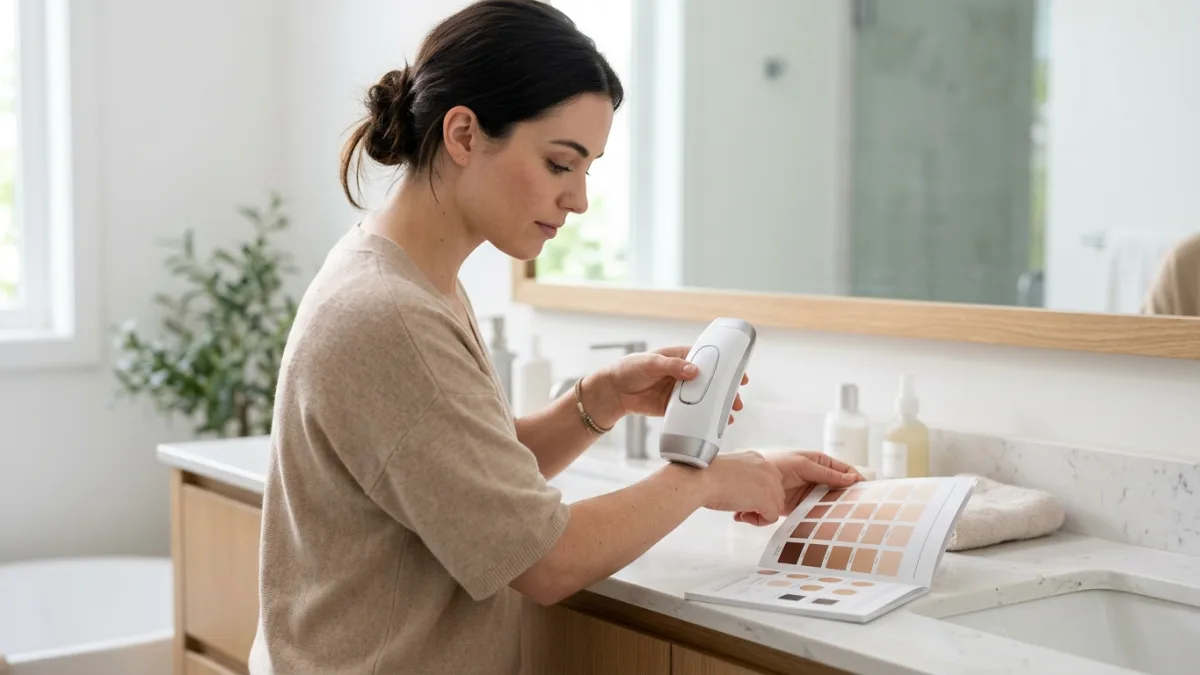
Skin tone shapes light-based hair removal results too. These tools read the contrast between hair and skin. The American Academy of Dermatology says people of all skin tones can be treated safely. It also warns that your provider should have real experience with your tone (AAD, 6 ways to remove unwanted hair).
Threading is a gentle hair removal option worth a look if your skin flares easily. The AAD notes it causes little irritation, so it suits sensitive or acne-prone skin.
Brands built around “every device type for every skin type,” like Bellxi, reflect a real shift. Tools now ship with adjustable settings. They cover a wider range of tones than older models did.
Hair Texture and Growth Cycle Factors
Coarse, dark hair responds best to light-based hair removal. Fine or blonde hair often lacks the pigment these tools need. The AAD is blunt on this point. Lasers cannot target blonde, white, gray, or red hair well. For those colours, waxing, epilating, or electrolysis gives steadier results.
The market has grown around this demand. Grand View Research valued the global hair removal devices market at $1.32 billion in 2023. It projects $2.14 billion by 2030, a CAGR of 7.2% (Grand View Research, 2024).
Regrowth timing varies by hair removal method. Threading results last four to five weeks, per the AAD. Waxing can hold for a few weeks or longer. Shaving needs a repeat every day or two.
Hair also grows in cycles, and timing matters. Light-based tools only damage follicles in the active growth phase. That is why one session is never enough.
Treatment Area (Face, Legs, Underarms, Bikini)
Facial skin is thin and reacts fast. Gentle hair removal tools made for the face lower your risk of irritation. Underarms and the bikini line need kit built for sensitive zones, not general body tools.
Legs and arms take more force, since the skin there is thicker. You can use stronger hair removal methods on them. Matching the tool to the zone is the step most people skip.
Laser work can look simple from the outside. It is not. As board-certified dermatologist Carolyn I. Jacob puts it, “in the wrong hands, it can cause serious skin damage.”
Carolyn I. Jacob, MD, FAAD, associate clinical instructor of dermatology, Northwestern University Feinberg School of Medicine — American Academy of Dermatology news release, 26 November 2018
At-Home Hair Removal Methods Compared
At-home hair removal options run from a plain razor to an IPL handset. Each one trades cost against pain and staying power. Here is how the common ones compare.
Shaving
Shaving is the fastest and cheapest hair removal method there is. The blade cuts hair at the skin, so stubble shows in a day or three. It is painless unless you nick yourself. The trade-off is constant upkeep, and the AAD notes that frequent shaving can irritate skin.
Epilating
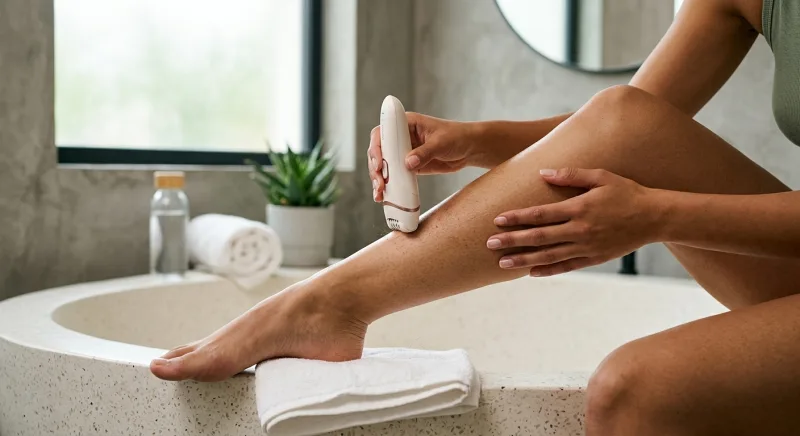
Epilators pull hair from the root with rotating tweezer heads. This hair removal method holds far longer than shaving, often two to four weeks. The first few passes sting more than a razor does.
Newer models are kinder than the old ones. Many now offer speed settings and cooling heads.
Depilatory Creams
Depilatory creams dissolve hair at the skin’s surface. This hair removal method is painless and quick. Results last longer than a shave, per the AAD. The downsides are a strong smell and a real risk of irritation.
The AAD urges a test patch before every first use, and again on each new body area. Rinse at once if you feel stinging or burning.
Sugaring and Waxing at Home
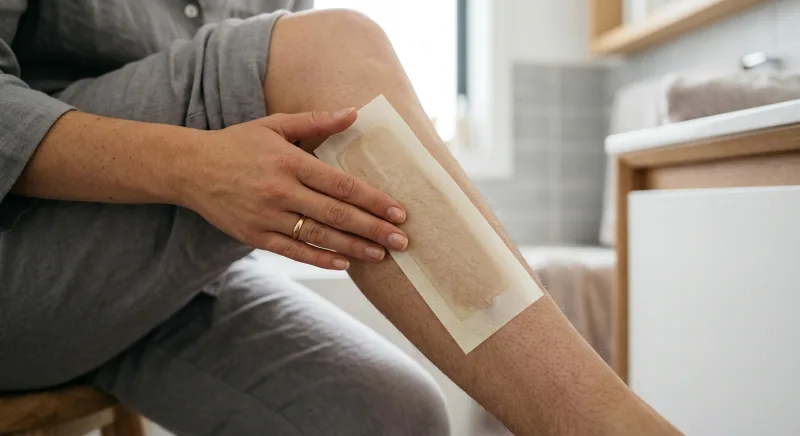
Sugaring and waxing are root-level hair removal methods. Smooth skin can hold for three to six weeks. Both hurt more than shaving, though many people find sugar paste gentler.
The paste itself is simple. Cleveland Clinic dermatologist Amy Kassouf explains that “most sugaring products contain sugar, lemon and water or similar ingredients,” heated into a sticky syrup that grips the hair.
Amy Kassouf, MD, dermatologist, Cleveland Clinic — Cleveland Clinic Health Essentials
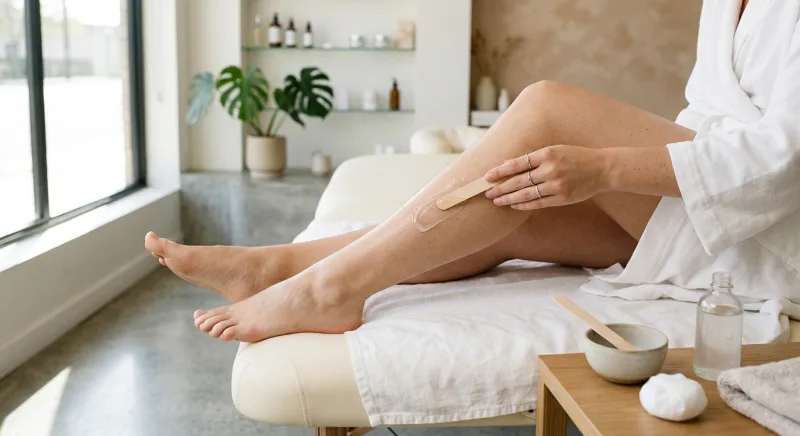
One warning matters here. The AAD says to skip waxing if you take isotretinoin, use an antibiotic, or apply tretinoin. These thin the skin, and the wax can tear it.
At-Home IPL and Laser Devices
At-home IPL hair removal uses broad-spectrum light to heat the follicle. Growth thins across repeated sessions. You pay more up front, but you top up far less often.
The clinical record is decent. In one trial, 22 women used a low-energy home IPL device six times, two weeks apart. Hair counts fell 78% one month after the last session, and 72% at three months (J Clin Aesthet Dermatol, via PMC).
Face results look similar. A separate study of home pulsed light on facial hair found a mean drop of 83.3% at one month and 78.1% at three months (J Clin Aesthet Dermatol, 2015).
Painless IPL handsets are now the usual entry point into long-term hair removal. They suit people who want laser-style results without booking a clinic. Pair one with a precision trimmer for touch-ups between sessions.
| Method | Pain Level | Cost Range | Results Duration | Upkeep Frequency |
|---|---|---|---|---|
| Shaving | Low | $ | 1-3 days | Every 1-3 days |
| Epilating | Medium-High | $$ | 2-4 weeks | Every 2-4 weeks |
| Depilatory Cream | Low | $ | 3-7 days | Weekly |
| Sugaring/Waxing (Home) | Medium | $$ | 3-6 weeks | Every 3-6 weeks |
| At-Home IPL/Laser | Low-Medium | $$$ | Weeks to months (with maintenance) | Every 2-4 weeks initially, then maintenance sessions |
Professional Hair Removal Treatments Explained
Professional hair removal treatments trade convenience for power. You pay more per visit. You often need fewer visits overall than home tools demand.
In-Office Laser Hair Removal
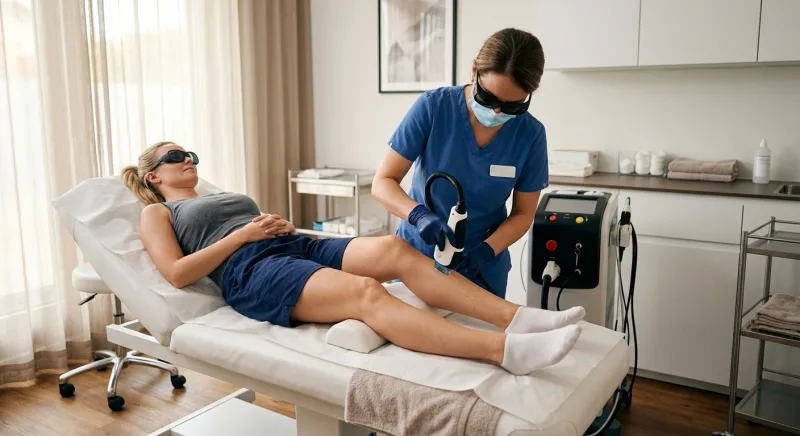
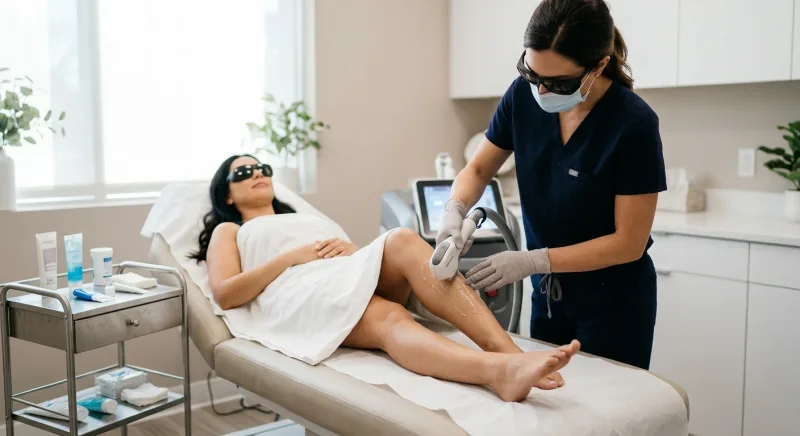
A clinic laser hair removal system uses one tight wavelength. It targets the follicle more precisely than a home IPL unit can. The AAD says it takes about six treatments from a dermatologist to destroy a follicle. Hair grows back thinner after each round.
After six or more sessions, the AAD calls the result permanent on most areas. A woman’s face is the exception, because of hormones.
Electrolysis
Electrolysis kills follicles one by one with an electric current. It is the only hair removal method the FDA treats as truly permanent. It also works on light hair that lasers miss, per the AAD.
Session length is flexible. The American Electrology Association notes that clients may book five minutes for a few chin hairs, or an hour or more for legs (American Electrology Association). You will need a run of visits either way.
New York dermatologist Nelson Lee Novick rates it above light-based options for lasting results: “It’s my preferred method for permanent hair removal, since it is, in fact, permanent.”
Nelson Lee Novick, MD, dermatologist, New York City — RealSelf
Professional Waxing and Threading
A trained technician controls angle and tension better than you can. That makes salon waxing more even than a home strip. Threading is the precision hair removal pick for brows and facial hair. Two twisted threads roll over the hairs and lift them out.
If you book a salon wax, watch the hygiene. The AAD says technicians should use wooden sticks and never double-dip them. Hot wax is not hot enough to kill germs.
Hair Removal Cost, Pain, and Duration: Side-by-Side Comparison
Seeing every option side by side makes the trade-offs clear. Cost, pain, and permanence rarely line up. Weigh what matters most to you.
| Method | Cost Range | Pain Level | Results Duration | Best For |
|---|---|---|---|---|
| Shaving | $ | Low | Days | All skin types, quick upkeep |
| Depilatory Cream | $ | Low | Days | Sensitive to touch, not chemicals |
| Epilating | $$ | Medium-High | Weeks | Coarser hair, tolerant skin |
| Waxing (Home/Pro) | $$-$$$ | Medium-High | Weeks | Larger areas, event prep |
| At-Home IPL | $$$ | Low-Medium | Months (with maintenance) | Dark hair, lighter skin tones |
| In-Office Laser | $$$$ | Medium | Months to years | Long-term reduction, dark coarse hair |
| Electrolysis | $$$$ | Medium-High | Permanent (per follicle) | All hair and skin types, fine hair |
Is At-Home IPL Hair Removal as Effective as In-Office Laser?
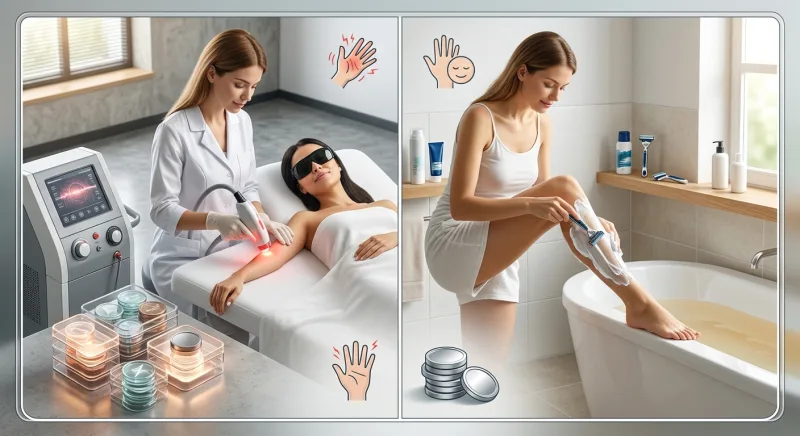
Home IPL hair removal works. It just works more slowly than a clinic laser. Clinic systems run at higher energy under medical supervision. Home units are tuned for safety in untrained hands.
The AAD puts it plainly. A home device needs far longer use to show results. You also have to keep using it to hold them.
The numbers back that up. Home IPL trials report roughly 72% to 78% hair reduction three months after a six-session course. A 2024 clinical study of rotational laser wavelengths in a clinic setting reported 75.07% reduction at six months (NCBI/PMC, 2024). Clinic lasers hold results longer between top-ups.
Device quality, skin-to-hair contrast, and steady use all shape your outcome. People short on time or budget often pick home IPL as the middle ground. It costs more than a razor and far less than a full clinic course.
How to Prepare Your Skin Before Any Hair Removal Method
Good prep improves your hair removal results and cuts irritation. The same few steps apply across shaving, waxing, epilating, and light-based tools.
Pre-Treatment Skin Care
Clean, dry, exfoliated skin gives the best result. Clearing dead cells helps hair lift and lowers your risk of bumps.
Sun matters more than most people think. The AAD says a tan must fade fully before laser work is safe.
Patch Testing for Sensitive Skin
Test every new hair removal product or device on a small patch first. This matters most for creams and light-based tools. The AAD advises waiting 24 hours. If nothing flares, you are clear to use it there.
- Exfoliate gently 24 hours before treatment
- Avoid direct sun exposure for several days prior
- Skip retinoid or exfoliating acid products beforehand
- Patch test new devices or creams on a small area
- Make sure skin is clean and free of lotion or makeup
- Check hair length matches device or method requirements

How to Care for Skin After Hair Removal
Aftercare counts as much as prep for every hair removal method. Skin needs time and a light touch to settle, above all after root-pulling or light-based work.
Soothing Irritation and Redness
Put on a cooling, fragrance-free moisturiser right away. Aloe vera gel and a lukewarm rinse calm redness from waxing, epilating, or shaving alike.
Preventing Ingrown Hairs
Gentle exfoliation two or three times a week keeps dead skin from trapping new hairs. Loose clothes help too, since friction makes bumps worse.
Keep the area clean as it heals. Cleveland Clinic advises this to stop an infection taking hold in ingrown spots.

When to See a Dermatologist
Book a visit if irritation lasts more than a few days. Do the same for signs of infection, such as pus or spreading redness. Severe, repeat ingrown hairs deserve a professional look as well.
The AAD adds one more trigger. If unwanted hair suddenly increases, a board-certified dermatologist can explain why.
Building a Complete At-Home Hair Removal and Grooming Routine
Few people rely on one hair removal tool alone. Most mix and match by area, timeline, and how their skin behaves.
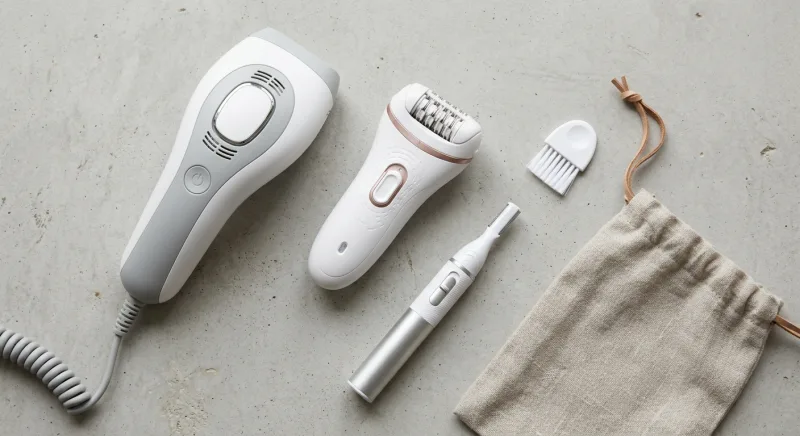
Bellxi stocks premium women’s grooming and advanced hair removal devices, offering every device type for every skin type. The range covers painless IPL laser handsets, precision trimmers, and epilators. That lets shoppers build a routine around their own needs rather than one fixed method.
Demand for that kind of range is growing fast. Grand View Research values the energy-based device segment at $1.13 billion in 2024, with an 11.2% CAGR forecast to 2030 (Grand View Research, 2025).

A layered hair removal routine might look like this. IPL on legs and arms over months. A trimmer for fast touch-ups. An epilator where you want longer-lasting smoothness. That mix reflects how most people actually groom.
Bellxi ships within 24 hours and backs every order with a 30-day risk-free guarantee. That makes it easier to try a new hair removal method without a long commitment. You can build the routine step by step and see what your skin likes.
Whatever you pick, consistency beats novelty. A routine built around your skin and your week will outperform any hunt for one perfect device.
Market context
Global hair removal devices market (2023-2030) — Valued at $1.32 billion in 2023, projected to reach $2.14 billion by 2030 at a 7.2% CAGR. Grand View Research, 2024
Average U.S. clinic price — The average cost of laser skin treatments such as laser hair removal is $697 per session. American Society of Plastic Surgeons
FDA 510(k) clearances of low-level laser therapy devices for androgenetic alopecia (2000-2018) — 47 low-level laser therapy devices for androgenetic alopecia received FDA 510(k) premarket approval between January 2000 and July 2018. PubMed (J Dermatolog Treat), 2019
The first two figures measure this category directly; the third is an adjacent-market indicator.
Further reading
- Laser Hair Removal: A Comprehensive Guide
- The Ultimate Guide to Laser Depilation 2024
- Laser Hair Reduction: Achieve Smooth, Confident Skin for Good
- Nose Hair Trimmers: A Comprehensive Guide 2024
- A Guide to SEV Laser Hair Removal for Women
- Facial Hair Removal: The Complete 2026 Guide to Every Method That Works
- Female Waxing 101: Types, Prep, Aftercare, and How Often to Wax in 2026
- Strawberry Legs: What Causes Them and How to Get Rid of Them
- Ingrown Hairs: Causes, Treatment, and How to Stop Them for Good
- Does an Epilator Hurt? The Truth Behind Smoother Skin
- Sugaring Hair Removal: The Gentler Truth Behind Smooth Skin
- Hair Removal Cream: How It Works, How to Use It Safely, and What to Try Next
- Eyebrow Threading: Why This Old Technique Still Wins
Frequently Asked Questions About Hair Removal
Which hair removal method lasts the longest?
Electrolysis. It is the only hair removal option the FDA counts as permanent, because it destroys each follicle. Clinic laser gives long-term reduction. Home IPL needs ongoing top-ups to hold its gains.
Is at-home IPL hair removal safe for all skin tones?
It depends on the contrast between your hair and your skin. IPL targets pigment in the follicle. Always check the device specs for tone limits. Many cleared systems list a Fitzpatrick range in their FDA paperwork, such as types I to VI on some diode lasers (FDA 510(k) K192735).
How often should you use an at-home hair removal device?
It varies by the tool. Published home IPL trials used a session every two weeks for six rounds, then follow-up checks. Epilators suit a few weeks apart. Trimmers work as needed. Follow your own device manual first.
Can hair removal cause ingrown hairs, and how do you prevent them?
Yes. Shaving, waxing, and epilating can all cause them. The AAD lists ingrown hairs as a known risk of shaving. Regular exfoliation, good technique, and loose clothing cut that risk sharply.
Is laser hair removal permanent?
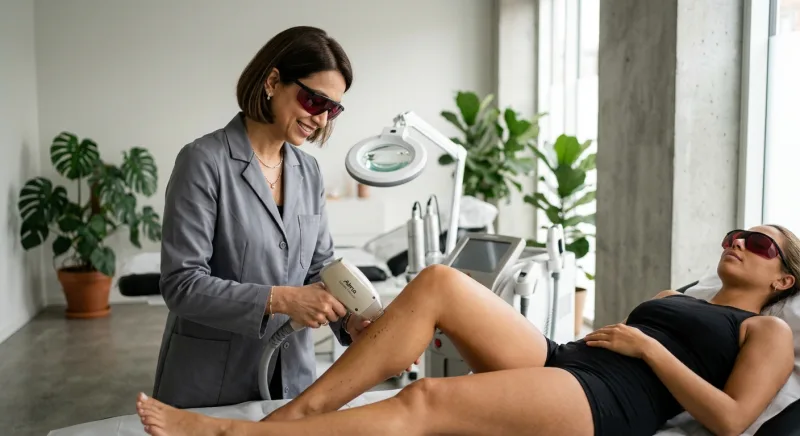
The label is “permanent hair reduction,” not removal. FDA clearance paperwork defines that term precisely. It means a long-term, stable drop in regrowing hairs, measured at 6, 9, and 12 months after a course ends (FDA 510(k) K192735). The AAD still calls results permanent on most body areas after six or more sessions, apart from a woman’s face. Some regrowth is normal.
What’s the difference between IPL and laser hair removal?
IPL hair removal fires broad-spectrum light across many wavelengths. Laser hair removal uses one tight wavelength. IPL dominates home devices. Laser is mostly a clinic tool.
What’s the best hair removal method for sensitive skin?
Start gentle. For sensitive skin, hair removal by trimming, sugaring, or threading tends to serve best. A sensitive-skin device setting helps too. The AAD flags threading as a good fit for sensitive or acne-prone skin. Patch test first, above all with creams and light-based tools.
Choosing well comes down to knowing your skin, your hair, and your goals. Quick daily upkeep or long-term reduction, the right hair removal approach exists. It just takes a little trial to find yours.
Comparing methods side by side often beats reading reviews alone.
Cost Comparison: What Hair Removal Really Costs Over Time
Hair removal sticker prices mislead. A razor looks cheap until you count blades. Laser looks steep until you add up years of salon visits. Annual spend tells a truer story than a single purchase.
| Method | Typical Published Price | How Often You Pay | Source |
|---|---|---|---|
| Eyebrow wax (salon) | About $20 per visit | Every 3-6 weeks | StyleSeat |
| Bikini wax (salon) | About $41 per visit | Every 3-6 weeks | StyleSeat |
| Full leg wax (salon) | About $70 per visit | Every 3-6 weeks | StyleSeat |
| Electrolysis | About $25-$100 per treatment | Many sessions, then none | RealSelf |
| In-office laser | $697 average per session | About 6 sessions, then top-ups | ASPS |
| At-home IPL device | One-off device purchase | Minimal cost after purchase | Varies by brand |
| Razors and creams | Low per unit, bought all year | Weekly to monthly | Varies by brand and region |
These figures shift by region, provider, and body area. The pattern still holds. Cheap methods cost more over the years. Pricier ones can pay off if you stay the course. Budget and patience both shape the smart choice.
Common Mistakes to Avoid
Even a good hair removal method can go wrong. A few habits lead straight to bumps, redness, or poor results.
- Shaving or waxing over dry, unwashed skin instead of prepping properly
- Skipping exfoliation, which increases the risk of ingrown hairs
- Using old or dull razor blades for too long
- Applying depilatory cream longer than the label recommends
- Waxing or using IPL on skin that’s actively sunburned or irritated
- Waxing while taking isotretinoin, an antibiotic, or topical tretinoin
- Not moisturizing after hair removal, leading to dryness and itching
- Expecting permanent results from temporary methods
- Skipping patch tests before trying a new product or device
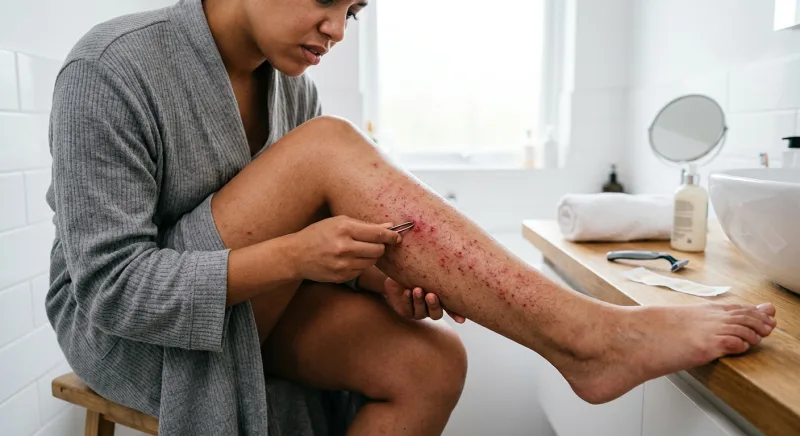
Most of these are easy to fix once you spot them. Slow down. Prep the skin. Read the label. Your results will improve whichever method you use.
Key statistics
- A clinical study combining rotational laser wavelengths found hair reduction of 75.07% across treated body areas at six months. (NCBI/PMC, 2024)
- A home-use IPL trial in 22 women reported 78% hair reduction one month after six biweekly sessions, and 72% at three months. (J Clin Aesthet Dermatol, via PMC)
- A facial home pulsed-light study reported a mean 83.3% drop in hair count at one month and 78.1% at three months. (J Clin Aesthet Dermatol, 2015)
- The global hair removal devices market was valued at $1.32 billion in 2023 and is projected to reach $2.14 billion by 2030. (Grand View Research, 2024)
- The average cost of laser skin treatments such as laser hair removal is $697 per session in the U.S. (American Society of Plastic Surgeons)
- FDA clearance documents define permanent hair reduction as a stable drop in regrowing hairs measured at 6, 9, and 12 months after treatment. (FDA 510(k) K192735)
