
Skin concerns
A Skin Concerns Guide That Finally Makes Sense of Your Routine
Last updated: November 7, 2026
This skin concerns guide breaks down the most common issues—dryness, redness, dark spots, breakouts, and razor bumps—and shows you how to treat each one. It starts with finding your skin type, then matches real fixes to real problems, including how your hair removal method can help or hurt.
You’ll leave knowing what to do next.
What Are the Most Common Skin Concerns?
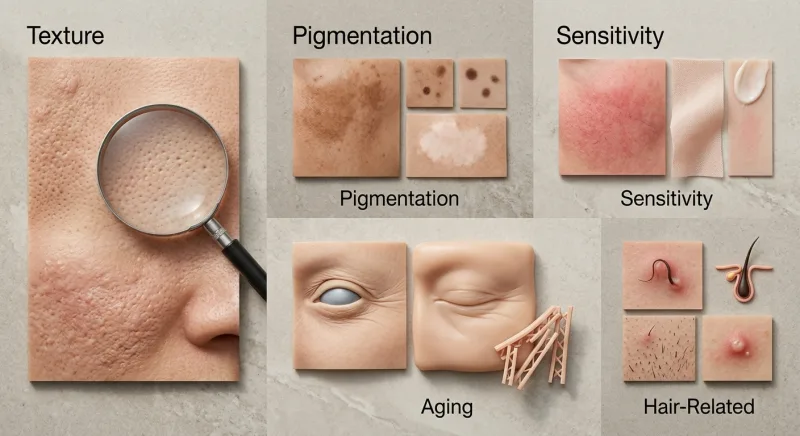
A skin concern is any issue with how your skin looks or feels that makes you want to change it. That covers dryness, redness, dark spots, dullness, breakouts, fine lines, and razor bumps. This skin concerns guide groups them into six buckets: texture, pigmentation, sensitivity, aging, oiliness, and hair-related irritation.
Acne is the most common skin condition in the United States, affecting up to 50 million Americans each year. Globally, acne affects an estimated 240 million people, a rate of 3.1% of the world’s population in 2021. Sensitivity is common too — 71% of adults report having self-declared sensitive skin to some degree. (American Academy of Dermatology, 2025) (PMC (Global Burden of Disease-based systematic review), 2025) (Johns Hopkins University (published systematic review and meta-analysis), 2020)
Most skin concerns guides stop at skincare. This one goes further. Hair removal and grooming habits — shaving, waxing, epilating — shape your skin just as much as any cream. Skipping that link means missing half the picture.
A Quick-Reference Overview
Here’s a fast summary of what this skin concerns guide covers, so you can jump to what matters most to you right now.
| Skin Concern | Likely Cause | Recommended First Step |
| Dryness and dehydration | Harsh soap, over-washing, weather | Switch to gentle cleanser, add emollient (a moisturizer that softens and seals in water) |
| Redness and sensitivity | Reactive skin, over-exfoliation, irritation | Simplify routine, patch test new products |
| Uneven texture | Dead skin buildup, dryness | Gentle exfoliation, consistent moisture |
| Dark spots | Sun exposure, acne marks, irritation | Daily sun protection, targeted brightening care |
| Dullness | Dead cell buildup, dehydration | Exfoliate gently, hydrate daily |
| Enlarged pores and oiliness | Excess oil production | Oil-balancing cleanser, non-comedogenic products |
| Breakouts | Clogged pores, hormones, bacteria | Consistent gentle routine, avoid picking |
| Fine lines | Sun exposure, natural aging, dryness | Sun protection, hydration, retinoid if suited |
| Razor bumps and ingrown hairs | Hair removal method, coarse or curly hair | Switch method or technique, exfoliate between sessions |
How to Use This Guide
Start by finding your skin type below. Then head to the section on your top concern. If hair removal is part of the picture, the later sections on method and device choice will help you connect the dots.
Anyone chasing anti aging skin results should also check the aging section, since prevention habits overlap heavily with daily routine basics covered further down.
How Do You Identify Your Skin Type Before Treating Any Concern?
You identify your skin type by watching how your face behaves a few hours after washing, with no products on. Skin type is usually sorted into oily, dry, normal, combination, or sensitive, and matching products to your type helps skin look and feel its best. This step comes before treating any skin concern in this guide. (American Academy of Dermatology)
Skin type can also be judged across several traits at once — oily or dry, reactive or resistant, prone to dark spots or not, and lined or smooth — rather than one fixed box. That’s why two people who both call themselves “combination” can need very different routines. (PubMed / National Library of Medicine)
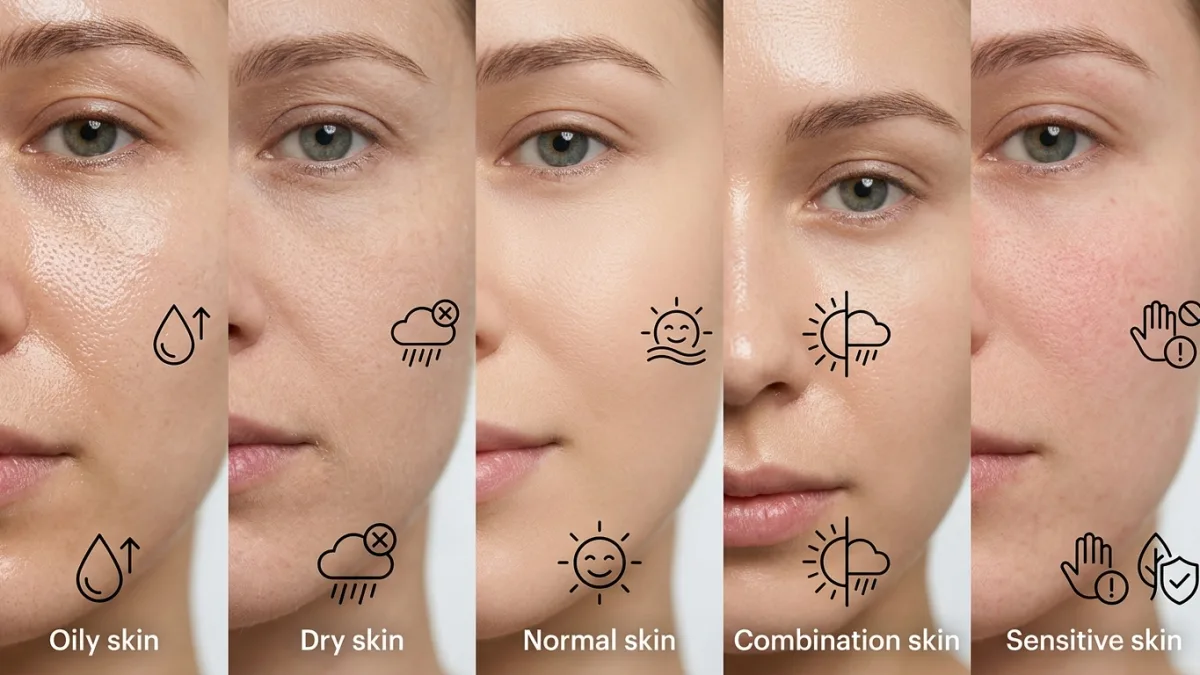
Normal, Oily, Dry, Combination, and Sensitive Skin
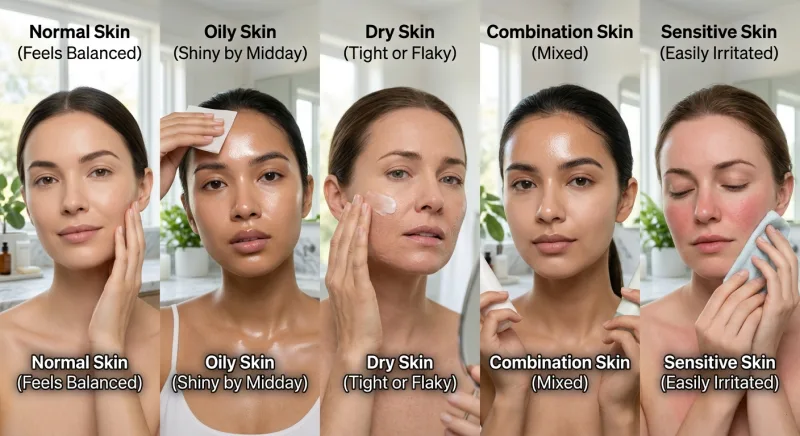
Normal skin feels balanced, with no tight or greasy patches. Oily skin looks shiny by midday, especially on the forehead and nose. Dry skin feels tight or flaky, often worse after washing. Combination skin is oily in the middle of the face but dry or normal elsewhere.
Sensitive skin reacts fast — redness, itching, or stinging from products that don’t bother other people.
Knowing your type matters for more than skincare. It also shapes how you should approach hair removal, since sensitive or reactive skin needs gentler methods and more recovery time between sessions.
Why Skin Type Changes Over Time
Your skin type isn’t fixed for life. Weather, hormones, age, and even your grooming routine can shift it. A skin concerns guide that treats skin type as permanent misses this reality entirely.
Grooming habits are a big, overlooked driver of this shift. Shaving can leave skin temporarily drier and more reactive. Epilating or waxing can trigger short-term redness as hairs are pulled from the root.
Even Intense Pulsed Light treatments (a light-based hair reduction method that targets pigment in the hair below the skin’s surface) can leave skin warm and sensitive for a day or two after a session.
None of this means your skin type has permanently changed. It means your routine needs to flex around what you did that week. A good skin concerns guide accounts for this back-and-forth, rather than assuming skin sits still.
What Are the Most Common Skin Concerns and How Do You Manage Them?
Dryness and Dehydration
Dry skin is a common condition, often made worse by long hot showers and harsh soaps or bubble baths; lifestyle changes and emollients are the recommended fix. Emollient use works best applied regularly, even on days skin looks fine, to head off future dryness before it starts. (NHS) (NHS Nottinghamshire APC)
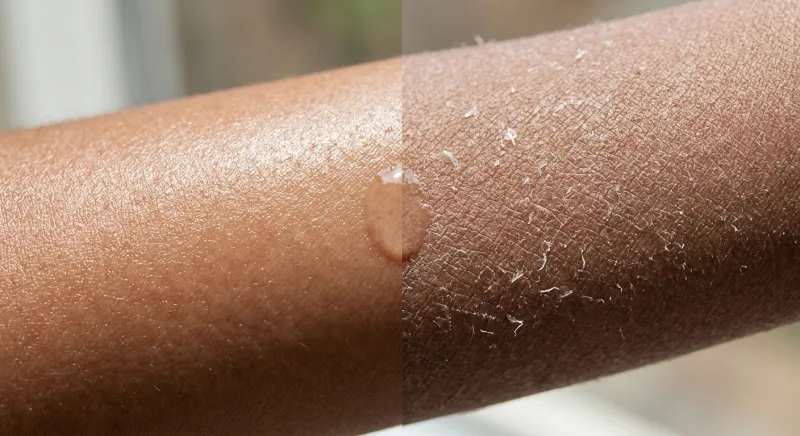
Redness and Sensitivity
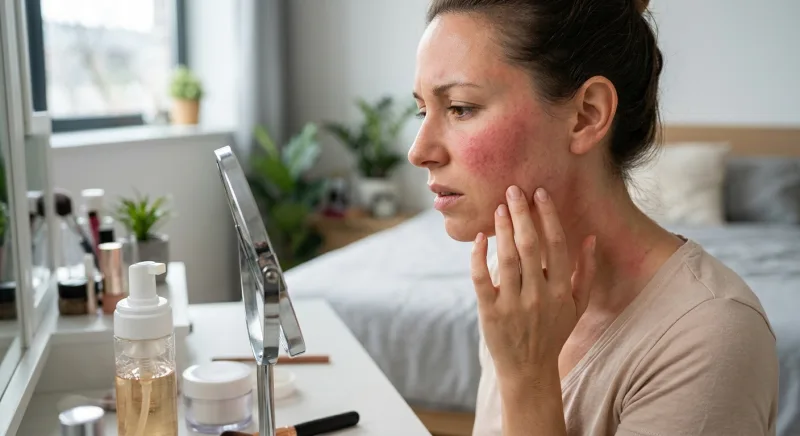
Redness and sensitivity show up as stinging, flushing, or visible irritation after products, weather, or friction. Given that 71% of adults report some degree of self-declared sensitive skin, this is one of the most common skin concerns people manage day to day. (Johns Hopkins University (published systematic review and meta-analysis), 2020)
Uneven Texture and Rough Skin
Dark Spots and Hyperpigmentation
People with darker skin tones face a higher risk of hyperpigmentation (dark, discolored patches caused by extra pigment) from sun and visible light exposure, and tinted sunscreen with iron oxide can help prevent and fade these spots. Dark spots often follow acne, injury, or product irritation, and fade on their own once the trigger is removed. (American Academy of Dermatology (AAD)) (American Academy of Dermatology)
For a full breakdown of causes and treatment paths, the guide on hyperpigmentation on face covers this concern in far more depth than a quick summary can.
Dullness and Uneven Tone
Choosing Products With a Skin Concerns Guide Mindset
Picking products gets a lot easier once you stop guessing. A skin concerns guide mindset means matching the product to the actual problem, not to whatever has the prettiest packaging. That single shift saves money and cuts down on trial and error.
Start by naming your top concern in plain words. Is it dryness, breakouts, redness, dark spots, or razor bumps? Once you name it, the ingredient list becomes much easier to read and compare.
Skin type also plays a role here. Skin is generally sorted into oily, dry, normal, combination, or sensitive, and picking products that match your type helps skin look and feel its best. (American Academy of Dermatology)
Some experts break skin type down even further, looking at oiliness, sensitivity, pigment, and firmness as separate sliding scales rather than one fixed label. That more detailed view often explains why two people with “oily skin” need very different routines. (PubMed / National Library of Medicine)

This is where a skin concerns guide becomes more useful than a single product review. A review tells you about one item. A guide helps you sort concerns first, then match products to each one.
Skin Concerns Guide: Comparing Common Fixes by Concern
The table below lines up common concerns next to the fixes that tend to help most. Use it as a quick reference when you are standing in the skincare aisle, unsure where to start.
| Concern | Likely Cause | Helpful Fix | What to Avoid |
|---|---|---|---|
| Acne and breakouts | Clogged pores, excess oil, bacteria | Gentle cleanser, salicylic acid, non-comedogenic moisturizer | Harsh scrubbing, popping spots |
| Dryness and flaking | Weak skin barrier, harsh soap, over-washing | Emollients, fragrance-free moisturizer | Long hot showers, bubble baths |
| Razor bumps | Shortened hairs curling back into skin | Sharp single-blade razor, shaving in hair direction | Dull blades, tight stretching of skin |
| Ingrown hairs | Hair growing back into skin after removal | Gentle exfoliation, loose clothing after hair removal | Tweezing too deep, tight waxing repeats |
| Dark spots | Sun exposure, acne marks, irritation | Daily sunscreen, spot-fading ingredients | Skipping sunscreen, picking at skin |
| Redness and sensitivity | Weak barrier, reactive skin, irritants | Fragrance-free products, patch testing | Multiple actives at once, hot water |
Notice how many fixes repeat across rows. Gentle cleansing, sun protection, and patience show up again and again. That pattern alone tells you most of what a skin concerns guide is built to teach.
Skin Concerns Guide for Hair Removal and Razor Irritation
Hair removal causes more skin complaints than people expect. Razor bumps, ingrown hairs, and redness after shaving or waxing are some of the most common questions in any skin concerns guide. (American Academy of Dermatology)
Razor bumps happen when a razor cuts hair very short. In people with coarse or curly hair, that short hair can curve back into the skin and trigger irritation. (American Academy of Dermatology)
Ingrown hairs work in a similar way. A hair grows back into the skin instead of out, often where people shave, wax, pluck, or thread, and it shows up more in coarse or curly hair types. (NHS)
Small changes in technique cut down on both problems. Shaving in the direction hair grows, using a sharp blade, and skipping tight stretching of the skin all help. A slower shave beats a fast one almost every time.
For people looking to reduce hair removal altogether, home-use light-based hair removal devices are an option worth knowing about. These devices work below the skin’s surface without cutting or pulling hair, and they are regulated as over-the-counter tools for hair reduction. (U.S. Food & Drug Administration (FDA))

That regulation matters. It means these devices go through a review process before they reach store shelves, which is reassuring for anyone nervous about trying a new hair removal method at home.
Comparing Hair Removal Methods and Skin Impact
| Method | How It Works | Common Skin Risk | Best For |
|---|---|---|---|
| Shaving | Cuts hair at the surface | Razor bumps, nicks | Quick, frequent upkeep |
| Waxing | Pulls hair from the root | Ingrown hairs, redness | Longer-lasting smoothness |
| Plucking/tweezing | Removes single hairs from the root | Ingrown hairs, small scarring | Small areas, spot treatment |
| Home light-based devices | Targets hair below the surface | Mild redness right after use | Long-term hair reduction |
Building a Routine Around Your Skin Concerns Guide
Once concerns are identified, the next step is building a routine around them. This is the part where most people either succeed quietly or give up from overload. A simple plan almost always beats a complicated one.
Start with three steps: cleanse, treat, protect. Cleansing removes dirt and oil. Treating addresses your main concern, whether that is acne, dryness, or dark spots. Protecting means daily sunscreen, no matter your skin tone or age. (American Academy of Dermatology (AAD))
People with darker skin tones face a higher risk of dark spots from sun and even visible light exposure. Tinted sunscreen with iron oxide can help prevent and fade these spots over time. (American Academy of Dermatology (AAD))
Dark spots after acne or skin injury are also common in darker skin tones. Finding and removing the trigger, whether that’s a harsh product or repeated picking, lets most spots fade on their own over time. (American Academy of Dermatology)
This is a good reminder that patience is part of any skin concerns guide. Spots that took months to form rarely fade in days, no matter how good the product claims to be.
Dry skin deserves its own mention here too. Regular use of a moisturizer, even on days skin feels fine, helps prevent future dryness before it starts. (NHS Nottinghamshire APC)
That single habit, applying moisturizer daily rather than only when skin feels tight, is one of the simplest upgrades anyone can make. It costs little and takes seconds.

When to Bring In a Skin Concerns Guide and When to See a Dermatologist
See a dermatologist if breakouts are painful, deep, or leaving scars. The same goes for rashes that spread quickly, spots that change shape or color, or irritation that does not improve after a few weeks of gentle care. (American Academy of Dermatology)
Acne in particular affects a huge number of people, so there is no shame in needing extra help. It is the most common skin condition in the United States, affecting up to 50 million Americans each year. (American Academy of Dermatology, 2025)
The scale is just as large worldwide. Acne affects an estimated 240 million people globally, which works out to an age-standardized rate of 3.1% in 2021. (PMC (Global Burden of Disease-based systematic review), 2025)
Sensitive skin is common too, even when it is not officially diagnosed. A large review of skin care research found that 71% of adults describe their own skin as sensitive to some degree. (Johns Hopkins University (published systematic review and meta-analysis), 2020)
These numbers matter because they show you are far from alone. Whatever concern brought you to this skin concerns guide, plenty of other people are working through the same thing right now.
Dry skin is also worth flagging to a doctor if it cracks, bleeds, or does not improve with regular moisturizer use. That kind of change can point to a condition that needs more than a basic skin concerns guide can offer, so a check-up is worth the time.
Further reading
FAQ: Your Skin Concerns Guide Questions Answered
What is a skin concerns guide meant to help with?
A skin concerns guide is a starting point for figuring out what your skin needs, whether that is dryness, acne, sensitivity, or ingrown hairs.
It helps you spot patterns, know when home care is enough, and know when to see a dermatologist instead.
How do I know my skin type?
Skin type is usually grouped as oily, dry, normal, combination, or sensitive. Watching how your skin feels a few hours after washing, with no product on, gives you a clear clue. Matching products to that type helps skin look and feel its best. (American Academy of Dermatology)
Can dry skin be fixed with moisturizer alone?
Regular moisturizer use, even when skin looks fine, is the main way to manage ordinary dry skin. Cutting back on long hot showers and harsh soap helps too. If dryness stays severe or painful despite this, a doctor visit is the next step. (NHS Nottinghamshire APC)
Why do I keep getting ingrown hairs?
Ingrown hairs happen when a hair curls back into the skin instead of growing out. They show up most where you shave, wax, or pluck, and are more common with coarse or curly hair. Gentle exfoliation and a sharp, clean razor lower the risk. (NHS)
What causes razor bumps and how do I stop them?
Razor bumps form when a cut hair curves back into the skin, sparking irritation. This is more common with coarse or curly hair. Shaving with the grain, using a single-blade razor, and skipping overly close shaves all help calm the pattern down over time. (American Academy of Dermatology)

Is acne only a teenage skin concern?
No. Acne affects up to 50 million Americans yearly, and plenty of them are adults, not teens. Globally it touches an estimated 240 million people, so any skin concerns guide worth using should treat adult acne as normal, not rare. (American Academy of Dermatology, 2025) (PMC (Global Burden of Disease-based systematic review), 2025)
How do I fade dark spots safely?
Dark spots often follow acne, irritation, or sun exposure, especially on darker skin tones. Finding and removing the trigger lets most spots fade on their own over time. Daily tinted sunscreen with iron oxide also helps prevent new spots from forming. (American Academy of Dermatology) (American Academy of Dermatology (AAD))
Are home hair removal devices safe to use?
Home-use light-based hair removal devices work below the skin’s surface without pulling or cutting hair, and the FDA regulates them as over-the-counter tools for hair reduction. Following the instructions closely, and patch-testing first, keeps the process safer for your specific skin. (U.S. Food & Drug Administration (FDA))
Key statistics
- Acne is the most common skin condition in the United States, affecting up to 50 million Americans annually. (American Academy of Dermatology, 2025)
- Globally, acne vulgaris affects an estimated 240 million people, equating to an age-standardized prevalence of 3.1% in 2021 according to the Global Burden of Disease Study. (PMC (Global Burden of Disease-based systematic review), 2025)
- A meta-analysis of skin care research found that 71% of adults report having self-declared sensitive skin to some degree. (Johns Hopkins University (published systematic review and meta-analysis), 2020)
Expert insights
If you've ever shaved, you probably know how razor bumps feel
Cameron K. Rokhsar, MD, FAAD, board-certified dermatologist in private practice in New York
References
- Razor bumps (pseudofolliculitis barbae) occur when the razor cuts hairs short and, especially in people with coarse or curly hair, the shortened hairs curve back into the skin, triggering an irritation response. — American Academy of Dermatology (American Academy of Dermatology (AAD) is the leading professional organization for dermatologists and publishes patient-facing clinical guidance on shaving-related skin conditions.)
- Skin type can be objectively classified along multiple parameters — oily or dry, resistant or sensitive, pigmented or non-pigmented, and wrinkled or tight — rather than a single fixed category. — PubMed / National Library of Medicine (Peer-reviewed research indexed by the U.S. National Library of Medicine (PubMed), describing the widely used Baumann Skin Type Indicator framework.)
- Dry skin is a very common condition that can be worsened by excessive bathing or showering and the use of harsh soaps or bubble baths, and lifestyle changes plus emollients are recommended to manage it. — NHS (Official NHS (UK National Health Service) patient self-care guidance on dry skin management.)
- Ingrown hairs are bumps caused when a hair grows back into the skin, often appearing where people shave, wax, pluck, or thread, and are more common in people with coarse or curly hair. — NHS (UK National Health Service official patient guidance page)
- People with darker skin tones are at higher risk of developing hyperpigmentation (dark spots) from UV and visible light exposure, and sun protection such as tinted sunscreen with iron oxide can help prevent and fade these dark spots. — American Academy of Dermatology (AAD) (Professional medical association representing board-certified dermatologists)
- Home-use IPL hair removal devices work below the skin's surface without cutting or pulling the hair, and are regulated by the FDA as over-the-counter devices for hair reduction. — U.S. Food & Drug Administration (FDA) (Federal regulatory agency clearance document for a medical device)
- Dry skin is a very common condition that can be managed with regular emollient (moisturizer) use, applied even when skin appears fine to help prevent future dryness. — NHS Nottinghamshire APC (UK National Health Service clinical guidance document on self-care for dry skin)
- Skin type is generally categorized as oily, dry, normal, combination, or sensitive, and choosing skin care products that match your specific skin type helps skin look and feel its best. — American Academy of Dermatology (American Academy of Dermatology, the leading professional association of board-certified dermatologists)
- For people with darker skin tones, dark spots and patches (post-inflammatory hyperpigmentation) commonly develop after acne, skin injury, or irritation from skin/hair care products, and identifying and removing the trigger allows most spots to fade on their own over time. — American Academy of Dermatology (American Academy of Dermatology guidance specifically addressing skin of color and hyperpigmentation)
