
Hair care
Curl Cream Benefits: What It Really Does for Wavy, Curly, and Coily Hair
Last updated: November 3, 2026
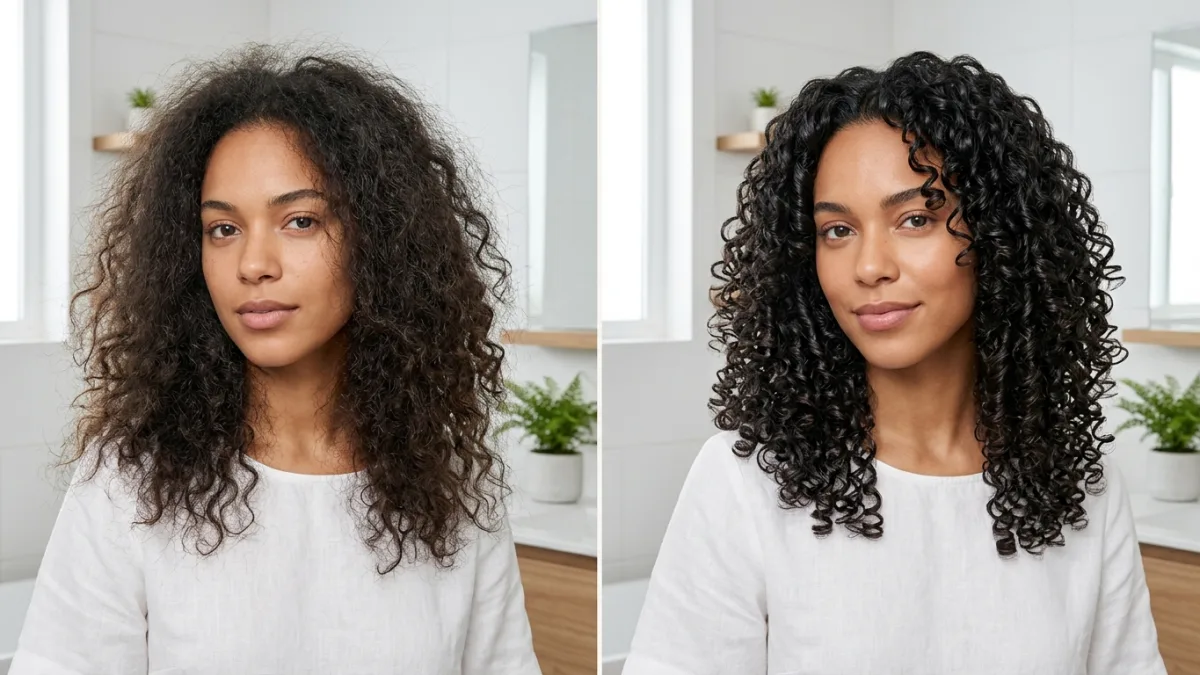
Curl cream benefits include deep moisture, better curl definition, less frizz, and flexible hold without a crunchy feel. It works by coating each strand with hydrating and smoothing ingredients that shape curl clumps as your hair dries.
Curl cream benefits show up fastest on wavy, curly, and coily hair, though the amount and method shift by type.
What Are the Benefits of Curl Cream? (Quick Answer)
The short version: curl cream benefits your hair by locking in water, smoothing the outer layer of each strand, and grouping loose strands into cleaner curl clumps. That combination is why so many people with texture reach for it daily. Curly hair tends to run drier than straight hair, so keeping it moisturized, not just at the ends but all over, is a key part of curl care. (American Academy of Dermatology)
Beyond moisture, curl cream benefits also include manageability you can feel right away. A leave-in product (a styling product you apply and don’t rinse out, left in the hair to keep working through the day) built for curly hair makes it easier to detangle. Dermatologists point out that less frizz and easier combing, with less breakage, happen immediately after use, not after weeks of build-up. (American Academy of Dermatology)
What Is Curl Cream, Exactly?
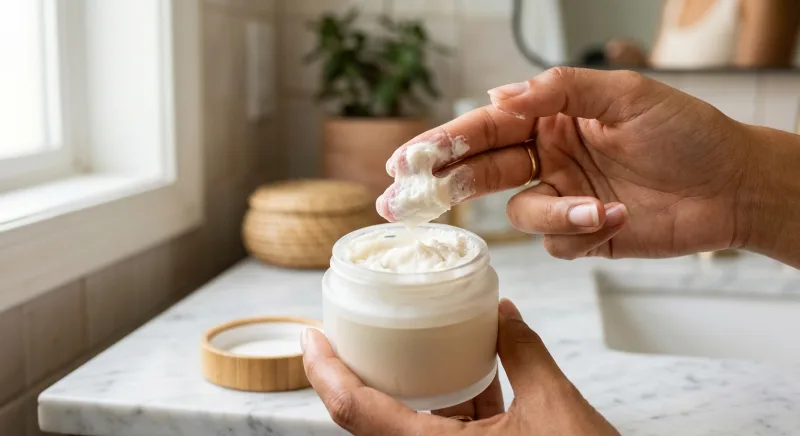
Curl cream is a leave-in styling product made to hydrate hair and shape curls as they dry. It sits between a lotion and a light gel in texture, thick enough to coat strands but soft enough to spread evenly through wet hair.
Understanding what it is helps explain why curl cream benefits show up the way they do.
How Curl Cream Differs From Leave-In Conditioner
A plain leave-in conditioner focuses mostly on softness and detangling. Curl cream does that too, but adds mild styling hold so curls hold their shape once dry. Applying a leave-in conditioner or a similar product after washing helps cut down on breakage, split ends, and frizz over time. Curl cream builds on that same base with extra shaping power. (American Academy of Dermatology (AAD))
What’s Actually Inside a Curl Cream
Most curl creams mix three kinds of ingredients: humectants (ingredients that pull water into the hair shaft), emollients (oils or butters that soften and coat strands), and film-forming agents (ingredients that form a thin, bendy layer around the hair). This mix is just why curl cream benefits bring both moisture and shape at once. Glycerin is a common humectant in this group, and a peer-reviewed study that compared ingredients found its power to hold moisture went up with strength up to 60 wt%, with the 60 to 70 wt% range showing no measurable weight change while drying out. (Scientific Reports (Nature) / PMC, 2022)
Film-forming ingredients matter too. They coat and smooth the outer layer of the hair, cutting down on friction between strands, which lowers static and reduces frizz. That’s the mechanism behind many curl cream ingredients. Hair conditioning agents like these also show up in lotions, mousses, and gels for the same reason, making them a shared building block across styling categories. (PMC / National Institutes of Health) (PMC (NIH))
The Core Benefits of Curl Cream, Explained
Curl cream benefits aren’t one single effect, they’re a set of smaller wins that add up. Below is each one broken out so you can see exactly what’s happening to your hair and why it matters for daily styling.
Moisture and Hydration
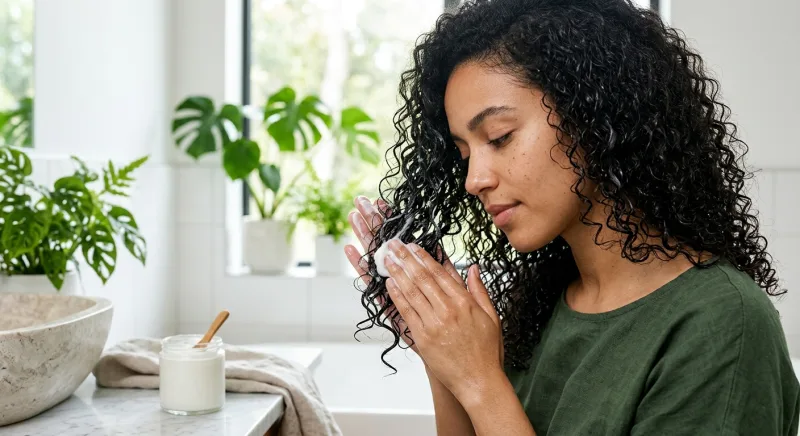
Hydration is the foundation of curl cream benefits. Curly and coily hair loses moisture faster than straight hair because its shape makes it harder for natural oils to travel down the shaft. Keeping curls moisturized all over, not just the ends, is a key part of proper curl care. That’s the first job any curl cream needs to do well. (American Academy of Dermatology)
Curl Definition and Clumping
Definition means individual strands group into visible, uniform curls instead of separating into a frizzy halo. Curl cream benefits here come from its light coating effect, which encourages strands to stick together in clumps as they dry.
This is often the single biggest reason people add a curl cream to their routine.
Frizz Control
Frizz happens when the outer layer of hair lifts and strands rub against each other. Film-forming conditioning agents smooth that surface and reduce friction, which lowers static and cuts frizz. This is one of the more immediate curl cream benefits, often visible the same day you style. (PMC / National Institutes of Health)
Flexible Hold Without Crunch
Unlike stiff gels, curl cream gives soft, bendable hold. Curls keep their shape but still move naturally, without a stiff “cast” forming on top. This is one of the curl cream benefits people notice most when comparing it to harder-hold products.
Protection From Heat and Environmental Damage
Heat from blow dryers, flat irons, and curling irons can hurt any hair type, so skin doctors say to use a guard product before styling. Using a heat guard product before styling, most of all on wet hair, helps cut down on harm from hot tools. Some curl creams have this guard built in, adding to their Curl Cream Benefits when you style. (American Academy of Dermatology) (American Academy of Dermatology (AAD))
Reduced Breakage Over Time
Using a leave-in conditioner or detangler after washing and conditioning helps cut down on breakage, split ends, and frizz over time. Since curl cream does this same leave-in job, one of its longer-term curl cream benefits is simply healthier-looking ends and fewer snapped strands from daily combing. (American Academy of Dermatology)
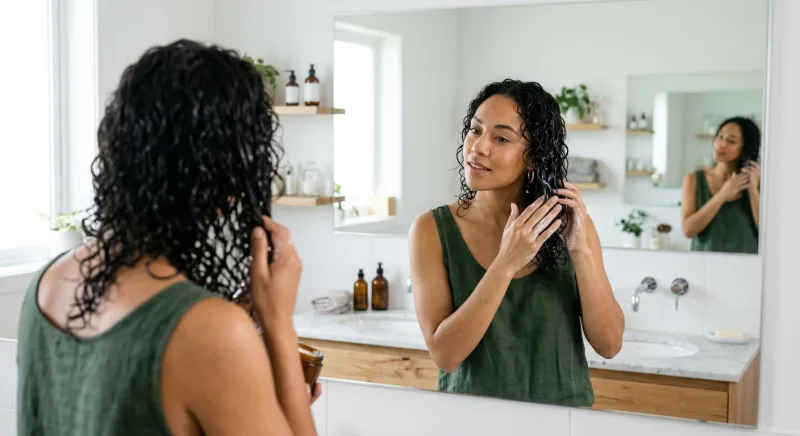
Does Curl Cream Work for Every Curl Type?
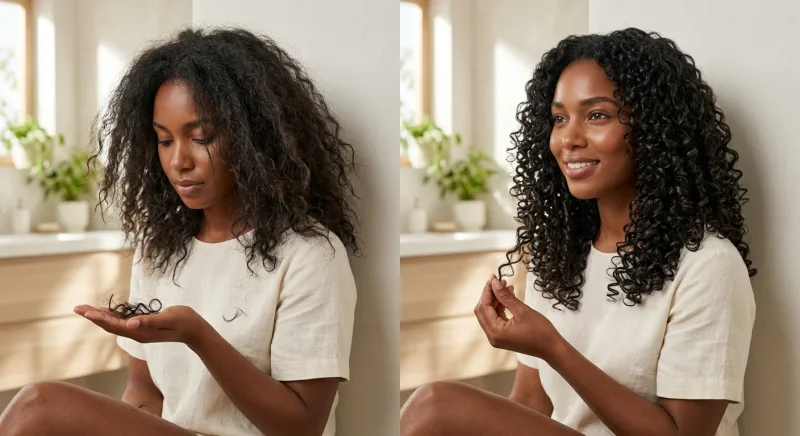
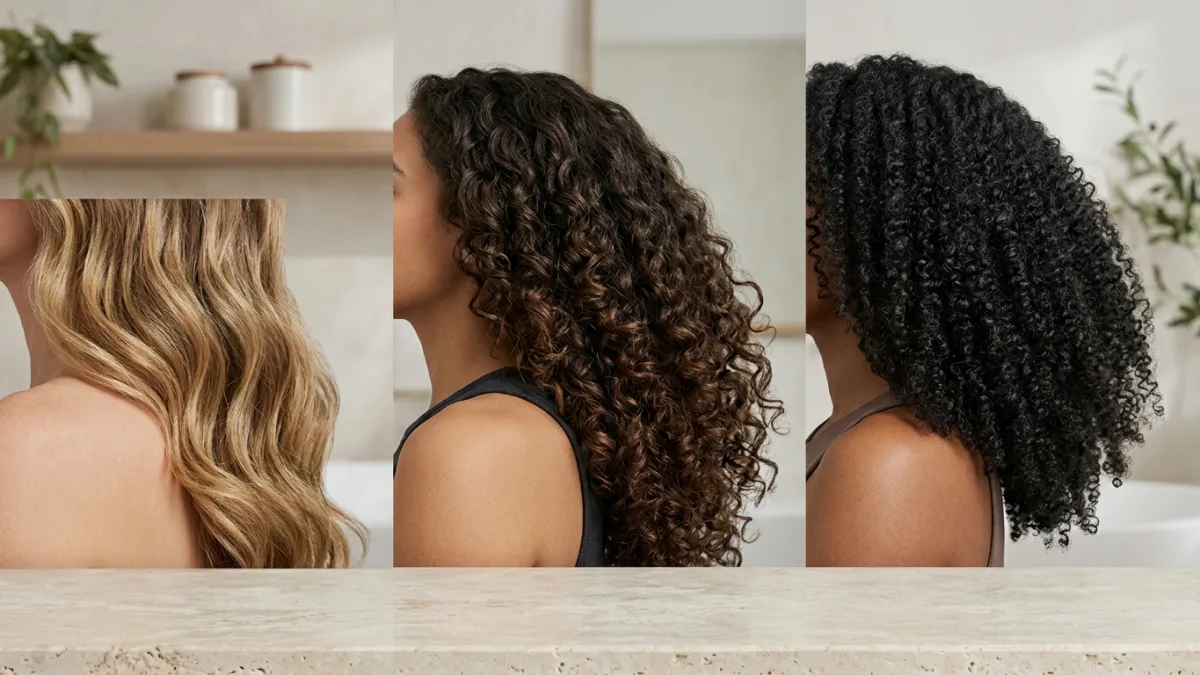
Yes, but curl cream benefits shift depending on your pattern. Hair typing generally runs from Type 2 (wavy) through Type 3 (curly) to Type 4 (coily), with sub-categories A, B, and C marking looser to tighter texture within each. The product amount and technique both need to change to match. (American Academy of Dermatology)
Wavy Hair (Type 2)
Wavy hair benefits from a small amount of curl cream, since too much can weigh down loose waves. A light layer boosts definition without flattening the wave pattern. Curl cream benefits here are mostly about frizz control and a soft, natural-looking hold.
Curly Hair (Type 3)
Type 3 curls usually need a medium amount, applied generously through mid-lengths and ends. This is where curl cream benefits tend to be most visible, since springy curls rely heavily on moisture and clumping to stay defined all day.
Coily Hair (Type 4)
Coily hair is often the driest texture, so it usually needs the most product. Layering curl cream with an oil or butter afterward can boost the curl cream benefits further, since coily strands need extra sealing to hold onto moisture between washes.
Fine vs Thick Strands
| Curl Type | Recommended Amount | Application Technique |
|---|---|---|
| Type 2 (Wavy) | Small, dime-sized amount | Light scrunch through lengths only |
| Type 3 (Curly) | Medium, coin-to-quarter size | Scrunch from ends upward, focus mid-lengths |
| Type 4 (Coily) | Generous, palm-sized amount | Section hair, apply and seal with oil or butter |
| Fine strands (any type) | Reduce amount by about half | Apply to lengths only, avoid roots |
| Thick strands (any type) | Increase amount as needed | Apply in sections for even coverage |
Curl Cream Benefits Compared to Other Styling Products
Curl creams are not the only option on the shelf. Gels, mousses, and butters all promise similar results, but they work differently. Understanding these differences helps clarify why curl cream benefits stand out for certain hair types and goals.
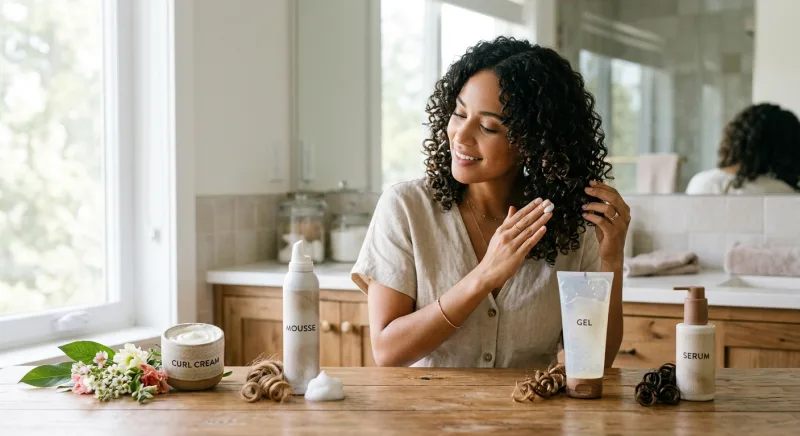
Mousses are lighter and add volume, but they often lack the moisturizing ingredients that curly hair needs daily. Since curly hair tends to be drier than straight hair, a lightweight mousse alone may not be enough. Conditioning all the hair, not just the ends, remains a foundational part of proper curl care. (American Academy of Dermatology)
| Product Type | Primary Function | Best For | Typical Feel After Drying |
|---|---|---|---|
| Curl Cream | Moisture, definition, frizz control | Wavy to coily hair, all-day softness | Soft, touchable |
| Gel | Strong hold, cast formation | High humidity, active days | Crunchy until scrunched out |
| Mousse | Volume, light hold | Fine hair, root lift | Light, airy |
| Butter | Deep moisture, sealing | Very dry, coily, or thick hair | Heavy, rich |
| Leave-in Conditioner | Detangling, light hydration | All hair types, pre-styling step | Light, slightly slippery |
Curl Cream Benefits for Heat Styling and Protection
Heat styling tools are still popular for stretching curls, shaping ringlets, or smoothing frizz. But too much heat from blow dryers, flat irons, and curling irons can cause lasting harm to any hair type. (American Academy of Dermatology)
This is where curl cream benefits go past simple shape and hold. Many curl creams have parts that form a light shield on the hair shaft, which can help cut down direct heat while diffusing or blow-drying. (American Academy of Dermatology)
Skin doctors say to use a product that guards hair from heat before styling, most of all when hair is wet and more open to harm. Not all curl creams are marked as heat guards, but many mixes give a base layer of defense when used with a heat guard spray made for that job. (American Academy of Dermatology (AAD))
Still, curl cream should not replace a dedicated heat protectant on high-heat days. Instead, think of it as a complementary layer that supports overall hair health while heat protectant sprays handle the more intensive thermal defense.
Long-Term Curl Cream Benefits for Hair Health
Beyond daily styling, using curl cream often may support healthy hair over months and years, one of the lasting Curl Cream Benefits. Putting on a leave-in style product made for curly hair can make hair easier to handle, and skin doctors note that effects like less frizz and easier combing often show up right away. (American Academy of Dermatology)
Over time, this lower rub during detangling can lead to less damage from combing. Curly hair breaks more easily because its shape makes it harder for natural oils to move down the strand. Cutting down on breakage, split ends, and frizz is a well-proven benefit of leave-in products used after washing and conditioning, one of the key Curl Cream Benefits. (American Academy of Dermatology)
This ties back to what we said about moisture-drawing ingredients. Things like glycerin can hold a lot of moisture at higher amounts, with one peer-reviewed study finding moisture-holding power rose up to 60 wt%, then leveled off between 60 and 70 wt%. Makers use this science to balance Curl Cream Benefits for steady day-to-day results. (Scientific Reports (Nature) / PMC, 2022)
Curl Cream Benefits Across Different Hair Porosities
Hair porosity, or how easily hair absorbs and retains moisture, plays a major role in how curl cream performs. Low porosity hair has tightly packed cuticles that resist moisture absorption, while high porosity hair absorbs moisture quickly but also loses it fast.

For high porosity hair, richer curl creams with sealing oils or butters help lock in moisture before it evaporates. This is one of the more practical curl cream benefits for people whose hair feels dry again just hours after washing.
| Porosity Type | Moisture Behavior | Recommended Curl Cream Texture | Application Tip |
|---|---|---|---|
| Low Porosity | Absorbs slowly, resists moisture | Lightweight, water-based cream | Apply to damp hair, use gentle heat |
| Medium Porosity | Balanced absorption and retention | Standard curl cream formulas | Apply on soaking wet hair, seal lightly |
| High Porosity | Absorbs fast, loses moisture quickly | Rich, butter-based cream | Layer with oil to seal in moisture |
How Ingredients Influence Curl Cream Benefits
Not all curl creams are formulated the same way, and ingredient lists can reveal a lot about expected performance. Understanding a few key categories helps explain why some products deliver stronger curl cream benefits than others.
Moisture-pulling agents, such as glycerin, honey, or aloe vera, pull water into the hair shaft from the air around it. As shown by studies comparing glycerin levels, moisture held in the hair rises with the amount used up to a point, which is why makers carefully balance these agents in curl creams to boost Curl Cream Benefits. (Scientific Reports (Nature) / PMC, 2022)
Emollients, like oils and butters, coat the strand to soften texture and cut down on roughness. These ingredients add to the smooth, soft feel many people link with curl cream benefits, most of all in dry climates or during winter months. (PMC / National Institutes of Health)
Film-forming smoothing agents also play a big role. These ingredients coat and smooth the outer layer of the hair, cutting down rub between strands, which then lowers static and cuts frizz. This is why many curl creams list similar smoothing agents despite having different brand names, another sign of Curl Cream Benefits at work. (PMC / National Institutes of Health)
Silicones, when used, can smooth the hair’s surface and add shine, though some people like silicone-free mixes to avoid buildup over time. Choosing between silicone and silicone-free options often comes down to what a person likes and how often they use a deep-cleaning shampoo.
Curl Cream Benefits When Used as Part of a Full Routine
Curl cream rarely works in isolation. It performs best as one step within a broader curly hair routine that includes cleansing, conditioning, and sealing. Recognizing where curl cream fits into this sequence helps people get the most out of every application.
After you wash and rinse with conditioner, using a leave-in conditioner or detangler helps cut breakage, split ends, and frizz over time. Curl cream Benefits often follow this step, as the cream locks in the moisture the leave-in conditioner gave. (American Academy of Dermatology (AAD))
Hair softening agents are often put into lotions, mousses, or gels used after washing, mainly to cut frizz and rubbing on the surface, which ties right in to how curl creams work as leave-in care products. This shared way of working is why curl cream fits so well with other leave-in mixes rather than fighting them. (PMC (NIH))
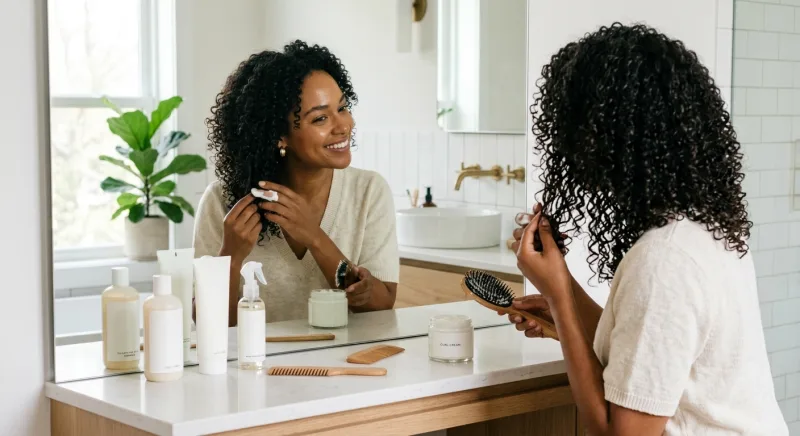
Sealing with oil after curl cream can further lock in moisture, particularly for medium to high porosity hair. This three-step layering, leave-in, curl cream, then oil, is a common routine that maximizes curl cream benefits while minimizing product buildup.
Refresh days also matter. On day two or three, misting hair with water and reactivating a small amount of curl cream can restore definition without a full wash. This stretch-the-wash approach is another practical way people extend curl cream benefits across multiple days.
Read the complete guide: A Hair Care Guide That Finally Makes Sense of Your Routine
Frequently Asked Questions
What are the main Curl Cream Benefits for everyday styling?
The main Curl Cream Benefits are less frizz, easier detangling, and better moisture held in through the day. Curly hair tends to be drier than other hair types, so a moist leave-in helps close that gap right after washing. (American Academy of Dermatology)
How quickly can I expect to notice curl cream benefits?
Many people see a change right away. Skin doctors note that leave-in products made for curly hair cut frizz and make combing easier almost right after use, with less breakage during styling. (American Academy of Dermatology)
Does curl cream actually protect hair from heat damage?
Some curl creams have ingredients that guard against heat, but not all do. Skin doctors say to use a heat guard product, most of all on wet hair, before using blow dryers or diffusers. (American Academy of Dermatology (AAD))
Can curl cream reduce breakage and split ends over time?
Yes. Using a leave-in conditioner or similar product after washing steadily cuts breakage, split ends, and frizz over weeks and months, not just on one wash day, showing real Curl Cream Benefits. (American Academy of Dermatology (AAD))
Why do curl creams contain glycerin or similar humectants?
Glycerin pulls in and holds moisture in hair strands. Studies show glycerin’s power to hold moisture goes up with more of it, up to 60 wt%, which is why many curl creams use it for long-lasting Curl Cream Benefits. (Scientific Reports (Nature) / PMC, 2022)
How do curl creams physically reduce frizz on the hair shaft?
Film-forming agents in curl cream coat and smooth the cuticle surface. This cuts down on rubbing between strands, lowering static and frizz, which is the main physical reason behind most curl cream benefits. (PMC / National Institutes of Health)
Should I use curl cream instead of a leave-in conditioner?
They work best together, not as swaps for each other. A leave-in adds moisture and slip, while curl cream shapes and seals; using both at once gives the most curl cream benefits without making hair feel heavy. (American Academy of Dermatology)
Is curl cream suitable for all curl types and textures?
Most mixes work on wavy to coily hair, though how much you use and how you layer it should shift with how thick and full the hair is. A light touch suits finer curls, while thick, coarse curls often need more product.
Key statistics
- A peer-reviewed comparative study found that the moisture-retention capacity of glycerin, a common humectant used in curl creams and other personal care products, increased with concentration up to 60 wt%, with the 60–70 wt% range showing no measurable weight change during evaporation. (Scientific Reports (Nature) / PMC, 2022)
Expert insights
Naturally curly or coily hair can feel overwhelming to care for,
Temitayo Ogunleye, MD, FAAD, board-certified dermatologist
References
- Curly hair is drier than other hair types, so keeping it moisturized (conditioning all the hair, not just the ends) is a key part of curl care — a foundational reason curl creams focus on hydration. — American Academy of Dermatology (Published by the American Academy of Dermatology with tips from board-certified dermatologists on curly hair care)
- Using a leave-in style product formulated for curly hair can make it more manageable, and dermatologists note the effects — less frizz and easier combing with reduced breakage — are immediate. — American Academy of Dermatology (Based on interviews with two board-certified dermatologists (Zoe D. Draelos, MD, FAAD and Paradi Mirmirani, MD, FAAD) known for expertise in hair conditions)
- Film-forming conditioning agents coat and smooth the hair cuticle surface, reducing friction between hair shafts, which lowers static electricity and reduces frizz — the mechanism behind many curl cream ingredients. — PMC / National Institutes of Health (Peer-reviewed scientific review on hair care physicochemistry hosted on NIH’s PubMed Central)
- No matter your hair type, excessive heat from tools like blow dryers, flat irons, and curling irons can cause damage, and dermatologists recommend using a product to protect hair from heat. — American Academy of Dermatology (Official dermatologist-reviewed hair care guidance from the American Academy of Dermatology)
- Applying a leave-in conditioner or detangler after washing and conditioning helps reduce breakage, split ends, and frizz over time. — American Academy of Dermatology (Dermatologist-recommended hair care guidance published by the American Academy of Dermatology)
- Using a heat protecting product before styling, especially on wet hair, helps minimize heat damage from styling tools. — American Academy of Dermatology (AAD) (Published by the American Academy of Dermatology, a professional medical organization whose hair care guidance reflects dermatologist recommendations.)
- Applying a leave-in conditioner or similar product after washing and conditioning helps reduce breakage, split ends, and frizz. — American Academy of Dermatology (AAD) (AAD dermatologist-authored patient guidance on hair care and breakage prevention.)
- Hair conditioning agents are incorporated into products like post-shampoo lotions, mousses, or gels to reduce frizz and friction on the hair surface, which is relevant to how curl creams function as leave-in conditioning products. — PMC (NIH) (Peer-reviewed scientific review on hair care physicochemistry hosted by the National Institutes of Health’s PubMed Central.)
