
Hair care
Curly Hair Routine 2026: The Complete Step-by-Step Guide
Last updated: November 5, 2026
A curly hair routine is a repeatable set of steps for cleansing, conditioning, detangling, styling, and drying curls in a way that fits your curl pattern. A solid curly hair routine also includes light daily upkeep, like refreshing curls and protecting them overnight, so results last between wash days.
What Is a Curly Hair Routine (And What Does It Actually Include)?
A curly hair routine is the set order of steps you follow to clean, feed, and shape your curls. It is not one product. It is a habit built around your hair’s needs, repeated on wash day and between washes.
Most people build their curly hair routine around five core actions. Each step supports the next, and skipping one often shows up as frizz or flat curls later in the week.
The core steps every curly hair routine needs
Every curly hair routine needs cleansing, conditioning, detangling, styling, and drying, done in that order. Skipping detangling before styling is one of the most common reasons curls end up clumped or frizzy by midday.
- Cleanse: remove buildup without stripping natural oils
- Condition: replace moisture and soften the strand
- Detangle: work out knots while hair is slippery and wet
- Style: apply product to define the curl pattern
- Dry: lock in shape with air-drying or gentle heat
This order matters because curls are more fragile wet than dry. A good curly hair routine treats wet hair gently at every step, since rough handling here causes most breakage.
How curl type changes the routine
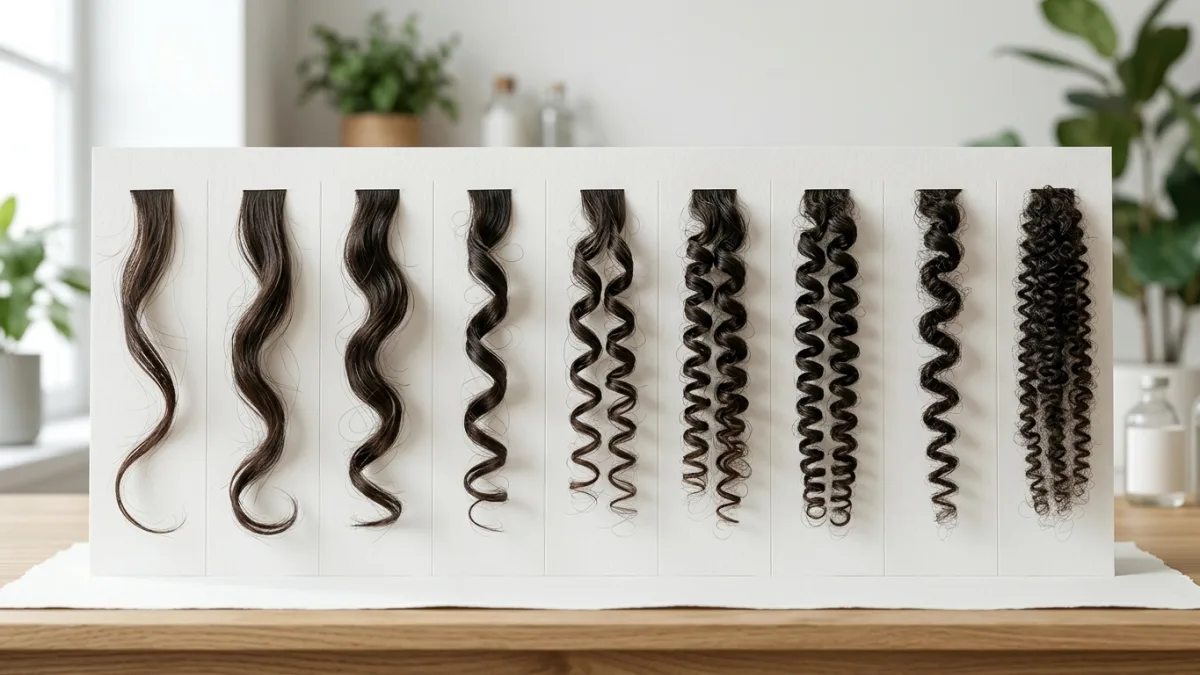
Curl type changes how heavy your products should be and how much moisture your routine needs. Hair type classification (a scale from 2A to 4C describing how loose or tight a curl pattern is) helps you pick the right starting point for a curly hair routine.
Looser waves usually need lighter gels and less frequent conditioning. Tighter coils often need richer creams and more moisture at every step of the curly hair routine.
| Curl Type | Typical Texture | Routine Adjustment |
|---|---|---|
| 2A–2C (Wavy) | Loose S-shaped waves | Lightweight gel, less frequent conditioning |
| 3A–3C (Curly) | Springy, defined loops | Balanced cream-gel combo, weekly deep conditioning |
| 4A–4C (Coily) | Tight coils, more shrinkage | Rich creams, heavier oils, frequent moisture steps |
Why Do Curls Need a Different Routine Than Straight Hair?
Curls need a different routine because their shape slows down natural oil movement, leaving ends dry while the scalp stays oily. A curly hair routine works around this uneven moisture pattern instead of ignoring it.
Straight hair lets scalp oil travel down the shaft easily. Curls bend and twist, so oil has a harder path to follow, which is why a curly hair routine leans so heavily on added moisture.
Curl structure and moisture loss
Curl structure creates bends where moisture escapes faster than it can be replaced. Hair porosity (how easily hair absorbs and holds onto moisture) plays a big role here, since high-porosity strands lose water quickly after washing.
This is one reason a curly hair routine usually includes a leave-in conditioner or sealing oil. Sealing traps water inside the strand right after the wash step, before curls have a chance to dry out.
Common curl problems this routine solves
A well-built curly hair routine solves four problems that show up again and again: frizz, dryness, undefined curls, and product buildup. Each has a distinct cause, so each needs a distinct fix.

- Frizz: caused by the outer layer of the hair lifting and letting in humidity
- Dryness: caused by slow oil movement along the curl bends
- Undefined curls: caused by rough drying or skipping styling products
- Buildup: caused by heavy products layering without a clarifying step
Once you know which problem you are solving, adjusting a curly hair routine becomes far less guesswork. Most fixes involve swapping one product or one step, not starting over.
How to Build Your Wash Day Routine Step by Step
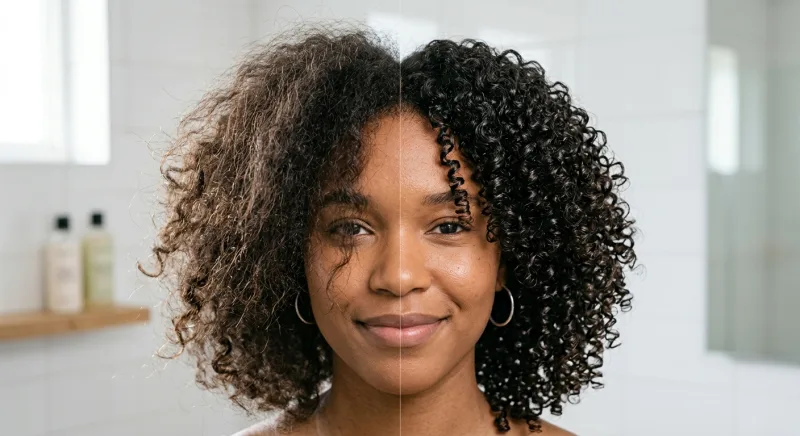
Wash day is the full version of a curly hair routine, done less often than daily upkeep. It covers everything from scalp prep to final drying, usually in one longer session.
Pre-wash and scalp prep
Pre-wash prep starts a curly hair routine by loosening tangles before water even touches the hair. A pre-wash oil treatment or a gentle finger-detangle session makes the rest of wash day easier.
Massaging the scalp during this step also helps loosen flakes and buildup. This makes the cleansing step that follows far more effective.
Cleansing and conditioning
Cleansing removes dirt, oil, and product residue without over-drying the hair. Many curly hair routine guides recommend a sulfate-free shampoo or a co-wash, since sulfates (strong detergents that strip oil from hair and scalp) can leave curls feeling rough.
Conditioning follows right after, replacing moisture the cleansing step removed. Leaving conditioner on for a few extra minutes gives it more time to soften the strand.
Detangling without breakage
Detangling works best while hair is still coated in conditioner. A wide-tooth comb or your fingers, moving from ends to roots, causes far less breakage than brushing dry curls.
This step is often rushed, but it shapes how the rest of the curly hair routine turns out. Tangled sections dry into knots that are much harder to fix later.
Styling wet curls
Styling products go on while hair is still soaking wet, not damp. Gels, creams, or foams coat each strand and help hold the curl pattern as it dries.
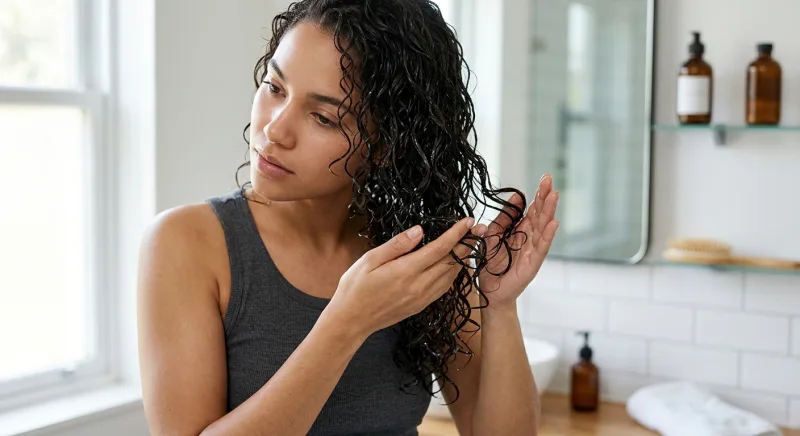
Scrunching upward, rather than pulling down, helps curls clump together. This single habit change is one of the simplest upgrades to any curly hair routine.
Drying methods (diffusing, plopping, air-drying)
Drying method changes texture and curl definition more than most people expect. Plopping (wrapping wet curls in a soft towel or shirt to set their shape without frizz) is a common low-heat option.
Diffusing with a blow dryer speeds things up while keeping curls defined. Air-drying is the gentlest option but takes the longest, so it fits better into a slower curly hair routine.
How often to repeat wash day varies by scalp oiliness, activity level, and curl type, so there is no single correct number of days. The American Academy of Dermatology recommends that people with dry, textured, curly, or thick hair wash their hair at least once every 2 to 3 weeks.
(American Academy of Dermatology (AAD), 2024)
- Pre-wash detangle and scalp massage
- Cleanse with a gentle or sulfate-free shampoo
- Condition and detangle together
- Apply styling product to soaking wet curls
- Dry using plopping, diffusing, or air-drying

Choosing Products for Each Curl Type
Not every curly hair routine needs the same products. Curl pattern, density, and porosity all change what actually works. A routine built for loose waves will likely underperform on tight coils, and vice versa.
Porosity affects how fast hair absorbs and loses moisture. Low-porosity hair tends to need lighter products applied to damp hair. High-porosity hair often benefits from heavier creams and sealing oils to lock moisture in.
Density and strand thickness matter too. Fine, low-density curls can get weighed down by rich butters, while thick, coarse curls often need that same richness to feel hydrated and defined.
| Curl Type | Common Texture Traits | Typical Product Focus | Ideal Curly Hair Routine Frequency |
|---|---|---|---|
| Type 2 (Wavy) | Loose S-shaped waves, prone to weight-down | Lightweight mousse, sea salt spray | Wash every 2-3 days |
| Type 3 (Curly) | Springy, well-defined loops | Curl cream, medium-hold gel | Wash every 3-5 days |
| Type 4 (Coily) | Tight coils or zigzag pattern, higher shrinkage | Rich butter, sealing oil, leave-in conditioner | Wash every 5-7 days |
This table is a starting point, not a rulebook. Many people have more than one curl pattern on a single head. Adjusting a curly hair routine by section, rather than treating hair as one uniform texture, often gives better results.
Common Curly Hair Routine Mistakes
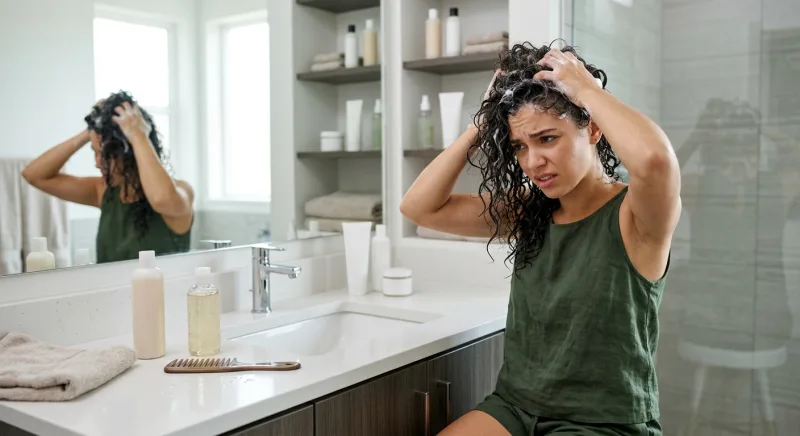
Even a well-intentioned curly hair routine can go wrong in small ways. These mistakes are common, and most are easy to fix once identified.
- Brushing dry curls, which breaks the pattern and creates frizz
- Using too much shampoo too often, stripping natural oils
- Skipping leave-in conditioner before styling products
- Touching or scrunching curls while they dry, which disrupts clumping
- Sleeping on cotton pillowcases instead of silk or satin
- Applying product to damp instead of soaking wet hair
The last point trips up many people. Curls need more slip and moisture than a towel-dried strand can offer. Applying styling product to hair that is still dripping helps distribute it evenly and locks in hydration before it evaporates.
Overuse of heat is another frequent issue. Frequent blow-drying without a diffuser, or flat-ironing curls straight and then re-curling them, weakens the hair shaft over time. This makes it harder for any curly hair routine to produce consistent results.
Product buildup is a quieter problem. Heavy creams, gels, and oils can accumulate on the hair shaft, especially with infrequent washing. A clarifying wash every few weeks helps reset a curly hair routine that has started to feel dull or crunchy.
Adjusting a Curly Hair Routine by Season
Weather changes how curls behave. Humidity, dry indoor heating, and sun exposure all shift how much moisture curls need. A routine that works in summer may fall flat in winter.
In humid months, frizz becomes the main challenge. Anti-humidity products and stronger-hold gels help curls hold their shape despite moisture in the air. Lighter leave-ins prevent hair from feeling weighed down and greasy in the heat.
In colder, drier months, the priority flips. Indoor heating pulls moisture from both air and hair, so a curly hair routine may need richer creams, deeper conditioning, and less frequent washing to retain hydration.
| Season | Main Challenge | Routine Adjustment | Recommended Products |
|---|---|---|---|
| Summer | Frizz and humidity swelling | Lighter products, more frequent washing | Anti-humidity spray, lightweight gel |
| Winter | Dryness from indoor heat | Less frequent washing, deeper conditioning | Rich butter, hair oil, hydrating mask |
| Spring/Fall | Fluctuating humidity levels | Flexible, layered product approach | Medium-hold cream, leave-in conditioner |
Traveling between climates can also disrupt a curly hair routine. Packing a small, adaptable kit with a leave-in, a gel, and an oil covers most weather scenarios without overloading luggage.
Nighttime Care and Protective Habits
What happens overnight matters just as much as wash day. Friction from regular pillowcases can undo a full day of careful styling. Protecting curls while sleeping is a small habit with a large payoff.
Silk or satin pillowcases reduce friction compared to cotton. Less friction means less frizz and fewer tangles by morning. Some people prefer a silk or satin bonnet or scarf for even more protection.
The pineapple method, gathering curls loosely on top of the head with a soft scrunchie, helps preserve curl shape overnight. This step takes seconds but can extend the life of a style by a day or two.


Refreshing curls in the morning without a full rewash is another useful skill. A light mist of water mixed with leave-in conditioner can revive curl definition. Scrunching gently from the ends up helps reactivate product without disturbing the pattern.
Building a Long-Term Curly Hair Routine
A sustainable curly hair routine evolves over time. Hair changes with age, hormones, climate, and even diet. What worked a year ago may need adjusting now.
Keeping a simple log of products used and results seen can help identify patterns. Noting which combinations led to frizz, dryness, or great definition makes future adjustments faster and less guesswork-based.
Regular trims also support a healthy curly hair routine. Split ends travel up the hair shaft and make curls look frizzy or undefined, no matter how good the products are. Trimming every few months keeps curls looking their best.
Patience matters more than most people expect. Switching to a new curly hair routine, especially one involving fewer sulfates or silicones, often requires a transition period. Hair may look worse before it looks better as it adjusts.
Ultimately, the best curly hair routine is the one that fits real life. A routine that is too complicated to maintain will not get followed consistently. Simplicity, adjusted for individual curl needs, tends to win out over time.
Market context
Lifetime incidence of alopecia areata worldwide — The lifetime incidence of alopecia areata is approximately 2% worldwide. PMC (NIH) – Epidemiology and burden of alopecia areata, 2015
Association between drinking water hardness and cardiovascular disease (CVD) mortality across observational studies — A peer-reviewed systematic review found that 17 of 25 qualitatively analyzed studies showed a significant protective relationship between total drinking water hardness and cardiovascular disease mortality. NCBI/PubMed Central (Nutrients journal systematic review), 2023
Adjacent-market figures — each names the subject it measures, not Curly Hair Routine directly.
Read the complete guide: A Hair Care Guide That Finally Makes Sense of Your Routine
Frequently Asked Questions
How long does it take to see results from a new curly hair routine?
Most people notice changes within a few weeks. A full curly hair routine adjustment, including scalp balance and curl pattern response, can take several wash cycles. Fine curls may adapt faster than thick or coarse curls.
What is the biggest mistake people make with a curly hair routine?
Overloading curls with too many products is common. Layering gel, cream, and oil without understanding how each interacts can leave hair heavy or crunchy. A simpler curly hair routine with fewer, well-chosen products often performs better.
Can a curly hair routine work for all curl types?

Not exactly the same way. Loose waves and tight coils have different moisture and hold needs. The core structure of a curly hair routine stays similar, but product strength and technique should be adjusted for curl type.
How often should curly hair be washed?
This depends on scalp oiliness and curl density. Many people wash once or twice a week, using co-washing or gentle cleansers between full washes. Overwashing can strip curls, while underwashing may cause buildup and dullness.
Is it necessary to use styling products every single day?
Daily product use isn’t required for everyone. Some curls hold style for several days with light refreshing using water or a spray mix. A flexible curly hair routine allows for refresh days instead of full restyling.
What should someone do if their curly hair routine stops working?
Hair changes with seasons, health, and age, so a routine that once worked may need adjusting. Reassessing moisture levels, protein balance, and product buildup usually helps identify what part of the curly hair routine needs updating.
Do curly hair routines need to include deep conditioning?
Deep conditioning is helpful for most curl types since curls tend to be drier than straight hair. Adding it weekly or biweekly to a curly hair routine can improve elasticity, reduce frizz, and support long-term curl health.
Can a curly hair routine help with frizz control long term?
Yes, consistency is key. Frizz often results from dryness, damage, or humidity exposure rather than curl type alone. A steady, well-suited curly hair routine addresses moisture and protective styling, gradually reducing frizz over repeated wash cycles.
How long does it take to see results from a new curly hair routine?
Most people notice changes within a few wash cycles, though full results can take longer. Hair grows and adjusts gradually, so patience matters. Give a new routine at least four to six weeks before judging its effectiveness.
Should curly hair be washed every day?
Daily washing usually strips natural oils and increases dryness in curly hair. Most curl types do better with washing every two to five days. Adjust frequency based on scalp condition, activity level, and how the hair responds.
Can men follow the same curly hair routine as women?
Yes, the core principles apply regardless of gender. Cleansing, conditioning, moisturizing, and styling steps stay the same. Product choice and hairstyle preferences may differ, but the underlying structure of a good routine remains consistent for everyone.
What if my curls change after switching products?
Curl patterns can shift temporarily due to buildup, damage, or ingredient sensitivity. This does not always mean permanent change. Returning to gentle, moisture-focused products often restores curl behavior within a few wash cycles as hair recovers.
Final Thoughts
Building a reliable routine takes observation, testing, and small adjustments over time. There is no single formula that works for every curl type. What matters most is paying attention to how hair responds and adapting accordingly.
Start with the basics: gentle cleansing, consistent conditioning, and moisture-focused styling. From there, refine based on porosity, climate, and personal preference. A thoughtful approach, more than any single product, drives lasting improvement in curl health.
Over time, small consistent habits add up. Tracking what works, staying patient through trial periods, and avoiding harsh ingredients all support healthier curls. With steady care, most people see noticeable improvement in texture, shine, and manageability.
Key statistics
- Dermatologists recommend that people with curly, thick, or textured hair wash their hair a minimum of every 2 to 3 weeks for optimal scalp and hair health. (American Academy of Dermatology, 2026)
- When treating dandruff on curly hair, dermatologists advise applying anti-dandruff shampoo only to the scalp and letting it sit for 2 to 10 minutes before rinsing. (American Academy of Dermatology, 2026)
Expert insights
Trial and error are often needed to find the best routine for curly hair, so do not get discouraged if a certain product does not work for your hair type,
Dr. Ogunleye, Dermatologist quoted in American Academy of Dermatology’s ‘6 curly hair tips from dermatologists’
Washing your hair is key to keeping bacteria and yeast counts down to minimize dandruff or any inflammation in the scalp,
Shilpi Khetarpal, MD, dermatologist for Cleveland Clinic
References
- Thick or curly hair doesn’t need to be washed daily or even weekly, but should be washed at least every 2 to 3 weeks for optimal scalp and hair health. — American Academy of Dermatology (Professional medical association representing board-certified dermatologists)
- Curly hair is drier than other hair types, so it should be conditioned all over — not just at the ends — to keep it moisturized. — American Academy of Dermatology (Professional medical association representing board-certified dermatologists)
- To detangle curly hair between washes, hair should be wet thoroughly, leave-in conditioner applied, and knots worked out with fingers or a wide-toothed comb in sections. — American Academy of Dermatology (Professional medical association representing board-certified dermatologists)
- People with curly hair need more conditioning than those with straight hair, and a leave-in conditioner formulated for curly hair can make it more manageable. — American Academy of Dermatology (Advice attributed to board-certified dermatologists via the AAD, a professional medical association)
- Excessive heat can damage any hair type, so heat styling tool use should be limited and a heat-protectant product used with low or medium heat settings. — American Academy of Dermatology (Professional medical association representing board-certified dermatologists)
