
Hair care
A Hair Care Guide That Finally Makes Sense of Your Routine
Last updated: November 8, 2026
A good hair care guide covers five things: cleansing, conditioning, treating, styling, and grooming or removing hair as part of your look.
This hair care guide walks through each step, helps you spot your hair type, and explains where modern tools like IPL laser devices fit into a routine suited to your daily life.
What Does a Complete Hair Care Guide Actually Cover?
A complete hair care guide covers cleansing, conditioning, treating, styling, and grooming in one simple system. Most people think hair care starts and stops with shampoo. It doesn’t.
A full routine also protects hair from heat and weather, treats problems before they get worse, and includes how you manage body and facial hair too.
Hair care today has grown past the bathroom shelf. It now includes tech that used to feel like a salon-only luxury.
Devices for hair removal and grooming have become part of a daily beauty routine with the complete range of modern hair removal and grooming tech, alongside your shampoo and conditioner.
Hair Care vs. Hair Removal & Grooming: Where They Overlap
Hair care usually means the hair on your head. Grooming and removal cover everything else: legs, underarms, face, and body. But they share the same goal — healthy skin and hair that looks and feels good.
Damaged hair from harsh shaving or plucking affects skin health, just as damaged strands affect scalp health.
A cross-country survey found that damaged hair was reported by 47% of female respondents, compared with 30% of male respondents, showing how common hair damage really is and why a joined-up routine matters. (PMC (NIH), 2024)
Who This Guide Is For
This hair care guide is for anyone starting fresh or fixing a routine that isn’t working. Maybe you’re dealing with dryness, frizz, or ingrown hairs. Maybe you just want fewer products and a clearer plan.
Either way, this guide gives you the order, the reasoning, and the tools to build one.

How Do You Identify Your Hair Type and Needs?
Reading Your Hair Texture and Porosity
Scalp Type Considerations
Scalp type matters as much as hair type in any hair care guide. An oily scalp needs more frequent washing to clear buildup. A dry or sensitive scalp needs gentler, less frequent washing. Board-certified dermatologists recommend regularly washing hair to remove dead skin cells, oil, and microorganisms that build up and can cause dandruff. (American Academy of Dermatology)
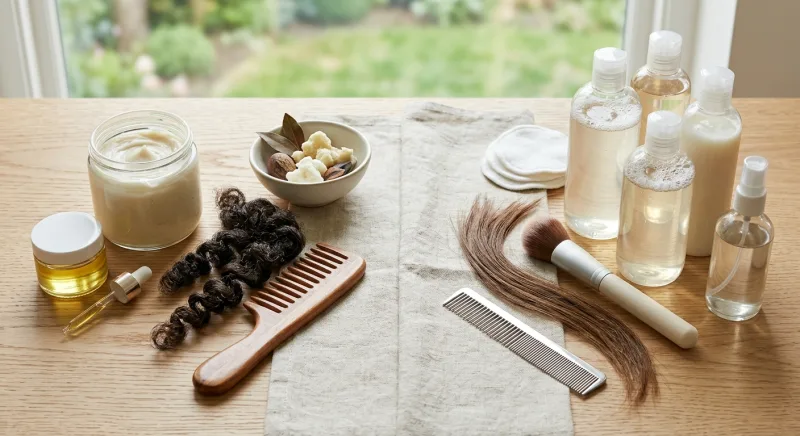
Curly and coily hair scalps often need less frequent washing than straight or fine hair. Thick, curly hair doesn’t need daily washing and should be washed at least every 2 to 3 weeks for optimal scalp and hair health. If curls are your main concern, a full curly hair routine builds on this guide with more detail. (American Academy of Dermatology (AAD))
How Hair Type Changes with Hormones, Weather, and Age
Hair type isn’t fixed for life. Hormonal shifts, weather, and age all change texture and thickness over time. Androgenetic alopecia (a genetic pattern of hair thinning tied to hormones) affects about 30% of white men by age 30, rising to about 50% by age 50 and 80% by age 70. (PMC (Frontiers/Springer journal via PubMed Central), 2022)
Women aren’t exempt either. In women, this same hormonal thinning may develop in 40 to 50% during their lifetime, which is worth knowing when your hair care guide stops working the way it used to. (PMC (peer-reviewed dermatology journal), 2022)
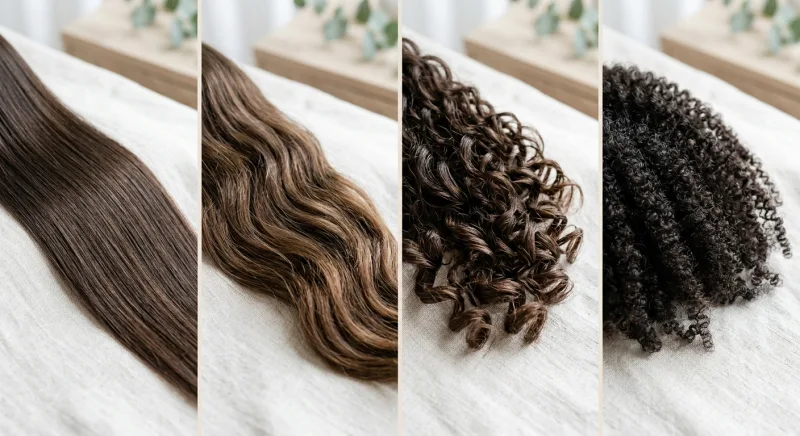
| Hair Type / Porosity | How to Spot It | Best Care Approach |
| Low porosity | Water beads on hair, slow to get wet or dry | Lightweight products, apply with warmth to help absorption |
| Medium porosity | Absorbs and holds moisture well, holds styles easily | Balanced routine, occasional protein or moisture treatments |
| High porosity | Soaks up water fast, dries quickly, prone to frizz | Rich, sealing products like oils and leave-in conditioner |
| Oily scalp | Greasy roots within a day or two of washing | Frequent gentle washing, lightweight roots-only conditioner |
| Dry or sensitive scalp | Flaking, tightness, irritation after washing | Less frequent washing, soothing sulfate-free formulas |
What Is the Correct Order for a Hair Care Routine?
Daily Steps: Cleanse, Condition, Protect
Not everyone needs to do all three steps daily, but when you do wash, this is the order. Applying conditioner after washing helps moisturize and detangle hair, with fine or straight hair needing conditioner just on the ends while dry or curly hair benefits from full-length application. (American Academy of Dermatology (AAD))
Weekly Steps: Treat, Deep Condition, Detangle
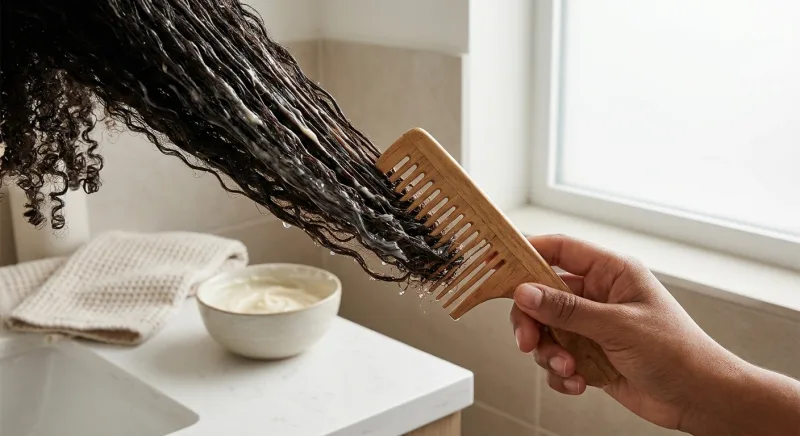
Weekly steps go deeper. A deep conditioner or hair mask for dry strands restores moisture that daily conditioner can’t. Detangling before and after washing, using a wide-tooth comb, cuts down on breakage. This is also the time to apply a scalp oil for hair that needs extra nourishment between washes.
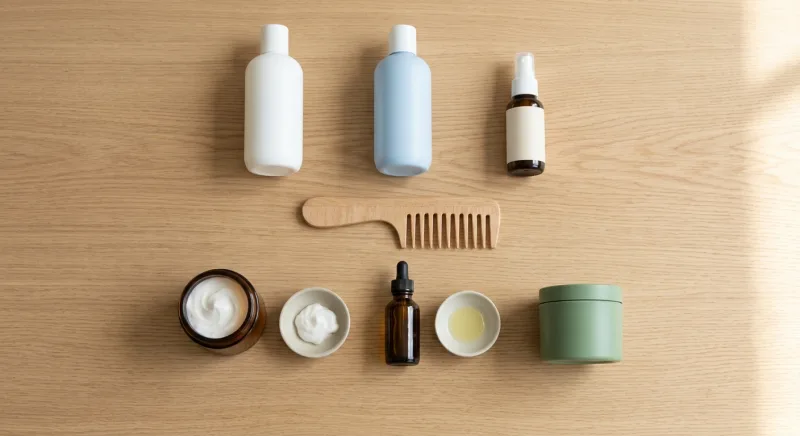
Styling Prep and Techniques
Before styling, always protect hair from heat. Chemical and heat treatments such as bleaching and straightening damage the hair cuticle and increase porosity, making hair more prone to moisture loss and environmental damage. A heat protectant isn’t optional if you use hot tools often. (PMC (National Institutes of Health))
- Cleanse: shampoo scalp and roots, focus on buildup
- Condition: apply based on your porosity and texture
- Treat weekly: deep condition or mask for extra moisture
- Detangle: wide-tooth comb, start from the ends
- Protect: heat protectant spray before any hot tool
- Style: finish with the lowest heat setting that works
Hair Care Guide by Hair Type: What Actually Works
No single routine works for every head of hair. A good hair care guide breaks things down by type, because fine, thick, curly, and straight hair all lose moisture and gather oil at different rates. Matching your routine to your actual hair type saves time and money.
Fine or straight hair tends to get oily fast near the roots. It usually needs less conditioner, and only on the ends, or it can end up looking flat and greasy. Curly or coarse hair holds less oil and needs more moisture pushed through the full length of each strand. This is one of the clearest rules any hair care guide can give you. (American Academy of Dermatology (AAD))
Washing frequency is another place where hair type changes the advice. Thick, curly hair does not need daily washing. Dermatologists suggest washing it every two to three weeks at most, since curly strands break and dry out more easily than straighter types. (American Academy of Dermatology (AAD))
That single fact trips up a lot of people who grew up washing daily. If your hair is curly and you’re following a hair care guide built for straight, fine hair, you’ll strip it dry.
The reverse is also true — fine hair left unwashed for weeks will look weighed down fast.
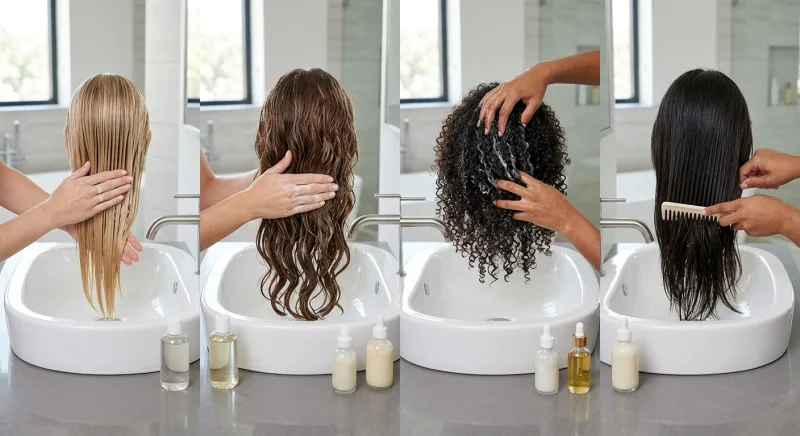
Hair Care Guide Comparison: Fine vs. Curly vs. Color-Treated Hair
The table below lays out how a hair care guide should shift based on your hair type. Use it as a quick reference rather than a strict rulebook — your own scalp and texture may need small tweaks.
| Hair Type | Wash Frequency | Conditioner Placement | Main Risk |
|---|---|---|---|
| Fine or straight | Every 1–2 days | Ends only | Looking flat or oily fast |
| Thick or curly | Every 2–3 weeks | Full length | Dryness and breakage |
| Color-treated or bleached | 2–3 times a week | Full length, extra on damaged spots | High porosity, moisture loss |
Color-treated and bleached hair deserves its own line in any hair care guide because chemical treatments change the hair itself. Bleaching and straightening damage the outer layer of the strand, called the cuticle, and raise its porosity. That makes hair drink in moisture fast but lose it just as quickly. (PMC (National Institutes of Health))
Scalp Care: The Part of the Hair Care Guide People Skip
Most people focus on the strands and forget the skin underneath. But scalp health drives hair health. A hair care guide that only talks about ends and length is missing half the picture.
Dermatologists recommend washing hair regularly to clear away dead skin cells, oil, and tiny organisms that build up over time. Left alone, that buildup can trigger dandruff and other scalp problems. Skipping washes and leaning on dry shampoo instead can make things worse, not better. (American Academy of Dermatology)
This is a common trap. Dry shampoo feels like a shortcut, but used too often without real washing, it just adds to the buildup on your scalp. A smart hair care guide treats dry shampoo as a backup, not a replacement for regular cleansing.
Scalp issues also connect to how much hair you shed. An itchy, flaky, or inflamed scalp isn’t a great base for healthy growth. If you’ve followed every styling tip in a hair care guide but your scalp still feels off, that’s usually the first thing to fix before anything else.
Hair Removal: A Different Side of the Hair Care Guide
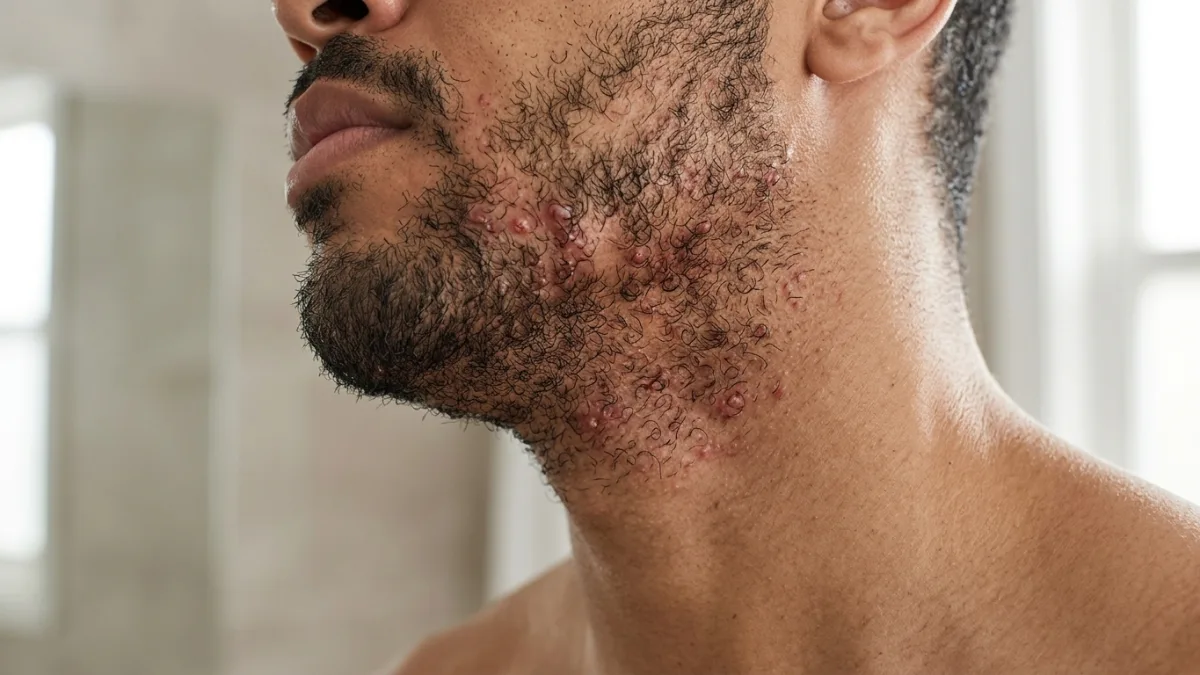
Razor bumps and ingrown hairs are one of the most common complaints, especially for people with coarse or curly hair. The clinical name is pseudofolliculitis barbae, and it shows up most in the beard area but can also affect the scalp, neck, and groin. (National Institutes of Health (NCBI MedGen))
These bumps happen when a shaved hair curls back and grows into the skin instead of straight out through its opening. Dermatologists say the fix starts with knowing which direction your hair grows and shaving with that grain, not against it. A warm compress afterward helps calm irritation. (American Academy of Dermatology (AAD))
Simple habits reduce ingrown hairs a lot. Use a sharp single-blade razor. Wet the skin with warm water and gel first. Shave in the direction the hair grows, and use as few strokes as possible over the same patch of skin. (NHS/nidirect (UK health service))
Hair Care Guide Comparison: Shaving vs. Laser vs. IPL Hair Removal
| Method | How It Works | Best For | Downside |
|---|---|---|---|
| Shaving | Cuts hair at skin surface | Quick, low-cost upkeep | Ingrown hairs, frequent repeats |
| Laser hair removal | Laser heats and destroys the follicle | Pale skin, dark hair | Less effective on tanned or bleached hair |
| IPL (at-home devices) | Light energy targets hair below the surface | Long-term, gradual reduction | Needs months of repeat sessions |
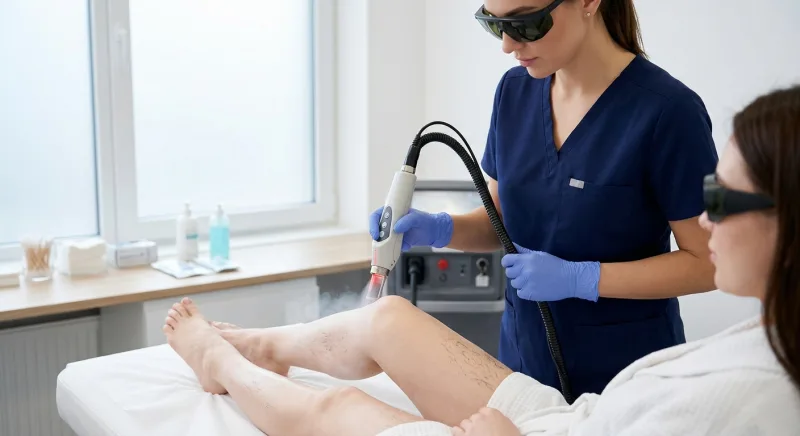
Laser hair removal is a clinical procedure that uses a strong laser or a pulsed light source to heat up and damage the hair follicle, which slows down regrowth over time. It tends to work better on people with pale skin and dark hair, and less well on tanned or bleached hair. (National Health Service (NHS))
At-home IPL devices work on a similar idea but are built for personal use rather than a clinic setting. In the United States, these devices are checked by the FDA as over-the-counter medical devices, and they need to show they work about as well as an already approved device before going on sale. (U.S. Food and Drug Administration)
These devices work below the surface of the skin, without cutting or pulling on the hair itself. Studies tracking users found steady, longer-term drops in regrowth at six, nine, and twelve months after finishing a treatment plan. (U.S. Food & Drug Administration)
Hair Loss and the Hair Care Guide: What to Watch For
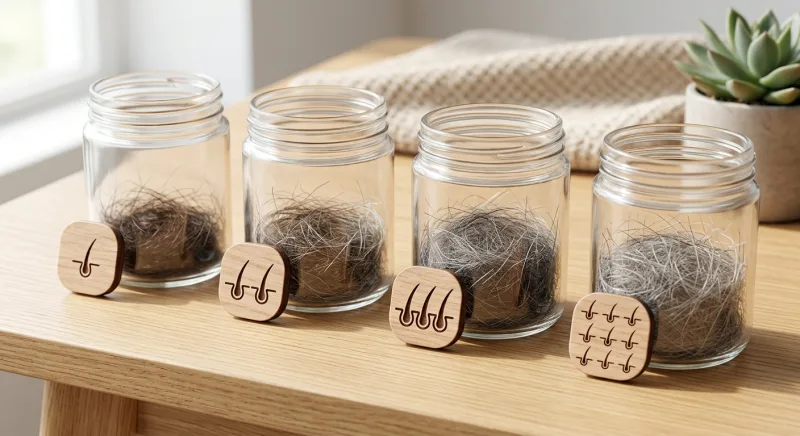
In men, the most common cause is androgenetic alopecia, often called male pattern baldness. It affects around 30% of white men by age 30, climbing to about 50% by age 50, and roughly 80% by age 70. That’s a steep rise across a lifetime. (PMC (Frontiers/Springer journal via PubMed Central), 2022)
Women face a version of this too. Female pattern hair loss, the same underlying condition, may develop in 40% to 50% of women over their lifetime. Hormonal shifts play a big role, which is why a hair care guide for women often needs updating as they age. (PMC (peer-reviewed dermatology journal), 2022)
Building Your Own Hair Care Guide Routine
Pulling this all together, a good routine starts small. Pick a wash schedule that fits your hair type, add conditioner where it’s needed most, and treat scalp health as its own task, not an afterthought.
A hair care guide only works if it matches your real life, not someone else’s hair.
From there, adjust slowly. Add one new step at a time, whether that’s a scalp treatment, a heat protectant, or a different brush. Watch how hair responds over a few weeks before changing anything else. That’s the whole point of a hair care guide: steady, small changes that add up.
Further reading
- Scalp Care 101: The Complete Guide to a Healthy Scalp in 2026
- Hair Oils Explained: Benefits, Types, and How to Use Them in 2026
- Sulfate Free Shampoo: What It Is and Who Really Needs It
- Overnight Hair Mask 101: What It Is, Who Needs One, and How to Use It Right
- Retinol Benefits for Hair: What It Does and How to Use It Safely
- Sulfate-Free Shampoo Benefits: What Changes When You Switch
- Scalp Oil for Hair Growth: What Actually Works in 2026
- Scalp Scrub Benefits: The Complete Guide to Healthier Hair in 2026
- Best Hair Oil for Growth: What Actually Works in 2026
- Curl Cream Benefits: What It Really Does for Wavy, Curly, and Coily Hair
- Hair Porosity Test: How to Check Yours at Home (2026 Guide)
- Hair Gloss Treatment 101: What It Is, How It Works, and How to Use It at Home
Frequently Asked Questions
What is the most important step in any hair care guide?
Knowing your hair type comes first. Every other step, from washing frequency to product choice, depends on whether hair is fine, thick, straight, or curly. A hair care guide that skips this step often leads people to the wrong products for their actual needs.
How often should I wash my hair?
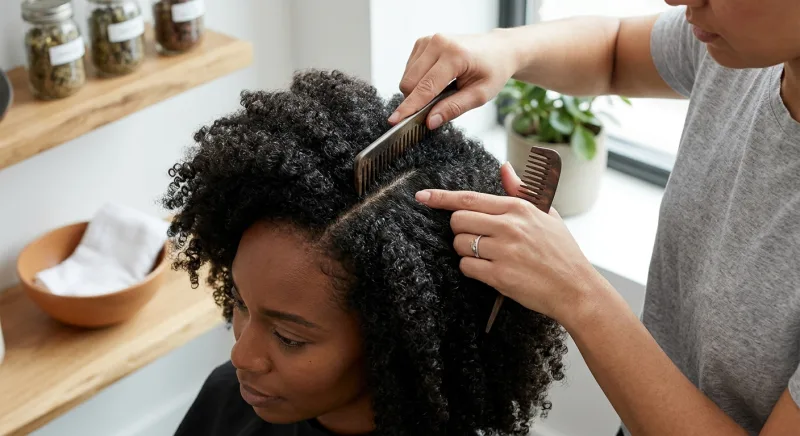
It depends on hair type. Thick, curly hair doesn’t need daily washing and should be washed at least every 2 to 3 weeks for the best scalp and hair health, since curly hair is more prone to breakage and dryness than other types. (American Academy of Dermatology (AAD))
Do I need conditioner every time I wash my hair?
Conditioner helps moisturize and detangle hair after washing. Fine or straight hair usually only needs it on the ends, while dry or curly hair benefits from applying it along the full length of each strand. (American Academy of Dermatology (AAD))
Can heat styling and bleaching really damage hair long term?
Yes. Chemical and heat treatments like bleaching and straightening damage the hair’s outer layer and raise its porosity, meaning it loses moisture faster and takes on more damage from the environment. A hair care guide should always factor in past treatments. (PMC (National Institutes of Health))
Why do I keep getting ingrown hairs after shaving?
Ingrown hairs happen when coarse or curly shaved hairs curl back into the skin instead of growing outward. Shaving in the direction hair grows, using a sharp single blade, and applying a warm compress afterward all help reduce them. (American Academy of Dermatology (AAD))
Is laser hair removal a permanent solution?
Laser hair removal uses a strong laser or intense light to damage hair follicles and slow regrowth, but results vary by skin and hair color, working best on pale skin with dark hair. It’s a longer-term option, not always a permanent one. (National Health Service (NHS))
How do I know if my scalp needs more attention?
Flaking, itching, or a greasy feeling soon after washing are common signs. Regular washing removes buildup of dead skin, oil, and microorganisms that can lead to dandruff, while skipping washes or overusing dry shampoo can make scalp issues worse. (American Academy of Dermatology)
Where should I start if I’ve never followed a hair care guide before?
Start with the basics: figure out your hair type, set a realistic wash schedule, and add conditioner where needed. A simple hair care guide built on these fundamentals works better than jumping straight into complex routines or trendy products you don’t actually need yet.
Key statistics
- A cross-country survey found that damaged hair was reported by 47% of female respondents, compared with 30% of male respondents, while dry hair was more common in women (38.9%) than men (32.1%). (PMC (NIH), 2024)
- Androgenetic alopecia (male pattern baldness) affects approximately 30% of white men by age 30, rising to about 50% by age 50 and 80% by age 70, describing hair loss prevalence relevant to identifying hair type and needs. (PMC (Frontiers/Springer journal via PubMed Central), 2022)
- In women, androgenetic alopecia may develop in 40–50% during their lifetime, an important consideration for hair care routines that account for hormonal changes. (PMC (peer-reviewed dermatology journal), 2022)
Expert insights
Naturally curly or coily hair can feel overwhelming to care for,
Temitayo Ogunleye, MD, FAAD, board-certified dermatologist
Trial and error are often needed to find the best routine for curly hair, so do not get discouraged if a certain product does not work for your hair type,
Ogunleye, Dr., board-certified dermatologist
References
- Applying conditioner after washing helps moisturize and detangle hair, with fine or straight hair needing conditioner just on the ends while dry or curly hair benefits from full-length application. — American Academy of Dermatology (AAD) (Professional dermatology association whose tips are reviewed by board-certified dermatologists)
- Thick, curly hair doesn't need daily washing and should be washed at least every 2 to 3 weeks for optimal scalp and hair health, since curly hair is more prone to breakage and dryness than other hair types. — American Academy of Dermatology (AAD) (Dermatology association guidance reviewed by board-certified dermatologists on curly hair care)
- Laser hair removal is a cosmetic procedure that uses a powerful laser or intense pulsed light (IPL) to heat and destroy hair follicles, disrupting hair growth, though it works better on people with pale skin and dark hair and is not as effective on tanned or bleached hair. — National Health Service (NHS) (UK national health service providing official medical guidance on cosmetic procedures)
- Ingrown hairs and razor bumps develop when coarse or curly shaved hairs curve back into the skin, and dermatologists recommend figuring out the direction hair grows and shaving with the grain, along with proper aftercare like a warm compress, to reduce them. — American Academy of Dermatology (AAD) (Dermatology association resource with tips attributed to board-certified dermatologists on treating razor bumps)
- Chemical and heat treatments such as bleaching and straightening damage the hair cuticle and increase porosity, making hair more prone to moisture loss and environmental damage. — PMC (National Institutes of Health) (Peer-reviewed research article hosted on NIH's PubMed Central archive)
- IPL hair removal devices are regulated by the FDA as over-the-counter medical devices and must demonstrate substantial equivalence to a legally marketed predicate device before they can be sold for home use. — U.S. Food and Drug Administration (Federal regulatory agency 510(k) clearance decision for an IPL hair removal device)
- Ingrown hairs and razor bumps are clinically known as pseudofolliculitis barbae, a common hair disorder that occurs in people with curly hair who shave, most often in the beard area but also on the scalp, neck, and groin. — National Institutes of Health (NCBI MedGen) (NIH-hosted medical genetics/clinical concept database)
- IPL hair removal devices work below the skin's surface without cutting or pulling, and can produce long-term, stable reduction in hair regrowth when measured over 6, 9, and 12 months after a treatment regime. — U.S. Food & Drug Administration (FDA 510(k) clearance summary for a home-use IPL hair removal device, a federal regulatory document)
- Ingrown hairs occur when a hair grows back into the skin instead of upward through the follicle opening, and prevention tips include using a sharp single-blade razor, wetting skin with warm water and gel, shaving in the direction hair grows, and using as few razor strokes as possible. — NHS/nidirect (UK health service) (UK National Health Service consumer health guidance)
- Board-certified dermatologists recommend regularly washing hair to remove dead skin cells, oil, and microorganisms that build up and can cause dandruff, and note that leaving shampoo residue or overusing dry shampoo without regular washing can lead to buildup-related scalp issues like seborrheic dermatitis. — American Academy of Dermatology (Professional dermatology association citing board-certified dermatologists)
