
Skincare tools & devices
Facial Massager Roller 101: Benefits, Types and How to Use One in 2026
Last updated: November 5, 2026
A facial massager roller is a handheld tool with a rolling head made of jade, rose quartz, ice, or a vibrating motor, used to massage the face and neck. It can temporarily ease puffiness, boost blood flow, and help you relax. It won’t permanently tighten skin or reshape your face.
Think of it as a feel-good add-on, not a substitute for skincare.
If you’ve scrolled past a facial massager roller in a beauty aisle or on your feed, you’ve probably wondered if it’s worth the hype. This guide breaks down what a facial massager roller actually does, the types on the market, and how to use one the right way.
We’ll also cover where it fits into your daily grooming routine, alongside tools like IPL hair removal devices and epilators.
By the end, you’ll know how to pick a facial massager roller for your skin type, what mistakes to avoid, and what to check before you buy one. No fluff, no overselling — just plain facts about a tool that’s become a staple in modern beauty routines.
What Is a Facial Massager Roller and What Does It Actually Do?
A facial massager roller is a small handheld tool with one or two rolling heads that you glide across your face and neck. The heads are usually stone, metal, or plastic, sometimes chilled or battery-powered. The goal is gentle pressure and motion, not deep tissue work.
Most facial massager roller designs share a simple build: a handle, an axle, and one or two roller heads of different sizes. The larger head suits your cheeks and forehead. The smaller head targets areas like under the eyes and around the nose.
People reach for a facial massager roller to look more awake, to ease tension after a long day, or to build a calming step into their skincare routine. It’s a sensory ritual as much as a skincare tool, and that’s fine — not every step needs to be clinical.
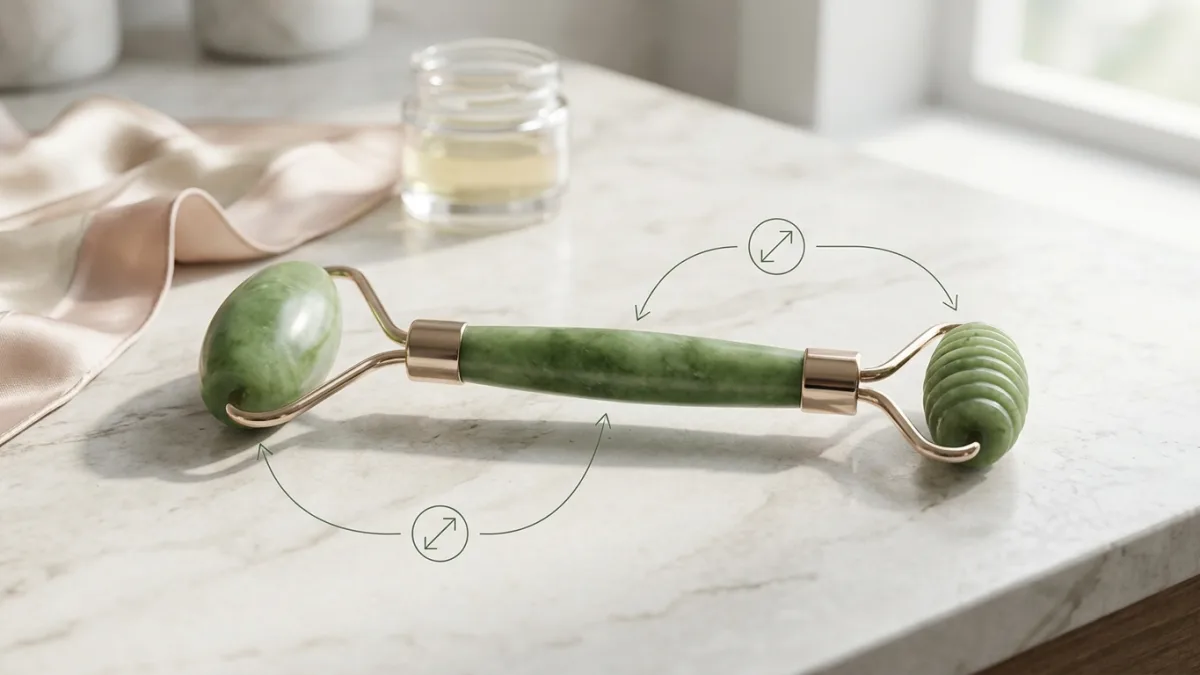
How does a facial massager roller differ from gua sha and vibrating tools?
A facial massager roller uses a rolling motion, while gua sha uses a flat-edged tool that’s scraped or pressed along the skin. Gua sha, a smooth stone tool used in traditional Chinese practice, needs more hands-on technique.
A facial massager roller is easier to use because it moves on its own axle.
Vibrating tools add motor-driven micro-movements on top of rolling or patting motion. Some facial massager roller models now combine both, giving you rolling plus a subtle buzz. The extra vibration may feel more intense, but it doesn’t automatically mean better results.
Choosing between them often comes down to preference. A facial massager roller suits people who want a simple, low-effort glide. Gua sha suits people who like more control over pressure and angle during each stroke.
What can and can’t a facial massager roller do for your skin?
A facial massager roller can help with short-term puffiness, tension, and a temporary glow from increased blood flow. It can make skincare products feel more spreadable and can turn a routine step into a moment of calm.
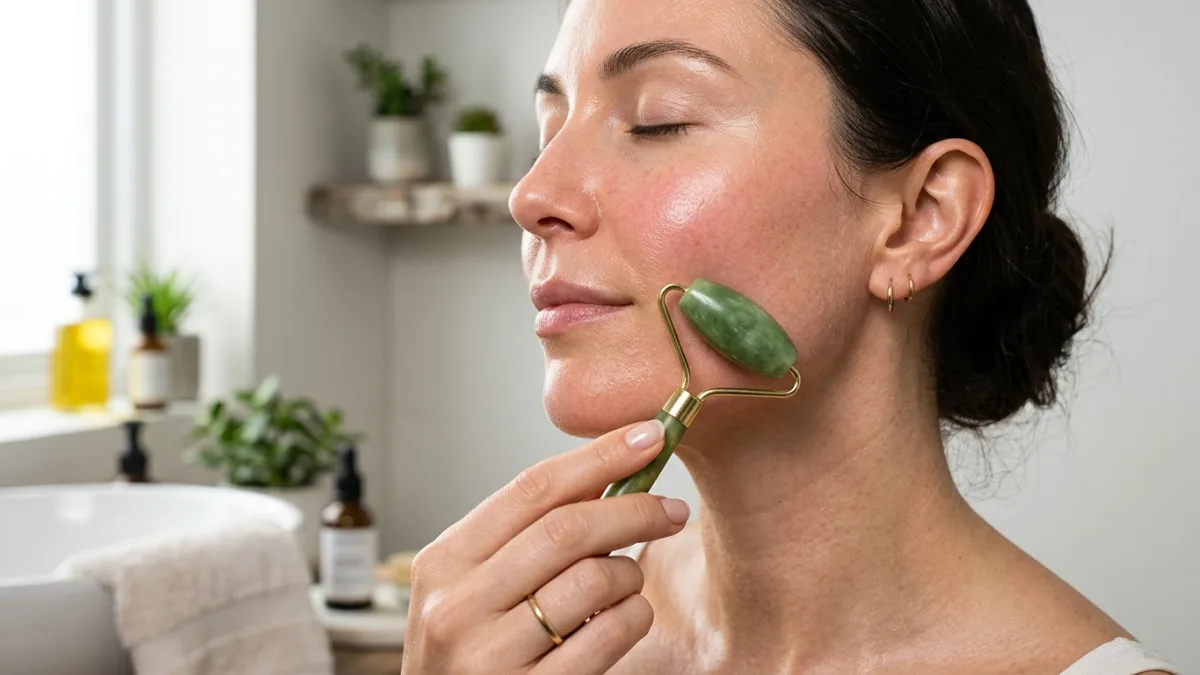
What a facial massager roller can’t do is replace medical treatments, permanently reduce wrinkles, or reshape your bone structure. Any tightening or contouring feel you notice is usually short-lived, tied to temporary de-puffing rather than lasting change.
It’s worth setting expectations early. A facial massager roller is a maintenance tool, not a fix for sagging skin or deep wrinkles. Used consistently, it can be a nice complement to your existing skincare, not a stand-in for it.
What Are the Real Benefits of Using a Facial Massager Roller?
The real benefits of a facial massager roller are mostly short-term: less puffiness, better circulation, and a sense of calm. These effects are genuine, but they fade within hours unless you use the tool regularly as part of your routine.
“They’re gently used to massage the face,” — Shilpi Khetarpal, MD, Dermatologist quoted by Cleveland Clinic
Can a facial massager roller help with circulation and de-puffing?
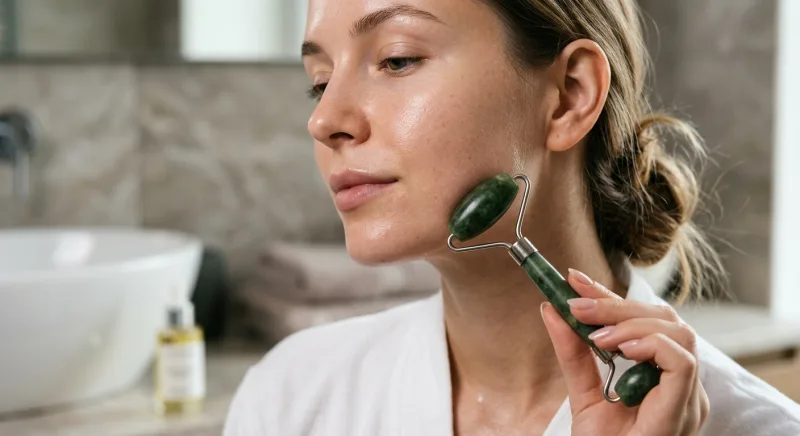
Yes, a facial massager roller can support short-term circulation and mild de-puffing when used with light pressure. The rolling motion may support lymphatic drainage, the body’s natural process for clearing excess fluid, which can reduce morning puffiness around the eyes and jaw.
(Tokyo Institute of Technology (Tokyo Tech News), 2018). A cool roller head may add extra de-puffing thanks to temperature, on top of the massage motion itself.

Ice and cryo rollers work by cooling the skin’s surface, which can calm the look of redness and give a refreshed appearance. This sensation is immediate but temporary, making the roller a nice addition to a routine rather than a clinical treatment.
If de-puffing is your main goal, using a facial massager roller first thing in the morning tends to give the most noticeable result. Fluid tends to pool overnight, so a few minutes of rolling can visibly help before makeup or a video call.
Does a facial massager roller help with relaxation and stress relief?
Yes, many people use a facial massager roller purely for relaxation. The slow, repeated motion across the face can ease tension in the jaw, temples, and brow, especially after a stressful day or too much screen time.
This calming effect is a real, reportable benefit even without hard clinical backing. A facial massager roller session can double as a two-minute wind-down ritual before bed, similar to how some people use breathing exercises or stretching.
Many people find that using a facial massage tool feels like a small pause in a busy day. The gentle pressure and repetitive motion can feel soothing, turning a routine skincare step into a short moment of calm.
Are the effects of a facial massager roller temporary or lasting?
Most effects from a facial massager roller are temporary, lasting a few hours rather than permanently changing your skin. The glow, de-puffing, and tension relief fade as your body returns to its normal state after use.
That doesn’t mean a facial massager roller is pointless. Many skincare tools work the same way — daily consistency builds a habit and a small cumulative comfort, even if each single use isn’t life-changing. Think of it like stretching for your face.
Claims about permanent skin tightening or wrinkle removal from a facial massager roller aren’t well supported. Treat those claims with caution, and focus instead on the short-term comfort and routine value the tool genuinely offers.
What Types of Facial Massager Rollers Are There?
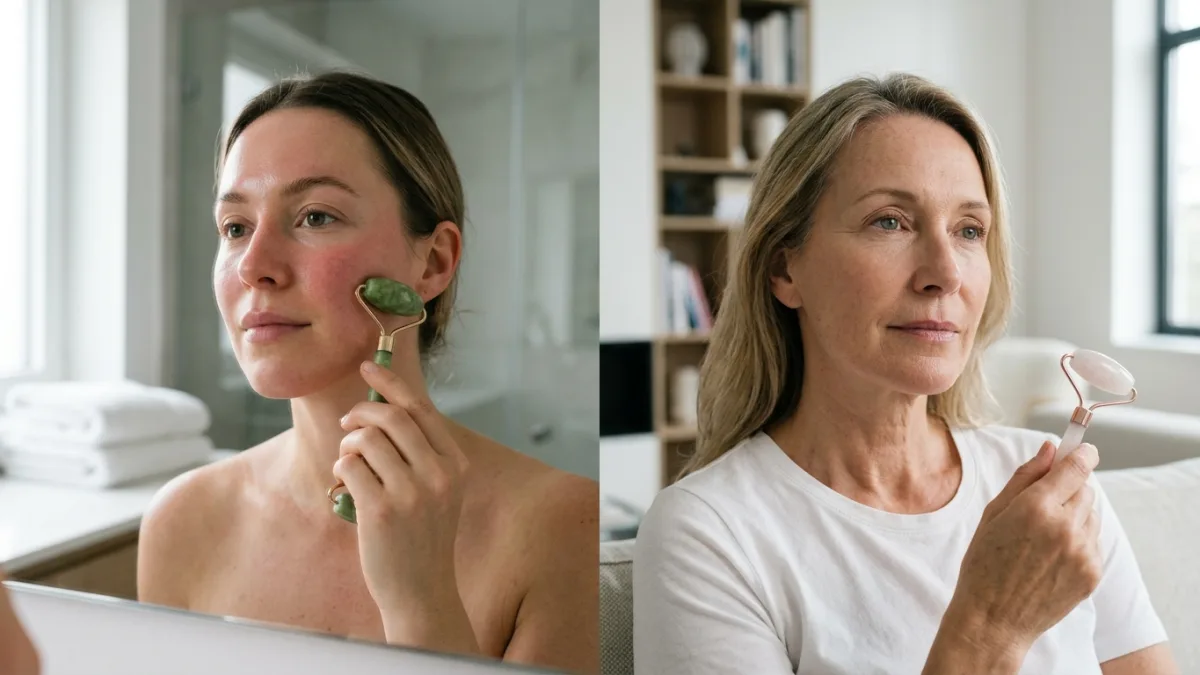
There are four common types of facial massager roller: jade, rose quartz, ice, and vibrating or electric models. Each uses a different material or mechanism, and each suits slightly different goals, from gentle daily massage to acute de-puffing.
Motorized facial rollers work differently from jade or stone tools, using gentle vibration instead of manual pressure alone. Bellxi designs its devices to fit comfortably into a daily routine, offering a modern option for those who prefer added sensation over traditional rolling.
What are jade and rose quartz facial rollers best for?
Jade and rose quartz are the most common stone materials used in a facial massager roller. Jade stays cool to the touch and is often chosen for daily, gentle massage. Rose quartz is slightly softer and often marketed for a soothing, calming feel.
Neither stone type has a proven difference in skin benefit backed by strong evidence, but both offer the mechanical benefits of any facial massager roller: circulation support and product application help.
Facial massager rollers have become a familiar part of many beauty routines, sitting alongside trimmers and epilators as everyday grooming tools. Bellxi stocks devices for every skin type, reflecting how normal these tools have become for daily self-care.
What is an ice roller and when should you use one?
An ice roller is a facial massager roller with a gel-filled or metal head that you chill in the freezer before use. It’s best for acute puffiness, redness, or overheated skin, since the cold adds a calming effect on top of the rolling motion.
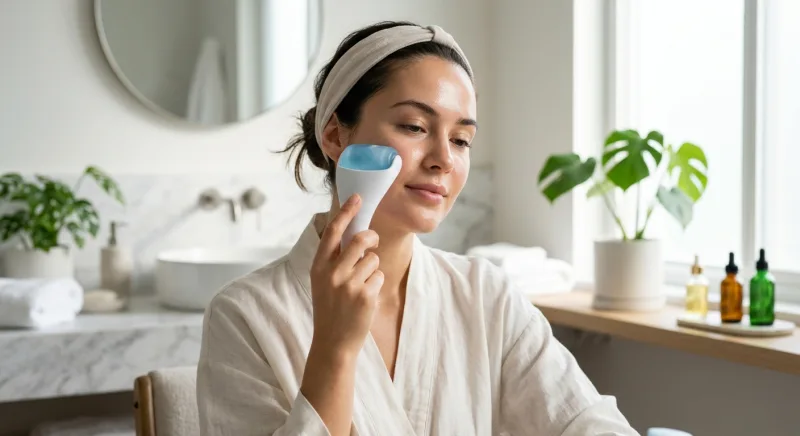
People often reach for an ice roller after a poor night’s sleep, a sunburn, or a breakout flare-up. It’s less suited to daily deep massage since the cold limits how long you can comfortably use it in one session.
How do vibrating and electric facial rollers work?
A vibrating facial massager roller adds a small motor that creates micro-vibrations as you roll. This is meant to boost the massage effect beyond plain manual pressure, though results can vary depending on personal preference and skin sensitivity.
These models often need charging or batteries, which makes them less travel-friendly than a manual facial massager roller. Some also include heat settings, combining warmth with vibration for a spa-like feel at home.
What are dual-head and multipurpose facial rollers?
A dual-head facial massager roller has two roller sizes on one handle, letting you switch between broad strokes and detail work without changing tools. Multipurpose versions may add a gua sha edge or a cooling metal tip on the opposite end.
These combo tools appeal to people who want one device instead of several. A multipurpose facial massager roller can also be more cost-effective than buying separate stone, ice, and vibrating tools individually.
| Roller Type | Material/Mechanism | Best For | Typical Price Range |
|---|---|---|---|
| Jade roller | Natural jade stone | Daily gentle massage | Not published |
| Rose quartz roller | Natural rose quartz stone | Soothing, relaxation-focused use | Not published |
| Ice roller | Gel or metal, chilled | Acute puffiness, redness, overheated skin | Not published |
| Vibrating/electric roller | Motorized head, sometimes with heat | Enhanced massage sensation, at-home spa feel | Not published |
| Dual-head/multipurpose roller | Mixed materials, two roller sizes | Versatility, targeted and broad strokes in one tool | Not published |
Price ranges vary widely by brand, material quality, and retailer, so it’s worth checking current listings rather than relying on fixed figures. What matters more than the number is matching the tool to your skin goals and budget.
Material Comparison: Which Stone or Surface Suits Your Skin
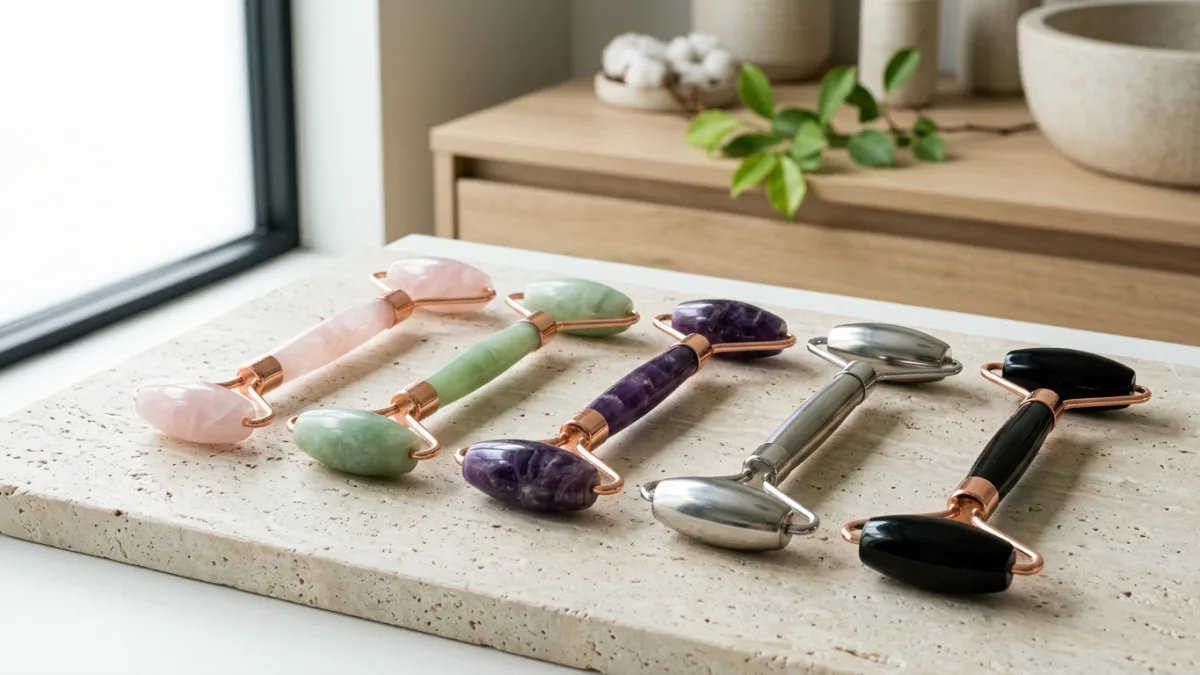
The material of a facial roller affects more than aesthetics. Different stones and surfaces retain temperature differently, feel different against the skin, and carry different cultural or marketing associations. Understanding these differences helps narrow down which roller fits your routine.
Jade has long been associated with traditional Chinese beauty practices and is prized for its cool, smooth surface. Rose quartz is often marketed for its slightly warmer feel and association with self-care rituals. Stainless steel and gel-based rollers are engineered specifically for temperature retention, making them popular for cooling applications.
| Material | Temperature Retention | Durability | Common Marketing Angle | Maintenance Needs |
|---|---|---|---|---|
| Jade | Naturally cool, moderate retention | High if not dropped | Traditional, calming energy | Wipe clean, avoid harsh chemicals |
| Rose quartz | Slightly warmer than jade | High if not dropped | Self-love, relaxation ritual | Wipe clean, avoid harsh chemicals |
| Stainless steel | Excellent, holds cold longest | Very high, resistant to cracking | Clinical, de-puffing focus | Easy to disinfect, rust-resistant |
| Gel-filled | Good, needs refreezing | Moderate, can leak if punctured | Spa-like cooling therapy | Store in freezer between uses |
| Silicone/plastic hybrid | Low to moderate | Moderate, motor parts may wear | Modern, tech-forward skincare | Charge battery, wipe head after use |
None of these materials has been shown to possess unique skin-penetrating properties. The stone itself doesn’t transfer minerals or energy into the skin in any measurable way. What differs is texture, weight, and how each material holds or releases temperature during use.
This kind of expert perspective can help clarify that the ritual and sensation matter more than the specific mineral composition of the roller.
How to Choose the Right Roller for Your Skin Concern
Selecting a facial roller should start with identifying your primary goal. Someone dealing with morning puffiness has different needs than someone using a roller purely for relaxation before bed. Matching the tool to the concern improves satisfaction and reduces the chance of buying something that sits unused in a drawer.
- For puffiness and under-eye swelling, a chilled stainless steel or gel roller tends to work best due to superior cold retention.
- For a calming nightly ritual, jade or rose quartz rollers offer a pleasant tactile experience without needing refrigeration.
- For an enhanced sensory experience, vibrating or heated rollers add a spa-like feel but require charging and more upkeep.
- For travel or multitasking, dual-head rollers cover both larger areas like the jaw and smaller areas like the under-eye.
- For sensitive or reactive skin, a gentle, non-vibrating stone roller minimizes the risk of overstimulation.
It’s also worth considering how often you’ll realistically use the tool. A roller that requires freezer storage or battery charging adds friction to a routine. If convenience matters most, a simple stone roller kept on a bathroom shelf may see more consistent use than a more elaborate device.
Facial Roller vs. Gua Sha vs. Manual Massage
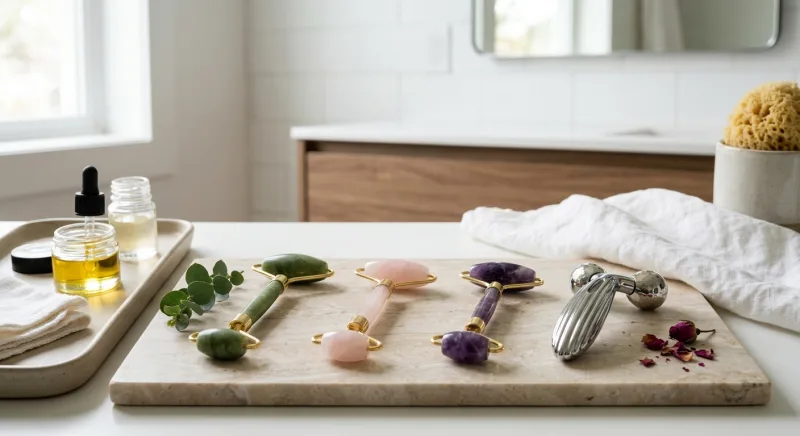
Facial rollers are often mentioned alongside gua sha tools and manual lymphatic drainage massage, but the three tools work differently. Understanding these distinctions helps set realistic expectations and choose the right tool, or combination of tools, for a given routine.
| Tool | Technique Required | Pressure Control | Time Commitment | Learning Curve |
|---|---|---|---|---|
| Facial roller | Low | Limited, mostly gravity/hand-driven | 2-5 minutes typical | Minimal |
| Gua sha tool | Moderate to high | High, adjustable by angle and force | 5-10 minutes typical | Moderate, benefits from guidance |
| Manual massage | Low to moderate | Highest, fully adjustable | 5-15 minutes typical | Minimal to moderate |
| Vibrating roller | Low | Limited, motor-driven | 2-5 minutes typical | Minimal |
Many skincare routines incorporate more than one of these tools. A person might use gua sha for targeted contouring and a roller for a quicker, more passive daily pass. There’s no rule requiring exclusivity, and combining tools may offer a more well-rounded approach to facial massage overall.
Proper Technique: Getting the Most From Your Roller
Technique matters more than the specific roller purchased. Using the tool correctly can influence how the skin feels afterward and how consistent the routine becomes. Most guidance suggests moving in outward and upward strokes, generally following the direction of lymphatic drainage.
- Start at the center of the face and roll outward toward the ears and hairline.
- Use light, even pressure rather than pressing hard into the skin.
- Move from the jawline down toward the collarbone to encourage drainage toward the neck.
- Roll over the forehead from the center outward, avoiding the eye area with larger rollers.
- Use the smaller end of dual-head rollers for the under-eye and around the nose.
- Cleanse the roller before and after each use to prevent product or bacteria buildup.
Applying a facial oil or serum before rolling can help the tool glide more smoothly and reduce tugging on the skin. Rolling on completely dry skin increases friction and may cause discomfort or minor irritation, especially with metal or glass rollers.
Professional input like this can reinforce that gentle, consistent motion is more beneficial than aggressive pressure or excessive repetition in a single area.
Maintenance, Hygiene, and Storage Tips
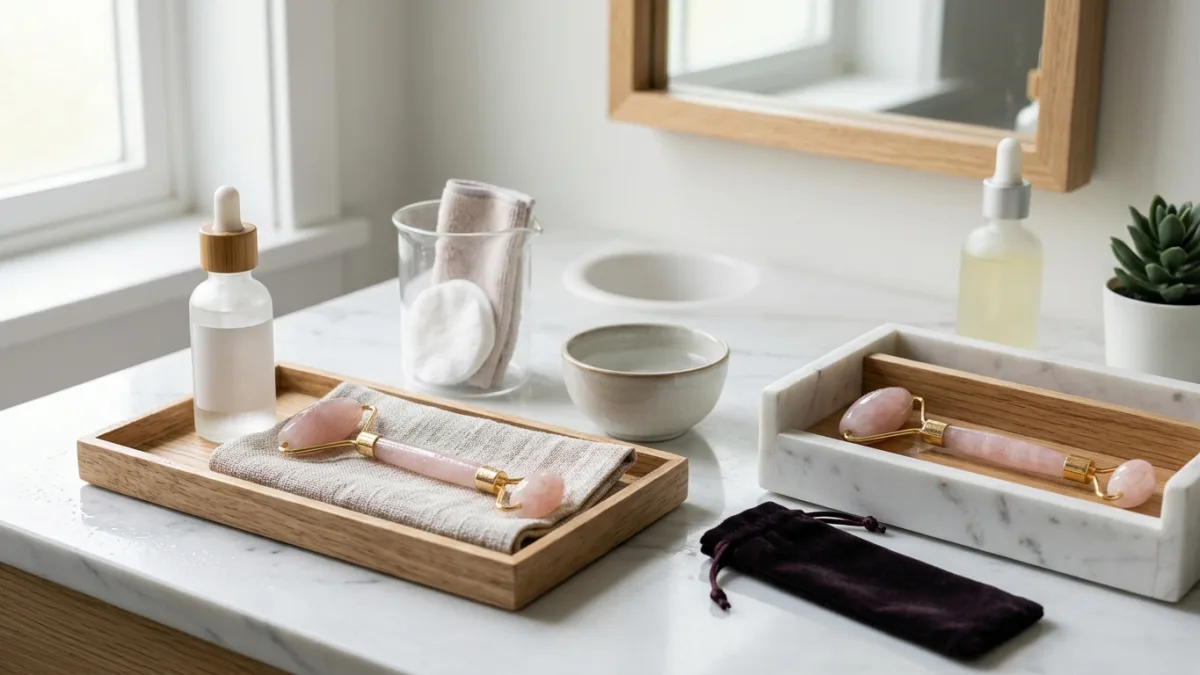
Facial rollers come into direct contact with the skin, oils, and any product applied beforehand, which makes hygiene an important part of ownership. Neglecting cleaning can lead to residue buildup and, in some cases, contribute to breakouts or irritation.
Stone rollers should generally be wiped down with a soft cloth and mild soap, then dried thoroughly before storage. Avoid soaking stone rollers for extended periods, as prolonged moisture exposure can weaken the adhesive holding the roller to its frame.
Gel and electric rollers require specific care depending on their construction.
- Wipe stone and metal rollers with a gentle cleanser after each use.
- Avoid submerging electric or motorized rollers unless labeled fully waterproof.
- Store rollers in a clean pouch or case to avoid dust and scratches.
- Check gel-filled rollers periodically for leaks or punctures before freezing again.
- Replace any roller with a cracked stone or frayed frame promptly.
Following a simple maintenance routine extends the life of the tool and reduces the chance of skin irritation from bacteria or leftover product. A few minutes of care after each session is generally enough to keep most rollers in good condition for months or years.
Read the complete guide: Skincare Tools and Devices Guide: Stop Buying the Wrong One
Key statistics
- A randomized controlled trial found the facial roller group showed significant improvements in skin elasticity, with gross elasticity (R2) increasing 8.6% and biological elasticity (R7) increasing 7.5%. (NCBI/PMC (Journal of Cosmetic Dermatology), 2025)
- In the same 8-week trial, facial contour measurements decreased by 2.75 to 3.26 mm in the facial roller group. (NCBI/PMC (Journal of Cosmetic Dermatology), 2025)
- The trial enrolled 34 women aged 20–50, split evenly between facial roller and gua sha groups, who performed 10-minute sessions five times weekly for 8 weeks. (NCBI/PMC (Journal of Cosmetic Dermatology), 2025)
References
- Short-term facial massage with a roller increases skin blood flow, and long-term use is associated with improved vascular dilatation response. — PubMed (NIH) (NIH-indexed peer-reviewed citation of the underlying Miyaji et al. study)
- A comparative randomized controlled trial found facial roller massage improves skin elasticity while gua sha massage primarily reduces facial muscle tone. — NCBI/PMC (Peer-reviewed randomized controlled trial hosted on NIH’s PubMed Central)
Market context
Manual lymphatic drainage effect on arm volume in breast cancer-related lymphedema patients — Manual lymphatic drainage therapy produced a significant arm volume reduction of −155.23 mL in the first week of intensive treatment for breast cancer-related lymphedema (p<0.001). Supportive Care in Cancer (PMC/NCBI), 2023
NIH funding for pediatric dermatology research on major skin conditions — NIH funding supported 307 grants totaling $388 million across ten major pediatric dermatology skin conditions. Pediatric Dermatology (NIH/PMC), 2025-08-17
Adjacent-market figures — each names the subject it measures, not facial massager roller directly.
