
Skin concerns
Hyperpigmentation on Face: Causes, Types, and How to Treat It in 2026
Last updated: November 5, 2026
Hyperpigmentation on the face is the darkening of skin patches caused by extra color matter called melanin. It’s often set off by sun, hormone shifts, swelling, or skin harm like acne or shaving irritation.
It can show up as melasma, sunspots, or dark marks left after a breakout, and it can be helped with sunscreen, targeted treatments, and gentle daily habits.
If you’ve noticed dark patches on your cheeks or a shadow above your lip, you’re not alone. Hyperpigmentation on face skin is one of the most common skin concerns people search for answers about. This guide walks through what causes it, the different types, and what actually helps.
We’ll also cover something most guides skip: how your hair removal routine might be making things worse. Small changes in how you shave, wax, or use light-based devices can lower your risk of new dark spots.
What Is Hyperpigmentation on the Face and What Causes It?
Facial hyperpigmentation can look like flat brown or gray patches, freckle-like spots, or faint shadows that come and go with the seasons. Some cases fade fast. Others stick around for months or years without care.
Common causes: sun exposure, hormones, inflammation, and injury
Sun exposure is the top trigger for hyperpigmentation on face skin. UV light tells pigment cells to work overtime, which is why dark spots often show up on cheeks, the forehead, and the nose first.
Hormones play a big role too. Pregnancy, birth control, and thyroid changes can all trigger patches known as melasma. Inflammation from acne, eczema, or a cut can also leave a dark mark behind once the skin heals.
Hormone shifts from pregnancy, birth control, or thyroid changes are well-known triggers for melasma. These shifts can spur on the cells that make pigment, leading to stubborn dark patches that are famously hard to treat and stop.
Skin harm is a cause of hyperpigmentation on face skin that people often miss. Any rubbing, burn, or irritation, including from harsh hair removal, can wake up color cells in that exact spot, leaving marks that stay.
Skin harm is a well-known cause of hyperpigmentation on face after swelling, most of all on the face. Repeat bother from shaving or rough hair removal can leave lasting dark marks long after the first harm heals.
Skin doctors widely agree that shaving, waxing, and other hair-removal skin bother can lead to hyperpigmentation on face after swelling. Gentler ways help guard skin from this repeat harm, cutting the risk of lasting dark marks over time.
Who is most likely to develop facial hyperpigmentation?
People with more melanin in their skin tend to see hyperpigmentation on face skin more often and more visibly. This includes many people with medium to deep skin tones, though anyone can develop it.
Women are more likely to develop melasma, largely due to hormone shifts from pregnancy or birth control Melasma is far more common in women than men, according to the Cleveland Clinic. (Cleveland Clinic, 2026). People who spend lots of time in the sun without sunscreen also face higher risk.
Anyone prone to acne, razor burn, or skin irritation also faces a higher chance of dark marks. That link between irritation and pigment is one we’ll come back to, since it connects directly to grooming habits.

What Are the Different Types of Facial Hyperpigmentation?
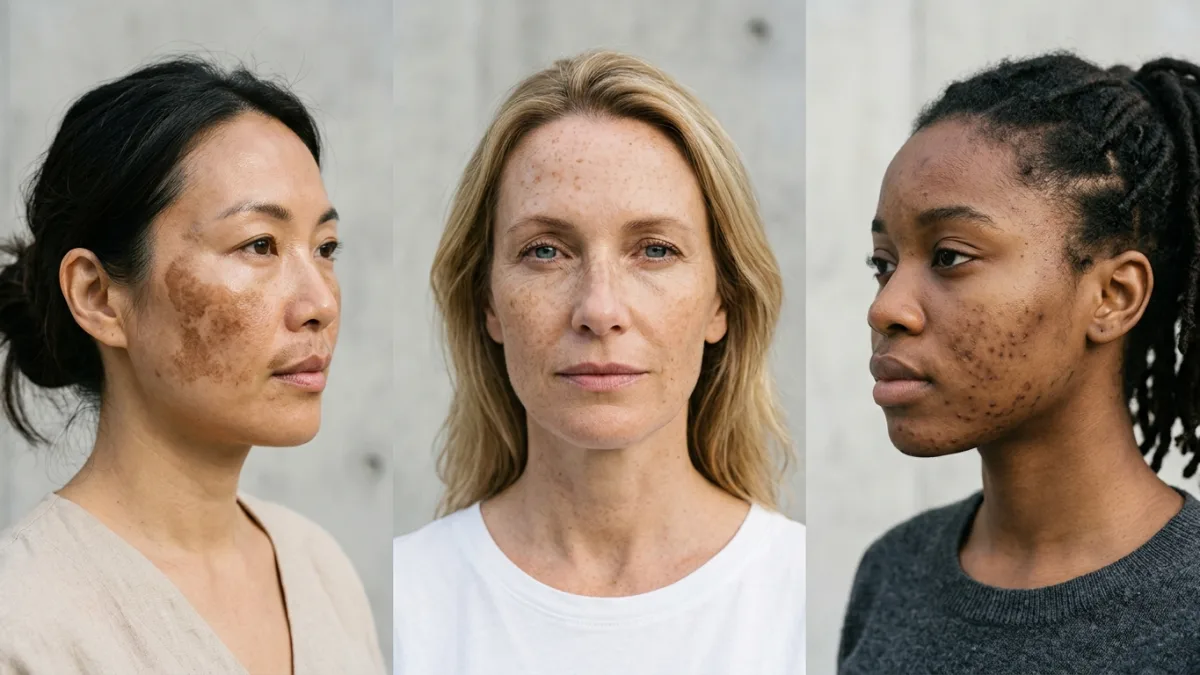
Hyperpigmentation on face skin isn’t one single condition. It’s a group of different patterns, each with its own cause, shape, and typical spot on the face. Knowing which type you have helps you pick the right care.
Melasma
Melasma shows up as larger, symmetrical brown patches, usually on both cheeks, the forehead, or above the lip. It’s driven mostly by hormones and gets worse with sun exposure.
Post-inflammatory hyperpigmentation (PIH)
Post-inflammatory hyperpigmentation, often shortened to PIH, is a dark mark left behind after a pimple, cut, or irritated patch of skin heals. It tends to match the exact shape of the injury that caused it.
Sunspots and age spots
Sunspots are small, flat, and round, usually appearing on areas that get the most sun, like the cheeks, nose, and forehead. They build up slowly over years of sun exposure.
How to tell types apart by appearance and location
The easiest way to sort out hyperpigmentation on the face is to look at shape and location. Melasma is broad and symmetrical. PIH follows an old blemish or scrape. Sunspots are small and scattered.
| Type | Main Cause | Typical Location | Common Trigger |
|---|---|---|---|
| Melasma | Hormone changes | Cheeks, forehead, upper lip | Pregnancy, birth control, sun |
| Post-inflammatory hyperpigmentation | Healed inflammation or injury | Wherever the injury happened | Acne, cuts, shaving irritation |
| Sunspots | Long-term sun exposure | Cheeks, nose, forehead | UV light over time |
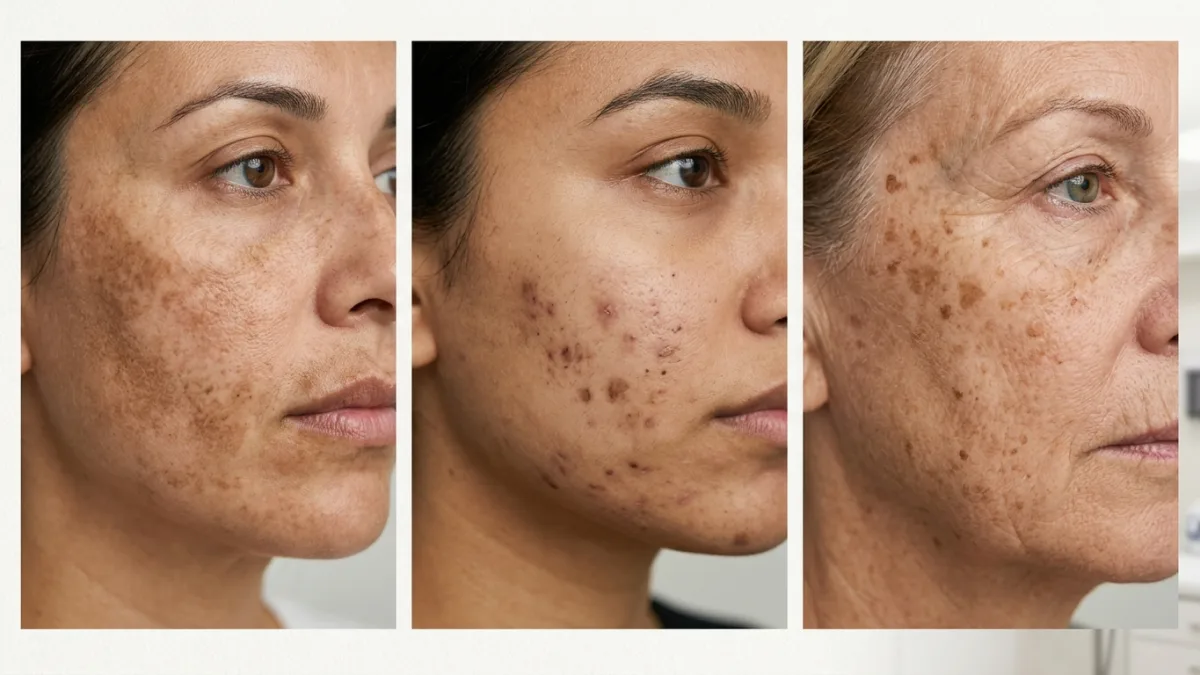
Where Does Hyperpigmentation Typically Show Up on the Face?
Hyperpigmentation on the face tends to follow a pattern based on its cause. Sun-driven spots cluster where skin gets the most light. Irritation-driven marks follow wherever the skin was disturbed.
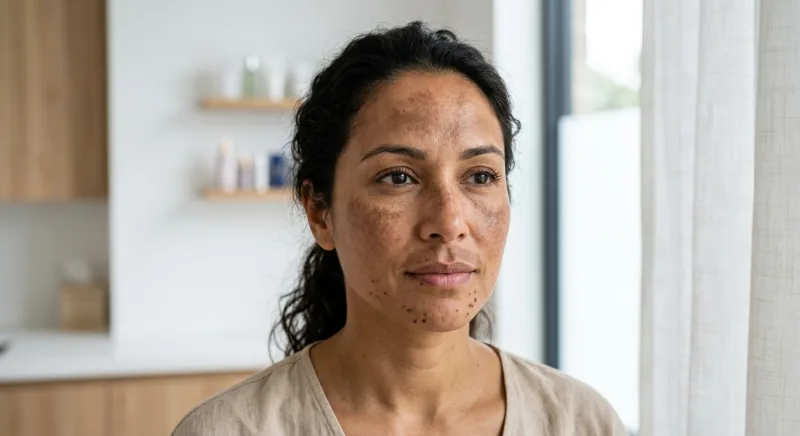
Cheeks, forehead, and upper lip patterns
Melasma almost always shows up on the cheeks, forehead, and upper lip in a fairly even, mirrored pattern. Sunspots favor the same high points of the face, since those areas catch the most UV light.
Hyperpigmentation on the face along the jawline and chin often points to a different cause. That pattern is more common with irritation from shaving or hair removal than from sun or hormones alone.
Why hyperpigmentation often follows hair removal or shaving irritation
Shaving, waxing, and plucking all create small amounts of friction and inflammation on the skin. That inflammation can trigger the same pigment response as a pimple or cut, leaving a dark mark behind.
This is especially common along the upper lip, jawline, and chin, where facial hair removal happens most. Repeated irritation in the same spot can lead to hyperpigmentation on the face that builds up over time.
Choosing a gentler hair removal method matters here. Devices built to reduce friction and skin trauma are less likely to trigger this kind of pigment response than a dull razor or hot wax.
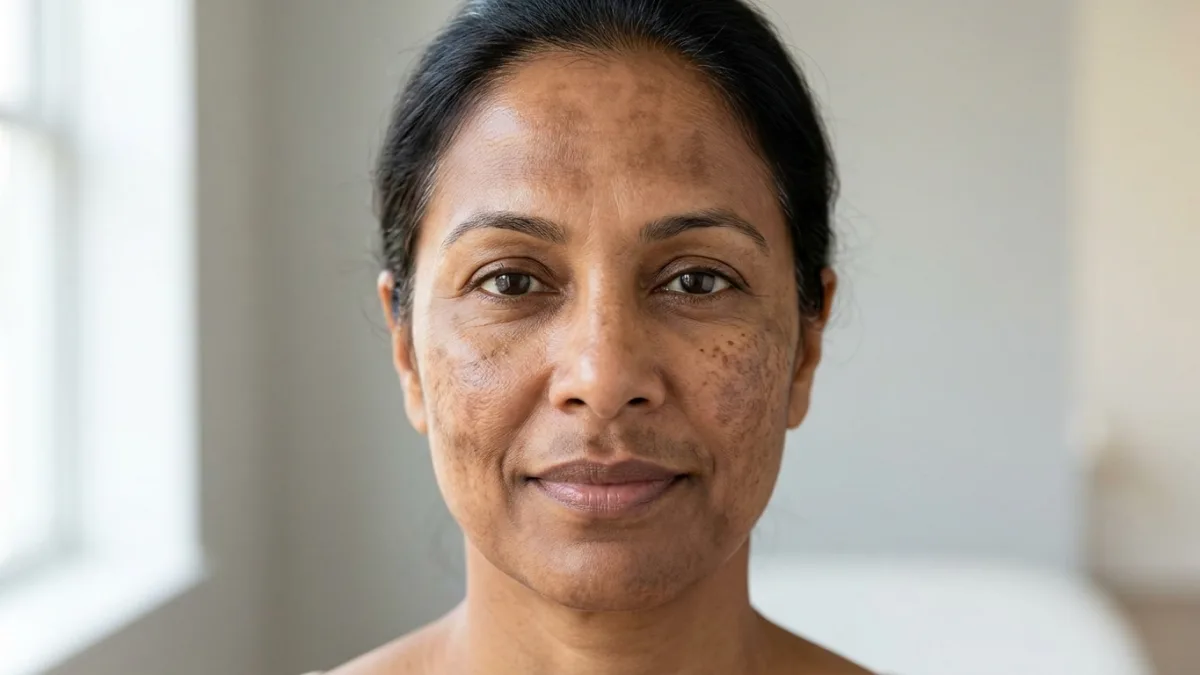
How Is Hyperpigmentation Diagnosed?
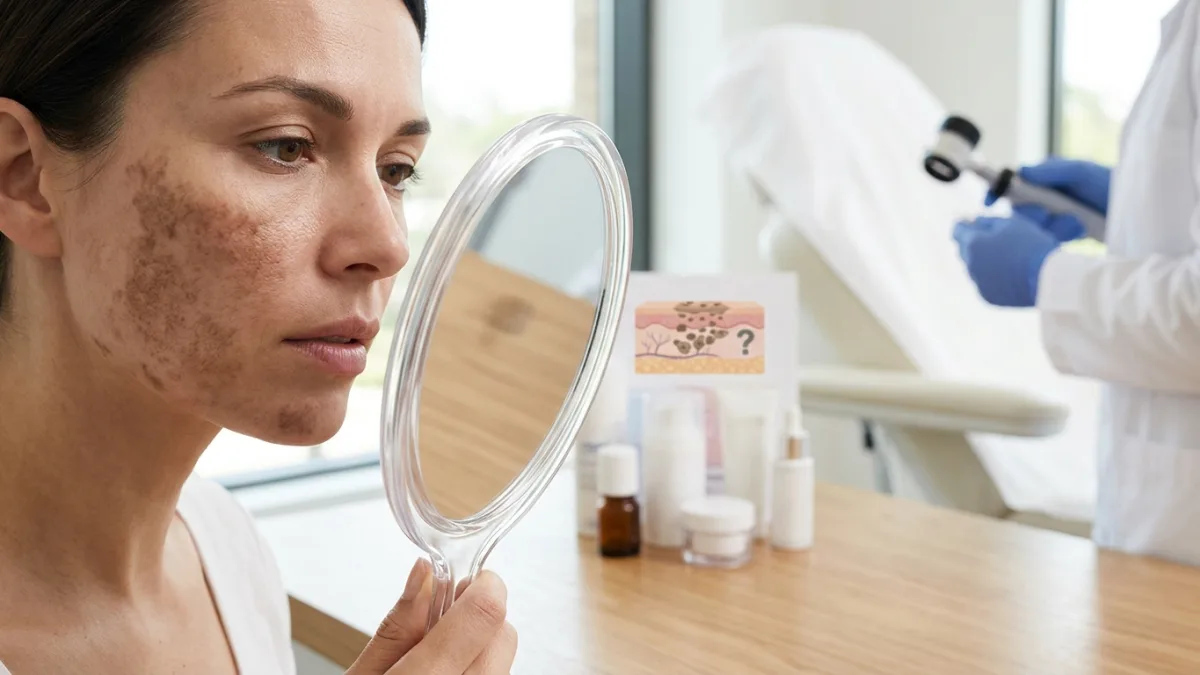
Hyperpigmentation on the face is usually diagnosed by a simple visual exam. A dermatologist looks at the color, shape, and spread of the patches to figure out the likely type and cause.
When a dermatologist uses visual exams vs. Wood’s lamp
This tool helps tell surface-level pigment apart from pigment sitting deeper in the skin, which affects which treatments are likely to work.
Signs you should see a professional rather than self-treat
Most mild hyperpigmentation on the face can be managed at home with sunscreen and gentle treatment. But some signs mean it’s time to book a dermatologist visit instead of self-treating.
- A dark patch changes shape, size, or color quickly
- The spot has an uneven or jagged border
- It bleeds, itches, or feels raised
- Over-the-counter care hasn’t helped after several weeks
- You’re unsure if it’s hyperpigmentation on the face or something else, like a mole
If any of these apply, don’t wait. Getting the right diagnosis early makes treatment far more effective down the line.
Comparing common ingredients for hyperpigmentation on the face
| Ingredient | How it works | Best for | Time to see results |
|---|---|---|---|
| Vitamin C | Antioxidant that slows melanin production and brightens tone | Sun-related dark spots, dull skin | A clinical study by Hakozaki et al. found that niacinamide significantly decreased hyperpigmentation and increased skin lightness compared with vehicle after 4 weeks of use. (PubMed – Hakozaki et al., British Journal of Dermatology, 2002, 2002) |
| Niacinamide | Reduces inflammation and blocks pigment transfer to skin cells | Sensitive or acne-prone skin | — |
| Retinoids | Speeds up cell turnover to fade spots and smooth texture | Deeper pigmentation, fine lines | A multicenter, randomized, double-masked trial of azelaic acid 20% cream for facial hyperpigmentation in darker-skinned patients found significantly greater decreases in pigmentary intensity than vehicle following a 24-week treatment period. (PubMed – Lowe et al., Clinical Therapeutics, 1998, 1998) |
| Azelaic acid | Calms redness and interrupts excess pigment formation | Rosacea-prone or reactive skin | — |
| Hydroquinone | Directly inhibits melanin-producing enzymes | Stubborn, prescription-level cases | — |
Many of these ingredients work better together than alone. A skin doctor can help you use them together safely, since mixing strong products without guidance can sometimes irritate skin and make dark spots worse instead of better.
In-office treatments: how they stack up
When store-bought products are not enough, skin doctors offer treatments that go after dark spots harder. Each choice comes with its own cost, downtime, and best use case. Here is how the most common treatments stack up.
| Treatment | How it targets pigmentation |
|---|---|
| Chemical peels | Removes outer skin layers to reveal fresher, more even skin |
| Laser therapy | Breaks down pigment clusters with targeted light energy |
| Microneedling | Creates micro-injuries that stimulate collagen and even tone |
| IPL (intense pulsed light) | Targets sun spots and redness using broad-spectrum light |
Building a daily routine that actually helps
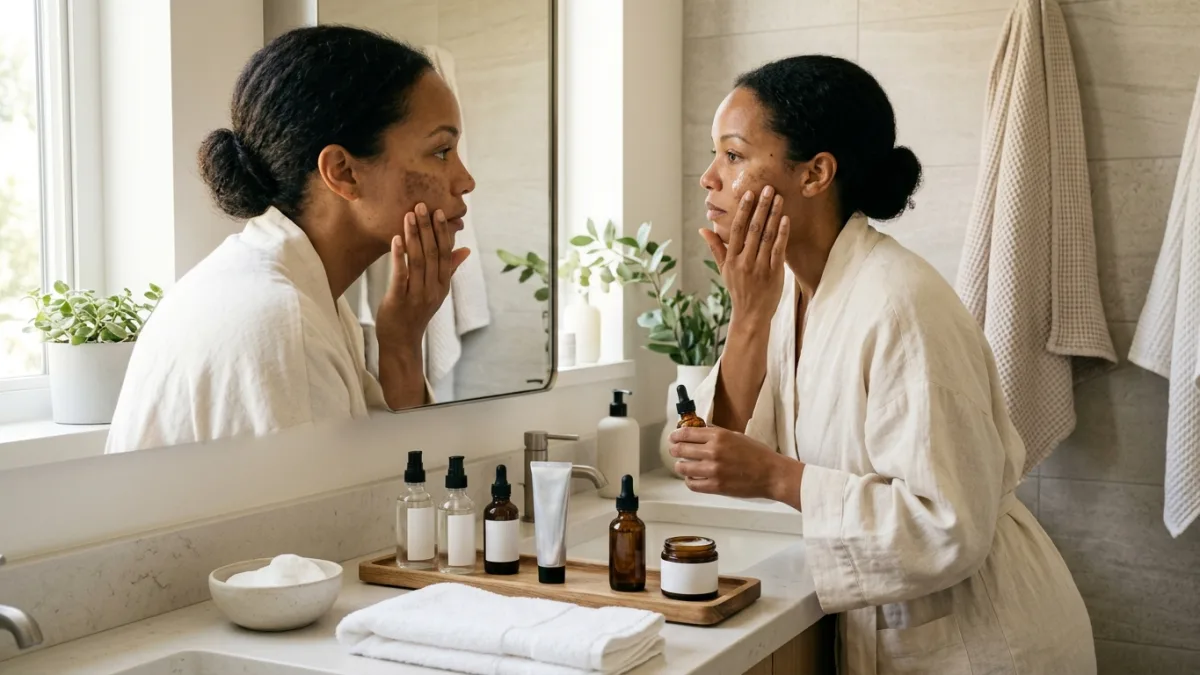
Treating hyperpigmentation on the face isn’t just about one product. It’s about a steady routine that guards skin while gently helping it even out over time. Here’s a simple plan to follow.
- Cleanse with a gentle, non-stripping formula morning and night
- Apply a brightening serum, such as vitamin C or niacinamide, in the morning
- Follow with a broad-spectrum sunscreen of at least SPF 30, reapplied every two hours outdoors
- At night, introduce a treatment ingredient like retinoids or azelaic acid a few times a week
- Moisturize daily to support the skin barrier and reduce irritation
Staying steady matters more than going hard. Switching products too often, or using too many strong products at once, can cause new irritation and, oddly, lead to more dark spots.
Lifestyle habits that support even skin tone
Skincare products only do part of the job. Daily habits play a bigger role in preventing and managing hyperpigmentation on the face than most people realize.
- Wear a wide-brimmed hat during peak sun hours, even on cloudy days
- Avoid picking at acne, scabs, or irritated skin to prevent scarring
- Limit hot showers and harsh scrubs, which can inflame sensitive areas
- Manage stress, since hormonal fluctuations can worsen melasma-type pigmentation
- Stay hydrated and eat a diet rich in antioxidants to support skin repair
None of these habits work instantly, but layered together with a solid skincare routine, they create the kind of long-term consistency that pigmentation treatment depends on.
Setting realistic expectations for results
One of the biggest headaches with treating hyperpigmentation on the face is impatience. Skin cell renewal takes time, and you often see it get better bit by bit, not overnight.
Most topical treatments need consistent use for
It also helps to track progress with photos taken in the same light every few weeks. Daily mirror checks rarely show change, but comparing month to month often shows a clear difference that tells people the plan is working.
Market context
Global skin cancer cases and deaths attributable to UV radiation exposure — The World Health Organization reports that excessive exposure to UV radiation caused around 1.2 million new cases of non-melanoma skin cancers and 325,000 melanomas of the skin worldwide in 2020. World Health Organization, 2022
Adjacent-market figures — each names the subject it measures, not hyperpigmentation on face directly.
Read the complete guide: A Skin Concerns Guide That Finally Makes Sense of Your Routine
Frequently Asked Questions
What causes hyperpigmentation on the face?
Hyperpigmentation usually starts from too much pigment made in the skin, set off by sun exposure, hormone shifts, swelling, or skin injury. Acne marks, rubbing, and certain drugs can also darken skin over time.
Genes play a part too, since some people naturally make more pigment in response to these triggers than others do.

Can hyperpigmentation go away on its own?
Mild cases sometimes fade little by little as skin renews itself on its own, mostly in younger people whose cells turn over faster. But deeper spots or marks caused by ongoing sun exposure often stay put without treatment.
Regular sunscreen use and skincare aimed at the problem usually speed up fading and stop new dark spots from forming.
Which ingredients work best for fading dark spots?
Vitamin C, niacinamide, azelaic acid, and retinoids are commonly recommended for reducing discoloration. Ingredients like tranexamic acid and kojic acid also target pigment production. Effectiveness varies by skin type and the cause of pigmentation, so can help guide product selection.
Is sunscreen really necessary for treating dark spots?
Yes, sunscreen is a must because sun rays darken spots that are already there and cause new hyperpigmentation on face. Even indoor light and daily sun through windows can make dark spots worse over time.
Putting on broad-spectrum sunscreen each morning, and putting more on during the day, guards the gains from treatment and stops dark spots from coming back fast.
How long does it take to see visible improvement?
Results depend on the treatment type, pigmentation depth, and individual skin response. Topical products often require
Are professional treatments better than at-home skincare?
Skin doctor treatments can deal with tough or deeper dark spots more directly, often giving faster results you can see. But they tend to cost more and may bring downtime or soreness after.
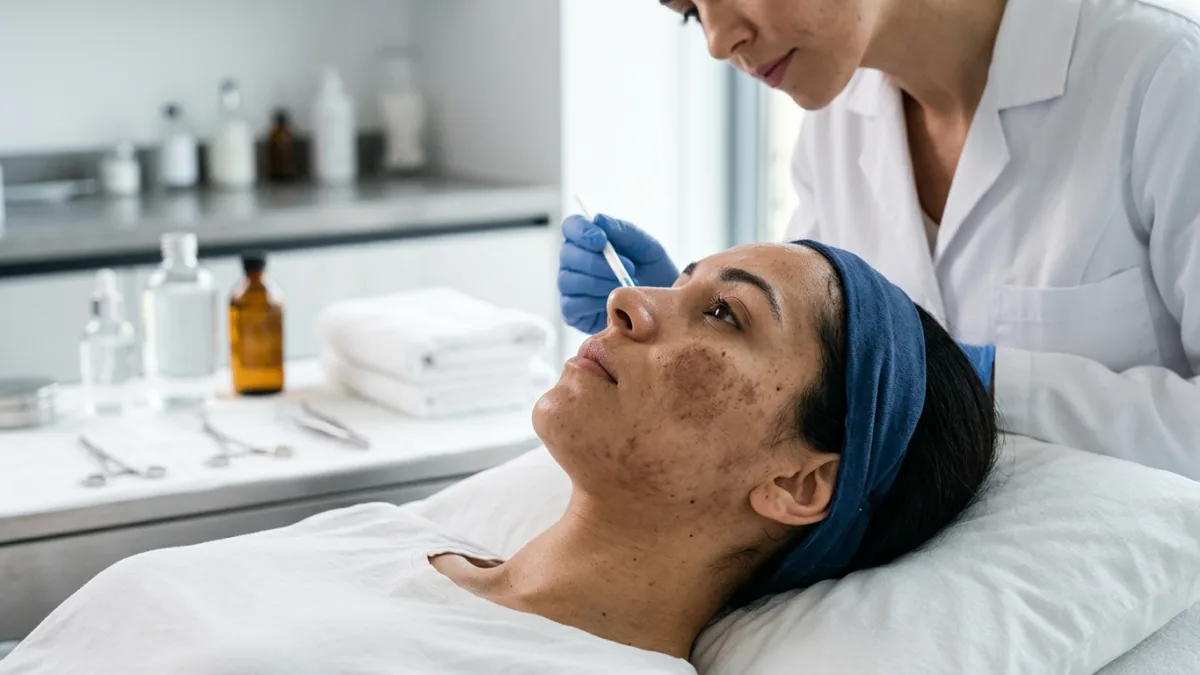
Many people find that mixing home skin care with now-and-then doctor treatments gives a fair, lasting way to manage dark spots over time.
Can makeup make hyperpigmentation worse?
Makeup by itself does not usually cause hyperpigmentation on face, but heavy products can bother sensitive skin or clog pores, and this may lead to swelling. Picking formulas that don’t clog pores and taking off makeup fully each night helps cut down on skin bother.
Using mineral-based sunscreen under makeup also adds extra shield against more sun-caused dark spots through the day.
When should someone see a dermatologist about dark spots?
A visit to the skin doctor is worth it if spots change shape, grow fast, bleed, or don’t respond to steady home care after several months.
A professional check can rule out other skin issues and help find the best, most fitting plan based on skin type, cause of the dark spots, and overall skin health.
Key statistics
- In a study of acne patients seen by a dermatologist, more than half had post-inflammatory hyperpigmentation linked to their acne. (PubMed (NIH National Library of Medicine), 2016)
- Women are far more likely than men to develop melasma, accounting for the vast majority of cases. (Cleveland Clinic, 2026)
- In people with darker skin tones, acne-related post-inflammatory hyperpigmentation can affect a majority of those who develop it. (NCBI Bookshelf (StatPearls), 2024)
Expert insights
Melasma is also known as chloasma or mask of pregnancy,
Dr. Akhtar
Koji acid works by inhibiting the formation of tyrosine,
Stein
References
- Sun exposure and UV light exposure is a major trigger for pigment-producing cells and drives melasma to develop on facial skin. — American Academy of Dermatology (American Academy of Dermatology (AAD) is the leading professional association of board-certified dermatologists, and this page is part of its patient-facing clinical guidance on melasma causes.)
- Hormonal shifts, including increases in estrogen and progesterone during pregnancy and the use of birth control pills, are believed to trigger melasma. — American Academy of Dermatology (American Academy of Dermatology (AAD) is the leading professional association of board-certified dermatologists, and this page is part of its patient-facing clinical guidance on melasma causes.)
- Melasma is much more common in women than in men, and hormones appear to play a role in causing it. — American Academy of Dermatology (American Academy of Dermatology (AAD) is the leading professional association of board-certified dermatologists, and this page is part of its patient-facing clinical guidance on melasma causes.)
- Women with medium to dark skin tones are most likely to develop melasma. — American Academy of Dermatology (American Academy of Dermatology (AAD) is the leading professional association of board-certified dermatologists, and this page is its overview resource on melasma for patients.)
- Skin injury, including wounds and irritation from skin or hair care products, can cause dark spots or patches to appear as the skin heals. — American Academy of Dermatology (American Academy of Dermatology (AAD) is the leading professional association of board-certified dermatologists, and this page is its patient guidance on fading dark spots in darker skin tones.)
