
Hair care
Scalp Scrub Benefits: The Complete Guide to Healthier Hair in 2026
Last updated: November 3, 2026
Scalp scrub benefits include removing buildup, calming flakes, boosting circulation, and giving hair a cleaner base to grow from. A scalp scrub lifts away dead skin, oil, and product residue that shampoo alone often misses.
This can unclog follicles (the tiny openings in skin where each hair strand grows), support a healthier scalp, and leave hair looking shinier and fuller over time.
What Are the Benefits of a Scalp Scrub?
The main scalp scrub benefits are buildup removal, better circulation, less flaking, and a healthier setting for hair growth. Think of your scalp like skin anywhere else on your body. It sheds dead cells, produces oil, and collects residue from styling products.
A scrub clears that layer away so your scalp can breathe and function properly.
Most people focus on hair itself and forget the skin underneath it. But hair grows from follicles that sit in the scalp. When those follicles get clogged with oil and product, hair can grow in weaker or thinner over time. Scalp scrub benefits start with clearing that path.
Quick answer
Scalp scrub benefits, in short: cleaner follicles, less itching, reduced flaking, and hair that looks fuller and shinier. It’s a simple weekly step that supports the health of the skin your hair actually grows from.
Dandruff, the scalp condition characterized by flaking, is estimated to affect approximately 50% of the global population. (Frontiers in Medicine, 2026)
Why scalp health drives hair health
- Removes dead skin cells and product buildup
- Boosts blood flow to the scalp through massage motion
- Reduces flaking and itchiness over time
- Creates a cleaner base for healthier-looking hair growth
- Helps other hair products absorb better
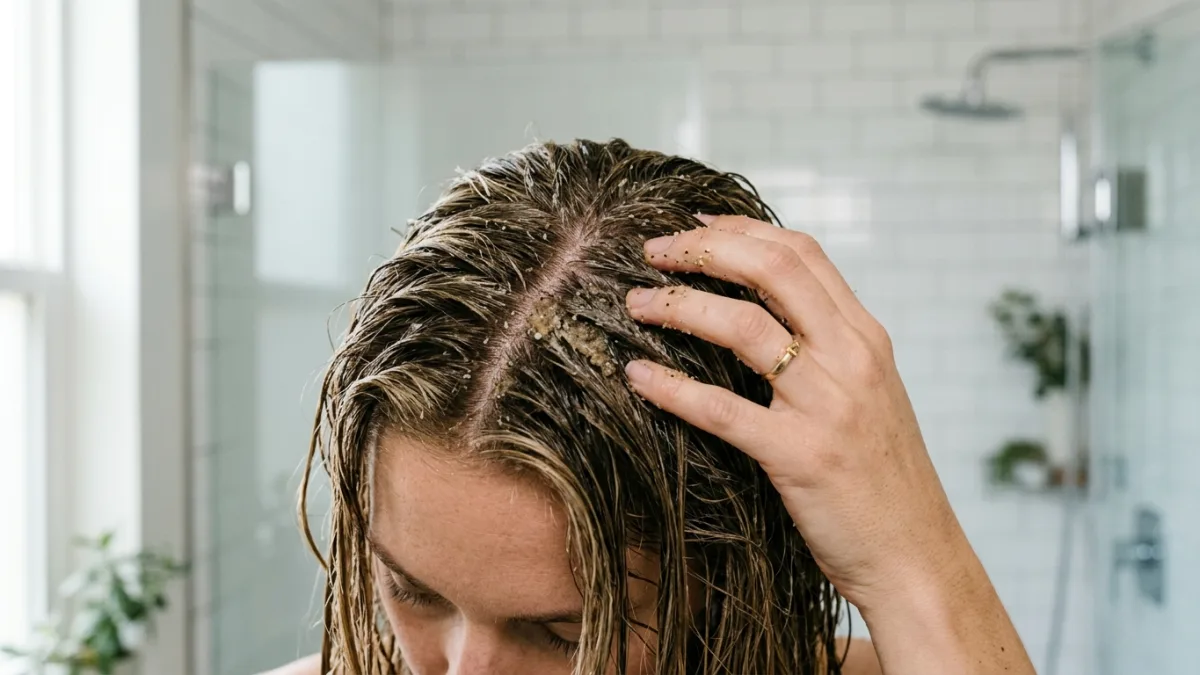
What Is a Scalp Scrub, and How Does It Work?
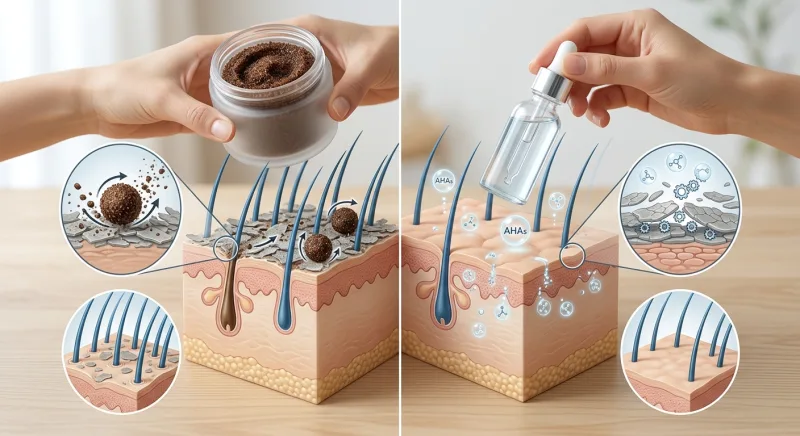
Physical vs. chemical exfoliants
Physical exfoliants use tiny particles, like sugar or salt, to scrub away debris by hand. Chemical exfoliants use mild acids to dissolve buildup without scrubbing motion.
Salicylic Acid (an oil-soluble acid that gets deep into pores and follicles to break up buildup) is one of the most common chemical options in scalp care. Both types can deliver real scalp scrub benefits, but they suit different sensitivity levels.
Scalp exfoliation has steadily moved from niche step to routine habit, as more people recognize that a clean scalp foundation matters as much as the hair itself.
Physical scrubs give an immediate, tactile clean and work well for thicker or coarser hair types. Chemical exfoliants tend to be gentler on sensitive skin since there’s no manual friction involved. Many store-bought formulas combine both, offering a balanced approach that suits most scalp types.
Seborrheic dermatitis (a skin condition that causes flaky, itchy patches) and flaking are common scalp problems that push many people toward scrubbing, since clearing away buildup can help the scalp feel calmer and look healthier.
How exfoliation affects follicles and oil production
Many people say that rubbing or scrubbing the scalp leaves it feeling warmer and more awake, a feeling often linked to better blood flow and a fresh feel.
Regular exfoliation may also calm overactive oil glands by keeping the surface clear, rather than letting oil pool and sit. This doesn’t mean scrubbing daily is better. It means consistent, moderate use tends to work better than occasional heavy scrubbing.
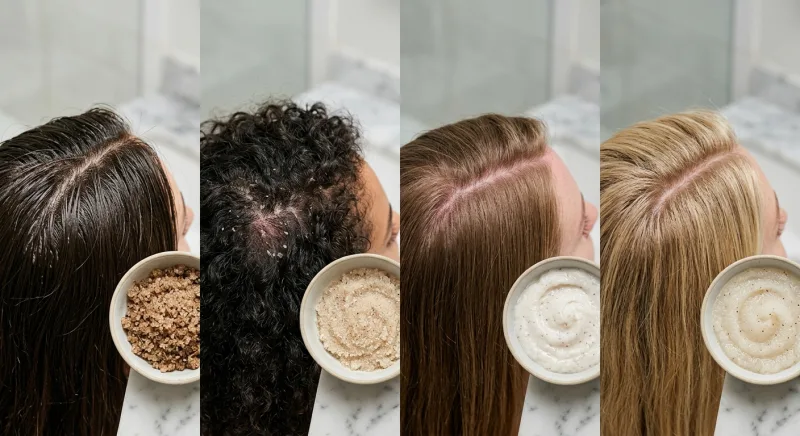
Which Scalp Scrub Benefits Apply to Your Hair Type?

Scalp scrub benefits shift slightly depending on your hair and scalp type. An oily scalp needs different care than a dry or color-treated one. Matching the right formula to your specific needs makes the results more noticeable and reduces the risk of irritation.
Oily scalp
An oily scalp tends to build up faster, so scalp scrub benefits here include keeping oil in check and easing that heavy, weighed-down feeling. A soft physical scrub or a formula with salicylic acid (a common skin-clearing acid) works well for cutting through oil without stripping the scalp bare.
Dry or flaky scalp
Dry scalps do better with gentler scrubbing that lifts flakes without more irritation. A mild acid-based scrub with hydrating ingredients tends to work better than a rough physical scrub, which can make dryness worse.
Itchy or sensitive scalp
Sensitive scalps need the mildest option available. Scalp scrub benefits still apply, but frequency should stay low, and formulas should avoid harsh fragrances or strong acids that can trigger more itching.
Color-treated hair
Color-treated hair can still get scalp scrub benefits, but gentler formulas help protect color from fading too fast. Look for sulfate-free scrubs made with color safety in mind.
Curly or coarse hair
Curly and coarse hair types often trap more product buildup near the roots. A textured physical scrub can reach through denser hair better, delivering scalp scrub benefits that a light chemical formula might miss.
| Hair or Scalp Type | Recommended Exfoliant | Suggested Frequency |
|---|---|---|
| Oily scalp | Physical scrub or salicylic acid formula | 1-2 times per week |
| Dry or flaky scalp | Gentle chemical exfoliant with hydrators | Once weekly |
| Itchy or sensitive scalp | Mild, fragrance-free formula | Every 10-14 days |
| Color-treated hair | Sulfate-free gentle scrub | Once weekly |
| Curly or coarse hair | Textured physical scrub | Once weekly |
Physical vs. Chemical Exfoliation: Which Delivers Better Scalp Scrub Benefits?
Not all exfoliating methods work the same way. Physical scrubs use granules to manually lift away debris. Chemical exfoliants rely on acids or enzymes to dissolve buildup. Understanding the difference helps you choose the option that suits your scalp best.
Scalp Scrub Benefits of Physical Exfoliation
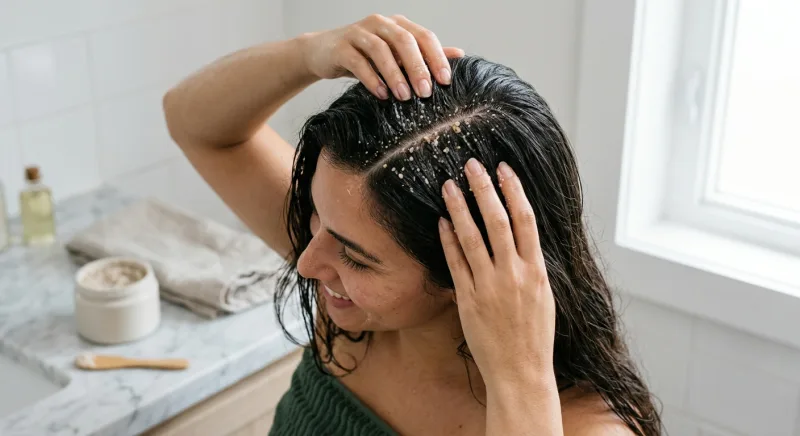
Physical scrubs offer quick, hands-on scalp scrub benefits. The rubbing from grains boosts blood flow right away. Many people feel a clear change right after rinsing. This method works well for those who like to see and feel their results.
That said, rough scrubs carry a higher risk of tiny skin tears if used too hard. Picking round, fine grains cuts this risk a lot.
Scalp Scrub Benefits of Chemical Exfoliation
Mild acid-based scrubs offer a gentler path to the same scalp scrub benefits. Ingredients like salicylic acid or glycolic acid break down oil and dead skin without rough rubbing. This makes them a good fit for sensitive or easily irritated scalps.
The results tend to build slowly rather than showing up right away. Sticking with it matters more with chemical mixes. Over several weeks, users often see less flaking and a clearer, more comfortable scalp.
| Factor | Physical Exfoliation | Chemical Exfoliation |
|---|---|---|
| Speed of visible results | Immediate | Gradual, over weeks |
| Risk of irritation | Higher if used roughly | Lower, more controlled |
| Best suited for | Oily or thick-buildup scalps | Sensitive or flaky scalps |
| Application feel | Tactile, massaging | Smooth, liquid or gel-based |
| Common ingredients | Sea salt, sugar, jojoba beads | Salicylic acid, lactic acid, enzymes |
Some people alternate between both methods depending on the season or how their scalp feels that week. This flexible approach can maximize scalp scrub benefits while minimizing the downsides of relying on just one technique.
How Often Should You Scrub? Comparing Frequency Recommendations
Doing too much scalp scrubbing can strip away natural oils and cause redness or itching. Doing too little means buildup stays longer than it should. Finding the right amount is key to getting real scalp scrub benefits without the downsides.
How often you scrub depends on your scalp type, how strong the scrub is, and your current hair care routine. Below is a list comparing how often to use different scrub methods for the best results.
| Exfoliation Method | Minimum Frequency | Maximum Frequency | Signs You’re Overdoing It |
|---|---|---|---|
| Physical scrub | Once every 2 weeks | Twice weekly | Redness, tenderness, tightness |
| Chemical exfoliant (mild) | Once weekly | Twice weekly | Excessive dryness, peeling |
| Chemical exfoliant (strong acids) | Once every 2 weeks | Once weekly | Burning sensation, flaking |
| Scalp brush (dry) | Daily | Twice daily | Soreness, thinning hair at part line |
Starting slow and observing how your scalp responds is the safest strategy. You can always increase frequency gradually once you understand your scalp’s tolerance. This cautious approach protects the skin barrier while still delivering scalp scrub benefits over time.
Building a Complete Scalp Care Routine Around Exfoliation
Exfoliation works best as part of a broader scalp care routine. Pairing it with the right shampoo, conditioner, and occasional treatments amplifies results. Think of scrubbing as one piece of a larger maintenance puzzle.
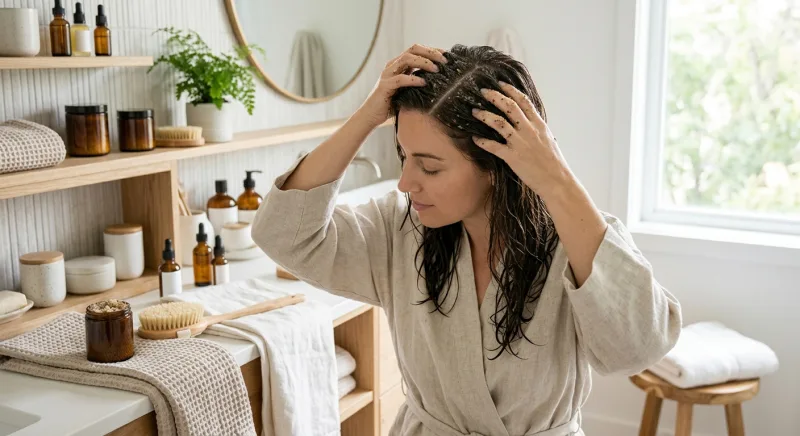
- Start with a clarifying shampoo to remove surface-level product residue before exfoliating.
- Apply the scrub to damp, not soaking wet, hair for better grip and control.
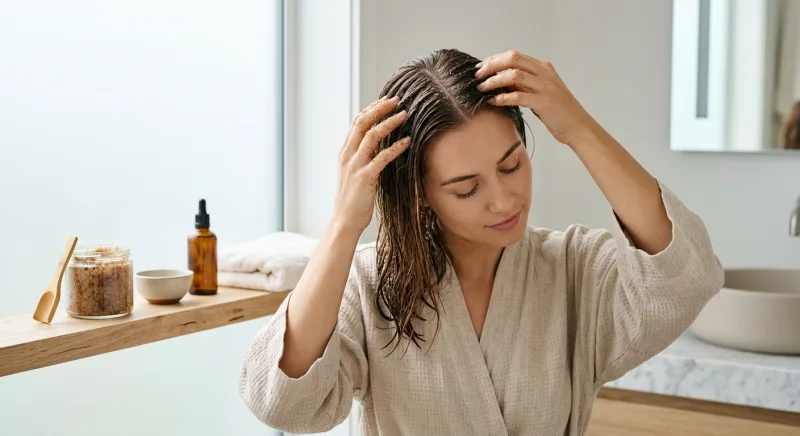
- Massage in small circular motions, focusing on areas with visible buildup or flaking.
- Rinse thoroughly with lukewarm water to avoid stripping too much natural oil.
- Follow with a hydrating conditioner to restore moisture balance after exfoliating.
- Finish with a lightweight scalp serum if your scalp tends toward dryness.
This layered approach makes sure the scalp scrub benefits aren’t undone by harsh follow-up products. A gentle, hydrating routine after scrubbing locks in the good effects and stops dryness or irritation from coming back.
Common Mistakes That Reduce Scalp Scrub Benefits
Even a great product can fall short if used the wrong way. Many people, without knowing it, hurt their own results through simple habits they could easily avoid. Spotting these mistakes helps you get more steady value from every use.
- Scrubbing too aggressively, which can cause micro-tears and worsen sensitivity over time.
- Using the wrong exfoliant type for your specific scalp condition or hair texture.
- Skipping patch tests before trying a new chemical exfoliant formula.
- Exfoliating immediately after coloring or chemically treating hair, which increases irritation risk.
- Neglecting to moisturize afterward, leading to compensatory oil overproduction.
- Exfoliating too frequently out of impatience for faster results.
Avoiding these missteps keeps your scalp barrier safe and whole. It also makes sure the scalp scrub benefits you want actually show up, instead of being wiped out by irritation or harm.
Signs Your Scalp Care Routine Is Actually Working
It can take a few weeks to notice meaningful change. Patience is key, but there are early indicators that your routine is on the right track. Watch for these signs as confirmation.
- Reduced flaking or visible dry patches on the scalp surface.
- Less oil buildup between wash days than before starting exfoliation.
- A noticeable decrease in itchiness or tightness after washing.
- Hair that feels lighter and looks shinier at the roots.
- Fewer clogged follicles or small bumps along the hairline.
If you see these gains, your routine is likely giving you real scalp scrub benefits. If not, it may be worth rethinking your product choice, how often you use it, or your method before you give up.
Frequently Asked Questions
What are the main scalp scrub benefits?
The main scalp scrub benefits include clearing away dead skin, unclogging hair roots, and cutting down on product buildup. Regular scrubbing can also calm itchiness, even out oil levels, and help build a healthier space for hair to grow over time.
How often should I use a scalp scrub?
Most people benefit from exfoliating once or twice a week. Oilier scalps may tolerate more frequent use, while sensitive or dry scalps often do better with once weekly or biweekly sessions to avoid irritation.
Can scalp scrubs help with dandruff?
Yes, many people find scalp scrubs help cut down on flaking caused by buildup or dry skin. But bad or long-lasting dandruff may need a medical treatment along with scrubbing, so see a skin doctor if it does not go away.
Is it normal for my scalp to feel tingly afterward?
A mild tingling sensation is normal and often signals increased circulation. This should feel refreshing, not painful. If you experience burning, redness, or lasting discomfort, stop use and switch to a gentler formula.
Do scalp scrubs support hair growth?
Scalp scrubs don’t make hair grow on their own, but they make the space around hair roots cleaner and healthier. By clearing blockages and boosting blood flow, scrubbing away dead skin may help hair grow stronger and more evenly over regular use.
Can I use a scalp scrub on color-treated hair?
Yes, but choose a gentle, sulfate-free formula designed for treated hair. Focus the scrub on your scalp rather than the lengths, and avoid overly abrasive exfoliants that could strip color or cause fading.
What ingredients should I look for in a scalp scrub?
Look for gentle scrubbing bits like sugar or jojoba beads, plus soothing ingredients such as tea tree oil, salicylic acid, or aloe vera. These combos boost scalp scrub benefits while cutting the risk of irritation.
How long until I see results from exfoliating my scalp?
Many people notice reduced flakiness and oil buildup within two to three weeks of consistent use. Full benefits, like improved texture and shine, often take four to six weeks to become clearly noticeable.
Key statistics
- In an international study on scalp seborrheic dermatitis, prevalence was highest in urban areas at 3.8%, compared with 2.1% in semi-urban and 1.8% in rural areas, suggesting environmental buildup factors may play a role in scalp skin issues. (PMC (International SSD prevalence study), 2024)
References
- Proper scalp care can help prevent certain types of hair loss and keep hair looking healthy, supporting the idea that scalp health underlies hair health. — American Academy of Dermatology (AAD is the leading professional dermatology organization; page reflects official board-certified dermatologist guidance on scalp care.)
- Dandruff is a common scalp condition marked by small flakes of dry skin coming off the scalp, and it may also cause itching, which scalp scrub benefits like reduced flaking and itchiness address. — American Academy of Dermatology (Official AAD patient-education page reviewed by board-certified dermatologists on diagnosing and treating dandruff.)
- Dandruff and dry scalp both commonly present with itchiness and flaking, and can result from hair care habits or product buildup on the scalp — the same buildup a scalp scrub is designed to remove. — American Academy of Dermatology (AAD article citing a board-certified dermatologist (Dr. Deirdre Hooper, MD, FAAD) on distinguishing and managing scalp flaking and itch.)
