
Hair care
Scalp Care 101: The Complete Guide to a Healthy Scalp in 2026
Last updated: November 5, 2026
Scalp care means cleansing, exfoliating, hydrating, and massaging the skin on your head to keep hair follicles healthy. A good scalp care routine removes buildup, balances oil, and improves blood flow. Together, these steps support stronger, healthier-looking hair over time. It’s the base every other hair habit builds on.
Most of us spend more on shampoo than we do thinking about the skin underneath our hair. That’s backwards. Scalp care is quickly becoming the missing step in daily beauty routines, and once you understand why, it’s hard to skip it again.
This guide walks through what scalp care actually means, how to spot signs your scalp needs help, and how to build a routine that fits real life. We’ll also cover where scalp care overlaps with your wider grooming routine, since one often affects the other.
What Is Scalp Care and Why Does It Matter?
Scalp Care vs. Hair Care: What’s the Difference?
Hair care focuses on the strands you can see — shine, softness, and color. Scalp care focuses on the skin underneath, where hair actually starts. They work together, but they are not the same thing.
A lot of shampoos are built for hair care, not scalp care. They smooth the strand but skip the skin underneath. That’s why some people with shiny hair still deal with itching or flaking near the roots.
Good scalp care fills that gap. It treats the skin first, then lets healthy hair follow. If you only focus on hair care, you may be missing half the picture.
Many hair care specialists agree that scalp care deserves the same attention as skincare. A clean, balanced scalp creates the right environment for hair to grow strong, making consistent scalp maintenance a simple but valuable part of any beauty routine.
How Scalp Health Affects Hair Growth
Hair grows from tiny openings in the skin called hair follicles, and each one needs a clean, well-fed environment to work well. Scalp care starts with understanding that when the scalp is clogged or inflamed, that environment suffers.
A randomized, placebo-controlled clinical trial found that rosemary-based oil treatments significantly improved hair growth rate compared to a control oil, with growth rate increasing by more than half from baseline, offering promising evidence for scalp care routines. (PMC (National Library of Medicine), 2025)
“If there’s inflammation in the scalp – scale, yeast overgrowth, itchiness – the theory was that maybe all of those things could impede hair growth and contribute to shedding.” — Melissa Piliang, MD, dermatologist and dermapathologist at Cleveland Clinic
“It’s like growing a rose bush,” — Chey Ranasinghe, MD (Geraldine Cheyana Ranasinghe), dermatologist at Cleveland Clinic
A buildup of oil, product residue, or dead skin on the scalp can crowd hair follicles and disrupt their natural cycle. Left unaddressed, this environment makes it harder for hair to grow in strong and healthy, which is why consistent scalp care matters so much.
Bottom line: scalp care is not a beauty extra. It’s basic upkeep for the skin your hair depends on. Skip it, and you’re working against yourself, no matter how good your products are.
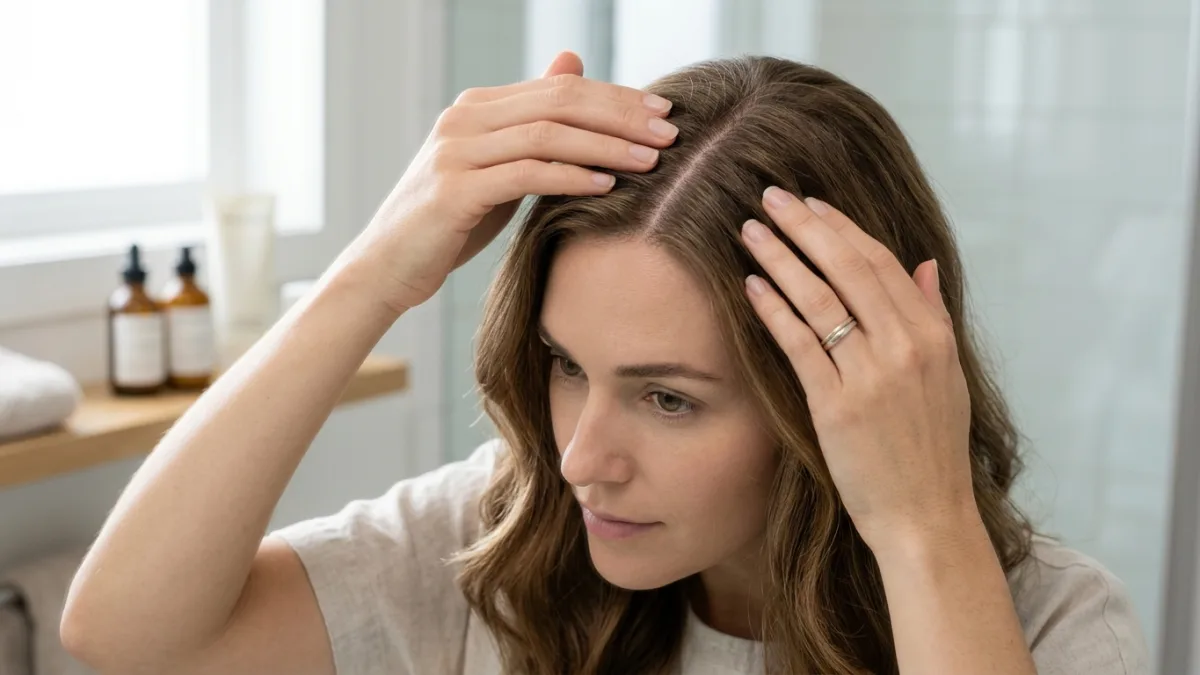
How Do You Know If Your Scalp Needs Extra Care?
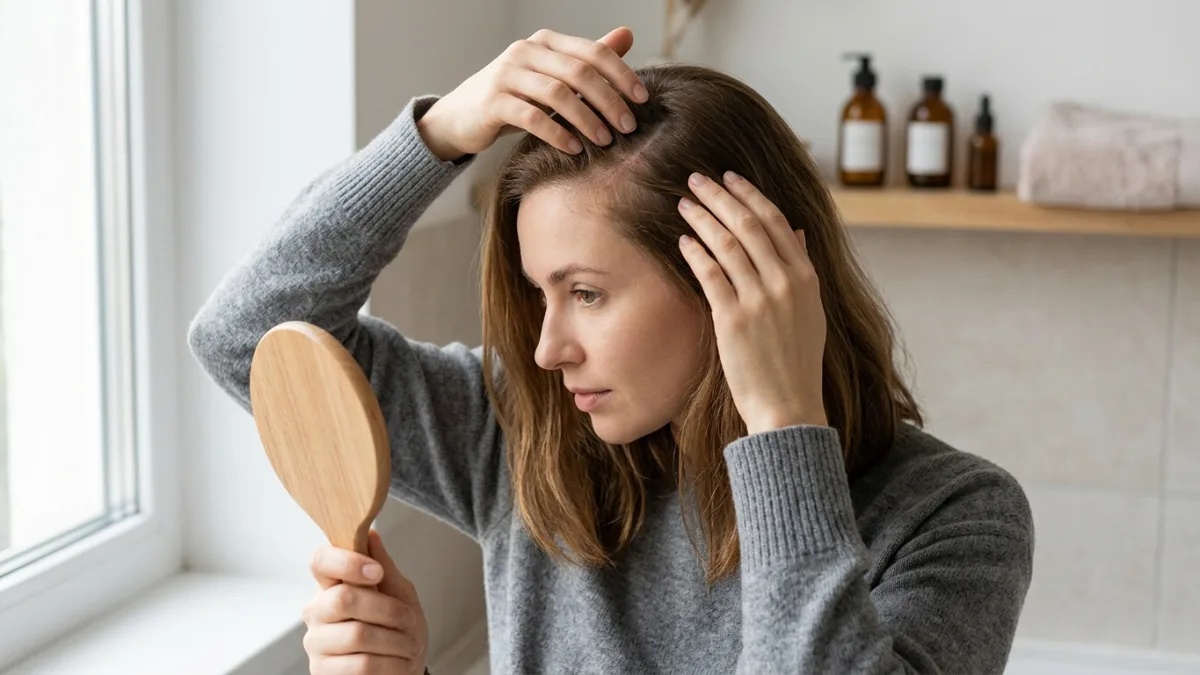
Common Signs of an Unhealthy Scalp
An unhealthy scalp usually shows up in one of a few clear ways. Run through this quick checklist and be honest about what you notice.
- Flaking or white bits on your shoulders or hairline
- Itchiness that shows up daily, not just after a workout
- Oil that returns within a day of washing
- Tightness, tenderness, or a burning feeling
- Redness or small bumps near the hairline
- Hair that feels thinner or falls out more than usual
If you spot one or two of these now and then, that’s normal. If you spot several, often, it’s a sign your current scalp care routine isn’t doing its job.
Scalp Types Explained (Oily, Dry, Sensitive, Combination)
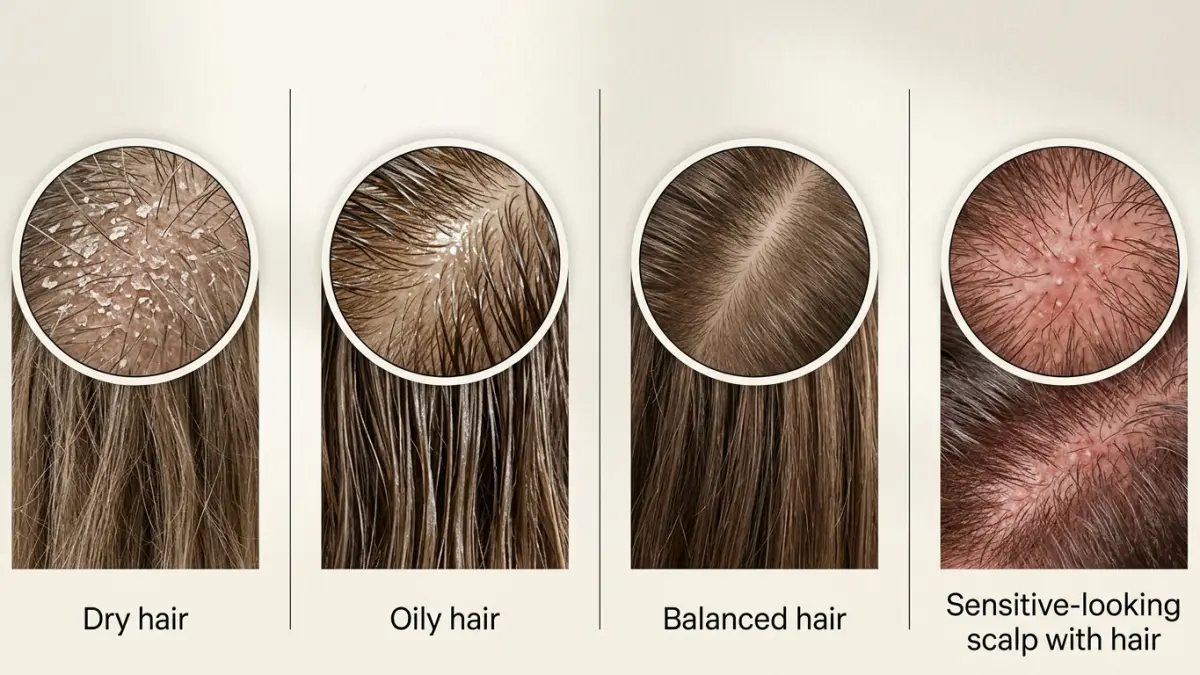
Your scalp type decides which scalp care steps actually help you. Oily scalps need less richness. Dry scalps need more. Getting this wrong is the top reason scalp care routines fail.
Sensitive scalps react fast to new products, fragrance, or heat. Combination scalps are oily in some spots (usually the crown) and dry in others (often near the ends or edges). Knowing your type is the foundation of good scalp care and saves you money and guesswork.
| Scalp Type | Common Signs | Scalp Care Tips |
|---|---|---|
| Oily | Greasy roots within a day, flat-looking hair | Wash more often, use lightweight, oil-free products |
| Dry | Flaking, tightness, dull-looking hair | Use hydrating products, avoid hot water |
| Sensitive | Redness, stinging, quick reactions to new products | Choose fragrance-free, gentle formulas, patch test first |
| Combination | Oily crown, dry ends or edges | Target products by zone rather than using one blanket routine |
Most people fall into one of these four groups, though it can shift with the seasons. Cold, dry months often push scalps toward dryness. Humid months can push things the other way, toward oil, which is why scalp care routines often need seasonal adjustment.
Building a Daily and Weekly Scalp Care Routine
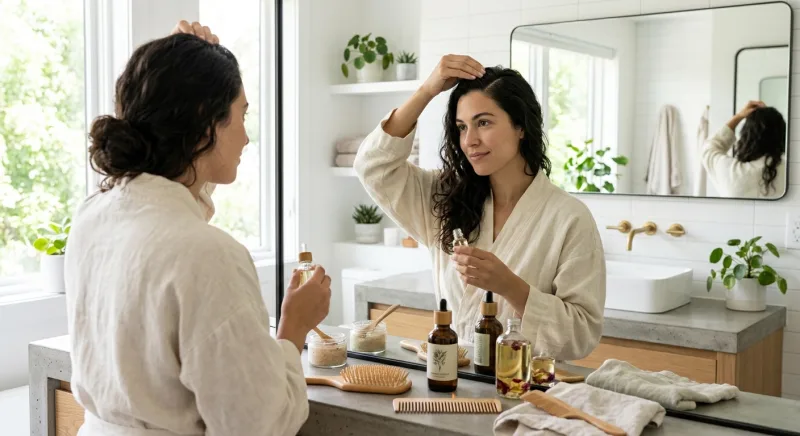
A solid scalp care routine has four parts: cleansing, exfoliating, massaging, and hydrating. You don’t need to do all four every day. Spreading them out actually works better for most scalp types.
Step 1: Cleanse Without Stripping
Cleansing is the base of any scalp care routine, but more washing isn’t always better. Harsh, sulfate-heavy shampoos strip natural oils, which can push oily scalps to overproduce and dry scalps to flake more.
Pick a gentle, sulfate-free cleanser and focus it on the roots, not the ends. Massage it in with your fingertips. Rinse fully. That last part matters more than people think — leftover product is a common scalp care mistake.
Step 2: Exfoliate the Right Way
Scalp exfoliation clears away dead skin, product buildup, and excess oil that regular shampoo leaves behind. It’s one of the most overlooked steps in scalp care, and one of the most useful.
Use a scalp scrub or a soft silicone brush once a week. Skip it if your scalp feels raw or sore. Over-exfoliating is its own problem, and it undoes the good your scalp care routine is meant to do.
Step 3: Massage for Circulation
Scalp massage is the simplest scalp care habit you can build, and it costs nothing. Using your fingertips (not nails), work in small circles across your whole scalp for a few minutes.
Massage is thought to boost blood flow to the area, which may support the follicles’ access to nutrients. A 24-week clinical study found that standardized daily scalp massage significantly increased hair thickness in participants. (Eplasty (PMC/NIH), 2016). Do it daily, in the shower or dry, whichever fits your routine.
Step 4: Hydrate and Protect
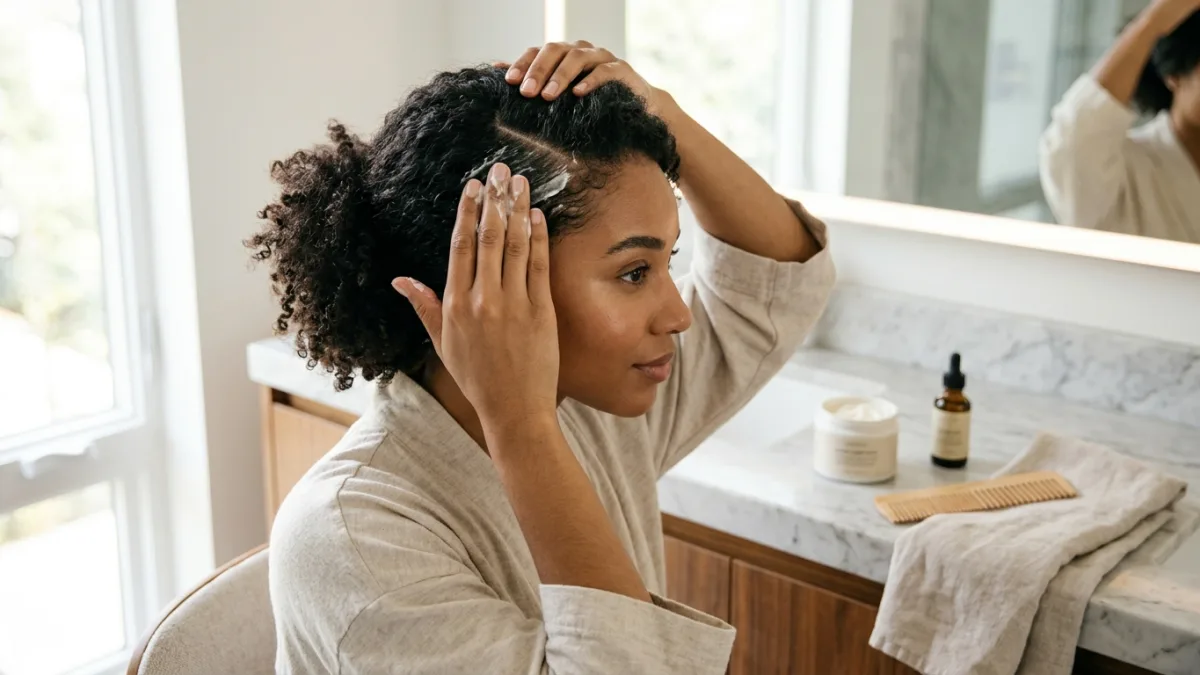
The last step in scalp care is locking in moisture and shielding the scalp from damage. A lightweight scalp serum or oil can help, especially after exfoliating, when the skin is more open to product.
Protection also means the basics: a hat in strong sun, and less direct heat from styling tools near the roots. These small habits round out a scalp care routine that actually holds up over time.
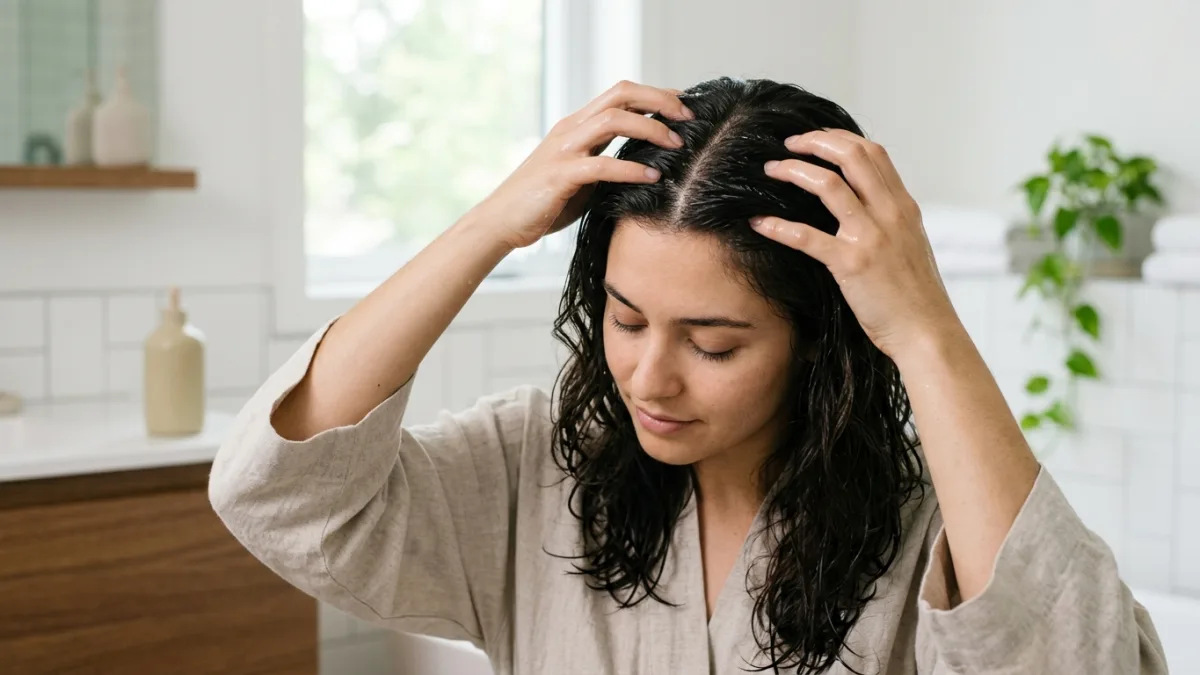
Here’s how to spread these steps across a week, so scalp care fits into real life instead of taking it over:
Consistent scalp care matters as much as the products used on strands themselves. A clean, balanced scalp creates the right environment for hair to grow in stronger and look healthier over time.
Dandruff is a milder, more common form of seborrheic dermatitis that affects only the scalp. It shows up as flaking and irritation, and many people experience it at some point in their lives.
- Daily: gentle massage, light hydration if scalp feels dry
- 2-3 times a week: gentle cleansing suited to your scalp type
- Once a week: exfoliation with a scrub or scalp brush
- Once or twice a month: deeper treatment mask or tonic, if your scalp type calls for it
Adjust based on how your scalp responds. Scalp care isn’t one-size-fits-all, and the right cadence often takes a few weeks of small tweaks to settle in.
Choosing Products by Scalp Type: A Side-by-Side Comparison
Product labels can be confusing when everything claims to “balance,” “soothe,” or “detoxify.” It helps to compare formulas by scalp type side by side, so you can see which ingredients and textures actually match what your scalp needs.
| Scalp Type | Best Shampoo Texture | Helpful Ingredients | Ingredients to Limit | Ideal Wash Frequency |
|---|---|---|---|---|
| Oily | Lightweight, clarifying gel | Salicylic acid, tea tree, niacinamide | Heavy oils, silicones | Every 1-2 days |
| Dry | Creamy, hydrating lotion | Glycerin, aloe vera, mild oils | Sulfates, strong alcohols | Every 2-3 days |
| Sensitive | Fragrance-free, gentle cleanser | Oat extract, panthenol, allantoin | Fragrance, sulfates, menthol | Every 2-3 days |
| Flaky / Dandruff-Prone | Medicated, slightly thicker formula | Zinc pyrithione, ketoconazole, coal tar | Excess conditioning agents | Every 1-2 days, as directed |
| Combination | Balanced, lightweight cleanser | Mild surfactants, botanical extracts | Overly rich or overly stripping formulas | Every 2 days |
Notice how the differences aren’t dramatic swings, but small shifts in texture and active ingredients. That’s usually enough to change how your scalp feels within a couple of weeks, without needing a full routine overhaul.

Scalp Care Tools: What They Do Differently
Beyond products, physical tools play a bigger role in scalp care than most people realize. Brushes, combs, and massagers each work through friction, pressure, or bristle design, and picking the wrong one can undo some of the benefit.
Here’s a comparison of the most common scalp tools, what they’re built for, and who tends to benefit most from each one.
| Tool | Primary Function | Best For | Use Frequency | Caution |
|---|---|---|---|---|
| Silicone scalp massager | Stimulates circulation, loosens buildup | Most scalp types, daily use | Daily to a few times a week | Avoid pressing too hard on sensitive scalps |
| Boar bristle brush | Distributes natural oils, gentle exfoliation | Dry or normal scalp | Daily | Not ideal for very oily scalps |
| Wide-tooth comb | Detangles without pulling at the scalp | All scalp types, especially post-wash | As needed | Minimal risk when used gently |
| Scalp scrub applicator | Deep exfoliation, buildup removal | Oily or flaky scalp | Once a week | Overuse can cause irritation |
| Fine-tooth nit comb | Removes flakes, debris, and residue | Dandruff-prone scalp | 1-2 times a week | Can feel harsh on sensitive scalp |
Common Scalp Care Mistakes That Slow Progress
Even with the right products, certain habits quietly work against scalp health. Recognizing these patterns is often the fastest way to see improvement, sometimes faster than adding new products at all.
- Washing too infrequently in an attempt to “train” the scalp, which can worsen buildup and irritation
- Using hot water, which strips natural oils and can trigger extra oil production
- Skipping scalp care entirely on non-wash days, leaving buildup and product residue to accumulate
- Applying conditioner directly to the scalp instead of the mid-lengths and ends
- Switching products too often, which makes it hard to tell what’s actually working
- Scratching aggressively instead of massaging, which can create micro-tears in sensitive skin
Most of these habits form gradually, often without much notice. Slowing down and paying attention to water temperature, product placement, and touch pressure can make an outsized difference over time.
How Diet and Lifestyle Factor Into Scalp Health
Scalp care isn’t limited to what you apply topically. Diet, sleep, stress, and hydration levels all influence how your scalp behaves, sometimes more than any single product could.
Scalp health does not exist in isolation from the rest of the body. While topical treatments address surface-level concerns, chronic stress and poor sleep can show up as increased oil production, flare-ups, or slower recovery from irritation.

Some lifestyle factors worth paying attention to include:
- Hydration levels, since dehydration can make scalp dryness worse
- Diet quality, particularly intake of omega-3s, zinc, and vitamin D
- Sleep consistency, which affects hormone regulation tied to oil production
- Stress levels, which can trigger or worsen conditions like dandruff and psoriasis flare-ups
- Sun exposure, which can dry out and damage the scalp over time
This connection is why two people using identical products can see very different results, since their internal starting points aren’t the same.
When to See a Professional About Scalp Concerns
Most scalp issues respond well to consistent at-home care. But certain signs suggest it’s time to bring in a dermatologist or trichologist rather than continuing to experiment on your own.
A large peer-reviewed meta-analysis found a pooled global prevalence of seborrheic dermatitis of 4.38% across more than 1.2 million individuals. (PMC (peer-reviewed systematic review and meta-analysis), 2024)
- Persistent itching or burning that doesn’t improve after a few weeks of gentle care
- Noticeable hair thinning or shedding beyond what feels typical
- Painful bumps, sores, or lesions on the scalp
- Flaking that worsens despite using medicated shampoos
- Signs of infection, such as swelling, warmth, or unusual odor
Catching issues early usually means simpler treatment, so it’s worth checking in with a specialist rather than waiting out a problem that isn’t improving.
Market context
How the broader market shapes Scalp care in 2026
The figures below come from adjacent, well-documented markets. Each row names the subject it actually measures and links to its original source — these are related market indicators, not Scalp care claims.

| What it measures | Figure | Source |
|---|---|---|
| Androgenetic alopecia (hereditary hair loss) in the United States | Androgenetic alopecia, the most common cause of hair loss, affects an estimated 80 million Americans, including 50 million men and 30 million women. | American Academy of Dermatology, 2024 |
| Global prevalence of seborrheic dermatitis | A global meta-analysis found a pooled seborrheic dermatitis prevalence of 4.38% across diverse populations worldwide. | JAMA Dermatology (PMC), 2024 |
| Global lifetime risk/prevalence of alopecia areata | The global prevalence of alopecia areata is approximately 0.1%-2.1%, with a lifetime risk nearing 2%. | PMC (NIH), 2025 |
Frequently Asked Questions
How often should I wash my scalp for optimal scalp care?
It depends on your hair type and scalp condition. Oily scalps may benefit from washing every other day, while drier scalps can go longer between washes. Pay attention to how your scalp feels and adjust your routine rather than following a strict universal schedule.
Can diet affect scalp health?
Yes, diet plays a role in scalp and hair health. Nutrients like omega-3 fatty acids, zinc, and vitamins A and D support the skin barrier and hair follicles. A balanced diet won’t fix every scalp issue, but it can support overall scalp resilience over time.
Is dandruff the same as a dry scalp?
No, dandruff and dry scalp can look similar but have different causes. Dandruff is often linked to excess oil and a yeast-like fungus, while dry scalp results from lack of moisture. Identifying the cause helps determine which products or treatments will actually help.
Can scalp care routines help with hair growth?
A healthy scalp creates a better environment for hair to grow, but scalp care alone won’t dramatically speed up growth. Gentle cleansing, exfoliation, and massage can support circulation and reduce buildup, which may indirectly benefit hair strength and appearance over time.

Are natural remedies effective for scalp issues?
Some natural remedies, like diluted tea tree oil or aloe vera, may soothe mild irritation for certain people. However, results vary, and natural doesn’t always mean gentle. Patch test new ingredients first, and consult a professional if symptoms persist or worsen.
Can stress cause scalp problems?
Stress can contribute to scalp issues like increased oil production, flaking, or hair shedding. While stress isn’t always the sole cause, managing it through sleep, exercise, or relaxation techniques may support overall scalp health alongside a consistent care routine.
Should I change my scalp care routine with the seasons?
Yes, scalp needs often shift with weather changes. Colder, drier months may call for more hydrating products, while humid seasons might require lighter formulas to prevent excess oil. Adjusting products seasonally can help maintain balance and comfort year-round.
When should I see a dermatologist for scalp concerns?
See a dermatologist if you notice persistent itching, unusual hair loss, painful bumps, or symptoms that don’t improve with over-the-counter products. Early evaluation can rule out underlying conditions and lead to more effective, targeted treatment before issues become harder to manage.
Key statistics
- A meta-analysis of over 1.26 million individuals found the pooled global prevalence of seborrheic dermatitis to be 4.38%. (PubMed (JAMA Dermatology systematic review), 2024)
- In a clinical study of a scalp scrub and serum regimen, scalp skin hydration improved by 76.24% from baseline to day 15. (PMC (National Center for Biotechnology Information), 2024)
References
- Dandruff is a common scalp condition that shows up as small pieces of dry skin flaking off the scalp, and it may be itchy. — American Academy of Dermatology (American Academy of Dermatology (AAD) is the leading professional association for dermatologists in the U.S.)
- Dandruff may be considered the mildest form of seborrheic dermatitis, and both conditions cause white-to-yellowish scale on the scalp. — American Academy of Dermatology (American Academy of Dermatology (AAD) is the leading professional association for dermatologists in the U.S.)
- Dandruff and dry skin can look similar on the scalp, making it hard to tell them apart without a dermatologist’s help, and some hair care products can dry and irritate the scalp by stripping natural oils. — American Academy of Dermatology (American Academy of Dermatology (AAD) is the leading professional association for dermatologists in the U.S.)
- Dermatologists say seborrheic dermatitis develops on skin that contains the most sebum, such as the scalp, face, and chest, and yeast is believed to feed on that sebum. — American Academy of Dermatology (American Academy of Dermatology (AAD) is the leading professional association for dermatologists in the U.S.)
- A dermatologist can determine whether persistent dandruff is actually a sign of a medical condition such as seborrheic dermatitis, psoriasis, fungal infection of the scalp, or eczema. — American Academy of Dermatology (American Academy of Dermatology (AAD) is the leading professional association for dermatologists in the U.S.)
