
Skincare ingredients
Bakuchiol Oil: The Plant-Based Retinol Alternative Explained
Last updated: November 5, 2026
Bakuchiol oil is a plant-based skincare oil made from the seeds of the bakuchi plant. It works as a gentler stand-in for retinol, a well-known anti-aging ingredient. Bakuchiol oil helps smooth texture, firm skin, and soften fine lines, with less risk of redness or peeling.
That makes it a good pick for sensitive skin and for people who want a calmer routine.
What Is Bakuchiol Oil?
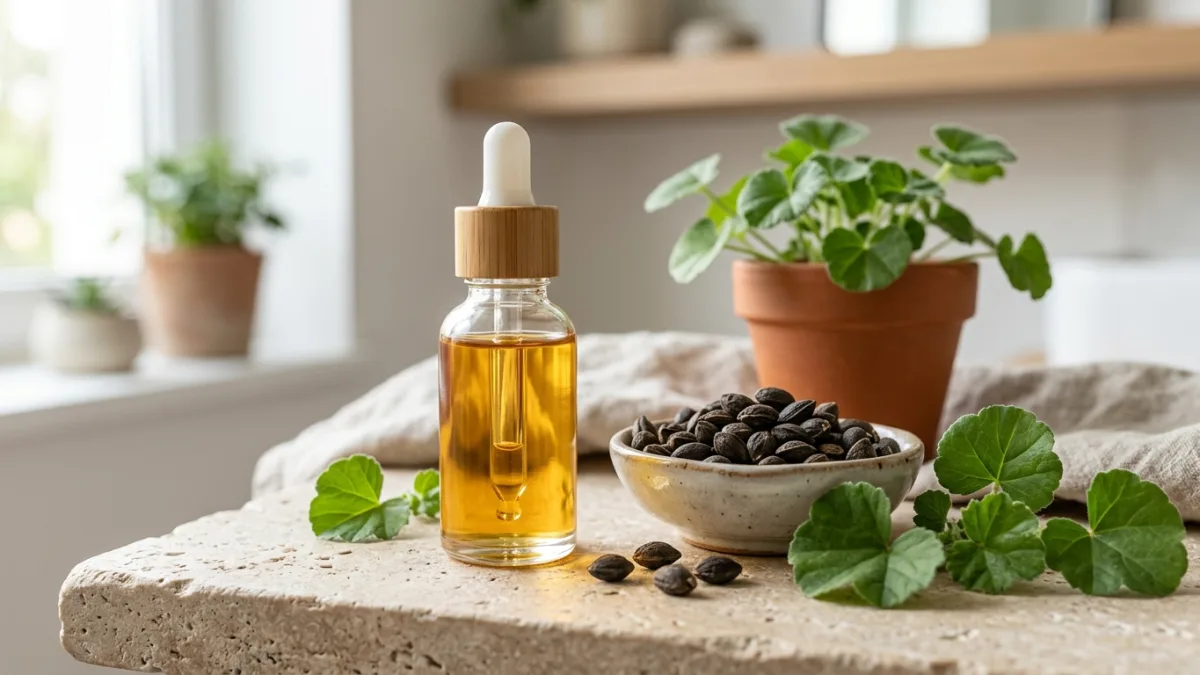
Bakuchiol oil is a plant-derived oil pressed or extracted from the seeds and leaves of the bakuchi plant, known by the scientific name Psoralea corylifolia. It has been used for ages in traditional practices across Asia.
Today, skincare brands use bakuchiol oil as a natural swap for retinol, a lab-made vitamin A ingredient that can dry out or irritate skin.
The word “oil” in bakuchiol oil matters. It tells you how the ingredient is carried and delivered to skin. Oil-based forms tend to feel richer and sit closer to the skin’s surface. This can help with dryness while still letting the active ingredient do its job.
Where bakuchiol comes from
Bakuchiol comes from the seeds of the bakuchi plant, a flowering plant grown mainly in warm regions of Asia. Makers extract the compound, then blend it into an oil base so it stays stable and easy to apply.
This plant origin is a big reason bakuchiol oil gets called a “natural retinol alternative.”
Unlike retinol, which is made in a lab, bakuchiol oil starts as a plant compound. Some people prefer this for personal or skin-sensitivity reasons. Either way, both ingredients aim to support smoother, firmer-looking skin over time.
Bakuchiol oil vs. bakuchiol serum vs. bakuchiol extract
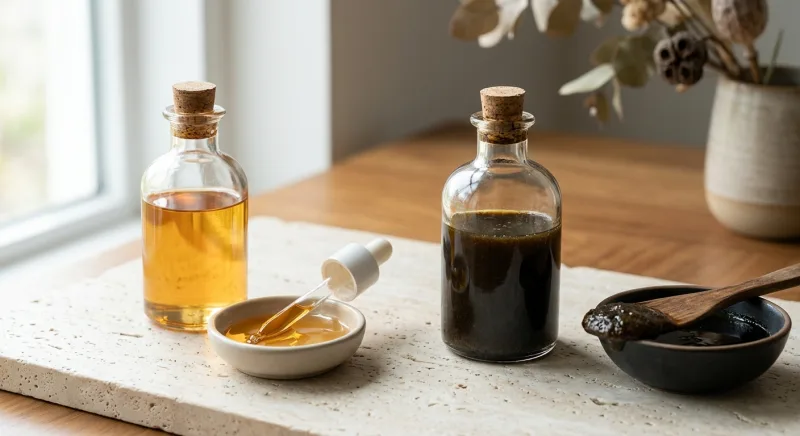
Bakuchiol oil, bakuchiol serum, and bakuchiol extract are not the same thing, even though they share one active ingredient. The difference comes down to format and what else is mixed in. Knowing this helps you pick the right product for your skin.
- Bakuchiol oil: the active ingredient blended into an oil base, often with other nourishing oils, meant to sit on top of skin and lock in moisture.
- Bakuchiol serum: a lighter, water-based or gel-based formula, often absorbed faster, and sometimes mixed with other active ingredients like vitamin C.
- Bakuchiol extract: the raw plant compound itself, before it’s turned into a finished oil or serum product.
If your skin runs dry, bakuchiol oil is often the comfier choice. If your skin is oily or you prefer a lighter feel, a bakuchiol serum may suit you better. Both deliver the same core ingredient, just in different textures.
What Does Bakuchiol Oil Do for Skin?
Bakuchiol oil works by signaling skin cells to act more like they did when they were younger. This can support smoother texture, more even tone, and a firmer look over time. It does this without the flaking or stinging some people feel with retinol.
Anti-aging and firming effects
Results build slowly with regular use. Bakuchiol oil is not a quick fix. Most people need to stick with it for several weeks before they notice a real change in how their skin looks and feels.
Texture and tone benefits
Beyond fine lines, bakuchiol oil can help smooth rough patches and even out blotchy tone. Some people use it to calm the look of old acne marks. Others like it for softening the texture that comes with sun exposure over the years.
Because bakuchiol oil tends to be gentler, it plays well with other skin-tone ingredients like vitamin C or niacinamide. This makes it a flexible piece of a bigger skincare plan, not just a stand-alone fix.

How bakuchiol oil compares to retinol in studies
Some research has looked at bakuchiol oil next to retinol for anti-aging results. . Until that figure is confirmed by a named source, it’s fair to say results vary by skin type, product strength, and how long someone uses it.
What most sources agree on is the irritation gap. Bakuchiol oil tends to cause less redness and peeling than retinol, especially early in use. That’s a key reason people search for bakuchiol oil as a swap-in, not just an add-on.
Is Bakuchiol Oil a Real Alternative to Retinol?
Bakuchiol oil can work as a real alternative to retinol for many people, though it’s not a perfect swap in every case. Both target similar skin concerns, but they get there in different ways. Knowing the differences helps you pick the right one for your skin.
How the two ingredients differ
Retinol is a vitamin A compound made in a lab, while bakuchiol oil comes from a plant. Retinol has a longer track record and more research behind it. Bakuchiol oil is newer to mainstream skincare, though interest in it keeps growing.
The biggest practical difference is tolerance. Retinol often causes dryness, redness, or peeling, especially at first. Bakuchiol oil is generally easier on skin from day one, which is why it’s often picked for sensitive skin.
| Factor | Bakuchiol Oil | Retinol |
|---|---|---|
| Irritation potential | Generally low | Can be higher, especially at first |
| Pregnancy use | Some sources view it as a gentler option; medical advice needed | Generally advised against during pregnancy |
| Onset of visible results | Varies by skin and product strength | Varies by skin and product strength |
| Best for skin type | Sensitive, dry, or reactive skin | Normal to oily skin that tolerates actives well |
| Sun sensitivity | Lower reported sensitivity | Can increase sun sensitivity |
This table is a general guide, not medical advice. Anyone with health concerns, especially during pregnancy, should check with a doctor before adding either ingredient to their routine.
Who should choose bakuchiol oil over retinol
Bakuchiol oil is a strong pick for people with sensitive or reactive skin. It’s also a good fit for anyone who tried retinol before and found it too harsh.
People who are pregnant or nursing often look into bakuchiol oil as a gentler option, though this should always be confirmed with a doctor first.
On the other hand, people with tough, acne-prone, or oily skin who tolerate actives well may still prefer retinol. It has more research behind it for certain skin concerns like deep wrinkles or stubborn acne. Bakuchiol oil can still help, just at a gentler pace.
Bakuchiol Oil vs. Vitamin C: Which One Fits Your Routine?
Vitamin C and bakuchiol oil often get compared because both claim to brighten skin. But they work in different ways. Vitamin C is mainly an antioxidant that fades dark spots and boosts glow. Bakuchiol oil focuses more on texture, fine lines, and overall renewal.
Some people use both together, one in the morning and one at night. Others simply pick whichever addresses their biggest concern. If dullness and dark spots are the main issue, vitamin C usually wins.
If fine lines and rough texture are the focus, bakuchiol oil tends to be the better match.
| Feature | Bakuchiol Oil | Vitamin C |
|---|---|---|
| Main benefit | Fine lines, texture, renewal | Brightening, dark spot fading |
| Best time to use | Morning or night | Usually morning |
| Skin sensitivity risk | Low | Moderate, can sting on broken skin |
| Sun sensitivity | None noted | None noted, but often paired with SPF |
| Works well with | Vitamin C, hyaluronic acid, SPF | Bakuchiol oil, niacinamide, SPF |
| Ideal for | Sensitive, dry, or mature skin | Dull skin, uneven tone |
Neither ingredient cancels the other out. In fact, pairing bakuchiol oil with vitamin C can cover more ground than using just one. It’s a common combination for people who want brightness and smoothness without overloading their skin with harsh actives.
Bakuchiol Oil vs. Niacinamide: Different Jobs, Same Goal
Niacinamide is another popular ingredient that often shows up next to bakuchiol oil on ingredient lists. Both are known for being gentle, but they serve slightly different purposes. Niacinamide calms redness, controls oil, and shrinks the look of pores. Bakuchiol oil works more on fine lines and skin renewal.
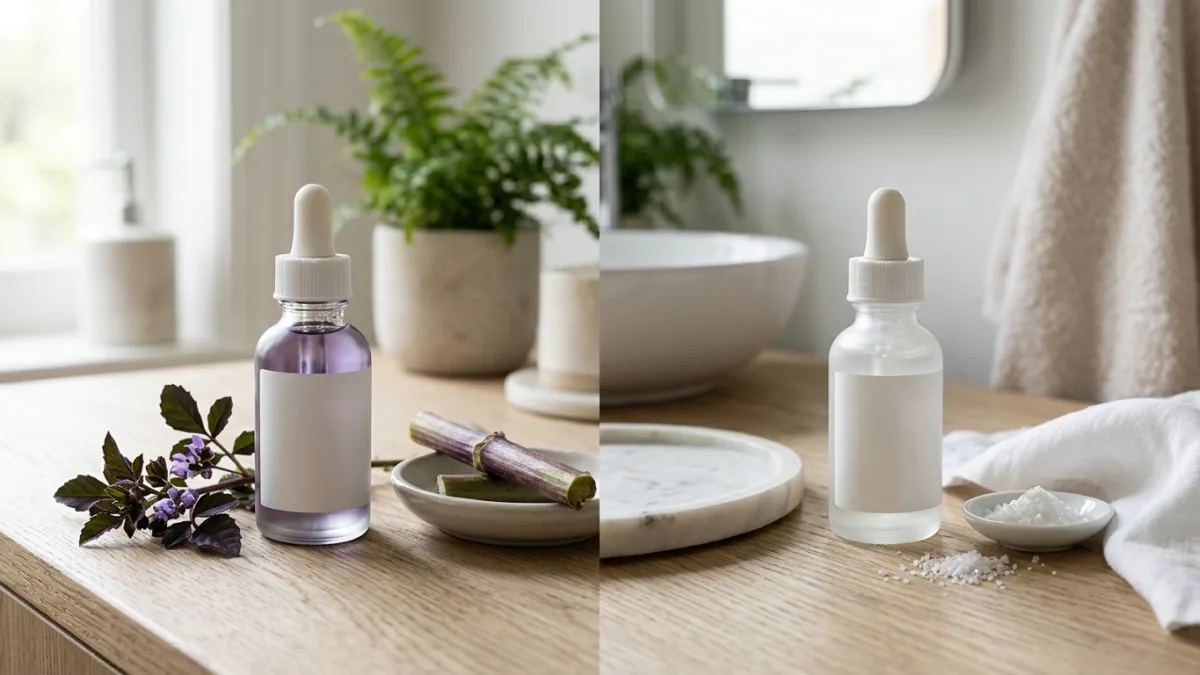
People with oily or acne-prone skin often lean on niacinamide first. Those more concerned with aging signs or rough texture may reach for bakuchiol oil. Many formulas now blend both, since they don’t conflict and can target multiple concerns at once.
| Feature | Bakuchiol Oil | Niacinamide |
|---|---|---|
| Main benefit | Anti-aging, texture smoothing | Oil control, redness reduction |
| Pore appearance | Mild improvement over time | Noticeable improvement |
| Best skin type match | Dry, sensitive, mature | Oily, combination, acne-prone |
| Irritation risk | Low | Very low |
| Common pairing | Niacinamide, vitamin C | Bakuchiol oil, zinc |
| Usage frequency | Daily, once or twice | Daily, once or twice |
Choosing between these two isn’t really an either-or decision for most people. Bakuchiol oil and niacinamide often complement each other rather than compete. Together, they can support smoother skin, fewer visible pores, and a calmer overall look.
How to Add Bakuchiol Oil to a Daily Routine
Adding bakuchiol oil doesn’t require a complicated routine overhaul. Most people simply swap it in where they’d normally use a serum or treatment oil. It fits well after cleansing and before heavier creams or moisturizers.
- Cleanse the face with a gentle, non-stripping cleanser.
- Apply a few drops of bakuchiol oil to damp skin.
- Follow with a moisturizer to lock in hydration.
- Use sunscreen during the day, even on cloudy days.
- Introduce it slowly, starting two to three times a week.
Consistency matters more than quantity. Using a small amount of bakuchiol oil regularly tends to bring better results than using a lot occasionally. Skin needs time to adjust and show visible changes.
Common Mistakes People Make With Bakuchiol Oil
Even though bakuchiol oil is considered gentle, a few habits can reduce how well it works. Understanding these mistakes early can help skin adjust faster and avoid unnecessary irritation.
- Applying too much product at once instead of a light layer.
- Skipping moisturizer, which can leave skin feeling dry.
- Expecting overnight results instead of giving it several weeks.
- Mixing too many new actives in at the same time.
- Forgetting sunscreen, even though bakuchiol oil isn’t linked to sun sensitivity.
Avoiding these missteps helps skin respond more predictably. Since bakuchiol oil works gradually, patience plays a bigger role than with faster-acting ingredients.
Who Should Be Cautious With Bakuchiol Oil

Bakuchiol oil is generally well tolerated, but no ingredient works for everyone. People with known plant allergies should read labels carefully before trying it. Those with very reactive or compromised skin barriers may still want to patch test first.
Anyone now using several other active ingredients should add bakuchiol oil slowly. Adding too many new products at once makes it harder to tell what’s causing irritation, if any shows up.
Before introducing a new active like bakuchiol oil, it’s wise to patch test on a small area first. Apply a small amount to your inner arm and wait a day or two, watching for redness or irritation before using it on your face.
Pregnant or breastfeeding individuals should always check with a healthcare provider before adding new actives to their routine. While this plant-derived option is often marketed as a gentle alternative, its safety profile during pregnancy hasn’t been firmly established, so professional guidance matters here.
How To Choose A Quality Product
Not all formulas are created equal. Concentration, packaging, and supporting ingredients all affect how well a product performs. Reading the label closely can save time and money down the line.
Look for products with clear percentage listings when possible. This helps set realistic expectations and makes it easier to compare one option against another. Vague marketing claims without specifics are worth questioning.
- Check that the ingredient is listed near the top for a meaningful concentration.
- Prefer opaque or dark packaging, since light exposure can degrade plant-based actives over time.
- Look for complementary ingredients like antioxidants or hydrators rather than a long list of potential irritants.
- Avoid products with added fragrance if sensitivity is a concern.
- Check for third-party testing or certifications where available.
Price isn’t always a sure sign of quality. Some cheap formulas work well, while some pricey ones fall short. Reading reviews and checking ingredient lists tends to help more than price alone.
Storage And Shelf Life Tips
Proper storage extends the effectiveness of any skincare active. Heat, light, and air exposure can all cause gradual breakdown, reducing potency well before the labeled expiration date arrives.
Keeping bottles tightly closed and stored in a cool, dry place helps preserve quality. Bathroom cabinets exposed to steam and humidity aren’t always ideal, despite being a common storage spot.
A noticeable change in color, texture, or smell usually signals it’s time to replace the product. When in doubt, checking with the manufacturer’s guidelines is the safest approach.
Market context
How the broader market shapes Bakuchiol Oil in 2026
The figures below come from adjacent, well-documented markets. Each row names the subject it actually measures and links to its original source — these are related market indicators, not Bakuchiol Oil claims.
| What it measures | Figure | Source |
|---|---|---|
| Oleyl adapalenate (Adapinoid), a retinoid alternative, versus retinol in a randomized clinical trial | In a 12-week randomized clinical trial, topical oleyl adapalenate (Adapinoid) improved facial wrinkle severity by 9.45% compared to a 4.11% improvement with retinol. | Skin Health and Disease (Wiley/PMC), 2024 |
| Natural personal care products (NPCPs) and contact allergen prevalence | A JAMA Dermatology study found that 89.5% of 1,651 natural personal care products contained one or more of the 100 most prevalent contact allergens, many of which were botanical extracts and fragrances. | JAMA Dermatology (PMC), 2022 |
| Acute oral toxicity (LD50) of psoralen, a major hepatotoxic component of Psoralea corylifolia (Fructus Psoraleae), in mice | The acute oral median lethal dose (LD50) of psoralen, a key hepatotoxic component of Psoralea corylifolia, was determined to be 1,673 mg/kg in ICR mice. | NCBI PMC (Toxins / peer-reviewed study on Psoralen Induced Liver Injury), 2018 |
Read the complete guide: Your Skincare Ingredients Guide to Fewer Guessing Games
Frequently Asked Questions
Is this ingredient a direct replacement for retinol?
It’s often described as a gentler alternative, but results can vary. Some people use it alongside retinol on alternating nights, while others switch entirely. Trying both and watching how your own skin responds can help guide that decision.
How long before visible results appear?
Most people notice gradual changes over several weeks of consistent use. Skin texture and tone often improve first, with more visible changes to fine lines appearing later. Patience and regular application matter more than speed.
Can it be used both morning and night?
Yes, many formulas are stable enough to use twice a day, unlike some older retinoids. Still, wearing sunscreen during the day stays important, since any active ingredient can make skin a bit more sensitive to sunlight over time.
Does it work for acne-prone skin?
Some people with acne-prone skin say their skin looks and feels better, with less redness. Results depend on skin type and the rest of the routine used with it. Seeing a skin doctor is a good idea for acne that won’t go away.

Can it be mixed with vitamin C?
Many people use both without trouble, often putting on vitamin C in the morning and this ingredient at night. The order you layer products in and how each is made can affect how well they mix, so trying one at a time helps spot any sensitivity.
Is it safe for sensitive skin types?
It’s often seen as milder than many other active ingredients, making it a fair choice for sensitive skin. Patch testing is still a good idea, since how skin reacts can vary no matter how well an ingredient is usually tolerated.
How much product should be used per application?
A few drops are usually enough to cover the entire face. Using more than recommended doesn’t necessarily speed up results and may increase the chance of irritation, especially during the first few weeks of use.
Expert insights
Bakuchiol is often used as a gentler alternative to retinol. It may help your skin look smoother and reduce the appearance of wrinkles,
Shilpi Khetarpal, MD, Dermatologist
Some folks like it because it’s considered milder on the skin than other ingredients.
Shilpi Khetarpal, MD, Dermatologist
References
- Bakuchiol is a plant compound found in abundance in the seeds and leaves of the Psoralea corylifolia plant. — PubMed (International Journal of Cosmetic Science) (Peer-reviewed study indexed on PubMed, a service of the U.S. National Library of Medicine/NIH)
- Although bakuchiol has no structural resemblance to retinoids, it can function as a retinol-like compound by regulating similar genes in the skin. — PubMed (International Journal of Cosmetic Science) (Peer-reviewed clinical/gene-expression study indexed on PubMed (NIH))
- A clinical study of a nature-based bakuchiol moisturizer found it well tolerated and effective for people with sensitive skin, including those with eczema and rosacea, and significantly increased skin moisture content. — Journal of Drugs in Dermatology (Peer-reviewed dermatology journal publishing a clinical trial on sensitive-skin subjects)
- The demand for ‘clean’ skincare products has driven interest in bakuchiol as a retinoid alternative in dermatology, prompting systematic review of the scientific literature on the ingredient. — PubMed (Journal of Cosmetic Dermatology systematic review) (Peer-reviewed systematic review indexed on PubMed (NIH))
