
Skincare ingredients
Retinol Serum 101: What It Does and How to Use It the Right Way
Last updated: November 5, 2026
Retinol serum is a topical form of vitamin A that speeds up skin cell turnover, helping smooth fine lines, even out texture, and clear clogged pores over time. You apply it at night in a small amount, follow with moisturizer, and always wear SPF the next day.
New users should start slow to avoid irritation.
If you’ve stood in front of a skincare shelf feeling lost, you’re not alone. Retinol serum shows up on almost every “must-have” list, but few explain what it actually does or how to use it without your face turning red and flaky. This guide breaks it down in plain terms.
We’ll cover what retinol serum is, who should use it, how to start without wrecking your skin barrier, and how it fits into the rest of your beauty routine. That last part matters more than most guides admit.
What Is Retinol Serum and What Does It Actually Do?
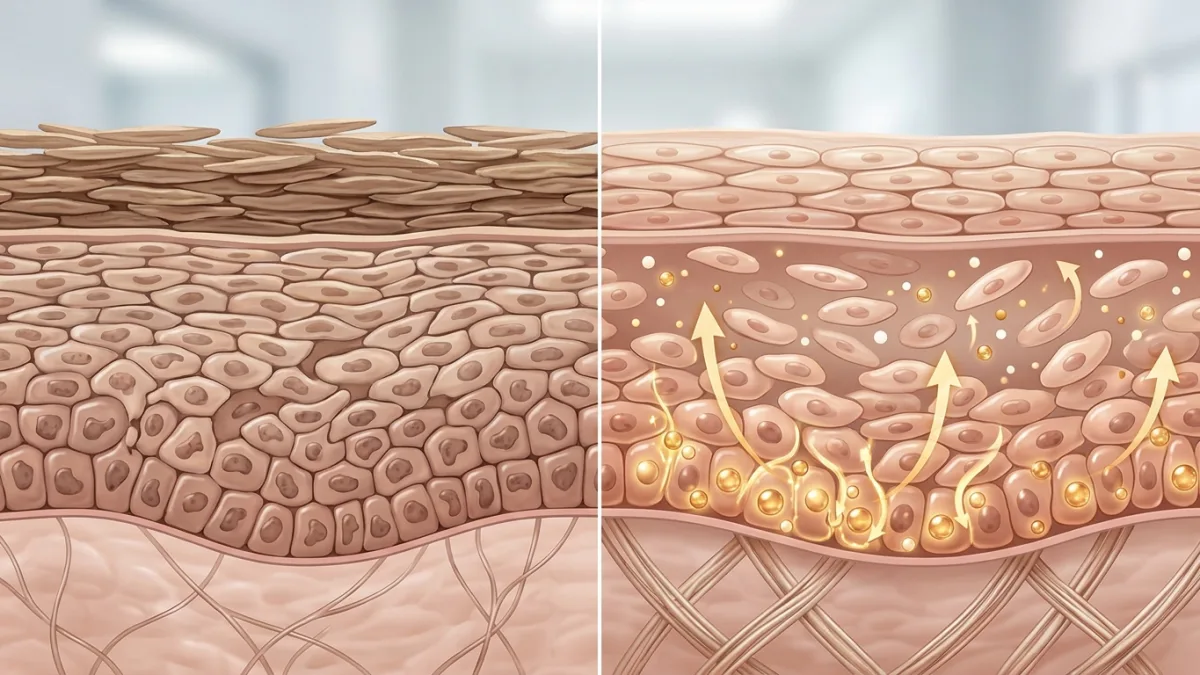
Retinol serum is a lightweight liquid or gel that carries a form of vitamin A onto your skin. Its job is to push skin cells to turn over faster, which is a fancy way of saying it helps old cells shed so newer ones can rise up.
Over time, this process can help smooth rough patches, fade dark spots, and support the skin’s own collagen, the protein that keeps skin firm.
A peer-reviewed in vivo study found that applying topical retinol to the surface of live, naturally aged human skin significantly increased collagen deposition and other structural proteins in the dermis. (PubMed / Journal of Investigative Dermatology (via PMC), 2016)
(PMC (National Institutes of Health) — ‘Molecular basis of retinol anti-aging properties in naturally aged human skin in vivo’, 2016) That’s why Retinol Serum is a staple in so many nightly routines.
How retinol works on skin at a basic level
Think of your skin as a brick wall that rebuilds itself all the time. Retinol serum speeds up that rebuild. It nudges cells to renew faster and can also calm the clogged pores that lead to breakouts.
Some situations call for waiting. If you’re pregnant or breastfeeding, it’s wise to pause retinol serum and speak with a doctor before resuming use. Your skin’s needs can shift during this time, so professional guidance helps you make the safest choice.
Because it works below the surface, results take patience. Retinol serum doesn’t act like a quick fix. It works with your skin’s natural cycle, not against it.
Retinol vs. other retinoids (retinaldehyde, adapalene, tretinoin)
Retinol is one member of a bigger family called retinoids, which are all forms of vitamin A. Some are gentler, some are stronger, and mixing up the names causes a lot of confusion.
Retinaldehyde is close to retinol in strength but often causes less irritation. Adapalene is a strong prescription retinoid mostly used for acne. Tretinoin is the strongest of the group and needs a doctor’s note in most places.
| Ingredient | Strength | Access | Best For |
|---|---|---|---|
| Retinol | Mild to moderate | Over the counter | Beginners, general aging concerns |
| Retinaldehyde | Moderate | Over the counter | Sensitive skin wanting faster results |
| Adapalene | Moderate to strong | Prescription or OTC (low dose) | Acne-prone skin |
| Tretinoin | Strong | Prescription only | Deeper wrinkles, medical-grade renewal |
For most people starting out, retinol serum is the easiest entry point. It’s widely sold, comes in many strengths, and gives your skin time to adjust before you consider anything stronger.
Who Should Use a Retinol Serum (and Who Should Wait)?
Most adults dealing with fine lines, dullness, or clogged pores can benefit from retinol serum. But timing and skin condition matter just as much as desire to start.
Skin types and concerns retinol helps most
Retinol serum tends to help people with early fine lines, rough texture, dullness, and mild breakouts. Oily and combination skin often tolerate it well since it can help manage excess oil over time.
Dry or sensitive skin can still use retinol serum, but usually needs a lower strength and slower pace. Buffering it with moisturizer, which we’ll cover shortly, makes a big difference.
When to avoid or delay retinol use
Some cases call for waiting. If you’re pregnant or breastfeeding, most advice says to skip Retinol Serum until a doctor says it’s fine.
You should also hold off if your skin barrier is already compromised, say from sunburn, active eczema, or recent harsh treatments. Retinol serum works best on skin that’s calm and ready, not already inflamed.
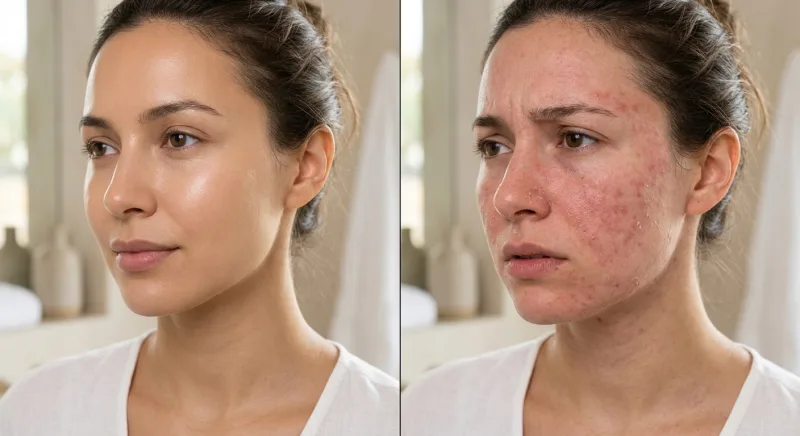
How to Start Using Retinol Serum Without Irritation
Starting retinol serum without irritation means going slow, using less than you think you need, and pairing it with a good moisturizer. Rushing is the most common reason people quit too early.
A beginner application schedule
New users often do best starting with just a couple of nights a week. From there, you can slowly add more nights as your skin builds tolerance to retinol serum.
There’s no single “correct” pace for everyone. Some skin adjusts fast; some needs weeks longer. The goal is steady progress, not speed.
How to layer retinol serum correctly
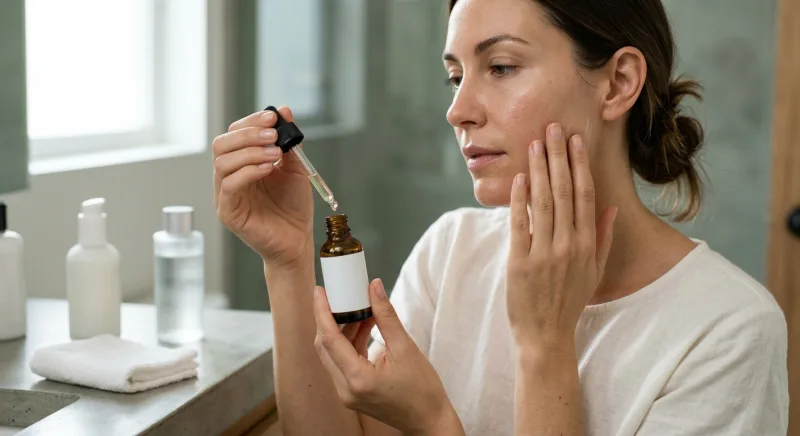
Layering order matters. Clean, dry skin comes first, since damp skin can let retinol serum absorb too fast and increase irritation risk.
Apply a pea-size amount, spread thin, then follow with a plain moisturizer to lock in moisture. In the morning, sunscreen isn’t optional, since retinol serum can make skin more sun-sensitive.
Common mistakes that cause irritation
Using too much retinol serum too soon is the top mistake. More product doesn’t mean faster results — it usually just means more redness.
Other common errors include skipping moisturizer, applying it near the eyes, or mixing it with strong exfoliants on the same night. Each one raises your odds of irritation.
- Cleanse and pat skin fully dry before applying retinol serum
- Use a pea-size amount for the whole face
- Wait a few minutes, then apply moisturizer over it
- Skip retinol serum on nights you use strong exfoliating acids
- Apply SPF every morning without exception
What Is the Retinol Purge, and How Long Does It Last?
The retinol purge is a short phase of extra breakouts that can happen when skin cell turnover speeds up. It’s different from an allergic reaction or true irritation.
During this phase, Retinol Serum is thought to push clogged material to the surface faster than usual. This purge phase tends to fade with steady use rather than staying around. Most people find it settles down with steady use.
The tricky part is telling purging apart from a bad reaction. Purging tends to show up as small breakouts in areas you normally break out. True irritation looks more like burning, peeling, or widespread redness.
If symptoms feel more like burning than bumps, that’s a sign to pause retinol serum and let skin recover. When in doubt, easing off for a few nights rarely hurts progress.
Retinol Strength Comparison: Choosing the Right Percentage
Retinol Serum comes in a range of strengths, usually listed as a percent on the label. Picking the right one matters more than picking the strongest one. Higher isn’t always better, especially for beginners.
Below is a general breakdown of common retinol concentrations and who they tend to suit. This is a starting guide, not a strict rule, since formulas vary in how they deliver the ingredient.
| Strength | Best For | Typical Experience |
| 0.01% – 0.03% | First-time users, sensitive skin | Gentle introduction, lower irritation risk |
| 0.04% – 0.1% | Users with some retinol experience | Noticeable results with manageable adjustment period |
| 0.25% – 0.3% | Experienced users with built-up tolerance | Stronger effects, higher chance of dryness or flaking |
| 0.5% – 1% | Long-term retinol users only | Most potent over-the-counter strength, needs careful pacing |
Starting low and moving up slowly gives skin time to build tolerance. Jumping straight to a high percent often backfires, leading to redness that stops people from going on at all.
Building up strength slowly gives skin time to adjust without becoming overwhelmed or irritated. This kind of guidance echoes what most skincare professionals repeat: patience with strength matters as much as consistency with use.
Retinol vs. Other Active Ingredients
Retinol Serum often gets compared to other well-known actives like vitamin C, niacinamide, and AHAs or BHAs. Each ingredient does a different job, and knowing the differences helps you avoid overlap or needless irritation.
Some people think more active ingredients mean better results. In fact, piling on too many strong ingredients at once usually does the opposite, straining the skin’s outer layer instead of helping it.
| Ingredient | Main Function | Works Well With Retinol? |
| Retinol | Cell turnover, texture, fine lines | — |
| Vitamin C | Brightening, antioxidant protection | Best used at a different time of day |
| Niacinamide | Barrier support, redness reduction | Generally compatible, often paired together |
| AHAs/BHAs | Exfoliation, pore clearing | Use on alternating nights to avoid over-exfoliation |
| Hyaluronic Acid | Hydration, plumping | Pairs well, helps offset dryness |
Vitamin C and retinol don’t have to clash, but many people find it easier to use vitamin C in the morning and save retinol for night. This keeps routines simple and cuts the chance of irritation.
Niacinamide is one of the easier pairings. It’s often put into retinol formulas themselves, mainly to help calm skin while the retinol does its work.
Exfoliating acids need more caution. Combining them with retinol on the same night can overwhelm the skin barrier, leading to peeling, tightness, or breakouts that take longer to calm down.
Building a Simple Retinol Routine
A retinol routine doesn’t need to be complicated to work. In fact, simpler routines tend to be easier to stick with, which matters more than having a long list of products.
A basic nighttime routine might start with a gentle cleanser, followed by retinol serum, and finished with a moisturizer to lock in hydration. That’s often all skin needs.
- Cleanse with a mild, non-stripping cleanser
- Wait for skin to fully dry before applying retinol
- Apply a pea-sized amount of retinol serum
- Follow with a fragrance-free moisturizer
- Use sunscreen every morning without exception
Applying retinol to damp skin can increase irritation, since moisture helps the product absorb faster and more intensely. Waiting a few minutes after cleansing helps reduce that risk.
Sunscreen deserves special attention here. Retinol makes skin more sensitive to sunlight, so skipping sun protection during the day can undo a lot of the progress made overnight.
How Long Before Results Show Up
Patience is one of the most overlooked parts of using Retinol Serum. Results come slowly, and hoping for quick change often leads to letdown or needless swapping of products.
Skin often smooths bit by bit as it gets used to regular retinol use over time. Many people see early changes in texture before they notice anything with fine lines or dark spots.
Staying steady matters more than going strong. Using a lower-strength retinol every night often works better than now-and-then use of a stronger mix, simply because skin does better with steady use.
Tracking progress with photos can help, since day-to-day changes are hard to see in the mirror. Comparing photos from several weeks apart usually shows more than you’d think.
Common Mistakes That Slow Down Progress
Even with the right product, small habits can slow results or cause unnecessary irritation. Most of these mistakes are easy to fix once they’re recognized.
- Applying too much product, thinking more speeds up results
- Skipping moisturizer, which increases dryness and flaking
- Using retinol every night before skin has adjusted
- Forgetting daily sunscreen, undoing overnight benefits
- Mixing too many active ingredients at once
- Giving up too early before results have time to appear
Overapplication is one of the most common issues. A pea-sized amount is usually enough for the entire face, and using more doesn’t speed up results.
Skipping sunscreen is another common mistake. Since retinol makes skin more sensitive to sun, unprotected sun time can make worse the very things retinol is meant to fix, like uneven tone and fine lines.
Mixing retinol with other strong active ingredients, like exfoliating acids or benzoyl peroxide, can also backfire. Piling on too many strong ingredients at once often leads to irritation instead of faster results.
Patience matters too. Most people need several weeks of steady use before they see any change, so quitting the routine early can mean missing out on the long-term gains entirely.
Market context
How the broader market shapes Retinol Serum in 2026
The figures below come from adjacent, well-documented markets. Each row names the subject it actually measures and links to its original source — these are related market indicators, not Retinol Serum claims.
| What it measures | Figure | Source |
|---|---|---|
| NIH funding for pediatric dermatology research on skin conditions | The NIH funded 307 grants totaling $388 million across 10 major pediatric dermatology skin conditions studied for research funding versus disease burden alignment. | Pediatric Dermatology (PMC/NIH), 2025 |
| Dietary carotenoids and their conversion to retinol (vitamin A) | Although plants synthesize hundreds of different carotenoids, only about 10% of them can be converted by the body into retinol, the active form of vitamin A. | Linus Pauling Institute, Oregon State University, 2026 |
| FDA cosmetic product facility registrations and product listings under MoCRA | Since MoCRA’s mandatory registration and listing requirements took effect, the FDA now has over 15,000 unique, active cosmetic product facility registrations and over 1 million unique, active cosmetic product listings, up from just 5,176 facility registrations and 35,102 product listings under the prior voluntary program. | U.S. Food and Drug Administration (FDA Voices), 2026 |
Read the complete guide: Your Skincare Ingredients Guide to Fewer Guessing Games
Frequently Asked Questions
How long does it take for retinol serum to show results?
Most people notice initial improvements, like smoother texture, within four to six weeks. More significant changes, such as reduced fine lines or fading dark spots, typically take three to six months of consistent, correct use to become noticeable.
Can I use retinol serum every day?
Beginners should start with two to three nights a week to let skin build tolerance. Once irritation subsides, frequency can gradually increase to nightly use, depending on skin sensitivity and the specific product’s strength.
Should retinol serum be applied before or after moisturizer?
Retinol Serum is usually put on after washing the face and before moisturizer, so it can soak into the skin. Those with sensitive skin sometimes use a “sandwich method,” putting on moisturizer first, then Retinol Serum, then another layer of moisturizer to cut down on irritation.
Can retinol serum be used around the eyes?
The skin around the eyes is thinner and more delicate, so care is needed. Many people avoid putting regular facial retinol there and instead choose specially made eye creams with lower retinol amounts made for that area.
Is it normal for skin to purge when starting retinol?
Mild purging, like small breakouts or flaking, can happen as skin adjusts and cell turnover speeds up. This usually clears up within a few weeks. If irritation is bad or lasts a long time, using it less often or seeing a skin doctor is a good idea.
Can pregnant or breastfeeding women use retinol serum?
Retinoids are usually advised against during pregnancy and breastfeeding because of possible risks. Anyone who is pregnant, planning to be pregnant, or nursing should ask a doctor before using Retinol Serum products and think about gentler ingredients instead.
What’s the difference between retinol and prescription retinoids?
Retinol is a milder, over-the-counter form of vitamin A that changes slowly into an active acid form inside the skin. Prescription forms, like tretinoin, are stronger and work faster but often cause more visible redness or peeling at first use.
Can retinol serum help with acne as well as aging?
Yes, retinol is often used for both concerns. It helps clear pores and even out skin cell turnover, which can cut down breakouts, while its collagen-boosting effects also help fine lines, uneven texture, and other signs of aging.
Key statistics
- In a 12-week randomized clinical trial, topical retinol 0.5% cream improved wrinkle severity by 4.11% compared to baseline. (PubMed / Journal of Cosmetic Dermatology, 2024)
- Retinaldehyde, a related retinoid, is considered ten times more bioavailable than retinol, making it one of the strongest over-the-counter retinoid options. (PubMed, 2024)
- Retinol is generally considered to be roughly ten times less potent than prescription-strength tretinoin, which is why cosmetic retinol formulations are made at higher percentages to approximate tretinoin’s effects. (Journal of Drugs in Dermatology (via PubMed), 2015)
Expert insights
If someone has a lot of redness or inflammation in their skin, they should avoid retinoids and ask their dermatologist about other therapies that are more directed to a condition called rosacea,
Anne Chapas, MD, FAAD, a board-certified dermatologist in private practice in Manhattan
