
hair removal
Facial Hair Removal: The Complete 2026 Guide to Every Method That Works
Last updated: November 5, 2026
The best facial hair removal method depends on your goals. Shaving and depilatory creams work fast, but you must repeat them often. Waxing and threading last longer. At-home IPL and professional laser reduce hair growth over time. Electrolysis is the only method considered permanent.
To choose the right method, match it to your skin type and hair coarseness. Also think about how much upkeep you want to do each week.
What Is the Best Way to Remove Facial Hair?
There’s no single best way to remove facial hair — the right choice depends on your skin, hair type, and budget. Facial hair removal splits into two broad categories: temporary methods you repeat often, and long-term methods that reduce or destroy hair over time.
Knowing the difference helps you avoid wasted money and irritation.
Quick comparison: temporary vs. long-term methods
Temporary facial hair removal — shaving, tweezing, threading, depilatory cream — removes hair above or at the skin’s surface. Long-term facial hair removal, like IPL and electrolysis, targets the follicle itself. That’s why results last longer but usually cost more upfront.
| Method | Permanence | Pain Level | Cost Tier | Best Facial Zone |
|---|---|---|---|---|
| Shaving | Temporary (days) | Low | Low | Cheeks, jawline |
| Waxing | Temporary (weeks) | Moderate | Low–Mid | Upper lip, chin |
| Depilatory cream | Temporary (days) | Low | Low | Upper lip, cheeks |
| Tweezing | Temporary (weeks) | Moderate | Low | Brows, stray hairs |
| Threading | Temporary (weeks) | Moderate | Low–Mid | Brows, upper lip |
| At-home IPL | Long-term reduction | Low–Moderate | Mid (one-time device cost) | Chin, upper lip, cheeks |
| Professional laser | Long-term reduction | Moderate | High (recurring sessions) | Larger facial areas |
| Electrolysis | Permanent | Moderate–High | High (recurring sessions) | Chin, upper lip, isolated hairs |
How to choose based on your skin type and hair type
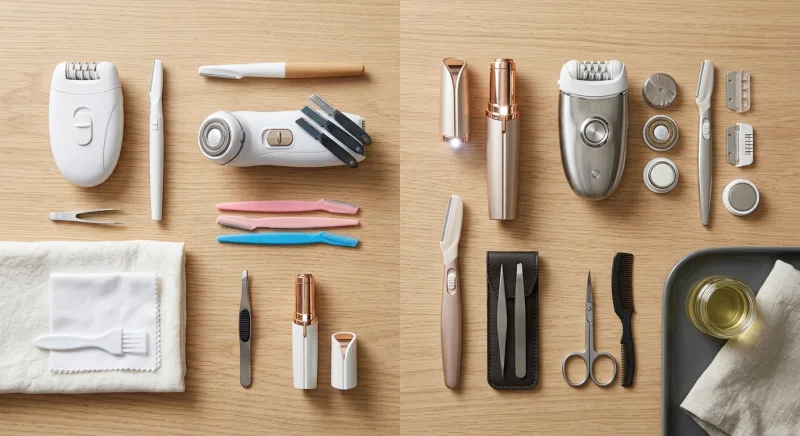
Fine, light hair often responds differently to facial hair removal devices than coarse, dark hair. Sensitive skin may react to depilatory chemicals or hot wax. That’s why having access to multiple device types — trimmers, epilators, IPL handsets — matters more than chasing one “perfect” tool.
Bellxi stocks every device type for every skin type, from painless IPL laser handsets to precision trimmers and epilators. This range lets you match facial hair removal tools to your actual skin and hair, rather than settling for a one-size-fits-all option.
At-home IPL facial hair removal has become a go-to option for women seeking salon-quality results without leaving home. Bellxi stocks a full range of these modern devices, built for every skin type, so anyone can find the right fit for their routine.

Temporary Facial Hair Removal Methods
Temporary facial hair removal methods are fast, low-cost, and easy to start today. They don’t require a big investment, but they do require regular repeats to keep hair away.
Shaving and dermaplaning
Shaving is the quickest facial hair removal method for cheeks and jawlines. Dermaplaning uses a fine blade to remove peach fuzz and dead skin at once. Both give instant results but regrowth appears within days, so this method suits people who want a fast routine over a lasting fix.
Waxing
Waxing pulls hair from the root, so facial hair removal results last noticeably longer than shaving, keeping skin smooth well after regrowth would normally appear. It works well on the upper lip and chin but can irritate sensitive skin, especially with repeated sessions.
Depilatory creams
Depilatory creams dissolve hair at the surface using chemical compounds. They’re painless and quick, but always patch test first — facial skin reacts more easily than legs or arms to these formulas.
Tweezing/plucking
Tweezing suits small areas like eyebrows or stray chin hairs. It’s precise but slow, making it impractical as a full-face facial hair removal method. Overuse in one spot can also cause ingrown hairs.
Threading
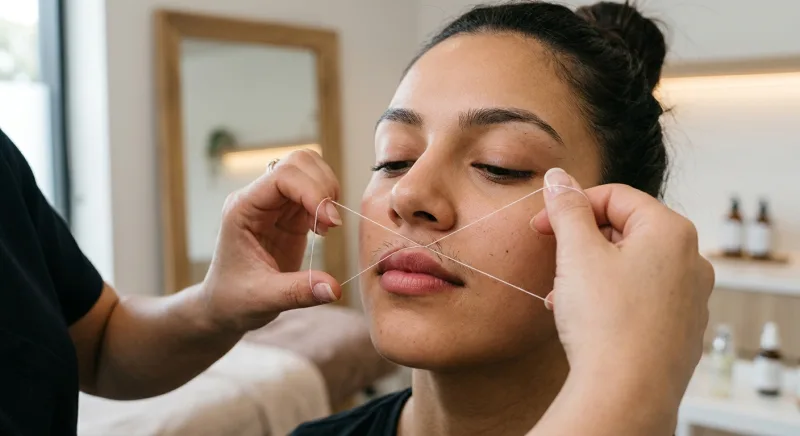
Threading uses twisted cotton thread to lift and remove hair in clean lines. It’s popular for eyebrows and upper lip facial hair removal because it’s precise and doesn’t involve chemicals or heat.
Long-Term and Permanent Facial Hair Removal Options
Long-term facial hair removal targets the hair follicle instead of just the visible strand. These methods take more sessions upfront but reduce how often you need to repeat treatment.
At-home IPL devices
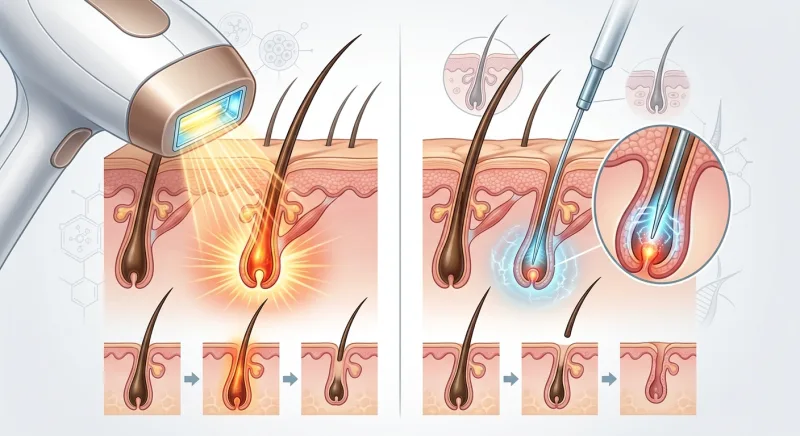
IPL facial hair removal uses light pulses absorbed by pigment in the hair, which weakens the follicle over repeated use. Results build gradually as sessions continue, with hair growing back finer and sparser over time.
IPL works best on darker hair against lighter skin tones, though device technology has expanded who it can help.
Painless IPL laser handsets are one option among several for at-home facial hair removal, alongside trimmers and epilators, depending on your comfort with light-based treatments.
Professional laser treatments
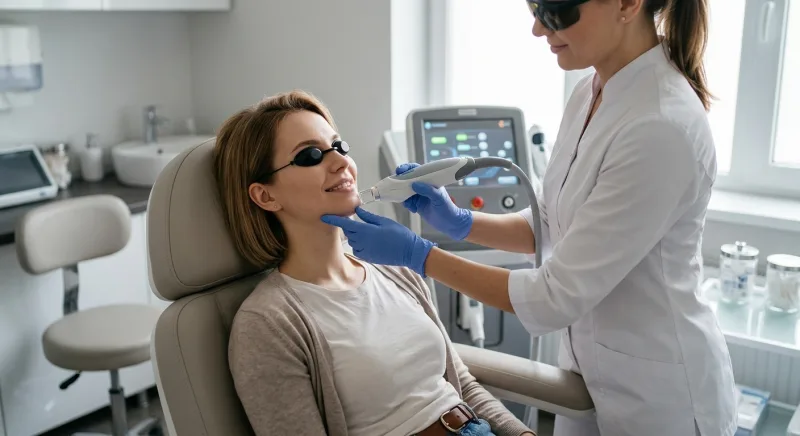
Professional laser facial hair removal uses stronger, clinic-grade equipment than at-home devices. It typically requires several sessions spaced weeks apart, and results vary based on hair color and skin tone.
Electrolysis
Electrolysis is widely regarded as the only facial hair removal method considered truly permanent. It destroys individual follicles with an electric current, making it effective on all hair colors and skin tones, unlike light-based methods.
How Do You Choose the Right Method for Your Face?
You choose the right facial hair removal method by weighing three things together: facial zone, skin sensitivity, and hair coarseness. Most advice covers these separately, but they interact — a method that suits your chin might not suit your upper lip.
Matching method to facial zone (chin, upper lip, cheeks, brows)
The chin often has coarser hair, so waxing, electrolysis, or IPL facial hair removal tend to work better there. The upper lip suits threading or depilatory cream. Cheeks respond well to shaving or dermaplaning for peach fuzz removal. Brows need precision tools like tweezers or threading.
Shaving is quick and painless but temporary. Waxing hurts more and lasts longer. IPL and laser reduce hair gradually with mild discomfort. Electrolysis is the slowest and most tedious, but many consider it the most permanent option overall.
Matching method to skin sensitivity and hair coarseness
Sensitive skin usually tolerates shaving and IPL better than hot wax or chemical creams. Coarse hair often needs stronger methods like electrolysis or professional laser. Fine vellus hair, like peach fuzz, responds well to gentler facial hair removal tools like dermaplaning.
Budget and time commitment
Shaving and creams cost little but demand frequent repeats. IPL devices cost more upfront but reduce long-term spending on salon visits. Electrolysis and laser require ongoing appointments, so factor in both money and time before committing to a facial hair removal plan.
- Brows: tweezing or threading for shape control
- Upper lip: threading, depilatory cream, or IPL for finer hair
- Chin: waxing, electrolysis, or IPL for coarser hair
- Cheeks: shaving or dermaplaning for peach fuzz removal

How to Prep Your Skin Before Removing Facial Hair
Prepping skin properly makes any facial hair removal method safer and more effective. Skipping prep raises the risk of irritation, redness, or missed hair.
Cleansing and makeup removal
Always start facial hair removal on clean, makeup-free skin. Product buildup can clog blades, block IPL light absorption, or trap bacteria in freshly opened pores.
Avoiding over-exfoliation
Skip harsh scrubs right before facial hair removal. Over-exfoliated skin is more prone to nicks, redness, and sensitivity, especially with waxing or depilatory creams.
Patch testing new products or devices
Patch test any new depilatory cream or IPL device on a small skin area first. This step helps catch reactions before they affect your whole face during facial hair removal.

Aftercare: Soothing Skin and Preventing Irritation
Aftercare matters as much as the facial hair removal method itself. Good aftercare prevents bumps, redness, and ingrown hairs from undoing your results.
Calming redness and bumps
Apply a fragrance-free, soothing product after facial hair removal to calm redness. Avoid hot water and heavy makeup for a few hours after waxing, IPL, or shaving.
Ingrown hair prevention
Gentle exfoliation between facial hair removal sessions helps prevent ingrown hairs. Avoid tight touching or picking at the treated area, which can worsen irritation.
When to moisturize vs. when to wait
Wait a few hours before moisturizing after depilatory cream or waxing, since pores are more open. After shaving or IPL facial hair removal, a light moisturizer right away usually helps calm the skin.

Is Facial Hair Removal Safe for Sensitive Skin or Skin Conditions?
Facial hair removal can be safe for sensitive skin, but the method matters more than usual. Some conditions call for gentler tools and extra caution before starting any routine.
Rosacea, eczema, and acne-prone skin considerations

Rosacea and eczema-prone skin may react to waxing or chemical depilatories. Facial hair removal methods with less friction, like careful shaving, are often gentler on sensitive, reactive skin. Always consult a dermatologist for active flare-ups before removing facial hair.
Facial hair and PCOS/hormonal hair growth
Hormonal conditions like PCOS can cause hirsutism, or excess facial hair growth, driven by androgen levels in the body. Facial hair removal manages the symptom, but a doctor can address underlying hormonal causes alongside your removal routine.

Building a Facial Hair Removal Routine You Can Stick To
A sustainable facial hair removal routine beats a one-time fix. Combining methods and adjusting over time keeps skin healthier and results more consistent.
Daily vs. weekly vs. monthly maintenance
Shaving and dermaplaning fit into a daily or weekly facial hair removal routine. Waxing and threading work on a monthly cycle. IPL sessions usually follow their own schedule, spaced out as the follicle responds.
Combining methods (e.g., dermaplaning + IPL)
Many people combine facial hair removal methods, like dermaplaning for peach fuzz between scheduled IPL sessions on coarser hair. This layered approach handles different hair types on the same face without over-relying on one tool.
Signs it’s time to switch methods
Persistent irritation, slow results, or a change in skin sensitivity are signs to switch your facial hair removal method. Since Bellxi ships within 24 hours and backs devices with a 30-day risk-free guarantee, testing a new tool carries little downside.
Your facial hair removal needs can change over time. Building a routine around these changes, instead of sticking to one method, tends to work better. This approach usually gives you more comfortable skin and better results in the long run.

| Routine Element | Frequency | Typical Devices Used |
|---|---|---|
| Peach fuzz upkeep | Weekly | Dermaplaning tool, trimmer |
| Coarse hair reduction | Every 1–2 weeks (building phase) | IPL handset |
| Brow and lip touch-ups | As needed | Tweezers, epilator |
| Deep maintenance | Monthly | Waxing or threading |
Many Bellxi customers pair a precision trimmer with an IPL laser handset for a complete facial hair removal routine. Explore the full range of women’s grooming and hair removal devices at bellxi.com to build the combination that fits your skin type.
Market context
U.S. consumer spending on personal care products and services — U.S. consumer spending on personal care products and services increased by 9.7 percent in 2023. U.S. Bureau of Labor Statistics, 2023
Prevalence of skin disease in the United States — Nearly 85 million Americans, or 27% of the population, were seen by a physician for at least one skin disease in 2013, according to the American Academy of Dermatology’s burden of skin disease report. Journal of the American Academy of Dermatology / ScienceDirect, 2017
Adjacent-market figures — each names the subject it measures, not facial hair removal directly.
Facial Hair Removal FAQs
What is the most permanent way to remove facial hair?
Electrolysis is widely considered the most permanent facial hair removal method, treating each follicle individually. IPL and laser reduce hair growth over time and are better understood as long-term reduction rather than true permanent removal.

Electrolysis works follicle by follicle, which is why many consider it a true removal method. Laser and IPL devices instead focus on reducing regrowth gradually, making them a long-term reduction option rather than permanent removal.
Can facial hair removal cause skin damage or scarring?
Facial hair removal can cause irritation or scarring if done improperly, especially with over-exfoliation or incorrect device use. People with active skin conditions should consult a dermatologist before starting any new facial hair removal method.
Is at-home IPL as effective as professional laser treatment?
At-home IPL facial hair removal devices, like those from BellXi, are designed for gentle, everyday use. Professional laser equipment is typically operated at higher settings by trained technicians, which can influence how quickly results appear.
How often should I remove facial hair?
It depends on the method. Shaving suits a daily or weekly face schedule since regrowth appears quickly. Waxing and threading typically last two to four weeks. Laser and IPL require repeated sessions over months but reduce how often removal is needed overall.
Can facial hair removal cause skin damage?
Any method carries some risk if done incorrectly. Shaving can cause razor burn or nicks. Waxing and threading may cause redness or irritation. Depilatory creams can trigger chemical burns if left on too long. Laser and IPL can cause burns or pigment changes on unsuitable skin tones or settings.
Depilatory creams and waxing can trigger irritation on sensitive skin, from redness to stinging or breakouts. Reactions vary widely person to person. Bellxi’s range of gentler, device-based alternatives helps you find a method your skin actually tolerates.
Does facial hair grow back thicker after removal?
This is a common misconception. Shaving cuts hair at the surface, so regrowth may feel coarser initially, but the hair itself does not become thicker or darker. Over time, texture returns to normal as the blunt tip wears down naturally.
What is the most affordable facial hair removal method?
Shaving and depilatory creams tend to cost the least upfront. Threading and waxing require ongoing salon visits, which add up over time. At-home IPL devices carry a higher initial cost but may save money long-term for people who would otherwise book professional laser sessions.
Can men and women use the same facial hair removal methods?
Most methods work for anyone regardless of gender. However, coarser or denser facial hair, common in men’s beard areas, may need stronger wax formulas or more laser sessions. Product labels often note suitability for different hair densities and skin sensitivities.
Comparing Cost, Pain Level, and Longevity
Three factors often guide your choice of a facial hair removal method: cost, discomfort, and how long the results last. The table below compares common methods using these factors. Use it for a quick comparison.
| Method | Typical Cost | Pain Level | Results Last |
|---|---|---|---|
| Shaving | Low | Minimal | 1-3 days |
| Depilatory Cream | Low | Low, unless sensitive skin | 3-7 days |
| Threading | Low to Moderate | Moderate | 2-4 weeks |
| Waxing | Moderate | Moderate to High | 2-4 weeks |
| At-Home IPL | Moderate to High (one-time) | Low to Moderate | Weeks, reduces over time |
| Professional Laser | High | Moderate | Months to long-term |
This comparison is a general guide rather than a fixed rule, since individual pain tolerance, skin type, and hair texture vary widely. Testing a method on a small area first can help set realistic expectations before committing to it fully.
Key statistics
- Up to 40% of the general female population have some degree of unwanted facial hair. (PubMed, 2011)
- Hirsutism, a common cause of unwanted facial hair, affects between 5-15% of women across all ethnic backgrounds. (PubMed, 2011)
References
- Hirsutism is a common clinical condition affecting facial and body areas dependent on androgens, such as the mustache and beard region. — NCBI StatPearls (NIH) (National Institutes of Health-hosted clinical reference (StatPearls/NCBI Bookshelf))
