
Hair care
Hair Porosity Test: How to Check Yours at Home (2026 Guide)
Last updated: November 3, 2026
A hair porosity test checks how well your hair takes in and holds moisture by looking at the state of its outer layer. You can run one at home using water and a few minutes.
The result sorts your hair into low, medium, or high porosity, which then guides which products and routines actually work for you.
What Is a Hair Porosity Test and What Does It Tell You?
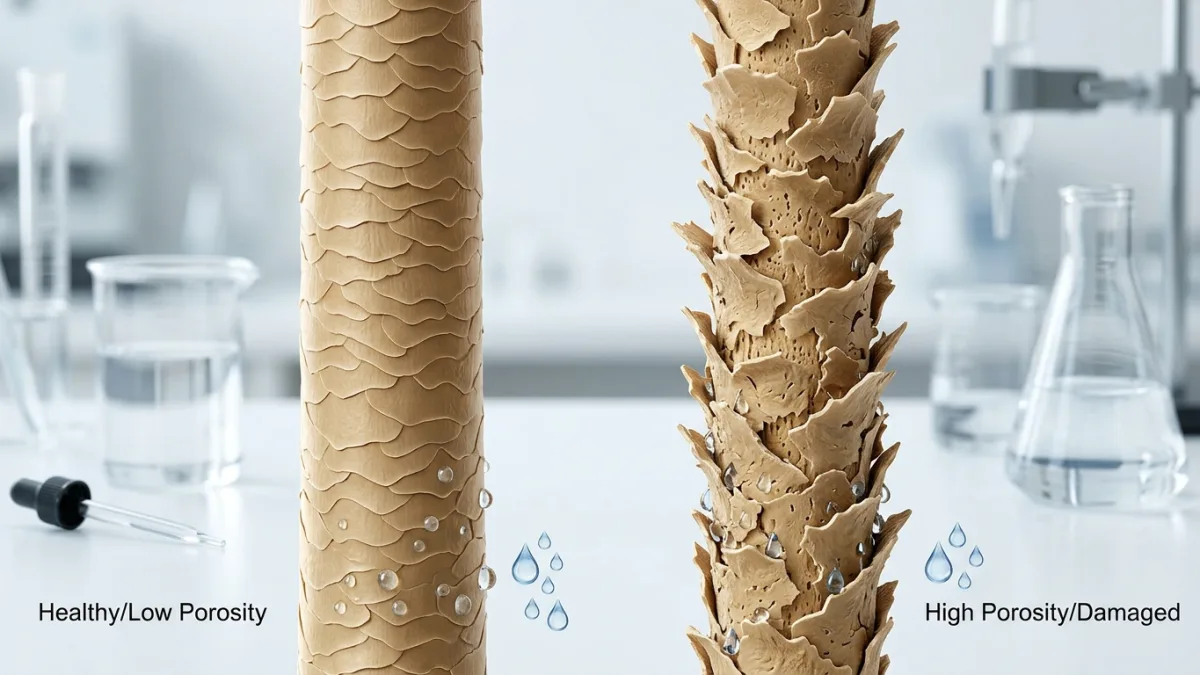
A hair porosity test is a simple check that tells you how easily your hair absorbs and keeps moisture. It looks at your Cuticle (the outer layer of overlapping scales that covers each strand of hair), which either lies flat, sits normal, or lifts up.
That structure decides how fast water and products move in and out of your hair.
Quick definition of hair porosity
Hair porosity is your hair’s ability to soak up and hold onto moisture. A hair porosity test measures this by watching how your strands react to water. Tightly packed cuticle scales make it hard for moisture in, giving you low porosity.
Raised or damaged scales let moisture rush in and out fast, giving you high porosity.
Chemical straightening and hair-smoothing treatments cause cuticle scale lifting, which increases hair porosity and makes hair more prone to weather damage. This is one reason a hair porosity test can give different answers over time. Your hair changes, and so does its porosity level. (PMC (NIH National Library of Medicine))
Why porosity matters for product choice and routine
Porosity matters because it decides what your hair actually needs. Low porosity hair needs lighter products and heat to open the cuticle. High porosity hair needs richer products to seal moisture in.
Guessing without a hair porosity test often means buying products that sit on top of your hair or slide right off.
Knowing your porosity type also helps you plan wash days, deep conditioning, and even how you handle heat tools. It turns your routine from trial and error into something planned around your hair’s actual behavior.
How to Test Your Hair Porosity at Home (Step by Step)
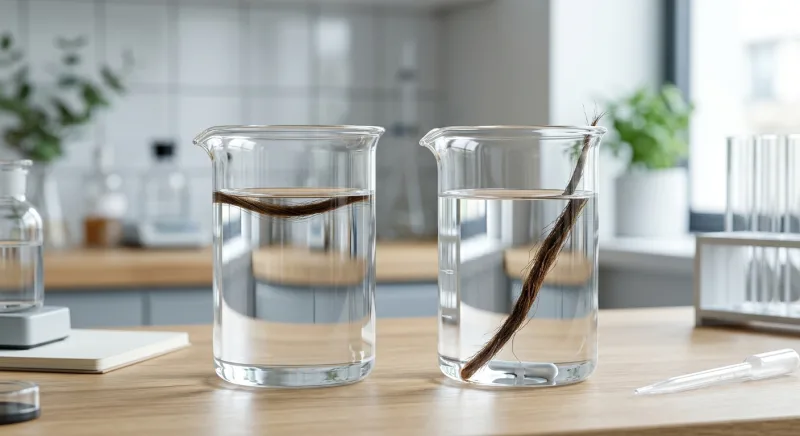
The strand test (float method)
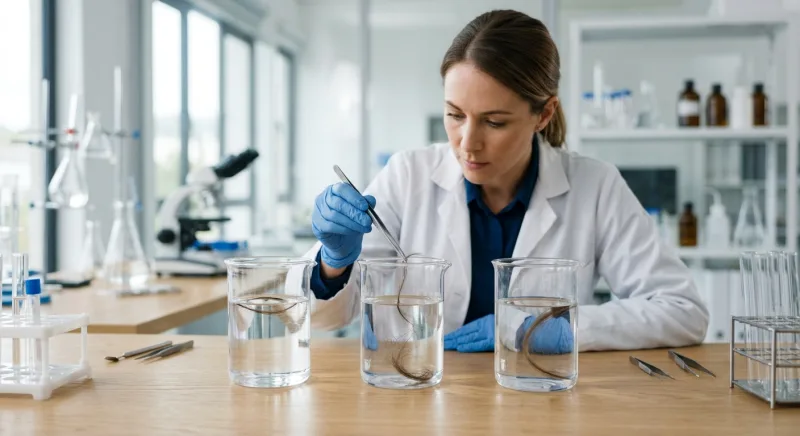
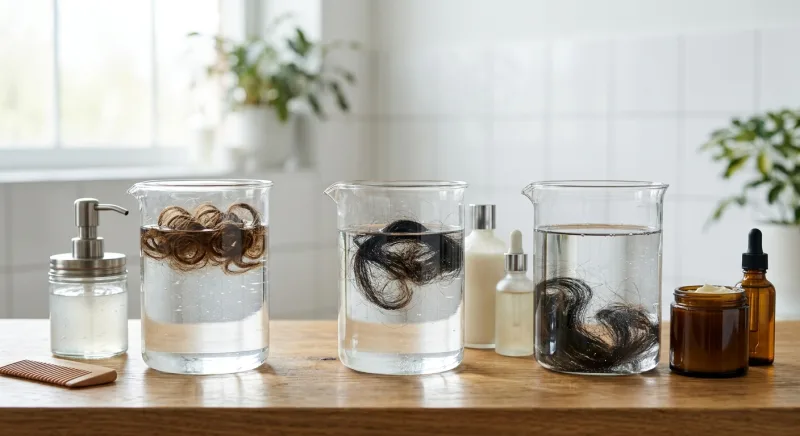
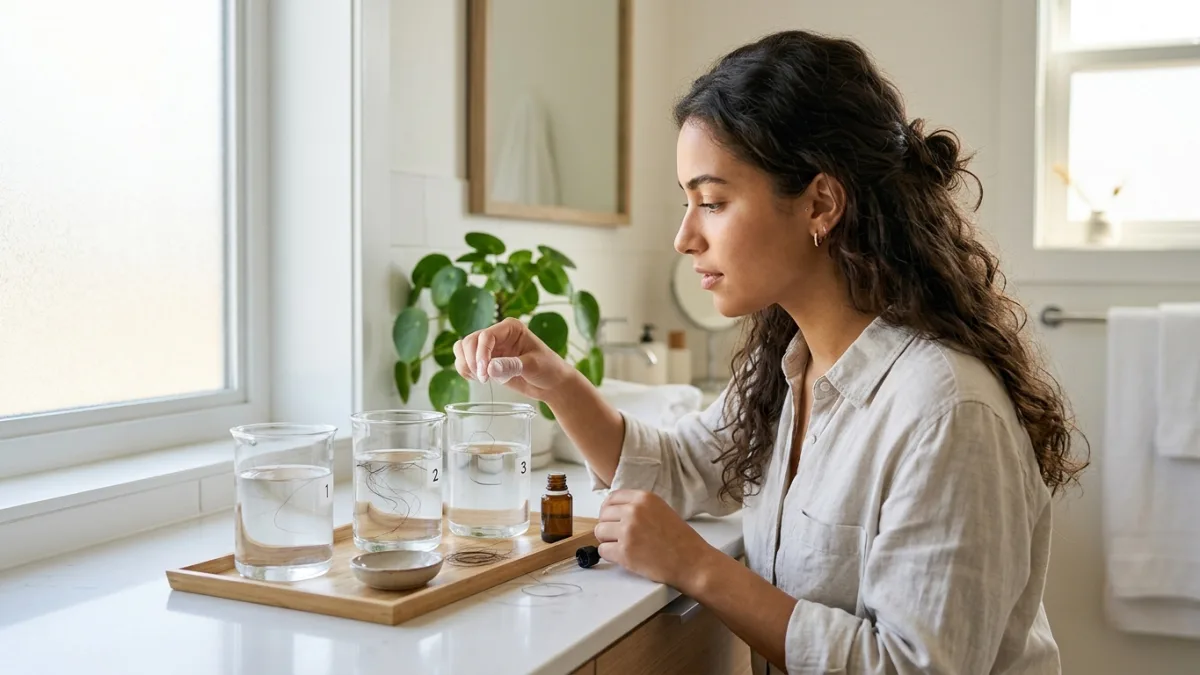
The float method is the classic hair porosity test. Drop a clean, dry strand of hair into a glass of room-temperature water. Watch what it does over the next two to four minutes without touching the glass.
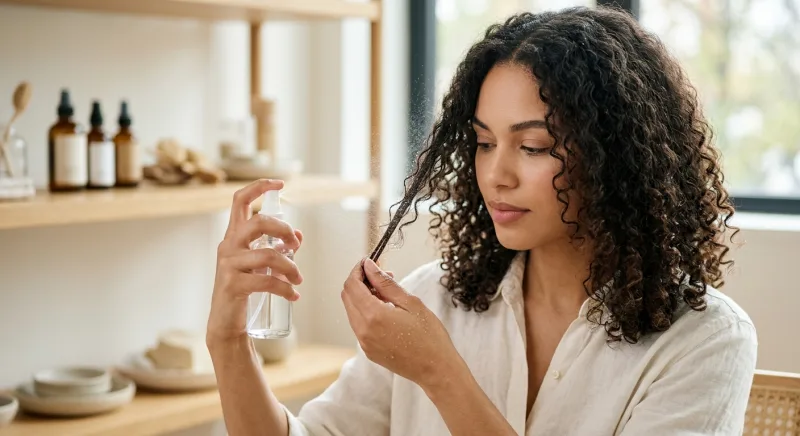
The spray or water absorption method
This method works well if you want to avoid pulling out a strand of hair. It also lets you check a few different spots, since porosity can vary across your head.
The slip test
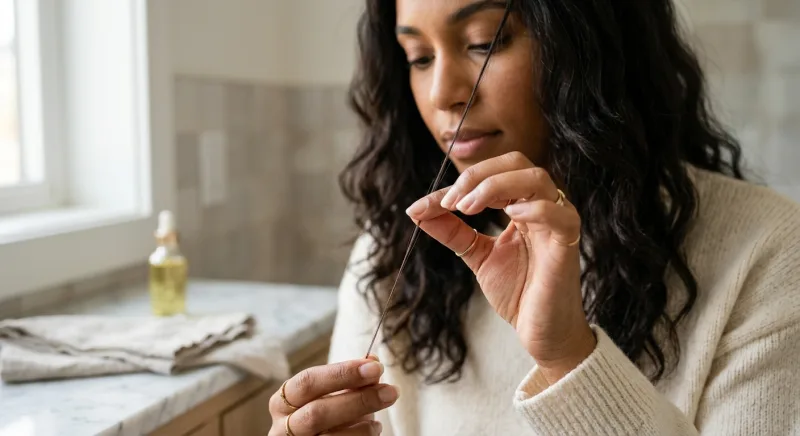
The slip test checks texture instead of water behavior directly. Run your fingers up a strand of dry hair, from tip to root, against the direction it grows. Smooth movement with little resistance suggests low porosity, since the cuticle lies flat.
A rough or bumpy feel suggests high porosity, since raised cuticle scales catch on your fingers. This hair porosity test works as a fast backup check alongside the float or spray method.
Why chemically treated hair often shows high porosity
Chemical straightening and hair-smoothing treatments cause cuticle scale lifting, which increases hair porosity and susceptibility to weathering. (PMC (NIH National Library of Medicine))
The protein loss involved can be significant. A hair-fiber study on chemical straightening found that alkaline straighteners caused protein loss of about 2.5 μg/g of hair, compared with only 1.12 μg/g in untreated (virgin) hair, while glyoxylic acid caused the worst damage at 3.5 μg/g. (PMC (National Institutes of Health), 2023)
This matters most for people with chemically altered hair, since prevalence of relaxer use is high in some communities. Among African-American girls, the prevalence of chemical relaxer use was 42%, and prior relaxer use doubled the risk of traction alopecia — a finding relevant to hair care routines for chemically altered, high-porosity hair. (PMC (National Institutes of Health), 2022)
If you run a hair porosity test and get a high-porosity result after chemical treatment, that’s expected. The goal shifts from diagnosis to management — sealing moisture in and slowing further protein loss.
How heat styling changes your hair porosity test results
Heat tools don’t just style hair — they reshape the cuticle over time. Repeated exposure to blow dryers, flat irons, and curling irons can leave the cuticle permanently raised, shifting your results toward high porosity on any future hair porosity test.
Heat styling and chemical treatments accelerate hair weathering and can lead to destruction of the cuticle and, ultimately, degradation of the cortex proteins. (PMC (NIH National Library of Medicine))
Daily heat styling with a hair dryer over an extended period measurably lifts hair cuticles and reduces the hair’s water content and mechanical strength, mirroring the effects simulated in a controlled heat-damage model. (PubMed / NIH – Establishment of Heat-Damaged Model for Hair)
Because of this, dermatologists recommend limiting heat tool use. Frequent use of heat tools like curling irons, flat irons, and hot combs can weaken hair, so the American Academy of Dermatology recommends limiting their use and using the lowest heat setting on blow dryers. (American Academy of Dermatology)
If you rely on heat tools often, consider retesting your hair porosity every few months. A hair porosity test isn’t a one-time result — it can shift as your styling habits change.
UV exposure and porosity: an overlooked factor
Sun exposure is easy to overlook when thinking about porosity, but it plays a real role. UV rays degrade the lipid layer that protects the cuticle, making strands more porous over time. (PMC / NIH – Photoaggravation of Hair Aging)
Hair porosity increases and cuticle fragility rises when the cuticle’s protective lipid barrier is degraded by UV exposure or by chemical or thermal treatments. (PMC / NIH – Photoaggravation of Hair Aging)
This means a hair porosity test done in summer, after weeks of sun exposure, might show different results than one done in winter. Combining UV exposure with bleaching or heat styling compounds the effect.
Chemical straightening and bleaching treatments combined with heat exposure alter the cuticle and cortex, increasing hair fiber porosity and causing irreversible structural damage. (PMC / NIH – Thermal Induced Changes in Cuticle and Cortex to Chemically Treated Hair)
If you spend a lot of time outdoors, factor that into how you interpret your hair porosity test. A protective hat or leave-in product with UV filters can help slow this kind of damage.
Comparing the three main hair porosity test methods
Each hair porosity test method has strengths and limits. The table below compares the float test, the spray test, and the slip test side by side, so you can decide which fits your routine.
| Method | What it measures | Best for | Limitation |
|---|---|---|---|
| Float test | How quickly hair absorbs water and sinks | Quick overall porosity read | Sensitive to oils or products left on hair |
| Spray test | How fast water beads or absorbs on the strand | Testing hair while still attached to the scalp | Harder to judge with textured or curly hair |
| Slip test | Cuticle texture by touch | Fast backup check, no water needed | Subjective; depends on finger sensitivity |
No single hair porosity test method is perfect on its own. Using two together, such as the float test and the slip test, gives a more reliable picture than relying on just one.
Hair porosity test results by hair type
Porosity results can look different depending on natural hair type, even before chemical or heat damage is factored in. Curl pattern affects how the cuticle naturally sits along the shaft. (PMC (NIH National Library of Medicine))
| Hair type | Typical natural porosity | Common hair porosity test result | Notes |
|---|---|---|---|
| Straight (Type 1) | Low to medium | Floats slowly; smooth slip test | Natural oils travel down the shaft easily |
| Wavy (Type 2) | Medium | Floats midway; slight roughness | Balanced moisture retention in most cases |
| Curly (Type 3) | Medium to high | Floats faster; noticeable roughness | Cuticle naturally raised at curl bends |
| Coily (Type 4) | High, especially if dry | Sinks quickly; rough slip test | Prone to dryness without sealing products |
These are general tendencies, not guarantees. Two people with the same curl pattern can still get different hair porosity test results depending on their styling history and product use.
Comparing product strategies for each porosity level
Once your hair porosity test gives you a result, the next step is matching products to that porosity level. Low, medium, and high porosity hair each respond differently to moisture and protein.
| Porosity level | Moisture needs | Recommended product texture | Ingredients to favor |
|---|---|---|---|
| Low porosity | Absorbs moisture slowly; needs help penetrating cuticle | Lightweight, water-based leave-ins | Humectants like glycerin; light oils |
| Medium porosity | Balanced absorption and retention | Standard conditioners and light sealants | Balanced moisture-protein formulas |
| High porosity | Absorbs quickly but loses moisture fast | Rich creams and heavier sealing oils | Proteins, butters, and heavier oils to seal cuticle |
Use this table alongside your hair porosity test results as a starting point, not a strict rule. Hair often needs some trial and error, even within the same porosity category.
Protecting cuticle health between hair porosity tests
Reduced cysteine levels in the hair shaft are linked to weaker, more fragile strands. Cosmetic hair treatments such as straighteners and relaxers cleave disulfide bonds and damage the hair’s cuticle, and reduced cysteine levels in the hair shaft correlate with greater susceptibility to hair weathering and fragility. (PMC (NIH National Library of Medicine))
This is one reason protein treatments help high-porosity hair. They temporarily patch gaps in the cuticle, giving a smoother surface until the next chemical or heat session undoes the work.
Retesting periodically matters here. A hair porosity test done right after a protein treatment may show lower porosity than one done a month later, once the treatment has worn off.
Tracking these changes over time turns a single hair porosity test into a useful pattern. You start to see which habits raise porosity and which ones help it recover.
Read the complete guide: A Hair Care Guide That Finally Makes Sense of Your Routine
Frequently Asked Questions
How often should I do a hair porosity test?
Once every two to three months is usually enough, unless you’ve just changed your routine. Retest sooner after a relaxer, keratin treatment, or a stretch of heavy heat styling, since these can shift results quickly.
Can a hair porosity test be wrong?
Yes. Home methods like the float test are sensitive to product buildup, water temperature, and even the oils on your fingers. Treat results as a general guide rather than an exact measurement, and confirm patterns using more than one method.
Does hair porosity change permanently?
Porosity itself doesn’t reverse on damaged strands, since cuticle damage is structural. But new growth can come in with different porosity, and consistent care can reduce how porous future hair becomes over time. (PMC / NIH – Thermal Induced Changes in Cuticle and Cortex to Chemically Treated Hair)
Is high porosity always caused by damage?
Not always. Some hair is naturally more porous due to genetics or curl pattern. However, chemical straightening, bleaching, and frequent heat styling are common accelerators, since they lift the cuticle and increase porosity beyond its natural baseline. (PMC / NIH – Thermal Induced Changes in Cuticle and Cortex to Chemically Treated Hair)
What’s the best hair porosity test for color-treated hair?
The float test can still work, but expect skewed results if hair is freshly colored or coated in styling products. Clarify hair first, then test a few strands from different sections since color processing doesn’t always affect porosity evenly.
Should I do a hair porosity test on wet or dry hair?
Most versions of the hair porosity test, including the float and slip tests, use clean, dry strands. Wet hair can behave differently in water, so starting dry gives a more consistent baseline reading.

Can heat styling change my porosity test results?
Yes. Regular heat exposure lifts the cuticle and lowers hair’s water content and strength, which can shift a strand toward higher porosity readings. Limiting heat tools and using lower settings helps preserve more consistent, lower-porosity results. (PubMed / NIH – Establishment of Heat-Damaged Model for Hair)
Do I need special tools for a hair porosity test at home?
No special equipment is required. A glass of water, clean strands of shed hair, and good lighting are enough for most home versions. Salons may use moisture meters for more precise readings, but they aren’t necessary to get useful, general results.
Key statistics
- A peer-reviewed review of hair care notes that among African-American girls, the prevalence of chemical relaxer use was 42%, and prior relaxer use doubled the risk of traction alopecia — a finding relevant to hair care routines for chemically altered, high-porosity hair. (PMC (National Institutes of Health), 2022)
- A hair-fiber study on chemical straightening (relevant to hair care and porosity) found that alkaline straighteners caused protein loss of about 2.5 μg/g of hair, compared with only 1.12 μg/g in untreated (virgin) hair, while glyoxylic acid caused the worst damage at 3.5 μg/g. (PMC (National Institutes of Health), 2023)
Expert insights
These products create a protective barrier on the hair shaft and help reflect UV radiation away from the strands,
Michele Green, board-certified cosmetic dermatologist
Overuse can leave hair stiff and protein overloaded, and low porosity hair is the most vulnerable to that,
Harris, certified trichologist (referenced as Harris-Burke, founder of The Hair Bawse Salon)
References
- Chemical straightening and hair-smoothing treatments cause cuticle scale lifting, which increases hair porosity and susceptibility to weathering. — PMC (NIH National Library of Medicine) (Peer-reviewed article hosted on PubMed Central, a federal (NIH) biomedical literature repository)
- Heat styling and chemical treatments accelerate hair weathering and can lead to destruction of the cuticle and, ultimately, degradation of the cortex proteins. — PMC (NIH National Library of Medicine) (Peer-reviewed review article on hair care physicochemistry hosted on PubMed Central (NIH))
- Cosmetic hair treatments such as straighteners and relaxers cleave disulfide bonds and damage the hair’s cuticle, and reduced cysteine levels in the hair shaft correlate with greater susceptibility to hair weathering and fragility. — PMC (NIH National Library of Medicine) (Peer-reviewed clinical case report/review hosted on PubMed Central (NIH), covering trichoscopy diagnosis of hair fragility)
- Frequent use of heat tools like curling irons, flat irons, and hot combs can weaken hair, so the American Academy of Dermatology recommends limiting their use and using the lowest heat setting on blow dryers. — American Academy of Dermatology (AAD is the leading professional organization of board-certified dermatologists and a recognized medical authority on hair and skin health.)
- Hair porosity increases and cuticle fragility rises when the cuticle’s protective lipid barrier is degraded by UV exposure or by chemical or thermal treatments. — PMC / NIH – Photoaggravation of Hair Aging (Peer-reviewed article hosted on PubMed Central (NIH), documenting cuticle changes from light exposure via microscopy)
- Chemical straightening and bleaching treatments combined with heat exposure alter the cuticle and cortex, increasing hair fiber porosity and causing irreversible structural damage. — PMC / NIH – Thermal Induced Changes in Cuticle and Cortex to Chemically Treated Hair (Peer-reviewed hair science study (published via Wiley, hosted on PubMed Central/NIH) using SAXS, WAXS, FTIR and SEM to measure porosity-related structural damage)
- Daily heat styling with a hair dryer over an extended period measurably lifts hair cuticles and reduces the hair’s water content and mechanical strength, mirroring the effects simulated in a controlled heat-damage model. — PubMed / NIH – Establishment of Heat-Damaged Model for Hair (Peer-reviewed study indexed on PubMed (NIH) directly measuring cuticle morphology and water content changes from heat exposure)
