
Skincare routine
Vegan Cosmetics Explained: What They Are and Why They Matter in 2026
Last updated: November 3, 2026
Vegan cosmetics are beauty products made without any animal-based parts, like beeswax, carmine, or lanolin. They are not always cruelty-free, since a product can be vegan but still tested on animals. Checking both labels matters if animal welfare and ingredients both concern you.
This guide breaks down what vegan cosmetics really mean, and how to shop smart.
What Are Vegan Cosmetics, Exactly?
Vegan cosmetics are skincare and makeup products made with zero animal-derived ingredients. That means no beeswax, no lanolin, no carmine, and no collagen from animal sources. Instead, brands use plant-based, mineral, or lab-made stand-ins that do the same job.
The word “vegan” here refers only to what’s inside the bottle, not how it was tested.
That distinction trips a lot of shoppers up. Vegan cosmetics can sit on the same shelf as products tested on animals, since the two labels track different things entirely. One tracks ingredients. The other tracks testing methods. Knowing this early saves confusion later when you start reading labels.
Vegan vs. Cruelty-Free: The Key Difference
In the United States, there is no legal or standard definition for “cruelty-free” or “not tested on animals” on cosmetic labels. That gap is exactly why so many shoppers feel unsure about what they’re buying. Brands can print these terms with little oversight, so a closer look at certifications matters more than the words on the front of the bottle. (U.S. Food and Drug Administration)
Federal law backs this up further. The FD&C Act (the main U.S. law governing cosmetic and food safety) does not require animal testing to prove a cosmetic is safe. It’s the manufacturer’s job to prove safety on its own, through whatever method it chooses. That leaves plenty of room for vegan cosmetics brands to skip animal testing entirely, but it doesn’t guarantee they all do. (U.S. Food and Drug Administration)
Across the Atlantic, the rules are stricter. The European Commission confirms a full EU-wide ban on selling cosmetic ingredients tested on animals has been in force since March 11, 2013. That means any cosmetic sold in the European Union, vegan or not, cannot legally use new animal tests. It’s one of the clearest legal lines in the whole vegan cosmetics conversation. (U.S. Food and Drug Administration)
| Label | What It Guarantees | What It Doesn’t Guarantee |
|---|---|---|
| Vegan | No animal-derived ingredients in the formula | Product was never tested on animals |
| Cruelty-Free | No animal testing (per brand or certifier claim) | Formula is free of animal-derived ingredients |
| Vegan + Cruelty-Free | Both no animal ingredients and no animal testing claimed | Independent, government-mandated verification in the U.S. |
Common Animal-Derived Ingredients to Watch For
- Beeswax (a wax made by honeybees, common in lip balms and creams)
- Carmine (a red pigment made from crushed cochineal insects, used in blushes and lipsticks)
- Lanolin (an oily substance from sheep’s wool, used in moisturizers)
- Collagen and keratin (proteins often sourced from animal skin, hooves, or feathers)
- Squalene (an oil sometimes sourced from shark liver, though plant versions exist)
- Guanine (a shimmer ingredient made from fish scales)
Why People Are Switching to Vegan Cosmetics
People are switching to vegan cosmetics mainly for three reasons: ethics, skin sensitivity, and clear facts. Shoppers want to know what’s really in their products, and they want that fact without a chemistry degree.
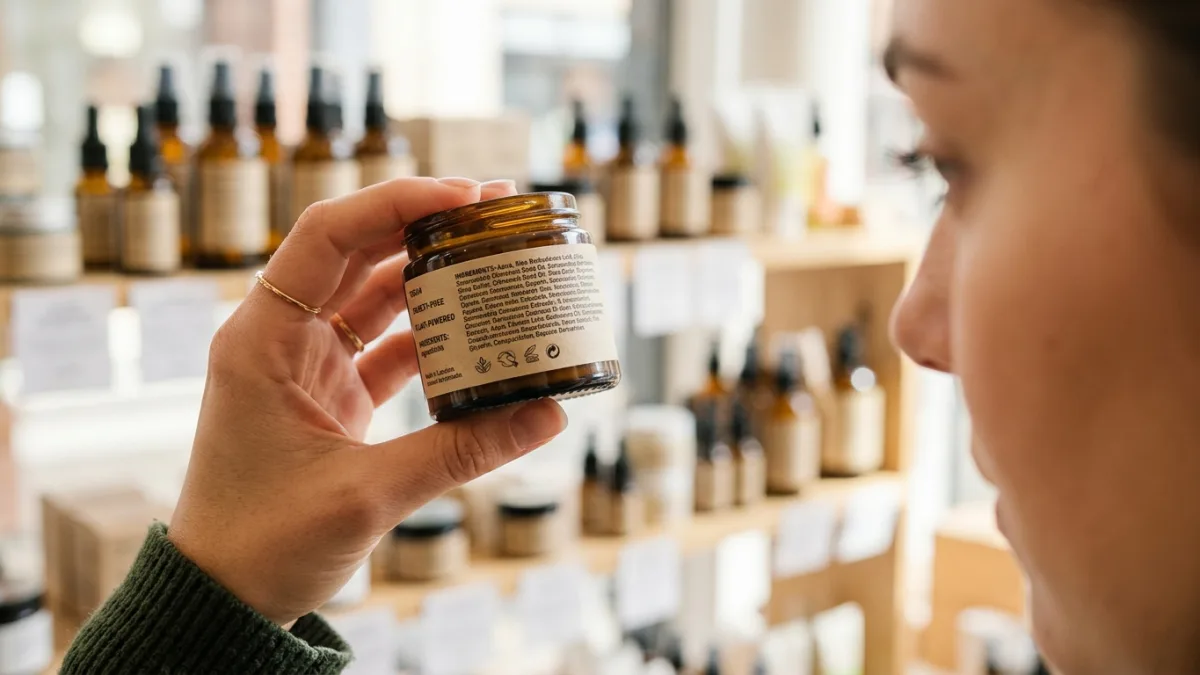
Vegan formulas often come with clearer ingredient lists, since brands sell simple as a selling point.
Ingredient Transparency and Trust
That said, not every green-sounding claim holds up. Vague or unproven environmental and vegan-like marketing terms can break the FTC’s Green Guides (federal rules that stop marketers from making misleading environmental claims). So being open and clear is a real trend in vegan cosmetics, but it still pays to check claims rather than assume every green label is true. (Federal Trade Commission)

Skin-Friendly Formulations
Sensitive skin is another big reason behind the shift to vegan cosmetics. A wide review found that skin allergy from contact hits 27% of people in Europe, which is part of why formulas with care over what’s inside, including many vegan lines, get so much notice from shoppers with sensitive skin. (PMC (National Institutes of Health), 2018)
Scent ingredients and other common parts of cosmetics are among the top causes of skin allergy and irritation. Vegan cosmetics don’t always skip scent or things that irritate skin, but many brands that focus on vegan cosmetics sell scent-free or simple mixes along with their animal-free claims. That mix has strong appeal for people who deal with sensitive or easily irritated skin. (PMC / NIH — Journal of Drugs in Dermatology commentary and cosmetic ingredient sensitization review)
Are Vegan Cosmetics Better for the Planet?
Vegan cosmetics can leave a lighter mark on the planet, though the answer depends on the brand and what goes into it. Leaving out animal-based parts often means fewer steps in the farming and slaughter chain.
That doesn’t automatically make a product eco-friendly, but it does cut one layer of resource use tied to raising animals.
Reduced Synthetic Chemical Runoff
Some vegan cosmetics brands pair animal-free formulas with simpler, plant-based ingredient lists overall. Fewer man-made additives can mean less runoff into waterways during making and washing off in daily use.
This isn’t unique to vegan cosmetics alone, but the two trends often go hand in hand in how brands present themselves.
Shoppers who care about water quality and factory waste often see vegan cosmetics as one piece of a bigger green puzzle. It’s not a promise on its own.

Pairing a vegan label with a brand’s wider sourcing and packaging habits gives a fuller view of its true impact on the planet.
Impact on Wildlife and Ecosystems

Vegan Cosmetics vs. Cruelty-Free: Understanding the Difference
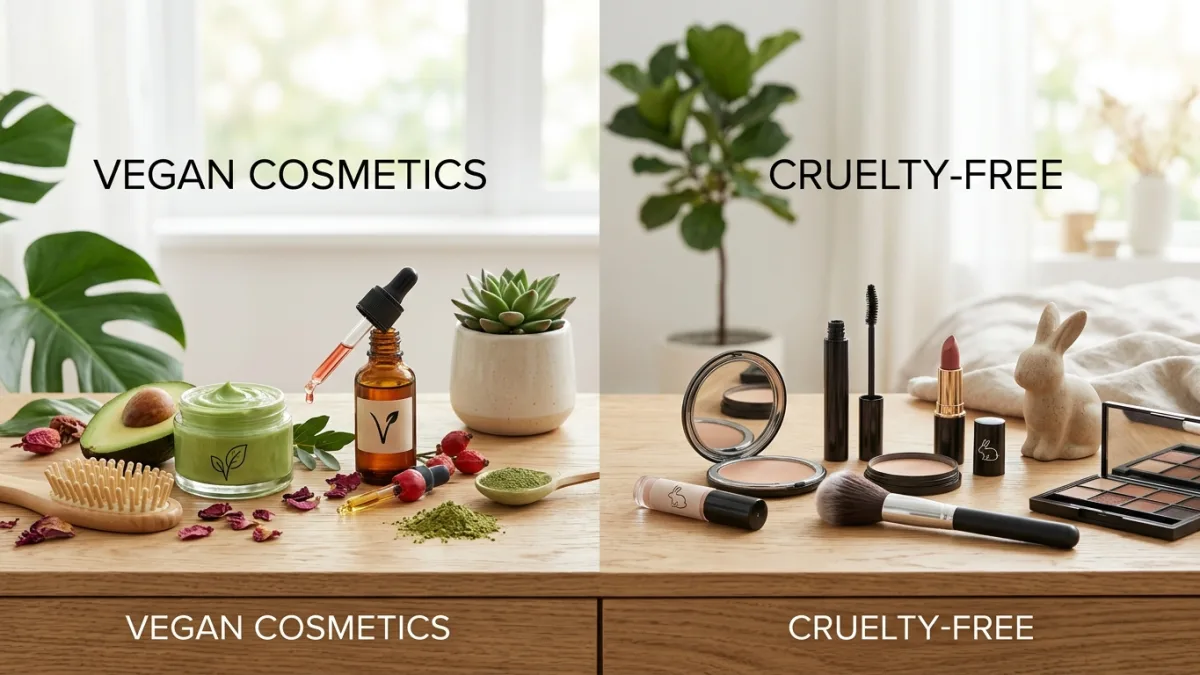
Shoppers often assume “cruelty-free” and vegan cosmetics mean the same thing. They don’t. Cruelty-free refers to whether a product or its ingredients were tested on animals. Vegan refers to whether animal-derived ingredients appear in the formula at all. A product can be one without being the other.
In the United States, there is no legal or standardized definition for “cruelty-free” or “not tested on animals” on cosmetics labels, which is part of why the distinction confuses so many shoppers. Brands can use these terms with little regulatory oversight, so label claims alone don’t guarantee an animal-ingredient-free product. (U.S. Food and Drug Administration)
The FD&C Act also does not clearly say that tests on animals are needed to show a cosmetic is safe. It is still up to the maker to show proof that ingredients and finished goods are safe before selling them. This means a company could choose not to test on animals while still using animal-based parts like lanolin or carmine. (U.S. Food and Drug Administration)
Rules are quite different in the European Union. The EU has fully banned animal testing for cosmetics since 2013, and it will not let anyone sell cosmetic products or ingredients that were tested on animals. This ban is tied to a wider set of laws that covers both finished cosmetics and single ingredients. (European External Action Service (European Commission)) (European Commission (Single Market Economy))
That EU-wide sales ban has applied since March 11, 2013, and it’s often cited in talks about cruelty-free and vegan cosmetics. Even so, a cruelty-free label under EU rules still says nothing about whether beeswax, honey, or milk parts are inside the bottle. (European Commission, 2013)
The table below breaks down how these two labels typically diverge in practice.
| Label | What It Guarantees | What It Does Not Guarantee |
|---|---|---|
| Cruelty-Free | No animal testing on product or ingredients (claim-dependent) | Animal-derived ingredients may still be present |
| Vegan Cosmetics | No animal-derived ingredients in the formula | Product may still have been tested on animals, depending on region |
| Cruelty-Free AND Vegan | No animal testing and no animal-derived ingredients | Third-party certification still varies by certifier |
Because U.S. labels aren’t standard, outside seals and ingredient lists matter more than ad language. Reading the back of the box stays the most reliable habit for anyone who wants to buy strictly vegan cosmetics.
Why Vegan Cosmetics Appeal to Sensitive Skin
Skin that reacts easily is a big reason people look into vegan cosmetics beyond ethics or the planet. Contact allergy hits an estimated 27% of people in Europe, a large study found, which shows why care in picking ingredients matters for skin that reacts easily. (PMC (National Institutes of Health), 2018)
Scent ingredients and other common parts of cosmetics are among the top causes of skin allergy and skin irritation. This matters because many animal-based add-ins, like lanolin (a waxy substance from sheep’s wool), are also known to irritate some users, which pushes some makers to make their ingredient lists simpler. (PMC / NIH — Journal of Drugs in Dermatology commentary and cosmetic ingredient sensitization review) (DermNet)
Reading Labels and Avoiding Misleading Claims
The words on beauty packages can promise more than a product truly gives. Vague or unproven green and vegan-like claims can break the FTC’s Green Guides, rules made to stop sellers from making green claims that are unfair or false. Those rules cover wider green claims, not vegan status alone, but they show how loosely some words get used across the trade. (Federal Trade Commission)
Outside vegan certification logos add a layer of check, since the groups that give them out usually ask for proof about what’s inside before they say yes.
That said, the rules are not the same from group to group, so it’s worth finding out what a given logo actually checks before you take it as the final word.
| Label Term | What to Verify | Common Pitfall |
|---|---|---|
| “Vegan” | Full ingredient list, third-party certification | Term is unregulated in the U.S. |
| “Natural” | Specific ingredient sourcing claims | No standardized legal definition |
| “Cruelty-Free” | Testing policy, not ingredient sourcing | Assumed to mean vegan, which it doesn’t |
| “Plant-Based” | Percentage or scope of plant ingredients | May still contain minor animal derivatives |
Building a habit of checking ingredient lists, rather than trusting front-label claims, guards against both hidden animal parts and hyped-up marketing claims. It’s a small extra step that makes the switch to vegan cosmetics far safer in practice. (U.S. Food and Drug Administration)
Read the complete guide: How to Build a Skincare Routine That Actually Works in 2026
Frequently Asked Questions

What exactly makes a product count as vegan cosmetics?
Vegan cosmetics have no ingredients that come from animals, such as beeswax, carmine, lanolin, or collagen taken from animals. The mix is fully plant-based, mineral-based, or man-made. This is not the same as a cruelty-free label, which is about how a product is tested, not where its parts come from.
Are vegan cosmetics automatically cruelty-free?
Not always. A product can be free of animal parts yet still have been tested on animals somewhere in its supply chain. Shoppers who want both traits should look for clear vegan and cruelty-free claims, or outside checks, rather than assuming one proves the other.
Is there a legal definition of “cruelty-free” in the United States?
No. There is no legal or standardized definition for “cruelty-free” or “not tested on animals” on U.S. cosmetics labels. This lack of regulation is part of why the vegan and cruelty-free distinction confuses so many shoppers browsing vegan cosmetics. (U.S. Food and Drug Administration)
Does U.S. law require animal testing for cosmetic safety?
No. The FD&C Act does not clearly say tests on animals are needed to show a cosmetic is safe. Makers are still the ones who must show proof that their ingredients and finished goods are safe before they reach store shelves. (U.S. Food and Drug Administration)
Has the European Union banned animal testing for cosmetics?
Yes. A full EU-wide ban on selling animal-tested cosmetic ingredients has been in place since March 11, 2013. This key rule bans selling cosmetics or ingredients tested on animals, and it is often brought up when people talk about cruelty-free and vegan cosmetics. (U.S. Food and Drug Administration)
Why might sensitive skin benefit from vegan formulations?

Scent ingredients and other common items in cosmetics are among the top causes of contact allergy and skin irritation. Some buyers pick simpler formulas free of animal parts to cut down on known irritants, though being vegan cosmetics alone does not mean a product won’t cause a reaction. (PMC / NIH — Journal of Drugs in Dermatology commentary and cosmetic ingredient sensitization review)
Can “green” or plant-based marketing claims be misleading?
Yes. Vague or unproven green and vegan-like ad terms can break the FTC’s Green Guides, rules made to stop unfair or false claims. Reading the list of ingredients is still the best way to check a brand’s vegan cosmetics claims. (Federal Trade Commission)
What’s the easiest way to verify a product is truly vegan?
Check the full list of ingredients for anything made from animals, and look for known vegan certification logos. Doing both checks, instead of trusting the words on the front alone, gives you the most solid proof before you add a product to your vegan cosmetics routine.
Key statistics
- A systematic review found that contact allergy affects 27% of the general population in Europe, underscoring why ingredient-conscious formulations (including many vegan cosmetic lines) matter for sensitive skin. (PMC (National Institutes of Health), 2018)
- The European Commission confirms that a full EU-wide marketing ban on animal-tested cosmetic ingredients has applied since March 11, 2013, a regulatory milestone often cited in discussions of cruelty-free and vegan cosmetics. (European Commission, 2013)
Expert insights
There is no one official certifying agency, but there are groups such as PETA (People for the Ethical Treatment of Animals) that do label certain products as being vegan or cruelty-free
Dr. Robert Anolik, fellow of the American Academy of Dermatology
References
- There is no legal or standardized definition for the terms ‘cruelty-free’ or ‘not tested on animals’ on U.S. cosmetics labels, which is why the vegan/cruelty-free distinction confuses so many shoppers. — U.S. Food and Drug Administration (Federal agency responsible for regulating cosmetic labeling and safety claims in the United States)
- The FD&C Act does not specifically require animal testing to establish cosmetic safety, and it remains the manufacturer’s responsibility to substantiate the safety of ingredients and finished products before marketing. — U.S. Food and Drug Administration (Federal agency with statutory authority over cosmetic safety in the U.S.)
- The European Union has fully banned animal testing for cosmetics since 2013, prohibiting the marketing of cosmetic products and ingredients that have been tested on animals. — European External Action Service (European Commission) (Official European Commission/EU institutional communication on cosmetics regulation)
- Lanolin, a common animal-derived moisturizing ingredient in cosmetics derived from sheep’s wool, was named the 2023 Allergen of the Year by the American Contact Dermatitis Society due to increasing rates of allergic reactions. — DermNet (Peer-reviewed dermatology reference site citing American Contact Dermatitis Society allergen designations)
- Fragrance ingredients and other common cosmetic components are among the most frequent causes of contact allergy and skin sensitization, which is relevant to why some consumers seek simpler, animal-ingredient-free vegan formulations for sensitive skin. — PMC / NIH — Journal of Drugs in Dermatology commentary and cosmetic ingredient sensitization review (Peer-reviewed review hosted on NIH’s PubMed Central discussing regulatory status of skin sensitization testing for cosmetic ingredients)
- Cruelty-free cosmetics are tied to a legal framework: the EU has fully banned both testing finished cosmetics/ingredients on animals and marketing animal-tested cosmetics since 2013. — European Commission (Single Market Economy) (Official European Commission page describing EU law and enforcement of the cosmetics animal-testing and marketing ban)
- Vague or unsubstantiated ‘green’ and vegan-adjacent marketing terms on cosmetics can run afoul of the FTC’s Green Guides, which exist to stop marketers from making environmental claims that are unfair or deceptive. — Federal Trade Commission (Federal regulatory agency’s own guidance on environmental/green marketing claim enforcement)
