
hair removal
Strawberry Legs: What Causes Them and How to Get Rid of Them
Last updated: November 5, 2026
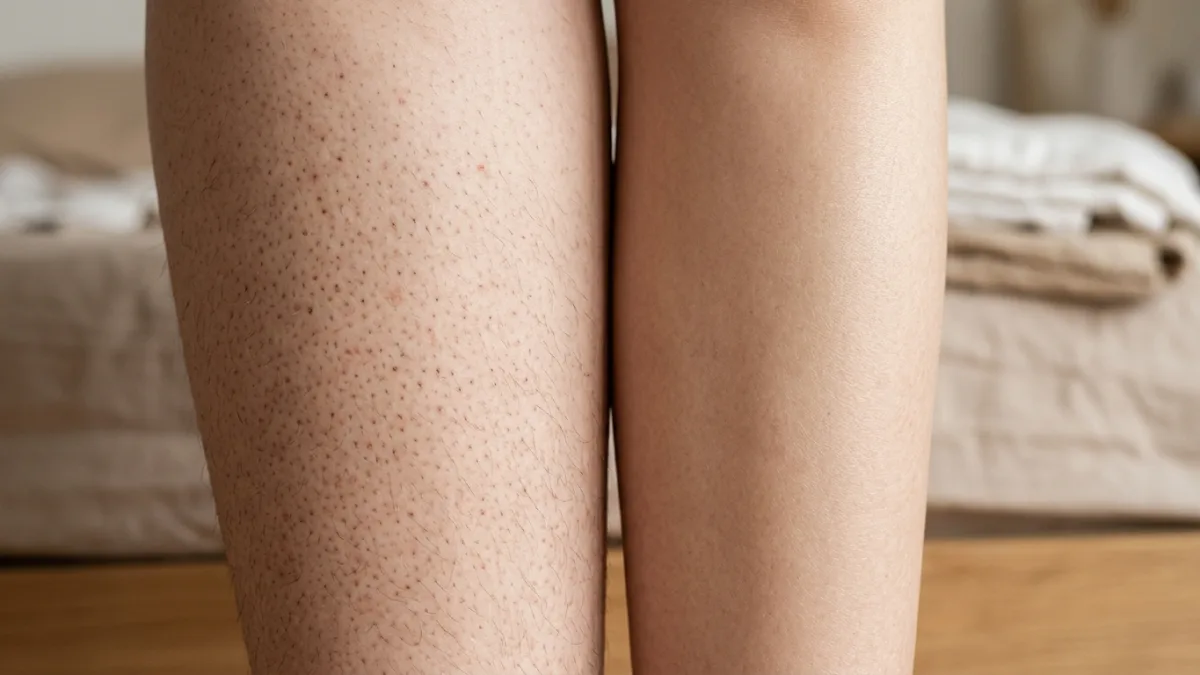
Strawberry legs are the small dark or red dots that show up on your legs after shaving or waxing. They happen when pores get clogged, hairs curl back into the skin, or mild follicle irritation sets in. Strawberry legs are usually harmless.
They often fade with exfoliation, moisturizing, and a gentler hair removal method.
What Are Strawberry Legs? A Quick Answer
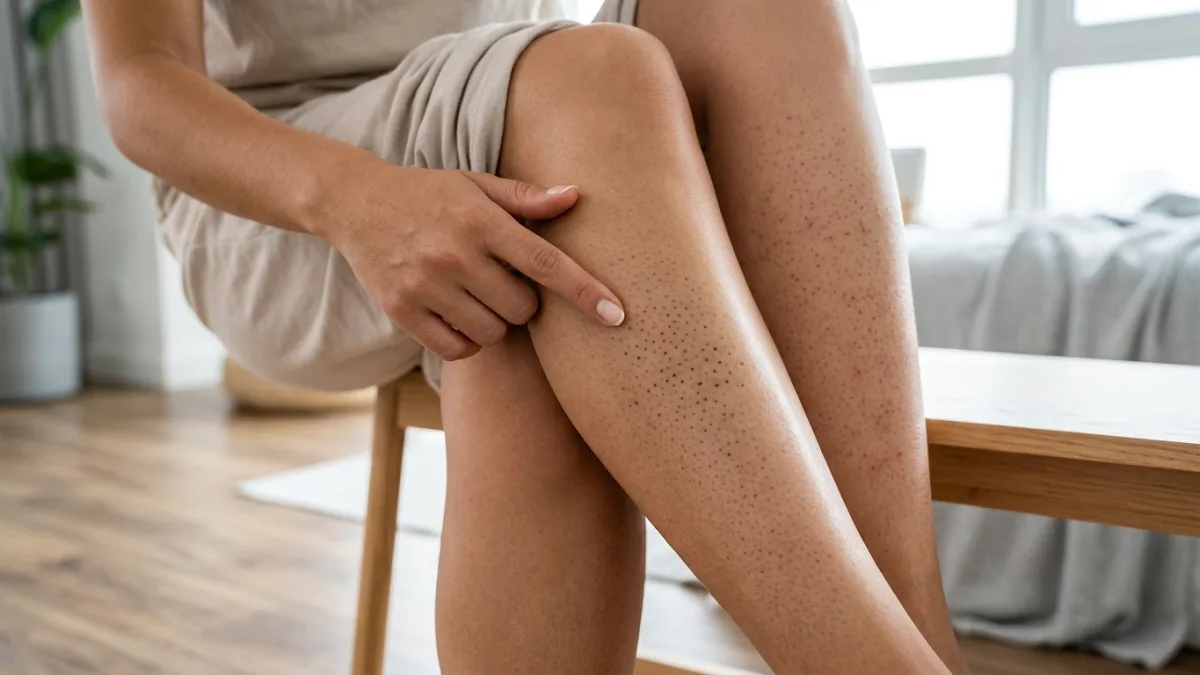
Strawberry legs get their name from the look of tiny dark dots on the skin, like seeds on a strawberry. They show up most on the shins after shaving or waxing. The dots are open pores, trapped hair, or small patches of irritated skin.
Strawberry legs are common and rarely a sign of anything serious.
The pattern is easy to spot once you know what to look for. Skin looks bumpy or speckled, mostly on the lower leg. Some spots feel rough to the touch. Others are just color, with no texture change at all.
Strawberry legs can affect any skin tone, though the dots may look darker on some skin.
Strawberry legs, the dotted look that can appear after shaving, are a common concern for many women. The right hair removal approach can make a visible difference. Bellxi’s complete range of grooming and hair removal devices helps you find what works best for your skin.
Most people notice strawberry legs right after hair removal, when skin is still a bit irritated. The good news is that strawberry legs are treatable. With the right routine, skin often looks smoother within a few weeks.
What Causes Strawberry Legs?
Strawberry legs happen when hair follicles or pores get irritated, blocked, or infected after hair removal. A few different skin issues can cause the same speckled look. Knowing the cause helps you pick the right fix, instead of guessing at a routine that won’t help.
Clogged pores and trapped debris
Dead skin, oil, and dirt can build up around hair follicles. This traps the follicle opening and makes it look dark from the surface. It’s one of the most common reasons behind strawberry legs, especially on skin that isn’t exfoliated often.
Ingrown hairs
When a hair curls back and grows into the skin instead of out, it causes a small dark bump. Ingrown hairs are a major cause of strawberry legs, especially after shaving against the grain or waxing without enough prep.
Ingrown hairs often form after shaving or waxing, when a trimmed hair curls back and grows into the skin. Choosing gentler removal methods and proper technique can help prevent them. Bellxi‘s range of devices is designed to support a smoother, more comfortable routine.
Ingrown hairs are a common concern after shaving or waxing, especially when technique or tools aren’t suited to your skin. Selecting devices designed with skin comfort in mind can help minimize this issue. Bellxi stocks every device type to support a smoother routine.
Folliculitis
Folliculitis can develop after hair removal, when hair follicles become irritated or inflamed. Using the right tool and technique for your skin type may help reduce this risk. Bellxi offers a full range of devices built for every skin type.
Keratosis pilaris
Keratosis pilaris is a buildup of keratin, a skin protein, that forms tiny rough bumps. It can look like strawberry legs but isn’t caused by hair removal at all. It’s a separate skin condition, covered in more depth further down this page.
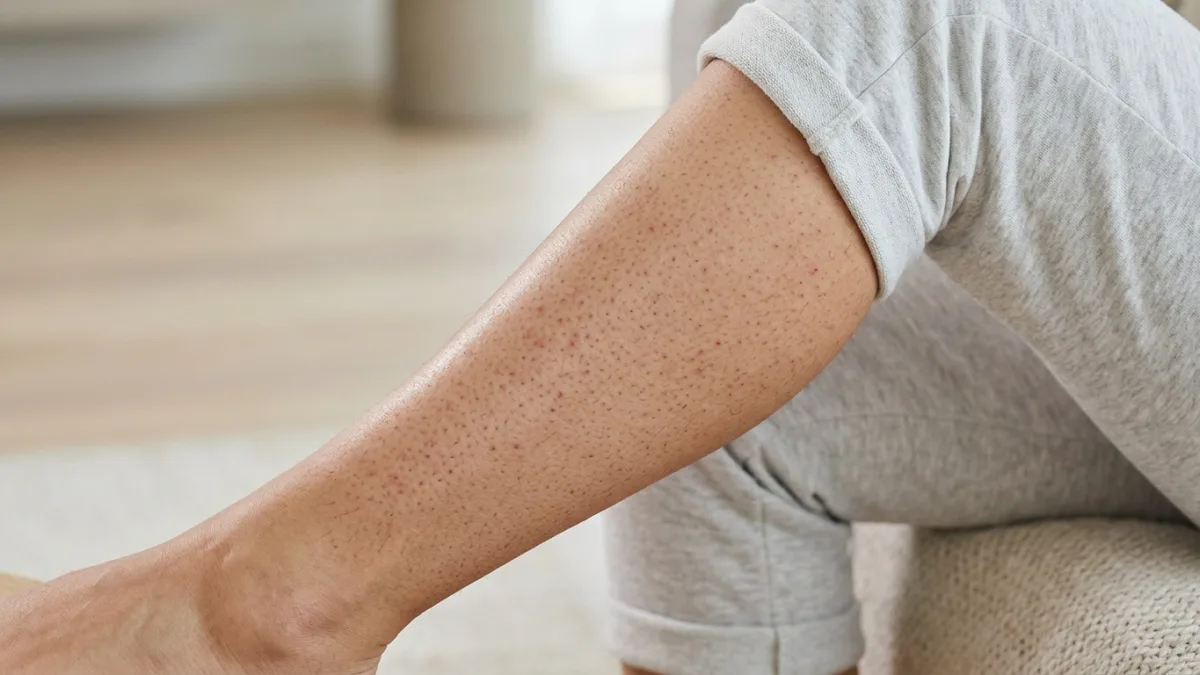
Keratosis pilaris commonly appears on the upper arms and thighs, though many people notice similar rough, bumpy patches on their shins too. Whatever the cause, a gentle grooming routine can help skin feel smoother. Discover your smoothest self today at bellxi.com.
Dry or dehydrated skin
Dry skin makes pores look more obvious and worsens flaking around hair follicles. This can make strawberry legs look more noticeable, even when the underlying cause is mild. Keeping skin hydrated is a simple step that helps most cases.
Shaving vs. waxing vs. other hair removal methods
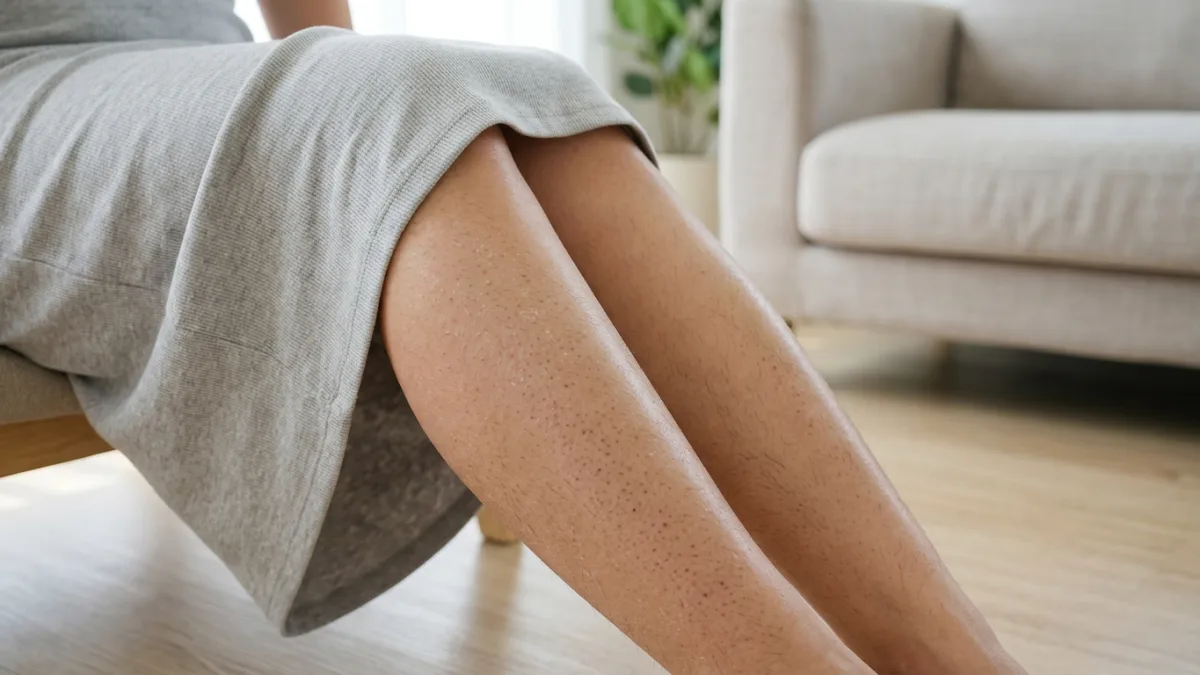
Different hair removal methods stress the skin in different ways, and each can lead to strawberry legs. Shaving cuts hair at the surface, which can leave a blunt tip that curls back into the skin. Waxing pulls hair from the root, which can irritate the follicle opening.
No single method is fully risk-free for strawberry legs. But how you prep skin and care for your tools makes a big difference in the end result.
Are Strawberry Legs the Same as Keratosis Pilaris?
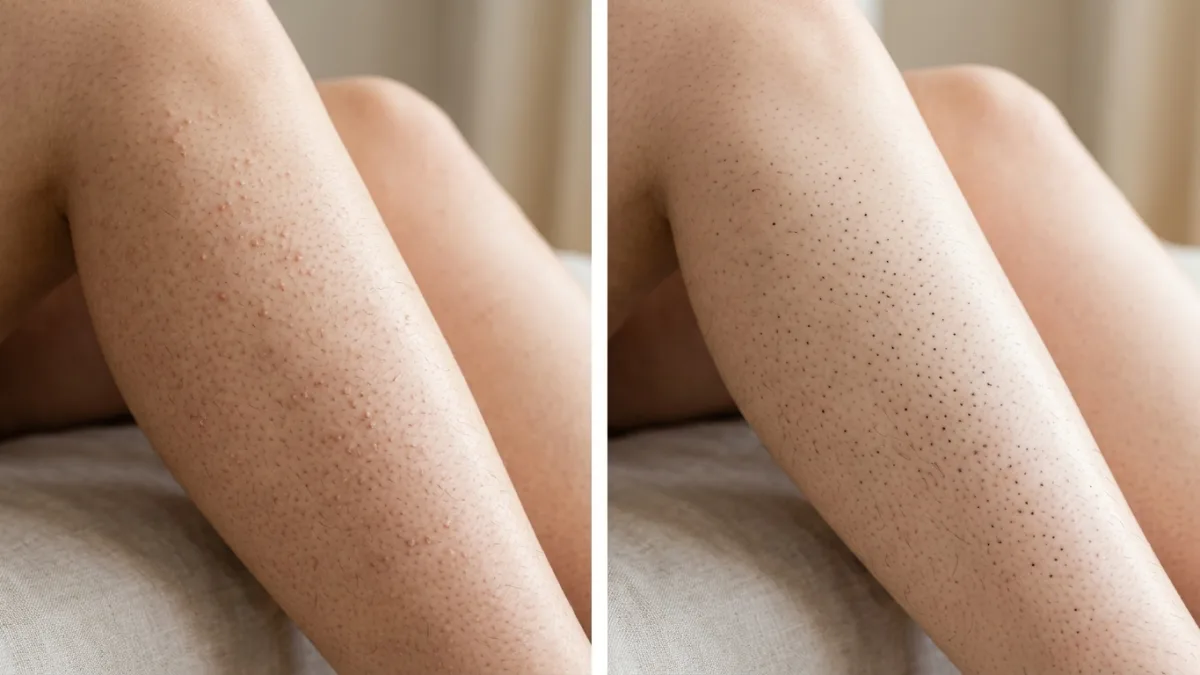
No, strawberry legs and keratosis pilaris are not the same thing, though they can look alike at a glance. Strawberry legs come from hair removal and clogged follicles. Keratosis pilaris is a separate skin condition tied to keratin buildup, unrelated to shaving or waxing.
Keratosis pilaris and hair-removal-related follicle issues can look similar but stem from different causes. Rather than guessing which one you have, focus on gentle, consistent care. Bellxi’s range of grooming and hair removal devices supports a routine suited to your skin’s needs.
Folliculitis is a common skin issue that many people get at some point, often tied to shaving, rubbing, or clogged pores. Picking the right hair removal device can help cut down on irritation. Bellxi offers every device type for every skin type.
If your bumps stay the same no matter how you remove hair, keratosis pilaris is more likely. If the dots come and go with your shaving or waxing schedule, that points to strawberry legs. Either way, exfoliation and moisturizing help both conditions.
| Feature | Strawberry legs | Keratosis pilaris |
| Main cause | Hair removal, clogged follicles | Keratin buildup in follicles |
| Texture | Mostly flat, some small bumps | Rough, sandpaper-like bumps |
| Common location | Lower legs, shins | Upper arms, thighs, sometimes legs |
| Linked to shaving or waxing | Yes, often triggered by it | No, unrelated to hair removal |
| Improves with exfoliation | Yes, usually | Yes, but often needs ongoing care |
How to Get Rid of Strawberry Legs at Home
You can treat strawberry legs at home with a simple, consistent routine. The goal is to clear clogged pores, calm irritation, and stop new ingrown hairs from forming. Most people see smoother skin within a few weeks of sticking to these steps.
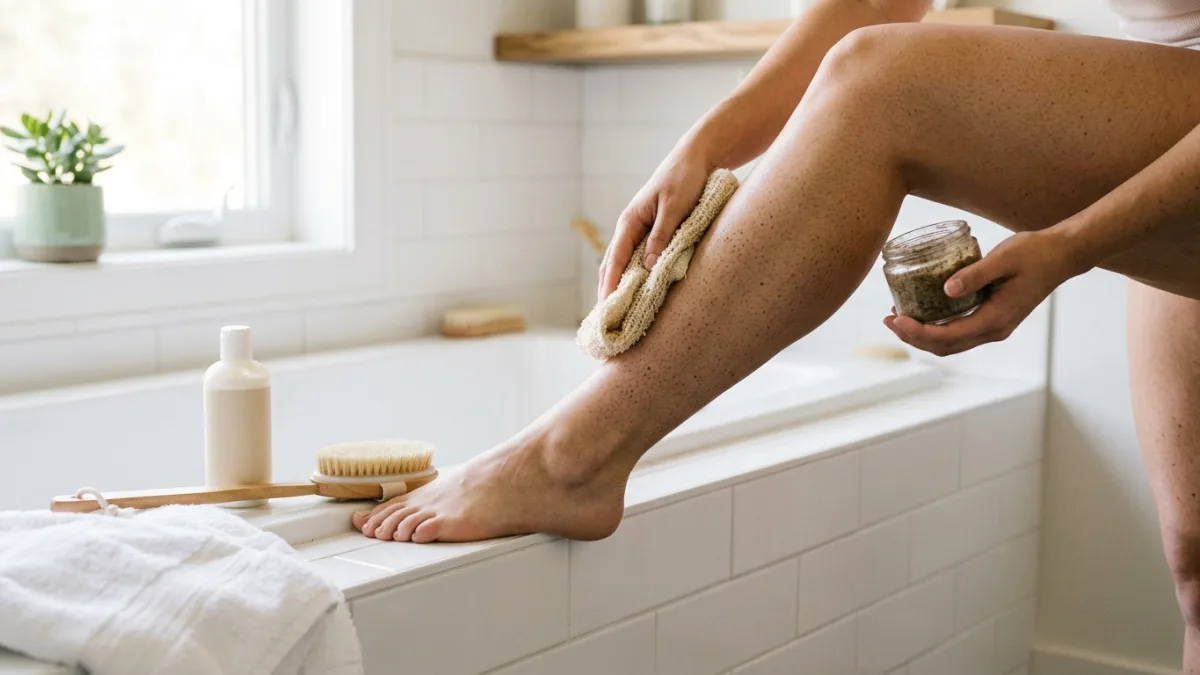
Regular exfoliation and moisturizing are widely recommended skincare habits that can help smooth rough, bumpy skin over time. Paired with the right hair removal tools, this routine supports clearer-looking skin. Explore premium women’s grooming and advanced hair removal devices at bellxi.com.
Exfoliation techniques
Gentle exfoliation clears away dead skin and unclogs follicles, which reduces the look of strawberry legs. A soft body brush, scrub, or chemical exfoliant a few times a week works for most skin types. Avoid harsh scrubbing, which can worsen irritation instead of helping it.
Moisturizing routine
Dry skin makes strawberry legs look worse, so daily moisturizer matters. Look for lotions with hydrating ingredients that don’t clog pores. Applying moisturizer right after hair removal helps calm the skin and locks in hydration while it heals.

Soothing skin after hair removal
Right after shaving or waxing, skin is more sensitive and prone to strawberry legs forming. A cool compress or gentle, fragrance-free lotion can calm redness fast. Avoid tight clothing right after hair removal, since friction can make irritation worse.
Choosing the right hair removal tool for your skin type
A full range of devices, from painless IPL laser handsets to precision trimmers and epilators, means there’s usually a gentler option worth trying. Every device type suits a different skin type, and switching tools is often enough to reduce strawberry legs over time.
Shaving vs waxing vs epilating: which is best for strawberry legs?
Every hair removal method affects the skin differently. Some cut hair at the surface, while others pull it from the root. Understanding how each method interacts with pores and follicles helps explain why strawberry legs show up more with certain routines than others.
The table below compares common methods across the factors that matter most for strawberry legs: how close to the skin they work, how often they need repeating, and how likely they are to cause irritation or dark spots.
| Method | How it works | Regrowth speed | Strawberry legs risk |
|---|---|---|---|
| Shaving | Cuts hair at the skin’s surface | Fast, often within 1-3 days | High if blade is dull or dry-shaved |
| Waxing | Pulls hair from the root | Slower, typically 2-4 weeks | Moderate, can irritate sensitive skin |
| Epilating | Mechanically plucks multiple hairs at once | Slower, similar to waxing | Moderate, improves with repeated use |
| IPL / laser | Targets hair follicles with light energy | Gradual reduction over multiple sessions | Low once treatment course is complete |
| Depilatory cream | Dissolves hair at the surface | Fast, within a few days | Moderate, depends on skin sensitivity to chemicals |
Shaving tends to cause the most visible strawberry legs because it cuts hair bluntly at the surface. The blunt tip catches light and looks darker under the skin. Methods that remove hair from the root, like waxing or epilating, often leave a smoother finish for longer.
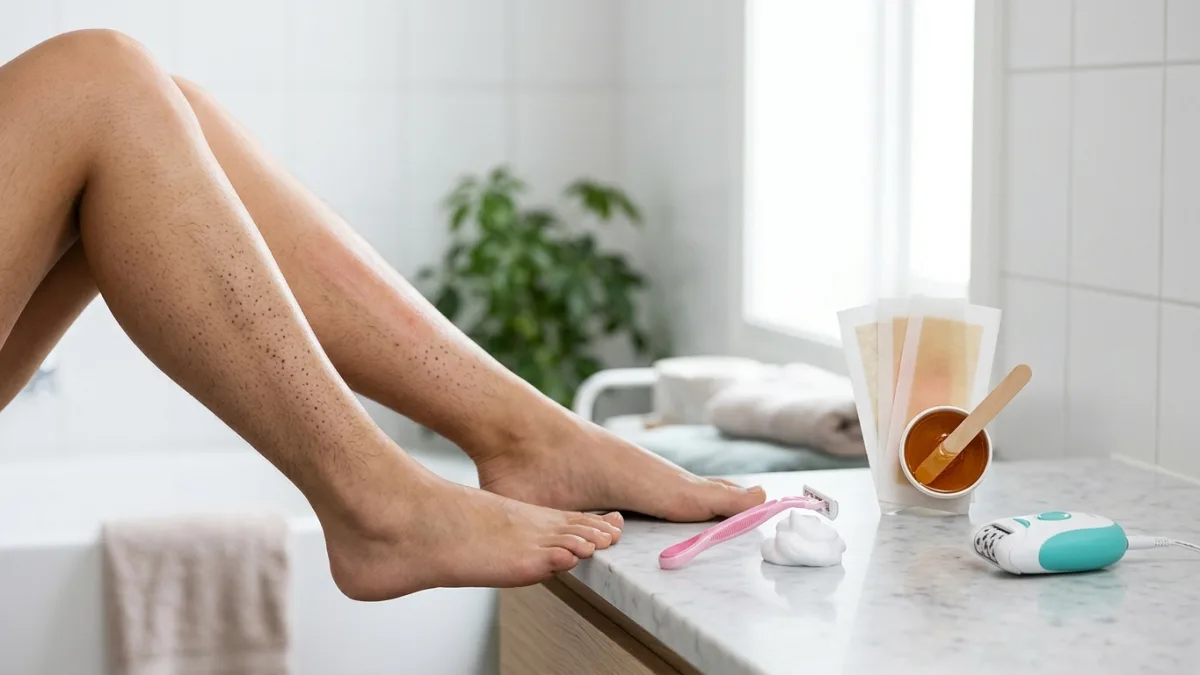
Bellxi offers premium women’s grooming and advanced hair removal devices, from painless IPL laser handsets to precision trimmers and epilators. We stock every device type for every skin type, so you can build a daily beauty routine that suits your needs. Discover your smoothest self today at bellxi.com.
How diet and hydration affect strawberry legs
Skin health starts from the inside. While hair removal habits play the biggest role in strawberry legs, hydration and diet can influence how quickly skin recovers and how visible pores appear.
Dry skin can look rougher and more textured, which may make strawberry legs more easy to see. Drinking enough water all day helps keep skin firm and springy and can make the surface look smoother overall.
Well-hydrated skin tends to look smoother and more even, which can make pores and dark spots less noticeable. Drinking enough water and moisturizing regularly supports skin’s natural texture and appearance over time.
Certain nutrients also support skin repair. Foods rich in vitamin C, vitamin E, and omega-3 fatty acids are often linked to healthier skin barrier function. A diet lacking these nutrients may slow down how quickly irritated skin calms after hair removal.
- Drink water consistently throughout the day, not just after exercise
- Include foods with omega-3s, like fish or flaxseed, to support skin barrier health
- Add vitamin C-rich foods, such as citrus or peppers, to support collagen production
- Limit excess sugar and processed foods, which some link to inflammation
None of these changes will remove strawberry legs on their own. They work best alongside a proper hair removal and skincare routine, rather than as a replacement for it.
Exfoliation methods compared: which works best?
Exfoliation is one of the most effective ways to reduce the look of strawberry legs, but not all methods work the same way. Physical scrubs, chemical exfoliants, and dry brushing each remove dead skin differently, and some are gentler than others.
Choosing the wrong exfoliation method for your skin type can make irritation worse instead of better. The table below breaks down how each option works and who it tends to suit best.
| Exfoliation method | How it works | Best for | Things to watch for |
|---|---|---|---|
| Physical scrub | Manually removes dead skin with granules or texture | Normal to oily skin | Can be too harsh on sensitive or freshly shaved skin |
| Chemical exfoliant (AHA/BHA) | Dissolves dead skin cells using acids | Sensitive or acne-prone skin | Can increase sun sensitivity, needs SPF follow-up |
| Dry brushing | Uses a stiff brush to sweep away dead skin | Dry or normal skin | Can be too abrasive if done too often |
| Exfoliating gloves | Manual buffing during showering | Most skin types | Should be replaced regularly to avoid bacteria buildup |
| Sugar or salt scrub | Combines physical exfoliation with moisturizing oils | Dry or rough skin | Can be too intense for freshly irritated skin |
For most people with strawberry legs, a mild chemical peel-type product mixed with occasional scrubbing works well. Chemical exfoliants clear pores from within, while light scrubbing removes the surface buildup that traps hair. Using both, but not on the same day, tends to give the best results.
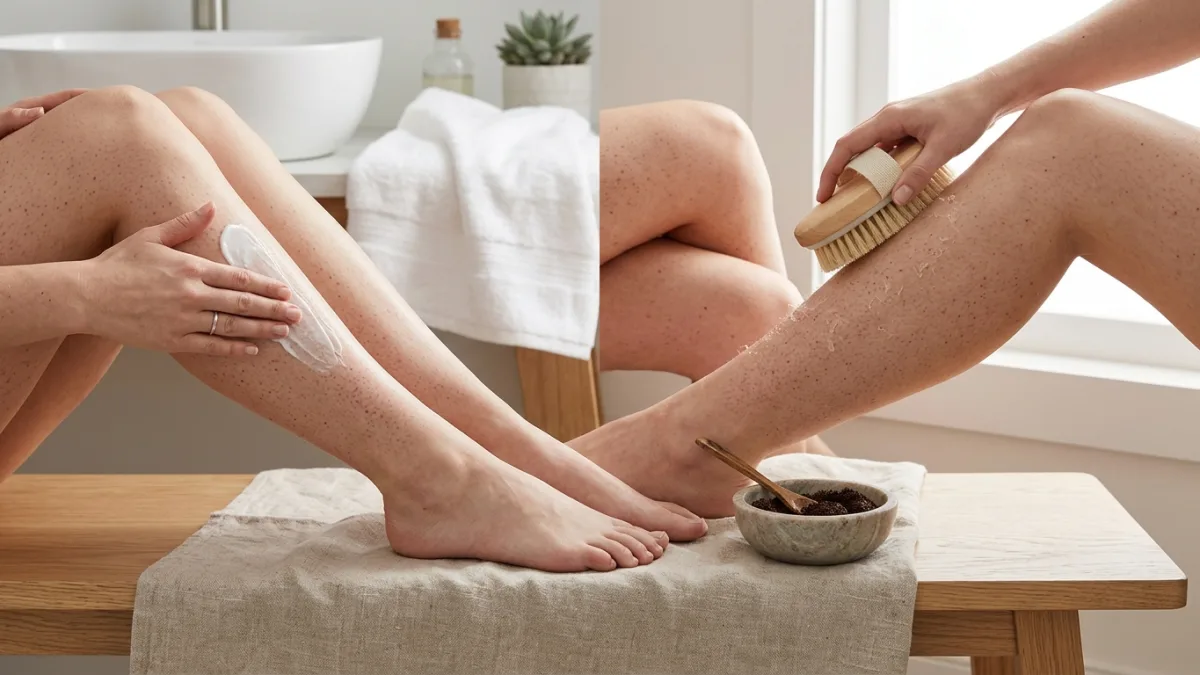
It’s worth adding new exfoliation products slowly. Starting with once or twice a week lets skin adjust before you use them more often. Doing too much, especially with acids, can lead to redness that looks like strawberry legs but is really just irritation.
When strawberry legs might be something else
Not every dark spot on the legs is strawberry legs. Conditions like keratosis pilaris, folliculitis, and clogged pores that have nothing to do with hair removal can look alike at first glance. Knowing the difference helps you pick the right care instead of guessing.
Strawberry legs are a common concern, showing up as tiny dark dots across the skin after shaving. Though widely experienced, they’re rarely talked about openly, leaving many people unsure what causes them or how to address the look.
Keratosis pilaris tends to feel rough and bumpy, almost like sandpaper, and is caused by a buildup of keratin rather than hair removal. Folliculitis often looks like small red or white bumps and can be linked to bacterial or fungal infection rather than dark pores.
If dark spots stay despite a steady shaving, exfoliating, and moisturizing routine, it may be worth talking with a skin doctor. A pro can help find out whether something beyond plain strawberry legs may be at play.
Ongoing redness, swelling, or pain around hair follicles can also point to infection rather than plain strawberry legs. These signs usually need a doctor’s care rather than at-home skincare fixes.
Market context
Long-term hair count reduction after home-use diode laser hair removal treatments — A dermatology study found that 86% of subjects had greater than 30% hair reduction 12 months after eight home-use diode laser treatments. PubMed (Lasers in Surgery and Medicine), 2012
Eosinophilic pustular folliculitis (EPF) occurrence among people living with HIV — Approximately 5% of patients living with HIV will develop eosinophilic pustular folliculitis at some point following their diagnosis. NCBI Bookshelf (StatPearls, NIH), 2023-10-28
Adjacent-market figures — each names the subject it measures, not strawberry legs directly.
Frequently Asked Questions
Can strawberry legs be completely cured?
Strawberry legs can rarely be cured for good, since they often come from a mix of genes, hair removal habits, and pore size. But regular exfoliating, moisturizing, and gentle hair removal can greatly cut down how much they show over time.
Many people ease symptoms well with a steady skincare routine.
Is strawberry legs the same as keratosis pilaris?
No, they are different conditions. Strawberry legs usually involve dark, open pores from trapped oil, germs, or hair, while keratosis pilaris involves small rough bumps caused by a buildup of skin protein. Both can show up on the legs, but they need slightly different care steps and skincare ingredients.
Does shaving cause strawberry legs?
Shaving can add to strawberry legs, especially when done with a dull razor or without proper lube. It can irritate hair follicles and leave behind stubble that shows up as dark dots. Using sharp razors, shaving cream, and scrubbing beforehand can help cut down this effect.
How often should I exfoliate to reduce strawberry legs?
Most skin doctors suggest exfoliating two to three times a week to help clear dead skin without irritating the area.
Too much exfoliating can make redness and sensitivity worse, so it is key to balance how often you do it with gentle, hydrating products that help the skin’s outer layer.
Can diet or hydration affect strawberry legs?
Drinking enough water and eating a balanced diet can help keep skin healthy overall, which may in turn ease the look of strawberry legs. Diet alone will not fix the condition, but proper hydration helps keep skin stretchy and can make pores look less obvious over time.
Are laser hair removal treatments effective for strawberry legs?
Laser hair removal can ease strawberry legs for some people by cutting down hair regrowth and follicle irritation. Results vary based on skin tone, hair color, and how often you get treated. It is best to ask a licensed pro to see if this choice suits your skin type.
When should I see a dermatologist about strawberry legs?
If dark spots persist despite consistent care, or if you notice swelling, pain, or signs of infection, it is time to consult a dermatologist. They can rule out other conditions like folliculitis and recommend targeted treatments suited to your specific skin concerns.
Key statistics
- Keratosis pilaris, one of the skin conditions that can mimic strawberry legs, is estimated to affect about half of adolescents and up to 40% of adults. (PMC (National Institutes of Health), 2024)
References
- Keratosis pilaris is a separate skin condition that produces small rough bumps and can be managed with at-home skin care tips before considering a dermatologist visit. — American Academy of Dermatology (AAD) (American Academy of Dermatology is the leading professional organization representing board-certified dermatologists in the U.S.)
