
Hair care
Retinol Benefits for Hair: What It Does and How to Use It Safely
Last updated: November 3, 2026
Retinol benefits for hair include less scalp buildup, calmer dandruff, and a cleaner base for other treatments to work. Some formulas may also ease scalp DHT (a hormone linked to shrinking hair follicles) activity, which could support healthier growth over time.
Results vary by hair type, and overuse can dry out or irritate the scalp, so easing in slowly matters.
What Are the Benefits of Retinol for Hair?
The benefits of retinol for hair start at the scalp, not the strands. Retinol (a vitamin A derivative that speeds up skin cell renewal) was built for skin, but the scalp is skin too. It sheds dead cells, clears pores, and can calm flaking when used the right way.
Quick answer summary
In short, retinol benefits for hair by clearing away buildup that can clog follicles and slow growth. It may calm an itchy, flaky scalp. It could support a better environment for hair to grow in. It is not a proven cure for hair loss, but it plays a supporting role.
- Reduces oil and product buildup on the scalp
- May calm dandruff and flaking
- Could ease scalp DHT activity linked to thinning
- Supports a cleaner follicle environment for growth
- Helps other scalp treatments absorb better
- Smooths rough patches caused by dead skin cells
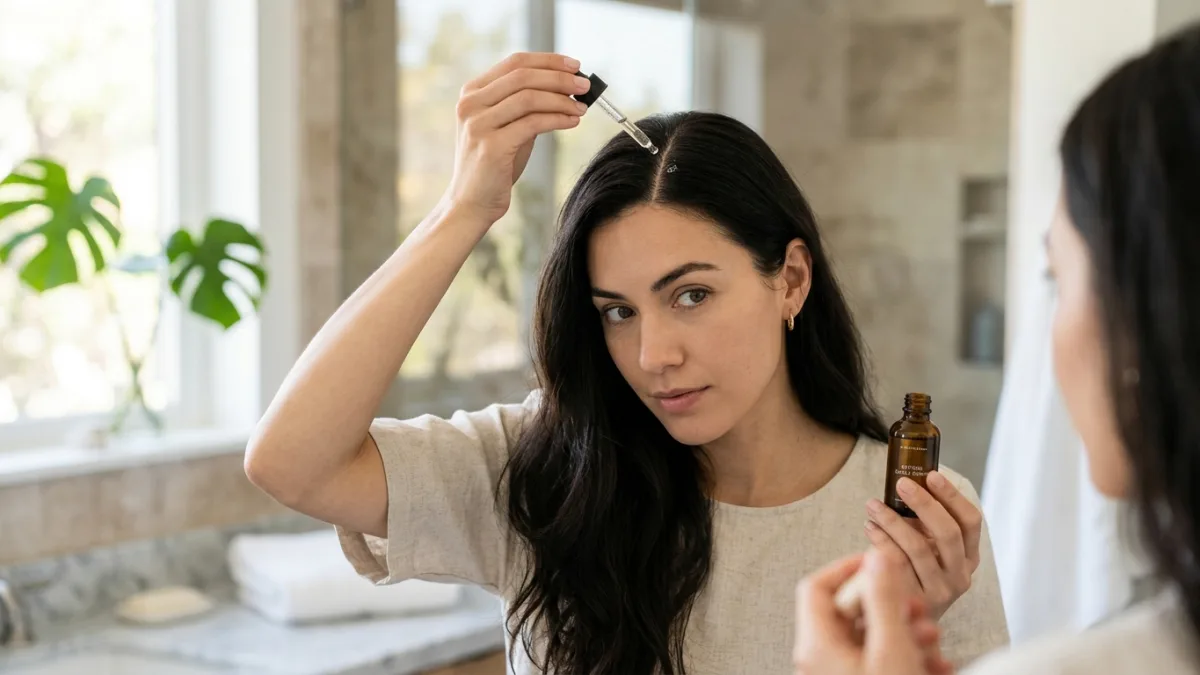
Why retinol crossed over from skincare to haircare
Retinol moved from face creams to scalp serums because the science overlaps. Skin cell turnover (the natural process where old skin cells shed and new ones form) slows with age on the face and scalp alike. Retinol speeds that process up in both places.
Brands noticed that a flaky, oily scalp behaves a lot like acne-prone skin. So they borrowed the same active ingredient. The retinol benefits for hair claim grew from real skin science, even though scalp-specific research is still catching up.
How Does Retinol Actually Work on the Scalp and Hair Follicles?
Retinol works on the scalp by speeding up cell turnover and cutting down on oil buildup around each follicle. A hair follicle (the small pocket in the skin where each strand grows) can get clogged with sebum, dead skin, and product residue over time.
Cell turnover and buildup removal
Cell turnover is the scalp’s natural renewal cycle. This process can slow down with age, stress, or product overload. Retinol nudges it back into gear, helping dead cells shed instead of piling up. .
Less buildup means follicles sit in a cleaner environment. That matters because a blocked follicle can struggle to grow a healthy strand. This is one of the clearer, more mechanical retinol benefits for hair that dermatology already understands from skin studies.
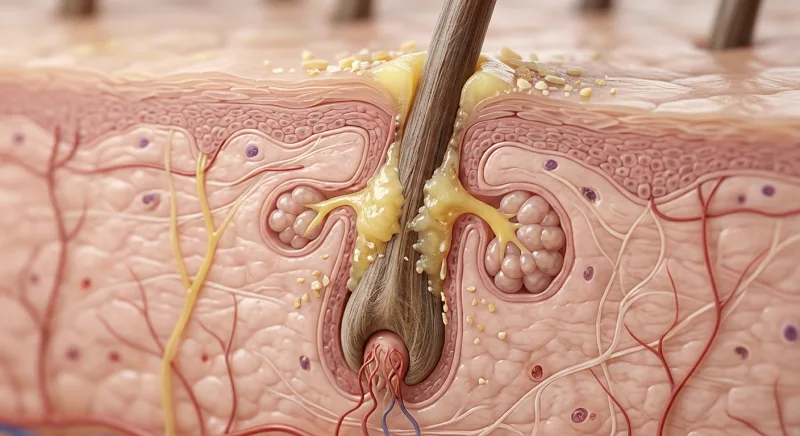
Retinol’s role in follicle environment
Sebum (the natural oil the scalp produces to protect skin and hair) is useful in small amounts. Too much can trap dirt and dandruff-causing yeast near the follicle. Retinol helps regulate oil output, which can make the scalp feel less greasy between washes.
A calmer, less oily scalp also tends to have a more balanced scalp microbiome (the community of bacteria and fungi that naturally live on the skin). Keeping that balance in check is part of why people report less itching and flaking after weeks of consistent use.
It is worth being honest here: most of this mechanism is borrowed from facial skin research. Direct clinical trials on scalp retinol use are still limited, so some of the retinol benefits for hair are reasonable extensions, not guarantees.
Does Retinol Help With Hair Growth or Hair Loss?
Retinol may support hair growth indirectly by improving the scalp environment, but it is not a direct treatment for hair loss. It works alongside proven options rather than replacing them. Anyone with real concerns about thinning should still talk to a doctor.
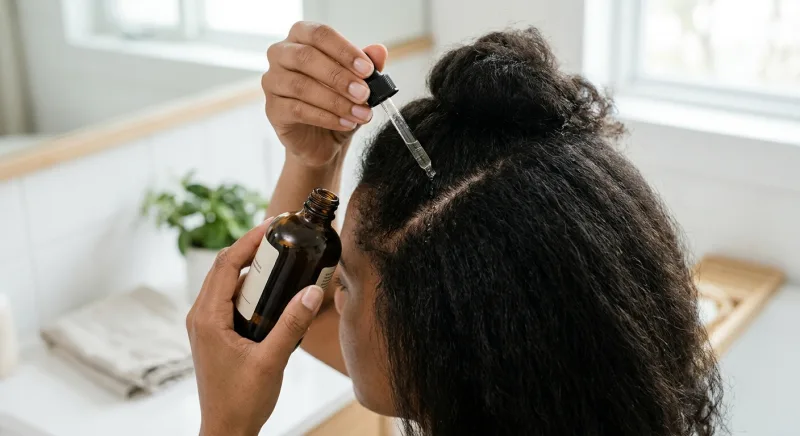
The DHT connection, explained simply
DHT (dihydrotestosterone, a hormone made from testosterone that can shrink hair follicles over time) is a main cause of pattern hair loss.
Some early studies suggest retinol benefits for hair may help other treatments, like minoxidil (a topical drug approved to treat hair loss by widening blood vessels near follicles), soak in better.
The theory is that retinol clears the path so active ingredients can reach the follicle. It does not appear to block DHT the way medications made for that purpose do.
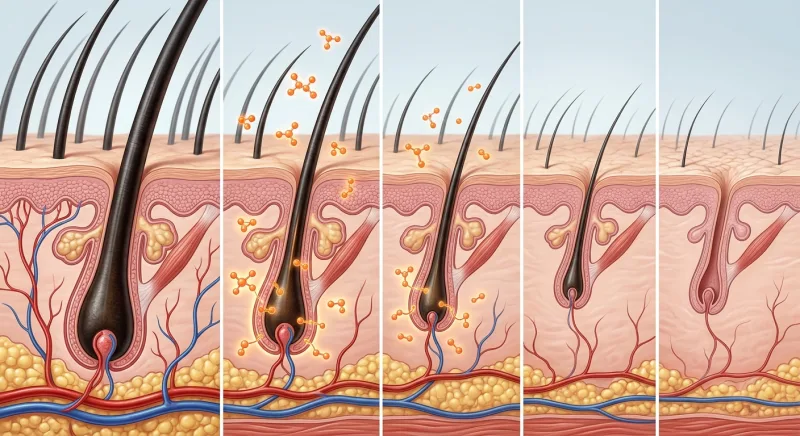
What the evidence does and doesn’t show
Current evidence shows retinol can improve scalp condition and possibly help delivery of other actives. It does not show that retinol alone regrows hair. Framing matters here: retinol benefits for hair are supportive, not a standalone fix for hair loss.
Anyone chasing serious regrowth should treat retinol as one part of a routine. Pairing it with a medically backed option, and setting realistic expectations, keeps the approach honest and avoids disappointment down the line.
Is Retinol Safe for Every Hair and Scalp Type?
Retinol is not equally safe for every scalp type, and that is one of the biggest gaps in most advice online. Oily scalps tend to tolerate it well. Dry, sensitive, or chemically treated hair needs a slower, more careful approach.
Oily vs. dry scalp considerations
Oily scalps usually handle retinol a few times a week without much trouble. The extra oil buffers some of the drying effect. Dry scalps need lower strength and less frequent use, since retinol can strip moisture and cause flaking that mimics dandruff.
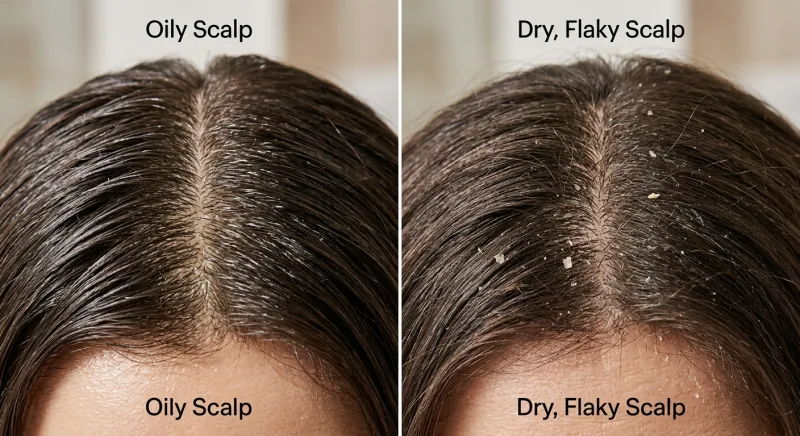
Curly, coily, and chemically treated hair
Curly and coily hair types often have scalps that are naturally drier, so retinol should be used with a light hand. Hair that has been treated with chemicals, like dye, keratin, or relaxers, may already have a weak scalp barrier, which raises the risk of stinging or irritation.
In these cases, starting with once-a-week use and watching for redness is the safer path. The goal is still to get retinol benefits for hair without triggering a reaction that undoes the progress.
Who should avoid retinol on their scalp
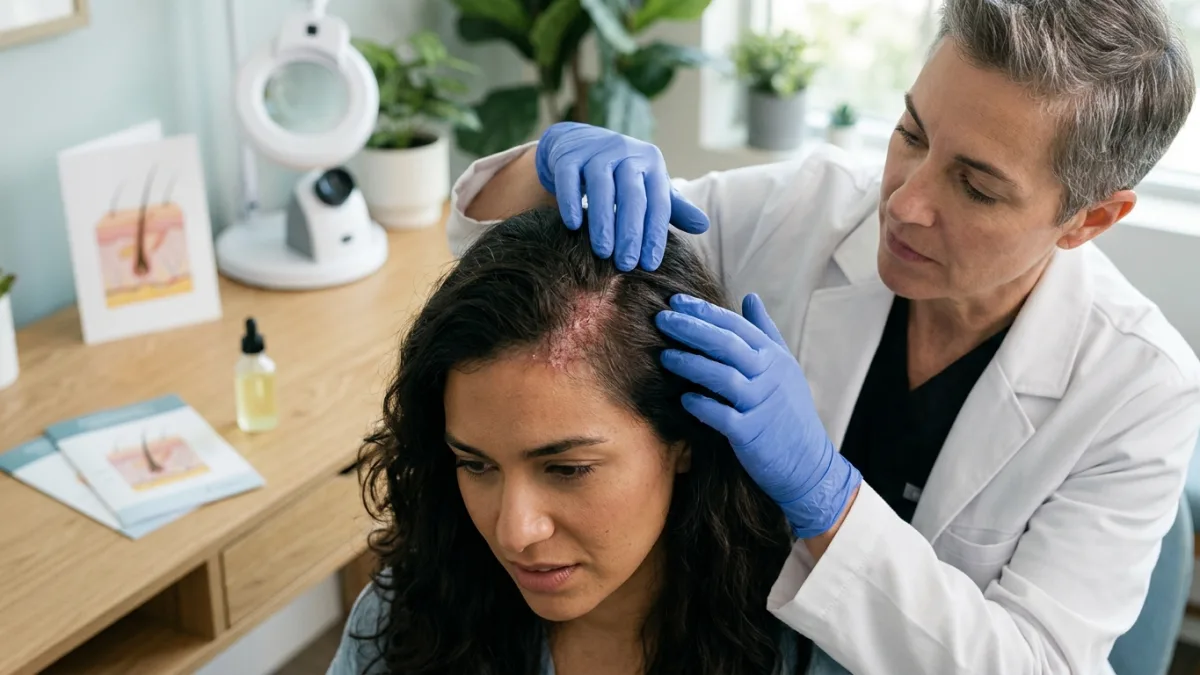
Pregnant or breastfeeding people are generally advised to avoid retinol products, including on the scalp, due to absorption concerns. Anyone with active scalp conditions, open sores, or a known retinoid sensitivity should skip it or check with a doctor first.
| Hair/Scalp Type | Suggested Frequency | Key Caution |
|---|---|---|
| Oily scalp | 2-3 times weekly | Watch for over-drying with heavy use |
| Dry scalp | 1-2 times weekly | Pair with a moisturizing conditioner |
| Curly or coily hair | Once weekly to start | Naturally drier scalp needs a gentler pace |
| Color-treated hair | Once weekly, patch-test first | Compromised barrier may sting or irritate |
| Sensitive or reactive scalp | Start biweekly | Stop if redness or itching appears |
| Pregnant or breastfeeding | Avoid | Check with a doctor before any retinoid use |
Retinol Benefits for Hair Compared to Other Popular Scalp Treatments
Retinol is not the only ingredient sold for scalp health. Minoxidil, caffeine shampoos, and blends of plant oils all claim like results. Knowing how retinol benefits for hair compare to these other choices helps set fair hopes before you commit to a routine.
| Treatment | Primary Action | Typical Timeline | Best Paired With |
|---|---|---|---|
| Retinol | Cell turnover, follicle decongestion | 8-12 weeks | Peptide serums, moisturizing conditioner |
| Minoxidil | Blood flow stimulation | 12-16 weeks | Scalp massage, biotin supplements |
| Caffeine shampoo | Mild follicle stimulation | Ongoing, subtle | Daily use as a maintenance step |
| Essential oil blends | Scalp soothing, circulation | Variable, less studied | Carrier oils, gentle massage |
Many skin doctors say it works best to mix ways, not just pick one. Retinol clears the path; minoxidil wakes up growth signals; caffeine and oils give gentle daily support.
The table above shows why people often layer treatments instead of relying on a single product. Retinol benefits for hair are most noticeable when paired thoughtfully, not when treated as a standalone miracle fix.
Retinol Benefits for Hair: What Actually Happens Week by Week
Patience matters more with retinol than with most scalp products. Visible change follows a fairly predictable pattern, though individual results vary based on scalp condition, product strength, and consistency of use.
- Weeks 1-2: Mild tingling or flaking as the scalp adjusts; no visible hair change yet.
- Weeks 3-4: Reduced oiliness and buildup; scalp may feel cleaner between washes.
- Weeks 5-8: Some users notice less shedding during brushing or washing.
- Weeks 9-12: Fine baby hairs may appear along the hairline for some users.
- Beyond 12 weeks: Continued use maintains follicle health; stopping may reverse gains.
This timeline shows why short trials rarely give pleasing results. Retinol benefits for hair build up slowly, tied to the natural hair growth cycle rather than a quick switch.
Tracking progress with monthly photos can help you notice subtle changes that are easy to miss day to day.
Choosing the Right Retinol Product for Your Hair Goals
Not all retinol products are formulated the same way. Some are designed for facial skin and repurposed for scalp use, while others are built specifically for hair and follicle support.
Read labels with care. A product made for anti-aging skin care may have scents or alcohols that irritate the scalp more than the face. Formulas made just for the scalp tend to add calming agents along with the active ingredient.

| Product Type | Formulated For | Common Additions | Consideration |
|---|---|---|---|
| Facial retinol serum | Skin, not scalp | Hyaluronic acid, antioxidants | May irritate scalp if repurposed |
| Scalp-specific retinol serum | Follicles and scalp barrier | Niacinamide, soothing botanicals | Generally better tolerated long-term |
| Retinol-infused shampoo | Light daily exposure | Surfactants, conditioning agents | Lower concentration, gentler entry point |
| Prescription tretinoin | Medical-grade scalp treatment | None, active ingredient only | Requires professional guidance |
Picking the right one changes how fast and how easy it is to get retinol benefits for hair. The wrong product can cause irritation that makes you quit before you see results.
Reading Ingredient Labels for Real Retinol Benefits for Hair
Lists of ingredients can be confusing, mostly when brands use different names for the same kind of compounds. Knowing what to look for helps you avoid weak or useless formulas.
- Retinol: The standard over-the-counter form, moderate strength.
- Retinyl palmitate: A gentler, less potent derivative, good for beginners.
- Retinaldehyde: Stronger than retinol, converts faster to active form.
- Tretinoin: Prescription-strength, most potent, requires medical supervision.
- Encapsulated retinol: Slow-release formula designed to reduce irritation.
New users often do better starting with retinyl palmitate or a wrapped form of retinol. These forms still give retinol benefits for hair while cutting the risk of redness, flaking, or discomfort while your skin adjusts.
Checking concentration percentages, when listed, gives a clearer picture than relying on marketing claims alone.
Common Mistakes That Undermine Retinol Benefits for Hair
Even a top-notch product can fall short if used the wrong way. A few common slip-ups explain why some people quit retinol before they see real change.
- Overapplying: More product does not speed up results and increases irritation risk.
- Skipping patch tests: Sensitive scalps can react unpredictably without warning.
- Combining with harsh exfoliants: Salicylic acid scalp scrubs plus retinol can overwhelm the skin barrier.
- Inconsistent use: Sporadic application resets the adjustment period repeatedly.
- Ignoring sun exposure: Retinol can increase scalp sensitivity to UV rays.
- Expecting fast results: Judging effectiveness after two weeks leads to premature quitting.
Ducking these mistakes helps you stay comfortable and get results. Retinol benefits for hair depend a lot on steady, correct use rather than hard or hit-or-miss habits.
Wearing a hat or applying sunscreen along the part line can offset increased sun sensitivity. This small habit prevents setbacks that might otherwise discourage continued use.
When to Consult a Professional About Retinol Benefits for Hair
Over-the-counter retinol works well for many people, but some situations call for professional input before starting or continuing use.
- Persistent redness, burning, or itching lasting more than a few days.
- Sudden or patchy hair loss unrelated to gradual thinning.
- Existing scalp conditions like psoriasis, eczema, or seborrheic dermatitis.
- No improvement after three months of consistent, correct use.
- Uncertainty about combining retinol with other prescription treatments.
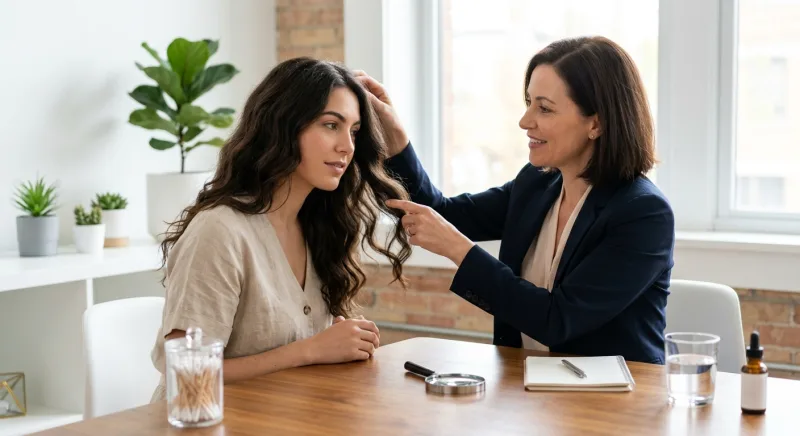
A dermatologist can assess whether a stronger prescription option makes sense. Professional advice prevents wasted time on ineffective routines.
Blood work or scalp biopsies are sometimes recommended when hair loss has an underlying medical cause. In these cases, retinol alone will not resolve the root issue, no matter how consistently it is applied.
Building a Sustainable Routine Around Retinol Benefits for Hair
Long-term success comes from treating retinol as one part of a broader scalp care routine rather than an isolated fix. Diet, stress management, and gentle hair handling all influence outcomes.
- Apply retinol to a clean, dry scalp for better absorption.
- Follow with a lightweight, non-comedogenic conditioner.
- Massage gently to boost circulation without causing friction damage.
- Maintain a balanced diet rich in protein, iron, and biotin.
- Reduce heat styling frequency while the scalp adjusts to treatment.
Combining these habits with steady retinol use creates conditions where results are more likely to last. Effort on its own, without other habits to back it up, often brings slower or less clear change.
Tracking your routine in a simple journal or app can help identify what works. Note application frequency, product changes, and any scalp reactions over time.
Read the complete guide: A Hair Care Guide That Finally Makes Sense of Your Routine
Frequently Asked Questions
What are the main retinol benefits for hair?
The main retinol benefits for hair include clearing clogged follicles (the tiny openings hair grows from), cutting down buildup, and helping the scalp stay healthy. Many people also notice less hair fall over time.
Results differ from person to person, and staying consistent matters more than speed when you judge whether it is working.
How long does it take to see results?
Most users report early signs of change within a few months of steady use. Hair growth cycles are slow, so patience is necessary. Stopping too early is one of the most common reasons people feel retinol has not worked for their scalp.
Can retinol cause hair shedding at first?
Yes, some people see mild hair loss when they start using retinol. This is often short-term and tied to follicles pushing out old strands. If hair loss goes on past a few weeks or seems like a lot, it is best to use it less often or ask a doctor.
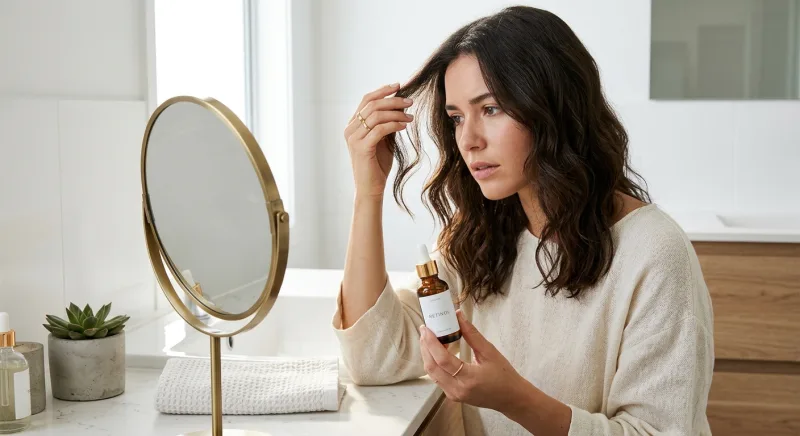
Is retinol safe to use with other scalp treatments?
Retinol can often be used with other scalp treatments, but you need to be careful. Mixing strong active ingredients may irritate sensitive skin. Trying one product at a time helps you see what works and stops you from hiding irritation caused by mixing too many treatments too fast.
How often should retinol be applied to the scalp?
How often you use it depends on the product strength and how your skin handles it. Many routines start with once or twice a week, then increase little by little.
Using too much can cause irritation, so following product instructions and watching how your scalp reacts is the safest path for most people.
Does diet affect how well retinol works for hair?
Diet plays a helping role in scalp health and can affect how much you see results. Getting enough protein, iron, and biotin helps the parts that retinol benefits for hair are meant to protect.
Gaps in diet may slow things down, even when the product is used the right way and often.
Who should avoid using retinol on their scalp?
People with highly sensitive skin, active scalp conditions, or those who are pregnant should consult a doctor first. Retinol benefits for hair may not outweigh risks for everyone, and professional guidance helps determine whether an alternative approach would be safer or more suitable.
Can retinol benefits for hair be reversed if treatment stops?
Stopping treatment often means a slow return to how the scalp was before. Gains are usually tied to steady use, not a lasting change. Anyone thinking about a break should expect slower progress if they start again, since staying consistent is what backs up long-term results.
Key statistics
- Androgenetic alopecia, the condition linked to scalp DHT activity, affects up to 50 percent of males and females after puberty according to an NIH StatPearls review. (StatPearls / NCBI Bookshelf (NIH), 2024)
References
- DHT (dihydrotestosterone) is linked to hair follicle miniaturization and shrinking, which is associated with balding scalp hair follicles. — NCBI/PMC (NIH) (Peer-reviewed research article hosted on the National Institutes of Health’s PubMed Central (NIH) database)
- Retinoids like tretinoin work by increasing cell turnover, promoting the detachment and shedding of cornified (dead) skin cells. — StatPearls / NCBI Bookshelf (NIH) (StatPearls is a peer-reviewed reference published via the NIH’s National Center for Biotechnology Information (NCBI) Bookshelf)
