
Skincare routine
Exfoliating Cleanser: How It Works, Who Needs One, and How to Use It Right
Last updated: November 3, 2026
An exfoliating cleanser is a face wash that mixes cleansing with mild physical or chemical exfoliants, such as small grains or acids, to lift away dead skin cells and unclog pores in one step. It works faster than a plain wash but gentler than a leave-on treatment.
Most skin types can use one, though frequency depends on skin type and formula strength.
What Is an Exfoliating Cleanser? (Quick Answer)
An exfoliating cleanser is not the same as a plain face wash or a separate scrub. A plain cleanser removes oil and dirt. An exfoliating cleanser adds an extra job: it also loosens dead skin cells while you wash, so you get two steps in one product.
The main idea behind an exfoliating cleanser is simple. Skin sheds dead cells all the time, but that process slows with age, dryness, or sun damage.
An exfoliating cleanser speeds it up, either with tiny hard bits that rub cells away, or with mild acids that melt the glue holding dead cells together.
This differs from a separate scrub, which sits on skin longer and often exfoliates harder. An exfoliating cleanser rinses off within a minute or two, so its effect is gentler by design.
That short contact time is exactly why it suits daily or near-daily use for many people, where a stronger scrub would not.
Knowing this difference matters before you shop, because “exfoliating” on a label can mean very different strengths. Some formulas use fine hard grains. Others use chemical acids. A few use fruit-based enzymes.
Each works in its own way, and picking the wrong one for your skin can cause more harm than good.
Below, we break down how each exfoliating cleanser type works, who should use one, how often, and how to fit it into a full body care routine, including skin prep before shaving or laser hair removal.
How Does an Exfoliating Cleanser Work on Skin?
An exfoliating cleanser works by speeding up how fast dead skin cells leave the outer skin layer, using either physical rubbing, chemical melting, or enzyme breakdown.
Skin renews itself on its own, but the process can leave dull, rough patches behind if dead cells pile up faster than they shed on their own.
Skin cell turnover (the process where new skin cells rise to the surface and old ones shed away) happens on its own, but it slows with age. An exfoliating cleanser helps clear the backlog of dead cells sitting on top, revealing smoother, more even skin underneath.
The method it uses to do this varies by formula.
Physical Exfoliation Explained
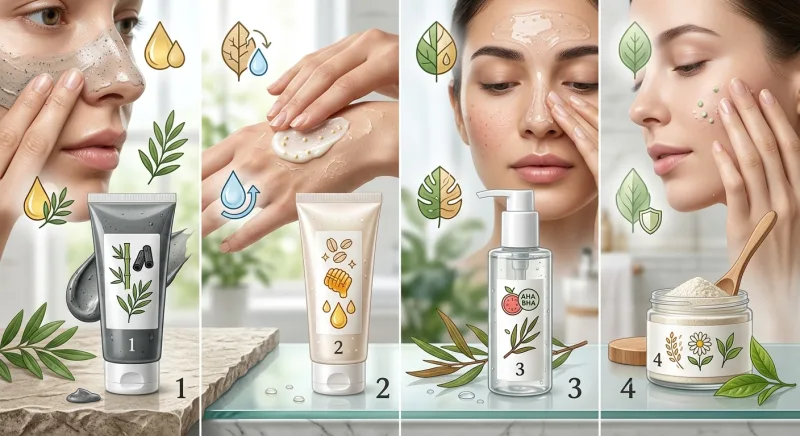
Physical exfoliation uses small solid bits, like finely ground rice, jojoba beads, or sugar, to gently rub dead cells off the skin’s top layer as you rub the cleanser in. This type of exfoliating cleanser gives a quick smooth feel because you can feel the grit working.
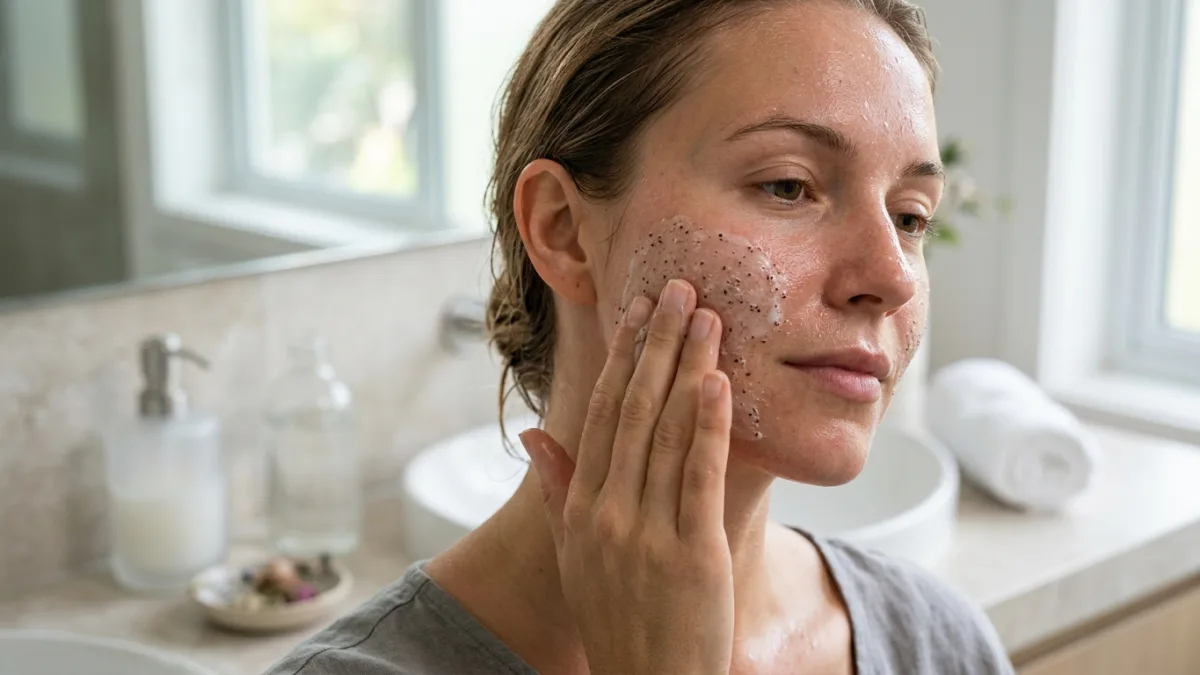
The gentleness of physical exfoliation depends entirely on the size and shape of the particles. Rounded, fine particles are gentler than jagged or coarse ones, like crushed shells or walnut husks, which can create tiny tears in skin. This is why particle shape matters more than the word “physical” itself.
Chemical Exfoliation Explained (AHA, BHA, PHA)
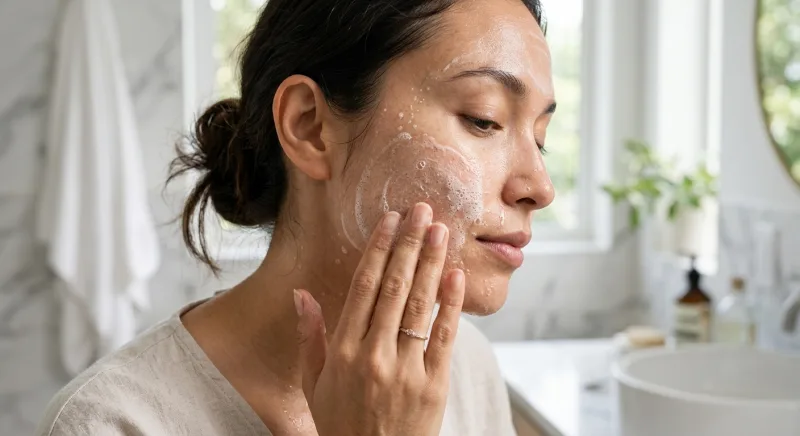
Chemical exfoliation uses acids to break the bonds between dead skin cells, so they lift away without any rubbing at all. An exfoliating cleanser with acids works even on skin that a scrub would irritate, since there is no rubbing involved.
Alpha hydroxy acid (a water-loving acid, like glycolic or lactic acid, that works mainly on the skin’s top layer to loosen dead cells) suits normal to dry skin and helps with dullness and fine texture.
Beta hydroxy acid (an oil-loving acid, mainly salicylic acid, that can get inside pores to clear built-up oil and debris) suits oily and acne-prone skin especially well.
Polyhydroxy acid (a gentler acid with bigger molecules that buffs off dead skin without going as deep as alpha or beta hydroxy acids) is the mildest of the three and often told to people with sensitive or reactive skin.
An exfoliating cleanser built around this acid type gives some of that peeling gain with a lower risk of sting or redness.
Enzyme Exfoliation Explained
Enzyme exfoliation uses fruit-based enzymes, like papaya or pineapple extract, to break down the outer layer of dead skin cells without acids or scrubbing. It is often the mildest kind of exfoliating cleanser and a good start for anyone new to exfoliation or unsure of their skin’s limits.
Enzymes tend to work more slowly than acids and need a bit longer contact time to have an effect, which is why some enzyme cleansers ask you to leave them on for a minute before rinsing. Results build gradually rather than showing up after one wash.

| Exfoliation Type | Mechanism | Best For | Common Ingredients | Gentleness Level |
|---|---|---|---|---|
| Physical | Manual buffing of dead cells | Normal, resilient skin | Jojoba beads, rice powder, sugar | Moderate, depends on particle shape |
| Chemical (AHA) | Dissolves surface cell bonds | Dry, dull, sun-damaged skin | Glycolic acid, lactic acid | Moderate |
| Chemical (BHA) | Clears oil inside pores | Oily, acne-prone skin | Salicylic acid | Moderate to strong |
| Chemical (PHA) | Gentle surface dissolving | Sensitive, reactive skin | Gluconolactone, lactobionic acid | Gentle |
| Enzyme | Breaks down dead cell protein | Beginners, sensitive skin | Papaya extract, pineapple extract | Gentle |
Who Should Use an Exfoliating Cleanser?
Most skin types can use an exfoliating cleanser, but the right formula depends on your skin’s oil level, sensitivity, and any active treatments you’re already using. Picking based on skin type, rather than marketing claims, is the safest way to add one to your routine.
By Skin Type: Oily, Dry, Combination, Sensitive
Oily and acne-prone skin often does well with a beta hydroxy acid exfoliating cleanser, since it can help manage oil and clear pores. Dry skin tends to do better with a milder alpha hydroxy acid or enzyme option, since it clears dead skin without stripping needed moisture.
Combination skin can often handle a light chemical exfoliating cleanser used a few times a week, with extra care on the oilier spots. Sensitive skin usually does best with a polyhydroxy acid or enzyme-based exfoliating cleanser, since both work with less risk of irritation.
Who Should Avoid or Limit Use
Anyone with a compromised skin barrier (the outer layer of skin that keeps moisture in and irritants out) should pause exfoliation until the skin heals. Signs of a damaged barrier include ongoing redness, stinging, flaking, or skin that reacts to products it once tolerated fine.
People using prescription retinoids, or other strong acne treatments, should talk to a doctor before adding an exfoliating cleanser, since mixing strong actives can raise the risk of irritation. Anyone with active eczema, rosacea flare-ups, or open acne sores should also wait until skin calms down.
What Are the Benefits of Using an Exfoliating Cleanser?
The main plus of an exfoliating cleanser is smoother, more even-looking skin, gained without adding an extra step to your routine. It combines washing and exfoliating in one move, saving time while still giving real texture gains over regular use.
Smoother, More Even Texture
Regular use of an exfoliating cleanser clears the buildup of dead cells that makes skin look dull or feel rough. Skin tends to reflect light more evenly once that buildup is gone, giving a smoother, brighter look without any makeup involved.

Fewer Clogged Pores
Dead skin cells mix with oil and can plug pores, leading to blackheads and breakouts. An exfoliating cleanser, especially one with salicylic acid, helps clear that debris before it builds up, which may reduce how often pores get clogged.
Better Absorption of Other Products
A layer of dead skin cells can block serums and moisturizers from sinking in properly. Clearing that layer with an exfoliating cleanser may help the products you apply afterward absorb more evenly, so you get more from the rest of your routine.
Simplified Routine (2-in-1 Step)
An exfoliating cleanser folds two steps into one, cutting down the time and number of products in a routine. This makes it a handy pick for anyone who wants the perks of exfoliation without adding a separate scrub or leave-on treatment to their shelf.
Exfoliating Cleanser vs. Regular Cleanser
A plain cleanser is built to remove dirt, oil, and makeup without upsetting the skin barrier. An exfoliating cleanser does that same job while also loosening dead skin cells through physical or chemical means. The table below sets the two side by side.
| Feature | Regular Cleanser | Exfoliating Cleanser |
|---|---|---|
| Primary function | Removes dirt, oil, makeup | Cleanses plus loosens dead skin cells |
| Key ingredients | Surfactants, mild humectants | Surfactants plus acids or physical granules |
| Frequency of use | Once or twice daily | Two to three times weekly, depending on skin type |
| Effect on texture | Minimal change | Can smooth rough patches over time |
| Risk of irritation | Low | Moderate if overused |
| Best paired with | Daily moisturizer | Barrier-supporting moisturizer and sunscreen |
Neither choice is always better. A regular cleanser suits daily use and sensitive skin. An exfoliating cleanser suits skin that can take a bit more activity and wants extra help smoothing texture.
Exfoliating Cleanser Options by Skin Type

Not every exfoliating cleanser suits every skin type. Picking the right formula matters more than picking the strongest one. The chart below gives general tips by skin type, though a patch test is always a good idea before daily use.
| Skin Type | Recommended Formula | Frequency | Notes |
|---|---|---|---|
| Oily or acne-prone | Salicylic acid based exfoliating cleanser | 3-4 times weekly | Helps with clogged pores; monitor for dryness |
| Dry or sensitive | Gentle lactic acid or enzyme-based exfoliating cleanser | 1-2 times weekly | Pair with rich moisturizer afterward |
| Combination | Mild glycolic acid exfoliating cleanser | 2-3 times weekly | Focus on T-zone if needed |
| Mature skin | Low-strength AHA exfoliating cleanser | 2 times weekly | Watch for increased sun sensitivity |
| Normal skin | Balanced exfoliating cleanser with mild acids | 2-3 times weekly | Adjust based on how skin responds |
These are starting points, not fixed rules. Skin can change with the seasons, stress, and other products in a routine. It helps to check how an exfoliating cleanser feels every few weeks and change how often you use it.
How to Choose the Right Exfoliating Cleanser
Picking an exfoliating cleanser takes more than reading the front label. The list of ingredients, how strong the active ingredients are, and how the mix feels on skin all matter. A few simple things can guide the choice.
- Identify your primary skin concern, such as texture, dullness, or clogged pores
- Check whether the formula uses physical exfoliants, chemical acids, or both
- Look at the concentration percentage if it’s listed on the label
- Consider how your skin has reacted to exfoliation in the past
- Factor in climate and season, since skin behaves differently in summer and winter
An exfoliating cleanser that works well for a friend may not suit your skin at all. Trying it yourself, best done with advice from a skin doctor, is still the most sure way to know.
Reading Labels on an Exfoliating Cleanser
Labels can be mixed up, mostly when brands use sales words instead of clear ingredient names.
When scanning an exfoliating cleanser label, look past buzzwords like “brightening” or “renewing.” Instead, check the real active ingredient and where it sits in the ingredient list, since ingredients are usually listed in order of amount.
Understanding a few key terms can make label reading easier and help you avoid formulas that are too harsh or too mild for your needs.
How Often Should You Use an Exfoliating Cleanser

How often you use it depends on skin type, the strength of the mix, and how skin responds over time. Using an exfoliating cleanser too often can lead to redness, tightness, or more sensitivity. Using it too rarely may mean missing out on the gains altogether.
As a general starting point, most people do well beginning with two to three uses per week and adjusting from there based on how their skin reacts.
Signs You’re Using an Exfoliating Cleanser Too Often
Overuse of an exfoliating cleanser often shows up as clear irritation. Common signs include ongoing redness, a tight or stinging feel after washing, flaking that wasn’t there before, and more breakouts in some cases.
If these signs show up, using it less often or switching to a milder formula is a fair first step.
Skin barrier damage from too much use can take time to heal. Stopping exfoliation for a week or two, while focusing on wetting and fixing the skin barrier, often helps skin heal before you bring back an exfoliating cleanser more slowly.
Tips for Using an Exfoliating Cleanser Safely
Getting the most from an exfoliating cleanser while cutting down on irritation comes down to a few steady habits. These tips work broadly, whether the mix is chemical, physical, or both.
- Always apply sunscreen the following morning, since exfoliation can increase sun sensitivity
- Avoid combining an exfoliating cleanser with other strong actives, like retinoids, on the same night
- Use lukewarm water instead of hot water to avoid additional irritation
- Apply gentle pressure rather than scrubbing aggressively, especially with physical formulas
- Follow with a moisturizer to help support the skin barrier
These habits help make sure that an exfoliating cleanser gives its good effects without harming the skin’s shield over time. Staying steady, rather than going hard, tends to give the best results over time.
When to Avoid an Exfoliating Cleanser

There are times when skipping an exfoliating cleanser is the better choice. Active breakouts with open sores, sunburned skin, or skin healing from a step like a peel are not good picks for exfoliation.
In these cases, a gentle, non-exfoliating cleanser is usually the safer choice until skin has calmed down.
People with certain skin problems, such as eczema or rosacea, may also need to avoid or limit exfoliating cleanser use. Talking to a skin doctor before starting is very important for anyone with a known skin problem.
Read the complete guide: How to Build a Skincare Routine That Actually Works in 2026
Frequently Asked Questions
What does an Exfoliating Cleanser actually do?
An Exfoliating Cleanser combines a normal face wash with mild physical or chemical exfoliants. It lifts away dead skin cells while cleaning, leaving skin smoother and brighter. Regular use can make texture better, unclog pores, and help other skincare products soak in better.
How often should I use an Exfoliating Cleanser?
Most people do well using an exfoliating cleanser two to three times a week. Sensitive skin types should start with once a week. Watch how skin reacts, and change how often you use it based on comfort, redness, or dryness before using it more.
Can I use an Exfoliating Cleanser every day?
Daily use is not a good idea for most skin types. Too much scrubbing can hurt the skin barrier, causing redness, soreness, or more sensitive skin. Unless a product is made just for gentle daily use, keeping it to a few times a week is the safer way to go.
Is an Exfoliating Cleanser suitable for sensitive skin?
Sensitive skin can often handle a gentle exfoliating cleanser, but care is a must. Look for mild mixes with low acid amounts or soft scrub bits. Testing on a small patch first and starting with very little use helps stop unwanted redness or reactions.

Should I follow up with moisturizer after using an Exfoliating Cleanser?
Yes, putting on moisturizer after is important. Removing dead skin can for a short time leave skin more open to moisture loss. Putting on a moisturizer that adds moisture right after cleansing helps fix the skin barrier and keeps skin feeling good rather than tight or dry.
Can an Exfoliating Cleanser replace other exfoliating products?
It can cut the need for separate scrubs or peels, but mixing many exfoliating steps may over-strip skin. If you already use serums or toners with active acids, cut back elsewhere so you do not stack too many exfoliating steps in one routine.
What ingredients should I look for in an Exfoliating Cleanser?
Common good ingredients include salicylic acid, glycolic acid, lactic acid, and small ground bits that scrub the skin. Pick ingredients that fit your skin needs, such as salicylic acid for oily or acne-prone skin, or lactic acid for a softer scrub on drier skin types.
How do I know if an Exfoliating Cleanser is working?
Signs of success include smoother texture, fewer clogged pores, and a more even-looking complexion over a few weeks. If skin instead feels tight, looks red, or breaks out, it may be a sign of irritation, meaning you should cut back on how often or how strong right away.
Expert insights
Chemical peels, as a category, are basically ways to exfoliate our skin.
Shilpi Khetarpal, MD, dermatologist at Cleveland Clinic
References
- There are two main methods for at-home exfoliation—mechanical and chemical—and the choice should be guided by skin type. — American Academy of Dermatology (AAD is the leading national dermatology association and this is its official patient-education page on exfoliation.)
- Mechanical exfoliation uses a tool such as a brush, pad, or sponge, or a scrub to physically remove dead skin cells, while chemical exfoliation uses chemicals such as alpha and beta hydroxy acids to dissolve dead skin cells. — American Academy of Dermatology (Official clinical guidance from the AAD distinguishing exfoliation types by mechanism.)
- Using products containing retinoids, retinol, or benzoyl peroxide at the same time as exfoliating can worsen dryness or trigger acne breakouts, so people should factor existing skincare products into their exfoliation routine. — American Academy of Dermatology (Dermatologist-reviewed safety guidance from the AAD on combining exfoliation with other active ingredients.)
- Glycolic acid, a common chemical exfoliant, works by chemically breaking down the adhesions that hold skin cells together in order to exfoliate the superficial skin layers and reduce excess pigmentation. — PubMed (National Library of Medicine) (Peer-reviewed clinical study indexed on PubMed describing the mechanism of glycolic acid exfoliation.)
