
Skincare routine
How to Build a Skincare Routine That Actually Works in 2026
Last updated: November 7, 2026
A skincare routine is a set order of steps you do each day to clean, treat, and protect your skin. A basic skincare routine covers cleansing, treating, moisturizing, and sun protection.
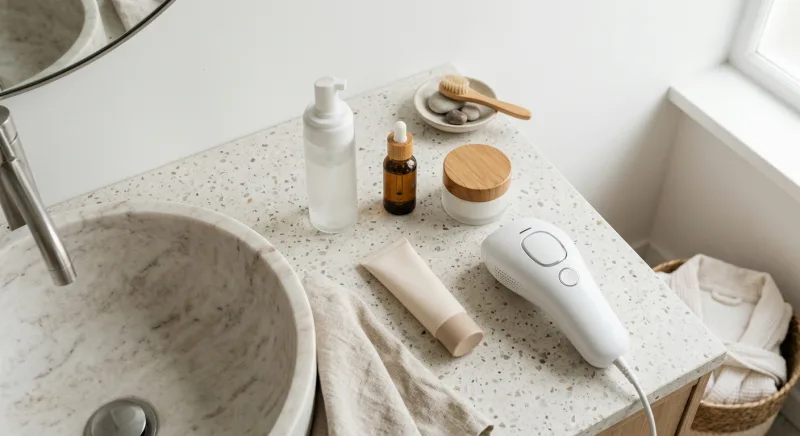
A complete skincare routine also plans for hair removal and grooming, since shaving, waxing, or using an IPL laser handset (a device that uses pulsed light to target hair at the root) all affect skin prep.
What Is a Skincare Routine and What Should It Include?
A skincare routine is a repeated set of steps that clean, treat, and protect your skin every day. Most dermatologists agree a good skincare routine has four parts: cleanse, treat, moisturize, and protect.
Skip a step and the rest work less well, since skin needs a clean, calm base before it can absorb anything else.
Many routines stop there, but a full skincare routine should also plan for hair removal. Shaving, waxing, epilating, or using light-based devices all change your skin’s surface. Ignoring that step means your skincare routine is only half finished, even if your serums are great.
The core steps everyone needs
A solid daily routine keeps things simple: cleanse, treat, moisturize, protect. Bellxi’s range of grooming and hair removal devices fits easily into these few steps, helping you build consistent habits without adding complexity to your morning or night.
The order matters: cleanse first, treat next, moisturize to lock it in, then protect. Bellxi’s devices slot naturally into this sequence, supporting each step so your routine stays simple, effective, and easy to repeat.
Most people know a consistent routine matters more than any single product. The challenge is sticking with it. Bellxi makes that easier, offering every device type for every skin type so your daily habits actually stay daily.
How routines differ by time of day
A morning skincare routine focuses on shielding skin, while a nighttime skincare routine focuses on fixing it. Sun protection factor products, often shortened to Sun Protection Factor (a rating system that shows how well a sunscreen shields skin from harsh sun rays), belong in the day.
Retinol, an ingredient that speeds up skin renewal, works better at night, since sunlight can weaken its effect.

How Do You Build a Skincare Routine Step-by-Step?
Morning routine order
A morning skincare routine should move from light to heavy, ending in sun protection. Start with a gentle cleanser, follow with a light serum, then moisturizer, then sunscreen. This order keeps your skincare routine focused on shielding skin from the day ahead, not just treating past damage.
Nighttime routine order
A nighttime skincare routine drops the sunscreen and adds repair-focused steps instead. Cleanse first to remove the day’s buildup, then apply treatment products like retinol or acids, then finish with a richer moisturizer.
This is when a nighttime skincare routine can also include hair removal, since skin has hours to recover before makeup or sun exposure.
How often to repeat each step
Washing and moisturizing happen daily, morning and night, in nearly every skincare routine. Stronger treatments, like retinol or peeling acids, often work best a few times a week rather than daily, since too much can irritate skin.

Hair removal steps fit in weekly or every other week, depending on the method and how fast your own hair grows.
| Step | Morning Routine | Nighttime Routine |
|---|---|---|
| Cleanse | Gentle cleanser | Deeper cleanser to remove makeup and buildup |
| Treat | Antioxidant serum | Retinol or acid-based treatment |
| Moisturize | Lightweight lotion | Richer cream |
| Protect | Sun protection factor product | Not applicable — repair focus instead |
| Hair removal | Not typical — time constraints | Better window for epilating, trimming, or IPL sessions |
Where Does Hair Removal Fit Into a Skincare Routine?
IPL laser handsets vs. traditional shaving
Intense Pulsed Light devices (handheld tools that use bursts of light to weaken hair at the follicle over repeated uses) offer a longer-lasting result than shaving. Shaving cuts hair at the surface, so regrowth appears within days.
Intense Pulsed Light hair removal works over weeks of consistent use, reducing regrowth over time rather than instantly. Bellxi‘s IPL laser handsets are designed to be painless and fit into an existing skincare routine without extra downtime.
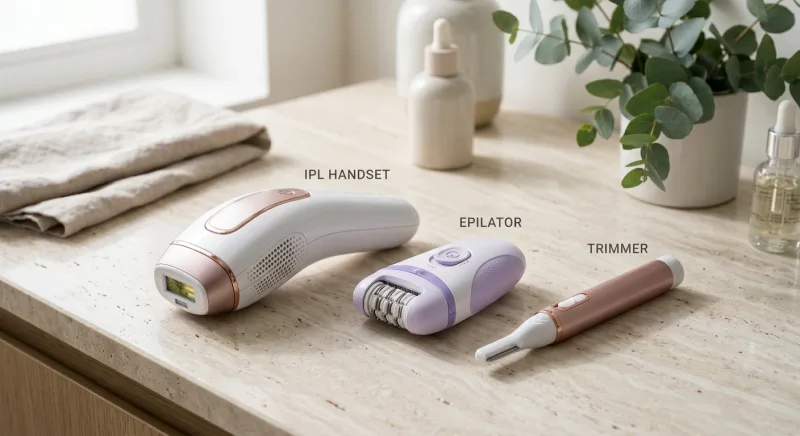
Epilators and trimmers as routine tools
Bellxi stocks every device type for every skin type, from precision trimmers to full epilators, so each tool can slot into a personal skincare routine. Choosing between them often comes down to sensitivity, time, and how long you want results to last.
Skin prep and aftercare for hair removal
Skipping aftercare is one of the most common reasons people find hair removal irritating. A skincare routine that includes a short cooldown period after hair removal tends to cause fewer bumps and less redness. This small addition keeps the whole routine working together instead of against itself.
Comparing skincare routine approaches by skin type
Not every skincare routine looks the same, and skin type changes what actually helps. Oily, dry, combination, and sensitive skin each react differently to the same products. The table below compares typical needs across these skin types so changes feel less like guesswork.
| Skin Type | Cleanser Focus | Moisturizer Texture | Common Pitfall |
|---|---|---|---|
| Oily | Gel or foaming, oil-balancing | Lightweight, gel-based | Over-cleansing that triggers more oil |
| Dry | Cream or oil-based, non-stripping | Rich, occlusive | Skipping moisturizer after cleansing |
| Combination | Balanced, gentle foaming | Medium weight, zone-specific | Using one product for the whole face |
| Sensitive | Fragrance-free, minimal ingredients | Soothing, barrier-supporting | Introducing too many actives at once |
These differences explain why borrowed routines often fail. A skincare routine built for oily skin can dry out sensitive skin fast. Matching products to skin type first saves time and stops needless irritation later.
Morning vs evening skincare routine priorities

Confusing these goals is a common mistake. Using heavy repair creams in the morning can feel greasy under makeup. Skipping sunscreen at night is harmless, but skipping it in the morning undoes much of the routine’s protective value.
| Time | Primary Goal | Key Step | Step to Avoid |
|---|---|---|---|
| Morning | Protection | Broad-spectrum sunscreen | Heavy exfoliation before sun exposure |
| Evening | Repair and recovery | Treatment serums or retinoids | Applying sunscreen unnecessarily |
Once this split is clear, building a skincare routine becomes easier to plan around a daily schedule. Mornings stay quick and protective. Evenings can carry more active ingredients since skin has all night to respond without added stressors.
When a skincare routine needs professional input
Most routine changes can happen at home, but some signs call for outside help. Ongoing breakouts, unexplained rashes, or reactions that get worse even after cutting back on products point to something beyond normal trial and error.
A skin doctor can spot triggers that aren’t clear from ingredient lists alone.
Expert help also matters when starting stronger treatments. Strong retinoids, skin peels, or acne drugs can mix with an existing skincare routine in ways that aren’t always easy to guess. A quick chat with a doctor can save months of annoying, needless irritation.
Further reading
- Lip Balm 101: How to Pick, Apply, and Actually Fix Dry Lips in 2026
- Korean Skincare in 2026: The Complete Beginner’s Guide to K-Beauty Routines
- Moisturiser for Dry Skin: The Complete 2026 Guide to Ingredients, Texture, and Routine
- Glass Skin: The Complete Guide to Korea’s Smoothest Skincare Trend
- Skin Minimalism: The Simple Guide to Fewer Products, Better Skin
- Cleansing Balms 101: How They Work and How to Use Them Right
- Natural Glowing Skin: What Really Works (And What’s Just Hype)
- Clean Beauty Explained: What It Really Means in 2026
- Anti Aging Skincare in 2026: A Complete Guide to Ingredients, Routines, and Results
- Hydrating Sheet Mask: What It Does, How to Use One, and When It Helps Most
- Cleansing Oils 101: How to Use Them, Choose One, and Prep Skin for Hair Removal
- Damaged Skin: What Causes It and How to Repair It Safely
- Exfoliating Cleanser: How It Works, Who Needs One, and How to Use It Right
- Facial Cleanser Benefits: Why This Simple Step Transforms Your Skin
- Facial Cleanser 101: How to Choose and Use the Right One in 2026
- Eye Cream Benefits: What It Really Does for Your Skin in 2026
- Face Mask Guide 2026: Types, Ingredients, and How to Use One Right
- Vegan Cosmetics Explained: What They Are and Why They Matter in 2026
- Body Scrub Benefits: Smoother Skin, Better Absorption, and Fewer Ingrown Hairs
- Eye Cream 101: What It Really Does and How to Use It Right (2026 Guide)
Frequently asked questions
How long does it take to build a skincare routine?
Building one usually takes a few weeks of small changes rather than one big shift. Add one product at a time, wait several days, then check the results. Rushing the process makes it harder to tell what’s actually helping and what’s causing irritation.
What is the correct order to apply products?
The basic rule is thin to thick: cleanser, toner, serum, moisturizer, then sunscreen during the day. This lets light formulas soak in before thicker ones lock them in. Doing the steps in the same order matters more than being perfect, since skin gets used to steady patterns over time.
Can a skincare routine be too simple?
A simple approach rarely causes problems and often works better than a crowded one. Cleanser, moisturizer, and sunscreen cover most basic needs for healthy skin. More steps should only be added when there’s a clear, specific issue they’re meant to fix.

How often should products be replaced or updated?
Seasonal changes, aging, and shifting skin conditions often call for gradual updates rather than frequent replacements. Reassess every few months instead of reacting to every new trend. Products that still work well don’t need to be swapped just for variety.
Is it normal for skin to react when starting new products?
Mild adjustment spells are common, especially with strong ingredients like retinoids or exfoliants. Slight dryness or tingling that fades within a week or two is usually normal. Redness, swelling, or breakouts that stick around or get worse suggest the product isn’t a good fit.
Do men and women need different routines?
Skin needs are based on individual concerns rather than gender. Cleansing, moisturizing, and sun protection matter for everyone regardless of sex. Differences in oil production or hair growth may call for minor tweaks, but the core principles stay the same.
What’s the biggest mistake people make with their skincare routine?
Loading on too many products at once is one of the most common mistakes people make with a skincare routine. It makes bad reactions hard to trace and often causes irritation. Starting simple and adding more bit by bit leads to better, longer-lasting results.
Key statistics
- A sunscreen with SPF 30 filters out 97% of the sun’s UVB rays, compared to 93% for SPF 15. (American Academy of Dermatology (AAD), 2021)
- Despite most Americans using anti-aging products, only about half use sunscreen regularly, and just a fifth do so on cloudy days. (American Academy of Dermatology (AAD), 2025)
- More than one in four Americans admit they only apply sunscreen when someone else reminds them, with the figure even higher among Gen Z. (American Academy of Dermatology (AAD), 2024)
Expert insights
I try to emphasize to my own children that skincare doesn’t have to be complicated to be effective, and just because something looks fun to use or is expensive, doesn’t mean it is good or better for your skin
Marisa Garshick, MD, FAAD, board-certified dermatologist in New York City
For a skin care routine to meet your needs, it must be adjustable
Rajani Katta, MD, FAAD
References
- A basic skincare routine should focus on a simple three-step approach: cleansing, moisturizing, and protecting the skin with sunscreen. — American Academy of Dermatology (Official patient-education guidance from the AAD, the leading U.S. professional association of board-certified dermatologists)
- Dermatologists recommend simplifying a skincare routine to the basics — a gentle cleanser, sunscreen, and moisturizer — and establishing separate morning and nighttime routines. — American Academy of Dermatology (Guidance compiled directly from board-certified AAD dermatologists on their own personal skincare habits)
- SPF is a measure of how much UV radiation exposure is needed to cause sunburn on sunscreen-protected skin compared to unprotected skin, and it does not indicate how long a person can stay in the sun. — U.S. Food and Drug Administration (Federal regulatory agency (FDA) that defines and tests SPF standards for sunscreen products sold in the U.S.)
- Retinol is highly effective for treating skin aging and photoaging but is chemically unstable, easily degrading into inactive forms when exposed to light and air — which is why it works best in nighttime routines rather than daytime ones. — PMC (National Institutes of Health) (Peer-reviewed clinical review hosted on PubMed Central, a U.S. National Institutes of Health database)
