
Skincare routine
Facial Cleanser Benefits: Why This Simple Step Transforms Your Skin
Last updated: November 3, 2026
The facial cleanser benefits list is longer than most people think. A good cleanser lifts dirt, oil, makeup, and grime off your skin. It unclogs pores, cuts down breakouts, and preps your face so other products work better.
It also protects your skin’s outer layer while giving hair removal tools a cleaner surface to work on.
What Are the Benefits of Using a Facial Cleanser?
The main facial cleanser benefits come down to one job: clearing away what builds up on your skin each day. Sweat, oil, dead skin cells, sunscreen, and makeup all sit on your face by evening. A cleanser lifts this layer off without scrubbing or harsh rubbing.
That single step supports nearly everything else in your routine.
Quick-Answer Summary
Cleansing does more than make skin feel fresh. It sets up every other step that follows it, from serums to sun protection to hair removal.
- Removes dirt, oil, sweat, and makeup buildup
- Unclogs pores and reduces the chance of breakouts
- Preps skin so serums and moisturizers soak in better
- Supports the skin barrier (the outer layer of skin that keeps moisture in and irritants out) instead of stripping it
- Creates a clean, calm base before hair removal or other grooming steps

Why Cleansing Is the Foundation of Any Skincare Routine
Think of cleansing as clearing the runway. Once skin is clean, treatments and moisturizers can actually land where they’re supposed to. Skipping this step, or doing it poorly, undercuts the rest of your routine. That’s true whether your routine is three steps or ten.
How Does a Facial Cleanser Actually Work on Your Skin?
A facial cleanser works by breaking down oil and grime so water can rinse it away. Skin naturally makes an oily substance called sebum, which mixes with sweat, sunscreen, and makeup during the day.
Plain water alone can’t remove this oily film, which is exactly why facial cleanser benefits matter so much.
Regular cleansing helps remove excess oil, sweat, and debris that water alone tends to leave behind. Over time, this can support clearer, more comfortable skin compared to skipping a proper cleanse.
The Role of Surfactants and Oils
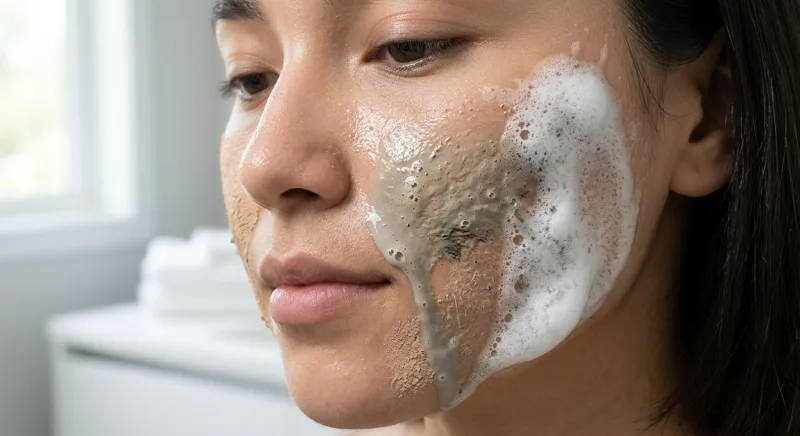
Different cleansers use different levels of surfactant strength. Stronger formulas cut through heavy makeup or sunscreen fast, but can also strip natural oils. Gentler formulas take more time but leave the skin barrier more intact, which matters if your skin leans dry or sensitive.
Cleanser vs. Soap: Why pH Matters
Cleanser and bar soap are not the same thing, even though people use the words loosely. Skin sits at a mildly acidic pH (a scale that measures how acidic or alkaline a substance is) naturally.
Regular bar soap tends to run more alkaline, which can leave skin feeling tight or dry after washing.
Facial cleansers are usually formulated closer to skin’s natural pH range, while traditional bar soaps tend to be more alkaline. This formulation gap is one reason dermatologists often recommend a proper cleanser over bar soap for the face specifically.
Skin doctors have seen that pairing a gentle cleanser with a moisturizer helps skin look healthier over time. Regular use helps keep skin calm and balanced instead of leaving it dry or sore.

What Are the Main Types of Facial Cleansers?
The main types of facial cleansers are foaming, cream, oil-based, and micellar water, and each suits different skin needs. Knowing the differences helps you pick a format that delivers real facial cleanser benefits instead of one that fights your skin type.
Foaming & Gel Cleansers
Foaming and gel cleansers create lather and tend to cut through oil well. They suit oily or acne-prone skin because they clear excess sebum without leaving a residue. People with dry skin sometimes find these formulas too drying if used twice a day.
Cream & Milk Cleansers
Cream and milk cleansers are thicker, richer, and gentler on the skin barrier. They suit dry or sensitive skin because they clean without stripping natural oils. They often leave a slight film, which some oily-skin users find too heavy for daily use.
Oil-Based & Balm Cleansers
Oil-based and balm cleansers dissolve makeup, sunscreen, and sebum using oil to attract oil. They’re a common first step in double cleansing (a two-step method that uses an oil cleanser followed by a water-based one to fully clear skin). Nearly all skin types can use them as a first cleanse.
Micellar Water
Micellar water uses tiny oil molecules suspended in soft water to lift away makeup and grime with a cotton pad, no rinsing needed. It’s popular for quick cleanses, travel, or sensitive skin. Many people still follow it with a rinse-off cleanser at night for a deeper clean.

Which Facial Cleanser Type Is Right for Your Skin Type?
The right facial cleanser depends on your skin type, not trends or packaging. Matching format to skin type is how you unlock real facial cleanser benefits instead of guessing and hoping for the best.
Oily & Acne-Prone Skin
Oily and acne-prone skin generally responds well to foaming or gel cleansers. These formulas clear excess sebum and help keep pores from clogging. Look for lightweight, water-based options rather than heavy creams that can sit on top of oily skin.

Dry & Sensitive Skin
Dry and sensitive skin does better with cream or milk cleansers. These formulas clean gently while supporting the skin barrier instead of stripping it. Fragrance-free options reduce the chance of irritation for reactive skin types.
Combination Skin
Combination skin, oily in some areas and dry in others, often does well with a gentle gel or low-foam formula. Some people use one cleanser overall and a targeted treatment on oilier zones like the forehead and nose.
Mature Skin
Mature skin tends to produce less natural oil over time, so cream or oil-based cleansers work well. These formats clean without adding to dryness, which helps preserve skin’s natural elasticity and comfort.
| Skin Type | Best Cleanser Type | Why It Works |
| Oily / acne-prone | Foaming or gel | Clears excess oil, helps prevent clogged pores |
| Dry / sensitive | Cream or milk | Cleans gently, supports the skin barrier |
| Combination | Light gel or low-foam | Balances oily and dry zones without over-stripping |
| Mature | Cream or oil-based | Cleans without adding dryness, supports comfort |
Facial Cleanser Benefits by Ingredient Type
Not all cleansers deliver the same results, and ingredients play a large role in that difference. Understanding which formulas suit specific goals makes it easier to choose wisely. The table below breaks down common ingredient categories and the facial cleanser benefits tied to each one.
| Ingredient Type | Common Examples | Facial Cleanser Benefits |
| Salicylic acid based | BHA cleansers | Helps clear pores, supports oil control for acne-prone skin |
| Hydrating / humectant | Glycerin, hyaluronic acid | Cleans while maintaining moisture levels |
| Soothing / calming | Aloe, oat, chamomile | Reduces irritation, supports comfort for sensitive skin |
| Exfoliating | Mild AHAs, enzymes | Clears dulling buildup, supports smoother texture |
| Barrier-supporting | Ceramides, fatty acids | Cleans while reinforcing the skin’s natural barrier |
Choosing a cleanser based on ingredients, not just texture, adds another layer of precision. It allows people to target specific skin concerns while still enjoying the core facial cleanser benefits everyone relies on. This includes removing dirt, oil, and residue buildup daily.
Facial Cleanser Benefits Compared Across Skincare Routines
Cleansing habits vary depending on the type of skincare routine someone follows. A minimalist routine relies heavily on the cleanser to do most of the work. A multi-step routine treats cleansing as the foundation for everything that follows. Either way, facial cleanser benefits remain central to results.
Some people like a long, many-step routine, while others stick to a few key products. No matter how simple or complex the routine, skipping the wash step tends to weaken how well every product works after it.

| Routine Type | Role of Cleanser | Facial Cleanser Benefits Gained |
| Minimalist (cleanse + moisturize) | Primary treatment step | Removes buildup, preps skin, supports simplicity |
| Double cleansing | Oil cleanser + water-based cleanser | Removes makeup and sunscreen fully, prevents residue |
| Multi-step (serums, treatments) | Preparation step for actives | Improves absorption, clears surface for treatments |
| Active-ingredient routines | Gentle cleanse to avoid conflict | Reduces irritation risk when paired with strong actives |
Double cleansing has grown popular, especially among people who wear makeup or sunscreen daily. The first cleanse breaks down oil-based products, while the second cleanse addresses sweat, dirt, and leftover residue. This two-step method maximizes facial cleanser benefits by ensuring nothing gets left behind.
People using strong ingredients like retinoids or exfoliating acids should pick their cleanser with more care. A gentle, low-irritation cleanser helps balance out the strength of these treatments. This keeps the skin’s outer layer safe while still letting the strong ingredients do their job.
Facial Cleanser Benefits for Long-Term Skin Health
Short-term results are easy to notice, but the long-term facial cleanser benefits matter just as much. Consistent, proper cleansing over months and years supports steadier skin tone, fewer breakouts, and a more resilient barrier. It’s a habit that compounds over time.
Dermatologists widely agree that cleansing plays a foundational role in maintaining a healthy skin barrier and helping prevent breakouts. It’s often described as the essential first step that allows other skincare products to work as intended.
This kind of insight reinforces why cleansing shouldn’t be treated as an optional or occasional step.
Skin that is cleaned effectively and gently, rather than harshly stripped, tends to show fewer signs of irritation and sensitivity over time. This is one of the more overlooked facial cleanser benefits, since results build gradually rather than overnight.
People who switch from harsh, drying cleansers to balanced formulas often notice their skin becomes less reactive within a few weeks. This shift highlights how much the right cleanser can influence overall comfort. It also shows why ingredient choice matters as much as consistency.
Common Mistakes That Reduce Facial Cleanser Benefits
Even a top-notch cleanser can fall short if used the wrong way. Simple mistakes in how, how often, or what you pair it with can quietly cancel out the facial cleanser benefits a formula is made to give. Spotting these habits is the first step to fixing them.
- Over-washing the face, which can strip natural oils and trigger rebound oiliness
- Using water that’s too hot, which weakens the skin barrier over time
- Skipping cleanser at night, allowing buildup to sit on skin for hours
- Choosing a cleanser based on scent or packaging instead of skin type
- Rubbing too aggressively, which can cause micro-irritation and redness
- Not rinsing thoroughly, leaving residue that can clog pores
Each of these habits chips away at the results a cleanser can provide. Fixing even one or two of them often leads to a noticeable improvement in skin texture and comfort. Small adjustments in technique can restore the full range of facial cleanser benefits.

Temperature control is one of the simplest fixes. Lukewarm water is generally gentler than hot water, which can leave skin feeling tight and dry. This small change supports better comfort without requiring a new product.
How Often You Should Cleanse to Maximize Facial Cleanser Benefits
Frequency plays a major role in how effective a cleansing routine turns out to be. Cleansing too little allows buildup to accumulate, while cleansing too often can damage the skin barrier. Most people find a twice-daily rhythm, morning and night, works best for steady facial cleanser benefits.
This guidance can shift slightly depending on skin type, activity level, and environmental exposure throughout the day.
| Lifestyle Factor | Suggested Adjustment | Facial Cleanser Benefits Impacted |
| Heavy sweating / exercise | Cleanse promptly after activity | Prevents clogged pores from sweat and bacteria buildup |
| Heavy makeup use | Consider double cleansing at night | Ensures full removal, supports clearer skin |
| Dry climate | Reduce to once daily if needed | Prevents over-drying, preserves barrier comfort |
| Humid or polluted environment | Maintain twice-daily cleansing | Clears pollutants, reduces buildup-related breakouts |
Adjusting frequency based on lifestyle rather than following a rigid rule tends to produce better outcomes. Someone who exercises daily may need an extra cleanse, while someone in a dry climate might benefit from cutting back slightly. Listening to how skin responds is the most reliable guide.
Ultimately, the goal is balance. Cleansing enough to remove impurities, but not so much that it disrupts the skin’s natural functions, is where the full range of facial cleanser benefits comes through most clearly. This balance looks different for everyone, which is why personalization matters.
Frequently Asked Questions
What are the main facial cleanser benefits?
The main facial cleanser benefits include removing dirt, oil, and makeup, preventing clogged pores, and supporting a smoother skin texture. Regular cleansing also helps other skincare products absorb better. Over time, consistent use can reduce breakouts and leave skin looking clearer and more refreshed.
How often should I cleanse my face to get the most benefits?
Most people benefit from cleansing twice daily, once in the morning and once at night. This helps remove sweat, oil, and pollutants without over-stripping the skin. Adjust frequency based on skin type, climate, and activity level to maintain balance and avoid irritation.
Can facial cleanser benefits vary by skin type?
Yes, facial cleanser benefits can differ depending on skin type. Oily skin may see more benefit from oil-control formulas, while dry skin benefits from gentle, hydrating cleansers. Choosing a formula suited to your specific skin type helps maximize results and minimizes the risk of irritation.

Do facial cleansers help with acne-prone skin?
Facial cleansers can help manage acne-prone skin by washing away extra oil and buildup that block pores. While washing alone won’t get rid of acne fully, it helps support other treatments made for it. Picking a formula that won’t clog pores matters most for skin prone to breakouts.
Is over-cleansing harmful to the skin?
Yes, over-cleansing can strip natural oils, leading to dryness, irritation, or increased oil production as skin compensates. This can actually reduce the facial cleanser benefits you’re seeking. Sticking to a consistent, moderate routine helps maintain the skin barrier while still keeping skin clean.
Can facial cleansing improve the appearance of pores?
Cleansing helps remove debris that can make pores appear larger by clearing buildup and excess oil. While it won’t shrink pore size permanently, regular cleansing supports a smoother, more refined complexion. Combined with other skincare steps, results tend to be more noticeable over time.
Should I use a different cleanser in winter versus summer?
Many people do well switching cleansers with the seasons. Lighter, gel-based formulas often suit warm months, while richer, more hydrating cleansers work better in winter. Changing with the weather helps keep skin’s moisture in check and keeps facial cleanser benefits steady all year.
Key statistics
- The North American Contact Dermatitis Group found that a group of surfactants used in hypoallergenic cleansers caused contact allergy in a notable minority of tested users. (National Center for Biotechnology Information (NCBI/PMC), 2023)
- In a patch-test study of eight surfactants commonly used in skin cleansers, only one ingredient showed a meaningful sensitizing effect. (National Center for Biotechnology Information (NCBI/PMC), 2023)
Expert insights
For example, if you have acne-prone skin, use a mild cleanser that removes oil.
Katta, Dermatologist (quoted on AAD’s dermatologist-recommended skin care guidance)
I try to emphasize to my own children that skincare doesn’t have to be complicated to be effective, and just because something looks fun to use or is expensive, doesn’t mean it is good or better for your skin
Marisa Garshick, MD, FAAD, board-certified dermatologist in New York City
References
- The American Academy of Dermatology recommends using a gentle cleanser (and moisturizer) twice daily for best skincare results. — PMC (National Library of Medicine) (Peer-reviewed article hosted on PubMed Central (NIH/NLM) summarizing official AAD skincare recommendations)
- Surfactants in facial cleansers work by dissolving hydrophobic substances like sebum and dirt in an aqueous phase so they can be rinsed away from the skin’s surface, and their negative effect on the skin barrier can be minimized by adjusting solution properties. — Cureus (via PubMed Central, NIH) (Peer-reviewed dermatology research article indexed on PubMed Central (NIH National Library of Medicine))
- Skin cleansers are surfactant-based substances that lower surface tension on the skin to remove dirt, sebum, oil from cosmetics, microorganisms, and exfoliated skin cells, and can play a beneficial role in dermatological conditions such as acne, rosacea, and atopic dermatitis. — PMC (National Library of Medicine) (Peer-reviewed dermatology review article hosted on PubMed Central (NIH/NLM))
