
Skin concerns
Acne Scar Guide 2026: Types, Causes, and Real Treatment Options
Last updated: November 5, 2026
An acne scar is a lasting change in skin texture or color left behind after inflamed acne damages deeper skin layers. It can look like a shallow dip, a hard pink bump, or a dark patch.
An acne scar rarely vanishes completely on its own, but treatments like retinoids, microneedling, and laser resurfacing can fade one a great deal over time.
What Is an Acne Scar and Can It Really Be Removed?
An acne scar forms when inflamed acne breaks down the skin’s support structure and heals with uneven texture or color. Some marks fade in months. Others, especially deep pitted ones, need active treatment to look better. Full erasure is rare, but real improvement is common with the right plan.
Quick answer
Most people who ask about an acne scar want a straight answer: can it be removed? The honest reply is that most acne scar marks can be softened, faded, or smoothed, but complete removal is uncommon. Depth, skin tone, and treatment choice all shape the final result.
Why some acne leaves scars and other acne doesn’t
Not every breakout leaves a mark. Shallow, surface-level pimples usually heal clean because they don’t reach the deeper skin layer where scar tissue forms. An acne scar is far more likely when a breakout is deep, cystic, or left inflamed for a long stretch without treatment.
Acne can leave permanent scarring, especially when breakouts go untreated or are picked at. Scarring severity varies widely from person to person. Early, consistent care helps reduce the risk of lasting marks on the skin.
Genetics also play a role. Some skin heals with a smooth, even response. Other skin overreacts or underproduces the repair proteins needed to rebuild smooth tissue, leaving a noticeable acne scar behind even after mild breakouts clear.
What Are the Different Types of Acne Scars?
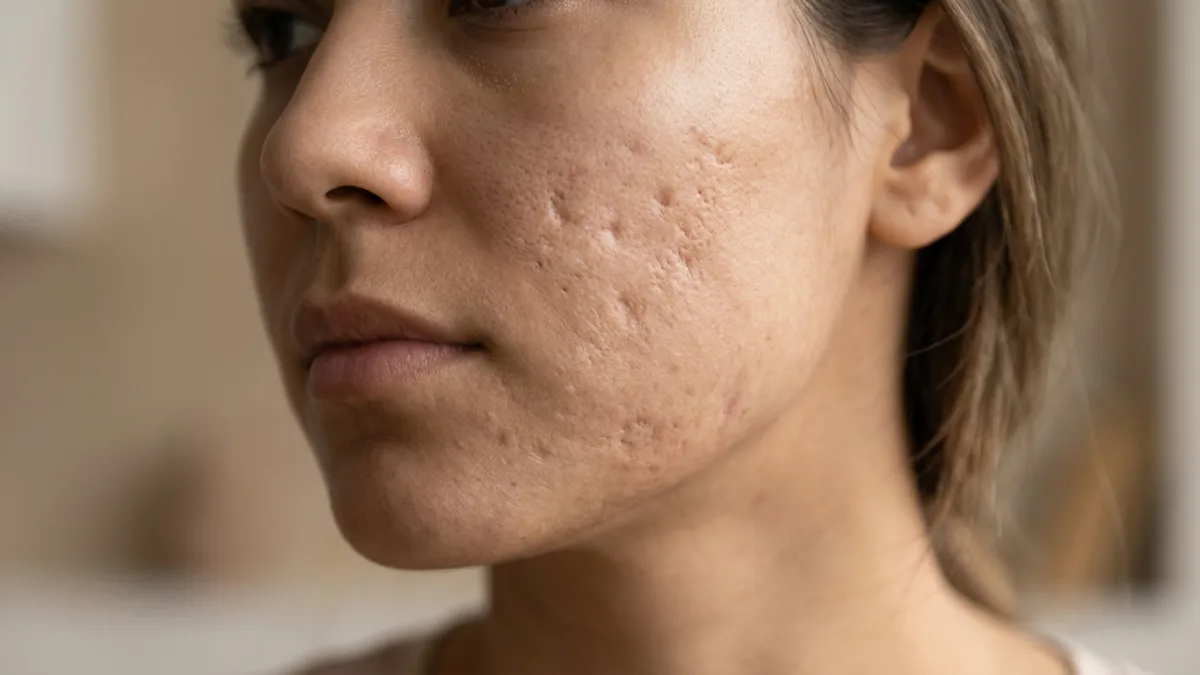
An acne scar isn’t just one thing — it falls into several distinct categories based on shape and depth. Knowing which type you have matters, because each acne scar type responds best to a different treatment approach.
Ice pick scars
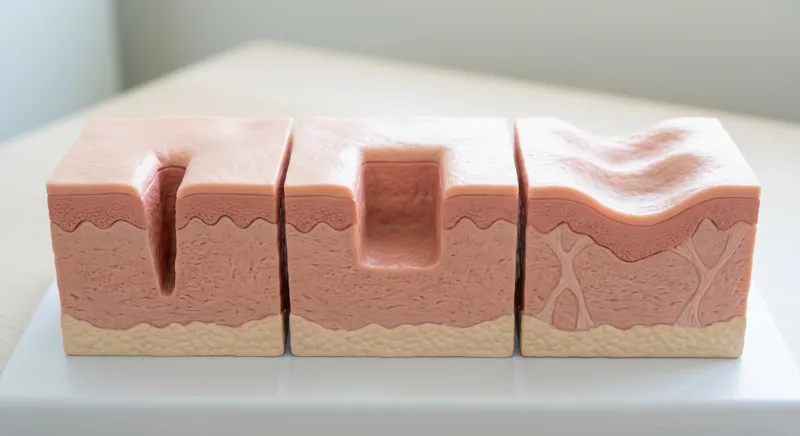
Ice pick scars (narrow, deep holes in the skin that look like they were made by a sharp point) are among the hardest to treat. They dive straight down into deeper skin, making surface-level products far less effective for this acne scar type.
Boxcar scars
Boxcar scars are wider, box-shaped depressions with sharp, defined edges. This type of acne scar sits closer to the surface than an ice pick scar, which is why it often responds better to resurfacing treatments and fillers.
Rolling scars
Rolling scars have soft, sloping edges that give skin a wave-like texture rather than a sharp pit. This acne scar type comes from bands of scar tissue pulling on the skin from below, tethering it down unevenly.
Hypertrophic and keloid scars
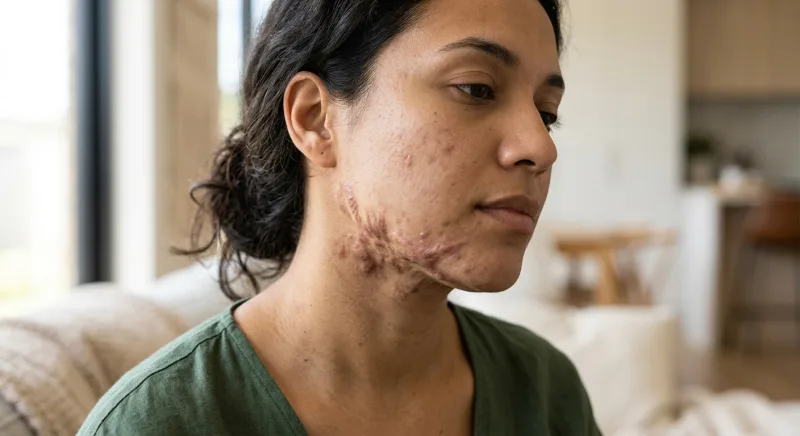
Hypertrophic scars (raised, firm bumps that form when the body produces too much repair tissue during healing) sit above the skin instead of below it. Keloid scars go further, growing beyond the original wound. Both are a raised acne scar type, unlike the pitted ones above.
Post-inflammatory hyperpigmentation vs. true scarring
Post-inflammatory hyperpigmentation (flat, colored skin left after swelling, with no change in feel) is often mixed up with an acne scar. Real scarring changes how the skin feels. This color change is just that, a change in color, and it often fades faster with much simpler care.
Skin tone can influence how scars heal and respond to treatment. People with deeper skin tones may face a higher risk of lingering discoloration, so choosing the right approach matters for every skin type.
| Acne Scar Type | Appearance | Texture | Commonly Recommended Treatment |
| Ice pick scar | Small, narrow, deep pit | Very deep, sharp indent | Chemical peels, subcision, laser resurfacing |
| Boxcar scar | Wide depression with defined edges | Shallow to moderate depth | Dermal fillers, microneedling, laser resurfacing |
| Rolling scar | Wavy, uneven surface | Soft, sloping edges | Subcision, microneedling |
| Hypertrophic/keloid scar | Raised, firm bump | Above skin surface | Silicone gel, steroid injection, laser |
| Post-inflammatory hyperpigmentation | Flat discolored patch | No texture change | Sun protection, topical brightening agents |
Why Does Acne Cause Scarring in the First Place?
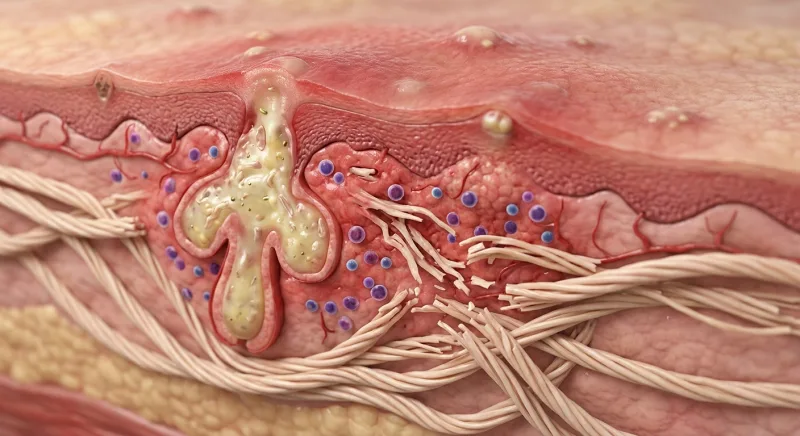
Acne causes an acne scar when inflammation reaches deep enough to damage the skin’s structural fibers. The skin then attempts repair, but often rebuilds unevenly, leaving a permanent mark instead of the smooth tissue that was there before.
The role of inflammation and collagen damage
Collagen (the protein fibers that give skin its strength and smooth shape) gets broken down during a deep, inflamed breakout. If the body replaces too little collagen, skin dips inward. If it replaces too much, an acne scar can raise above the surface instead.
This is why cystic acne, the deep, painful kind that sits under the skin, causes far more scarring than small surface pimples. The deeper the damage, the higher the odds of a lasting acne scar.
Why picking or popping increases scar risk
Picking or popping a pimple pushes bacteria and debris deeper into the skin instead of out. This spreads inflammation to nearby tissue, often turning a mark that might have healed clean into a lasting acne scar.
Squeezing also tears the skin’s support fibers directly. That harm adds to the swelling already going on, which is why skin doctors always say not to pop breakouts at home.
How Are Acne Scars Diagnosed?
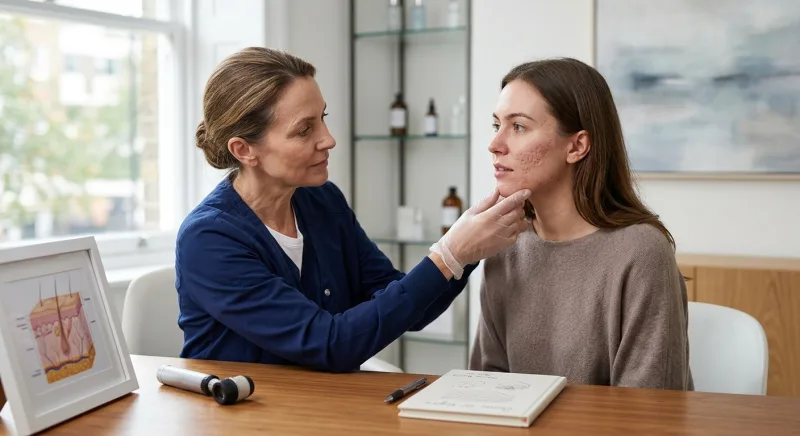
An acne scar is usually diagnosed through a simple visual exam, not lab tests. A dermatologist looks at the shape, depth, and spread of marks to decide which acne scar type is present and which treatment fits best.
Visual/clinical assessment
During a visual check, a dermatologist examines skin under good lighting, sometimes stretching it gently to see how deep an acne scar runs. This simple exam is usually enough to sort marks into ice pick, boxcar, rolling, or raised categories.
When a dermatologist may recommend scar-severity grading

For widespread or mixed scarring, a dermatologist may use a formal grading scale to rate severity from mild to severe. This helps match the right acne scar treatment to the actual depth and spread of damage, rather than guessing.
For advice made just for you on acne scarring, ask a skin doctor or a trusted health source. Tips can change based on the type of scar and the state of your skin, so advice from a pro helps you find the safest, best path for treatment.
Grading also helps track progress. Comparing a grade before and after treatment gives a clearer picture of whether a chosen acne scar approach is actually working, instead of relying on memory alone.
What Are the Best At-Home Treatments for Acne Scars?
At-home care for an acne scar works best on mild texture change or lingering dark marks. Retinoids, gentle exfoliants, and steady sun protection are the main tools most skin doctors suggest before looking at an in-office fix.
Topical retinoids and exfoliants
Retinoids (vitamin A derivatives that speed up how fast skin cells turn over and rebuild) are one of the best-studied at-home options for a mild acne scar. Gentle chemical exfoliants can also help smooth texture and fade lingering discoloration over time.
Silicone gels for raised scars
Silicone gel sheets and creams are a well-known option for a raised acne scar, such as a hypertrophic or keloid type. They work by hydrating the scar and applying gentle pressure, which can flatten and soften texture over weeks of steady use.
Sun protection to prevent scars from darkening
Ultraviolet light can darken an acne scar and make it far more noticeable, especially on deeper skin tones. Daily sunscreen is one of the simplest, cheapest steps to keep a healing acne scar from becoming a long-term dark patch.
Where at-home hair removal and grooming habits fit into skin health
Hair removal choices matter more than most people realize when skin is already healing from an acne scar. Razors and wax can create tiny cuts and friction, which adds fresh irritation right where skin is trying to recover.
Intense Pulsed Light (a light-based hair removal method that targets the hair follicle without dragging a blade across the skin) is one gentler option worth considering.
Bellxi‘s painless Intense Pulsed Light handsets are built as skin-friendly grooming tech, avoiding the micro-trauma that razors and waxing can cause near sensitive, acne-prone areas.
This isn’t a scar cure. It’s a routine choice that can reduce added irritation while skin with an acne scar is already working to repair itself.
- Look for: retinoids, vitamin C, gentle chemical exfoliants, broad-spectrum sunscreen
- Look for: fragrance-free moisturizers that support the skin barrier
- Avoid: harsh physical scrubs on freshly healing acne scar tissue
- Avoid: high-alcohol toners that dry out and irritate sensitive skin
- Avoid: picking, popping, or aggressive extractions at home
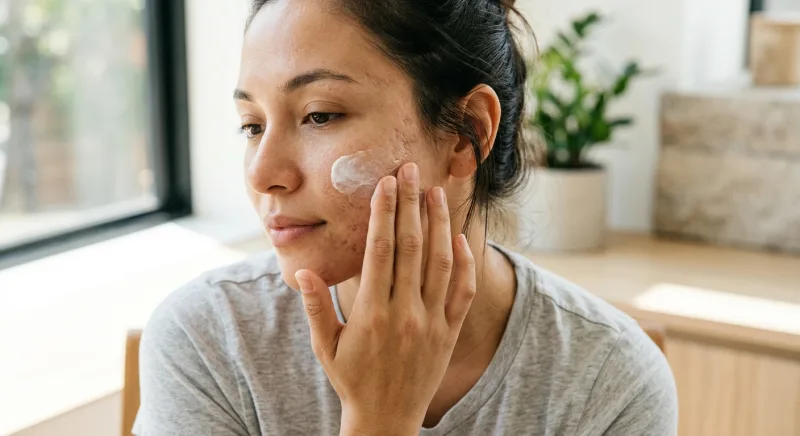
In-Office Procedures Compared
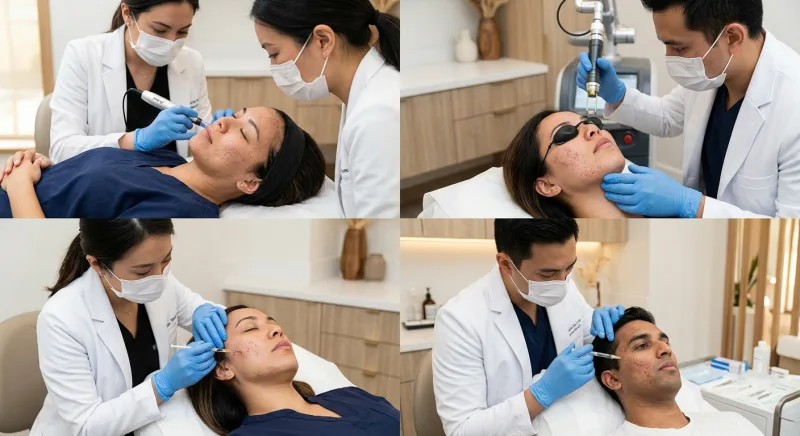
Home care can only do so much for textured marks. Many people eventually ask a dermatologist about procedures built specifically to treat an acne scar. Each option works differently, and the right choice depends on scar depth, skin tone, and downtime tolerance.
The table below compares common procedures used to treat an acne scar, along with typical downtime. Sessions needed and total cost vary by provider, scar severity, and treatment type, so ask your dermatologist for specifics.
| Procedure | Best For | Typical Downtime | Sessions Often Needed |
|---|---|---|---|
| Microneedling | Rolling and boxcar scars | 2–4 days redness | — |
| Chemical peels | Shallow discoloration and mild texture | 1–7 days peeling | — |
| Fractional laser | Moderate to deep textured scarring | 5–7 days redness/swelling | — |
| Subcision | Tethered, rolling scars | Several days bruising | — |
| Dermal fillers | Temporary volume in depressed scars | Minimal, some swelling | Repeated every several months |
None of these guarantee complete removal of an acne scar. Instead, each aims to soften depth, blend texture, or fade discoloration over repeated treatments.
How Much Does Acne Scar Treatment Cost
Cost varies a lot based on the method, doctor, and place. Treating a single acne scar patch is rarely a one-time cost. Most plans need many visits spread across months.
In-office treatments like microneedling, laser, and peels can add up quickly over multiple sessions. At-home devices offer a way to support your routine between visits without the recurring clinic costs.
Insurance usually does not cover cosmetic acne scar treatment. Some skin doctor offices offer package deals for many sessions, which can lower the cost per visit over time.
At-Home Devices vs Professional Treatment
Consumer devices sold for skin texture have grown popular. Some claim to lessen the look of an acne scar using microneedling rollers, LED panels, or at-home peels. Results and safety differ a lot from clinical versions.
| Factor | At-Home Devices | Professional Treatment |
|---|---|---|
| Needle depth / intensity | Shallow, limited by safety design | Deeper, adjustable to scar type |
| Supervision | Self-administered, no medical oversight | Performed or supervised by trained provider |
| Risk of infection | Higher if hygiene is inconsistent | Lower with sterile clinical protocols |
| Typical results on textured scars | Mild, gradual improvement at best | More noticeable change over a treatment series |
| Cost over time | Lower upfront, ongoing product purchases | Higher per session, fewer total sessions needed |
At-home tools aren’t unsafe, but they’re built mostly for surface-level care. Deeper dips from an acne scar usually respond better to pro-grade tools with more control over depth and heat.
Anyone thinking about an at-home device should still start with clean skin, clean tools, and clear steps. Mixing unwatched devices with strong prescription treatments can raise the risk of irritation.
Setting Realistic Expectations
One of the hardest parts of treating an acne scar is patience. Skin remodeling is slow, and visible change often takes months, not days. Expecting instant smoothness can lead to overtreatment.
Doing too much—too many peels, too much retinoid, harsh at-home squeezing—can make swelling worse. That swelling can, oddly, cause new marks on top of the ones you’re already treating.
Most skin experts agree that scars fade and soften over time rather than disappearing entirely. Setting expectations around gradual improvement helps you stay consistent with a routine instead of chasing an impossible outcome.
A better goal is to see real gains over a set time, tracked with the same kind of photos taken in the same light. This helps tell true gains apart from small day-to-day shifts in skin.
When to See a Dermatologist for Acne Scar Concerns
Not every mark needs professional intervention. But certain signs suggest it’s worth booking a dermatology visit rather than continuing to self-treat an acne scar at home.
- Scarring is deep, pitted, or covers a large area of the face
- Active breakouts continue alongside existing scarring
- Over-the-counter products have shown no change after several months
- Discoloration is spreading or darkening despite sun protection
- Skin reacts badly to multiple products, suggesting barrier damage
A skin doctor can also confirm whether marks are true scarring or short-term dark marks left after healing. That choice changes the whole treatment plan, since the dark marks often fade on their own without procedures.
Getting a dermatology appointment for scarring often takes time, especially if a referral is needed first. Building a consistent at-home routine while you wait can help you stay proactive about your skin.
Building a Long-Term Skin Plan
Treating an acne scar rarely ends after one step or one product change. Long-term plans usually mix daily habits with regular visits to a pro, changed as skin shifts over time.
Sun protection remains a constant requirement throughout every stage. Unprotected sun exposure can darken any active or healing acne scar, undoing months of progress in a matter of weeks.
A simple, steady plan often works better than a hard one dropped after a few weeks. Staying steady, not going hard, tends to give the more reliable long-term result.
Tracking progress with monthly photos, taken in the same lighting, helps separate real change from wishful thinking. Scars often improve slowly, and memory alone can miss gradual shifts in texture or tone.
Working with a dermatologist over time, rather than seeking a single fix, tends to produce steadier results. Treatment plans can be revised as new scars form or old ones fade.
Market context
Acne vulgaris prevalence in the United States — An estimated 45 million people in the United States have acne vulgaris, with approximately 85 percent prevalence in the 15-24 age group. NCBI Bookshelf – AHRQ Evidence Report Summaries, 2001
Adjacent-market figures — each names the subject it measures, not Acne Scar directly.
Read the complete guide: A Skin Concerns Guide That Finally Makes Sense of Your Routine
Frequently Asked Questions
Can an acne scar disappear completely on its own?
Some marks, especially flat red or brown spots, fade on their own within months. Deeper textured scars rarely go away without treatment. An acne scar involving lost tissue usually needs a doctor’s care for real improvement.
What is the best treatment for acne scars?
There is no single best option, since results depend on scar type, skin tone, and severity. Microneedling, laser therapy, and chemical peels each address different scar patterns, often working better in combination.
How long does it take to see results from acne scar treatment?
Most treatments require several sessions spaced weeks apart before visible change appears. Collagen remodeling continues for months after a procedure, so full results from an acne scar treatment often take three to six months.
Can home remedies fade acne scars effectively?
Home remedies may help mild color change but rarely fix textured or pitted scarring. Things like vitamin C or niacinamide can help even out skin tone, though deeper scars usually need clinical-grade care for real change.
Does picking at acne make scarring worse?
Yes. Picking or squeezing spots raises swelling and harms the skin around it. This greatly raises the chance that a short-term spot turns into a lasting acne scar, so gentle care matters during active breakouts.
Is it safe to treat acne scars on darker skin tones?
Yes, but the choice of treatment matters more. Strong lasers can trigger changes in skin color in darker skin. A trained provider will pick softer options and test settings with care before full treatment begins.
Should I treat active acne before starting scar treatment?
Mostly, yes. Treating active breakouts first stops new scars from forming while old ones are dealt with. Most doctors suggest calming redness and swelling before starting steps aimed at fixing an existing acne scar.
Are acne scar treatments painful?
Discomfort varies by method. Microneedling and laser treatments often cause mild stinging, eased with numbing cream on the skin. Most patients handle sessions well, calling the feeling uncomfortable rather than very painful during healing.
Key statistics
- A meta-analysis of nearly 25,000 acne patients found that the pooled prevalence of acne scarring was 47%. (Skin Research and Technology (NIH/PMC), 2023)
References
- Acne scars can fade over time but rarely disappear completely on their own, and a board-certified dermatologist can help diminish their appearance. — American Academy of Dermatology (AAD is the leading professional organization of dermatologists and this is its official patient-facing clinical guidance page on acne scars.)
- Acne scars are more likely to develop when a breakout is deep, such as a cyst or nodule, because these types of acne cause intense inflammation that damages the skin. — American Academy of Dermatology (AAD dermatology clinical resource explaining the pathophysiology of acne scar formation.)
- Acne scars fall into distinct atrophic subtypes—ice pick, rolling, and boxcar scars—which differ in depth, width, and cross-sectional shape. — Journal of Clinical Medicine (PMC/NIH) (Peer-reviewed dermatology review article hosted on PubMed Central (NIH).)
- Most people who develop acne scars have depressed (atrophic) scars, often more than one type, and picking or scratching at a breakout can also cause scarring. — American Academy of Dermatology (AAD official clinical page describing signs, symptoms, and classification of acne scars.)
- Among people with acne scars, the large majority have atrophic scars from collagen loss, compared with a smaller minority who develop hypertrophic scars. — Journal (PMC/NIH) (Peer-reviewed literature review hosted on PubMed Central (NIH) summarizing acne scar epidemiology and treatment efficacy.)
