
Skin concerns
Barrier Cream 101: What It Is and Why Your Skin Needs One in 2026
Last updated: November 5, 2026
A barrier cream is a rich, protective moisturizer made with lipids like ceramides (fats that hold skin cells together) and fatty acids that reinforce your skin’s outer shield, lock in hydration, and block irritants.
It works best for dry, sensitive, or damaged skin, including skin that’s just been through hair removal or heavy exfoliation.
If your skin feels tight, red, or flaky no matter what you put on it, the problem might not be dryness. It might be a weak skin barrier. A barrier cream is built to fix that, not just cover it up.
What Is a Barrier Cream and What Does It Actually Do?
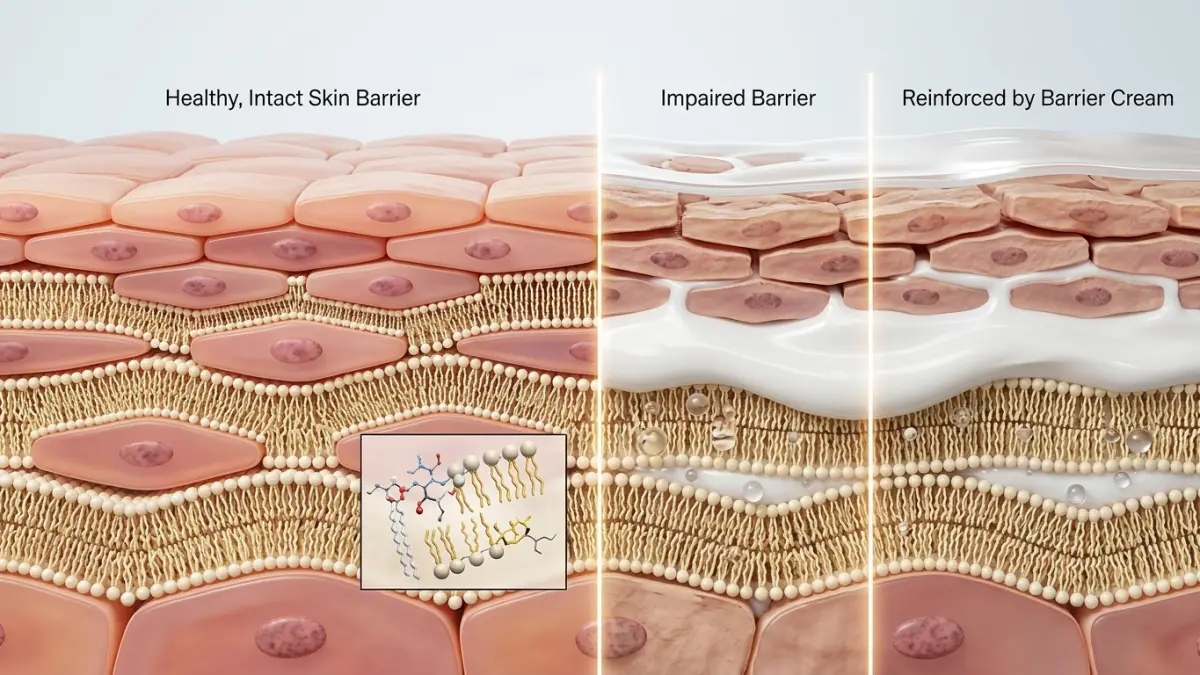
A barrier cream is a thick, lipid-rich cream that rebuilds and protects the outer layer of your skin. Think of your skin as a brick wall. Skin cells are the bricks, and lipids (fats) are the mortar holding them together.
A barrier cream refills that mortar so moisture stays in and irritants stay out.
Unlike a light lotion, a barrier cream is made to sit on top of skin and form a protective layer. It’s meant to slow down water loss and keep out things like pollution, harsh weather, and product irritants. That’s its whole job.
How barrier creams differ from regular moisturizers
Most everyday moisturizers are thinner and absorb fast. A barrier cream tends to feel richer and sit longer on the skin. That heavier feel is doing real work, not just adding weight for no reason.
The skin barrier explained in plain terms
When that seal is intact, skin looks smooth, feels comfortable, and handles new products well. When it breaks down, water escapes faster than it should In a controlled experiment simulating skin barrier damage, transepidermal water loss rose nearly threefold after repeated tape stripping, showing how much faster water escapes once the barrier is compromised. (PMC (National Library of Medicine), 2024), and skin becomes reactive, dry, and easily irritated. A barrier cream is built to help patch that seal back up.
Signs Your Skin Barrier Is Damaged
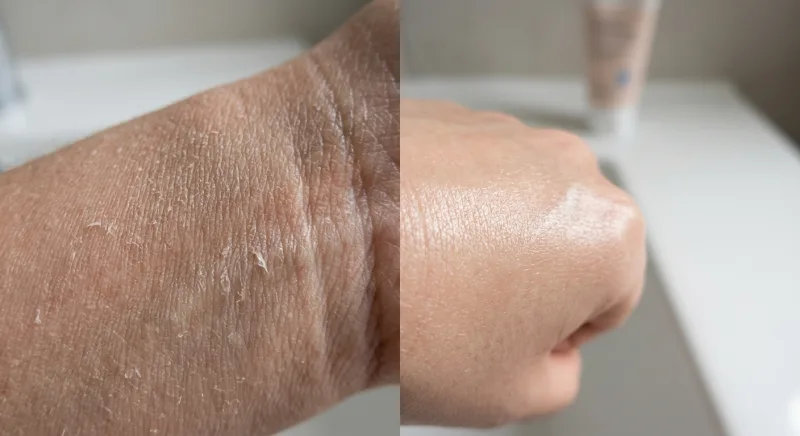
A damaged skin barrier usually shows up as tightness, redness, flaking, or stinging when you apply products that never used to bother you. If your skin feels raw or reactive out of nowhere, a barrier cream may be worth adding to your routine right away.
These signs can creep up slowly or hit fast, especially after a change in weather or a new skincare habit. Catching them early makes recovery easier and faster.
Common causes of barrier damage
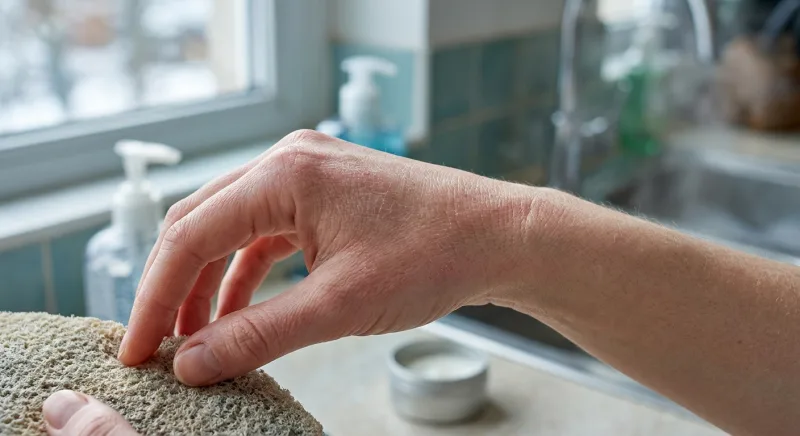
Over-exfoliating is one of the biggest culprits. Scrubbing too often, or using strong acids too frequently, wears down the barrier faster than it can rebuild.
- Harsh cleansers that strip natural oils
- Overusing retinoids or exfoliating acids
- Hot showers and long, hot baths
- Cold, dry weather or indoor heating
- Frequent hair removal without aftercare
- Skipping moisturizer after cleansing
Any one of these on its own might not cause damage. Stacked together, they wear the barrier down over time. A barrier cream helps offset that daily wear.
How to tell if a product is helping or hurting
A helpful product calms skin within a day or two. A harmful one causes more stinging, redness, or tightness the longer you use it. Pay attention to how skin feels right after application, not just how it looks.
If a barrier cream leaves skin soft and calm, it’s doing its job. If it causes new breakouts or a burning feel, the formula may be too heavy or contain an ingredient your skin doesn’t like.
Key Ingredients to Look for in a Barrier Cream
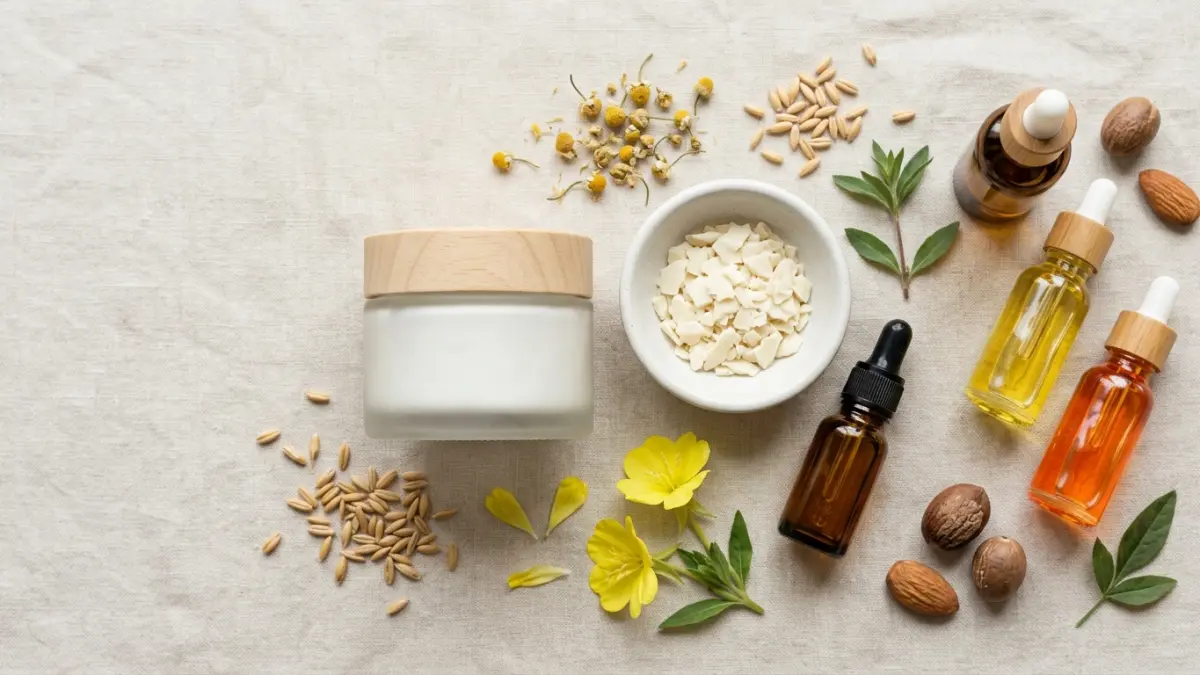
The best barrier cream ingredients are lipids that mimic what your skin already makes naturally. Ceramides, fatty acids, and cholesterol work together to rebuild the barrier’s structure, rather than just sitting on top of skin.
Ceramides, fatty acids, and cholesterol
These three make up most of the natural fat found in healthy skin. Skin experts often talk about a ratio between them, because balance matters more than loading up on just one. A good barrier cream includes all three, not only ceramides.
Some brands market “ceramide creams” hard, but ceramides alone won’t rebuild a barrier well. A barrier cream that skips fatty acids and cholesterol is only doing part of the job.
Humectants vs. occlusives vs. emollients
These three ingredient types each play a different role. Humectants draw water into skin. Emollients soften and smooth skin’s surface. Occlusives sit on top and seal moisture in. A well-made barrier cream usually blends all three.
| Ingredient Type | Function | Common Examples |
|---|---|---|
| Humectant | Pulls water into the skin’s surface | Glycerin, hyaluronic acid |
| Emollient | Softens and smooths skin texture | Squalane, plant oils |
| Occlusive | Seals moisture in, blocks water loss | Petrolatum, shea butter |
| Barrier lipid | Rebuilds the skin’s natural structure | Ceramides, fatty acids, cholesterol |
Ingredients to avoid if your barrier is compromised
If your skin barrier is already weak, skip strong fragrance, high percentages of alcohol, and harsh acids for a while. These can slow down repair and make irritation worse, even in a good barrier cream.
Look for simple, short ingredient lists instead. A barrier cream with fewer, purposeful ingredients tends to be gentler while your skin heals.
How to Choose a Barrier Cream for Your Skin Type
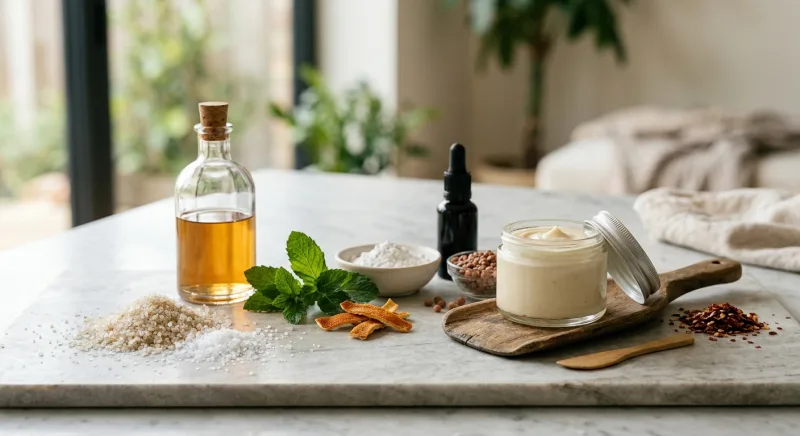
Choosing a barrier cream comes down to matching texture and ingredients to your skin’s needs. Dry skin wants richer formulas, while oily skin needs something lighter that still repairs the barrier.
Dry or flaking skin
Dry, flaking skin does well with a thicker barrier cream that leans on occlusives and rich lipids. Look for shea butter, ceramides, and fatty acids together for the most support.
Oily or acne-prone skin
Oily and acne-prone skin still needs a barrier cream, just a lighter one. Gel-creams with ceramides and light emollients repair the barrier without clogging pores or adding excess shine.
Sensitive, reactive, or eczema-prone skin
Sensitive skin, including skin prone to eczema (a condition causing dry, itchy patches) or rosacea (a condition causing facial redness), needs a scent-free barrier cream with few ingredients. Simple mixes lower the risk of flare-ups while the skin’s barrier heals.
Mature skin
Mature skin often has thinner, drier barriers, so a richer barrier cream with ceramides and cholesterol-based lipids helps support both hydration and comfort. Look for formulas that pair barrier repair with gentle, supportive textures.
Barrier Cream vs Other Moisturizing Products
Not every moisturizer is a barrier cream, even though the terms get used loosely. Understanding the differences helps you choose the right product for your specific skin concern rather than grabbing whatever jar is on the shelf.
A standard lotion often focuses on light hydration and quick absorption. A barrier cream typically layers occlusive and emollient ingredients to seal in moisture and rebuild the skin’s outer defenses. The table below breaks down how these categories compare.
| Product Type | Primary Goal | Typical Texture | Best For |
|---|---|---|---|
| Barrier Cream | Repair and protect the skin barrier | Thick, occlusive | Dryness, irritation, barrier damage |
| Standard Lotion | Light hydration | Thin, fast-absorbing | Normal to slightly dry skin |
| Facial Moisturizer | Daily hydration and comfort | Medium, often with actives | General skincare maintenance |
| Petroleum-Based Ointment | Pure occlusion | Very thick, greasy | Severe dryness or wound-adjacent care |
This comparison shows why a barrier cream sits in its own category. It borrows the sealing power of ointments while staying more cosmetically pleasant than pure petroleum jelly, and it does more repair work than a typical lotion.
How to Apply Barrier Cream Correctly
How you apply it matters as much as which ingredients you pick. Putting on a barrier cream the wrong way can make it work less well or leave skin feeling greasy without truly helping the skin’s barrier.
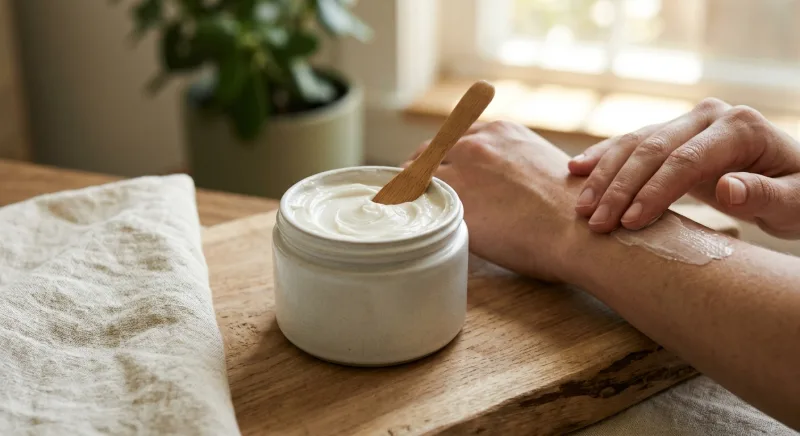
- Cleanse skin gently before application, avoiding harsh scrubbing that can worsen barrier damage.
- Pat skin until slightly damp rather than completely dry, since a barrier cream locks in existing moisture.
- Apply a thin, even layer rather than piling on excess product, which can trap heat and cause discomfort.
- Focus on problem areas first, such as cracked hands, chapped cheeks, or diaper-prone skin.
- Reapply after handwashing, swimming, or exposure to irritants like cleaning products or harsh weather.
Consistency matters more than quantity. A thin layer of barrier cream applied several times daily typically outperforms one thick application that sits unabsorbed on the surface of the skin.
Common Mistakes When Using Barrier Cream
Even a top-quality barrier cream can work poorly if it’s used the wrong way. Knowing these common mistakes can help you get steadier results from your skin care routine.
Applying to the wrong skin state
Some people apply barrier cream to bone-dry skin, expecting it to hydrate on its own. Because these creams primarily seal in moisture, applying them to damp skin produces noticeably better results.
Skipping patch tests
New formulas, even gentle ones, can cause reactions in sensitive individuals. Skipping a patch test before applying a barrier cream to already-irritated skin can make identifying the cause of a flare-up more difficult.
Using the wrong product for the job
A heavy barrier cream designed for cracked heels isn’t ideal for the delicate under-eye area, and a lightweight facial barrier cream may not hold up against harsh occupational exposure. Matching product to purpose avoids wasted effort.
Barrier Cream by Use Case
Different cases need different mixes. The table below shows how barrier cream needs change based on the exact use, from daily skin care to job-related protection.
| Use Case | Key Ingredient Focus | Application Frequency | Special Considerations |
|---|---|---|---|
| Daily facial care | Ceramides, fatty acids, cholesterol | Once or twice daily | Lightweight enough to wear under makeup |
| Diaper rash prevention | Zinc oxide, petrolatum | Every diaper change | Must be safe for infant skin |
| Occupational hand protection | Dimethicone, mineral oil | Before and after exposure | Needs to resist frequent washing |
| Eczema or dermatitis management | Colloidal oatmeal, ceramides | Multiple times daily | Fragrance-free and minimal ingredient list |
| Cold weather protection | Petrolatum, shea butter | Before outdoor exposure | Thicker texture for wind and cold resistance |
This breakdown highlights why there’s no single best barrier cream for every situation. The right formula depends heavily on the environment, skin type, and specific challenge you’re addressing.
Ingredients to Look For and Avoid
Reading ingredient labels helps you choose a barrier cream that matches your skin’s needs rather than relying on marketing claims alone. Some ingredients consistently perform well, while others may work against sensitive or damaged skin.
Ingredients worth seeking out
- Ceramides, which help restore the lipid matrix that holds skin cells together.
- Petrolatum, a well-studied occlusive that reduces water loss effectively.
- Colloidal oatmeal, which can soothe itching and irritation.
- Shea butter and cocoa butter, which add emollient softness alongside occlusion.
- Niacinamide, which may support barrier function and reduce redness in some formulations.
Ingredients to approach with caution
- Added fragrance, a common trigger for sensitive or eczema-prone skin.
- High concentrations of alcohol, which can be drying despite appearing in lightweight formulas.
- Essential oils, which sound natural but can still irritate compromised skin barriers.
- Harsh preservatives in individuals with known sensitivities or allergies.
If you’re new to a particular barrier cream, introducing it gradually and watching for reactions is a reasonable approach. This is especially true for anyone with a history of sensitive or reactive skin.
When to See a Dermatologist
Most mild dryness and irritation responds well to a good barrier cream and simple routine changes. But some cases call for a doctor’s check instead of ongoing home care.
If skin stays cracked, sore, or red after several weeks of steady barrier cream use, it may point to a deeper problem. Rashes that won’t go away, oozing, or signs of infection also mean you should see a skin doctor instead of trying more products.

A skin doctor can also give you strong prescription options when store-bought barrier cream types aren’t enough. This might include steroid creams put on the skin, special barrier repair treatments, or more tests to find allergies or sensitivities.
Market context
How the broader market shapes Barrier Cream in 2026
The figures below come from adjacent, well-documented markets. Each row names the subject it actually measures and links to its original source — these are related market indicators, not Barrier Cream claims.
| What it measures | Figure | Source |
|---|---|---|
| Contact dermatitis as a share of occupational skin disease cases in the United States | Research indicates that contact dermatitis accounts for 90–95% of occupational skin disease cases in the United States. | CDC/NIOSH, 2026 |
| FDA-permitted concentration range for petrolatum as an OTC skin protectant active ingredient | Under the FDA’s OTC skin protectant monograph (21 CFR 347.10), petrolatum is permitted as an active ingredient at a concentration of 30 to 100 percent. | 21 CFR § 347.10 (Cornell Legal Information Institute, codifying FDA regulation), 2003 |
| Recordable occupational skin diseases reported in the U.S. workforce | In 2018, 25,000 recordable skin diseases were reported by the U.S. Bureau of Labor Statistics, at a rate of 2.2 injuries per 10,000 employees. | OSHA (Occupational Safety and Health Administration), 2018 |
| Diaper dermatitis incidence among infants | Diaper dermatitis occurs in about 50% of infants and accounts for about 25% of first-year dermatologic primary care visits. | StatPearls (NCBI Bookshelf, National Library of Medicine), 2023 |
Read the complete guide: A Skin Concerns Guide That Finally Makes Sense of Your Routine
Frequently Asked Questions
What is a Barrier Cream used for?
A Barrier Cream protects skin from irritants like moisture, friction, and chemicals. It forms a protective layer over the skin’s surface, helping prevent damage while allowing natural healing. People use it for dry hands, diaper rash, occupational exposure, and general skin protection in harsh conditions.
How often should I apply barrier cream?
Most people gain from putting it on two to three times a day, especially after washing hands or before contact with things that irritate skin. Those with bad dryness or risky jobs may need to use it more often.
Always follow the product’s steps, since mixes differ in strength and how often they should be used.
Can barrier cream be used on broken skin?
Some formulas are safe for minor cracks or irritation, but severely broken or bleeding skin usually needs different care first. Check product labeling for guidance on open wounds. When in doubt, consult a pharmacist or dermatologist before applying any cream to compromised skin.
Is barrier cream the same as moisturizer?
No, though they overlap some. Moisturizers mainly add water to the skin, while barrier creams focus on guarding skin from outside irritants and keeping moisture in. Many barrier formulas do add water too, but their main job is protection, not deep moisture refill for skin that’s already healthy.
Can I use barrier cream every day long-term?

Yes, using it daily for a long time is usually safe and often told to people with ongoing dryness or repeated contact with harsh things. Pick a formula that fits your skin type and watch for any changes.
If irritation shows up over time, switch products or ask a skin doctor for other choices.
Does barrier cream work for eczema?
Many people with eczema find barrier cream helpful for reducing flare-ups triggered by irritants and moisture loss. It won’t replace prescribed treatments but can support skin between flares. Look for fragrance-free, gentle formulas, and ask your dermatologist which ingredients work best for your condition.
What ingredients should I avoid in a barrier cream?
Avoid scents, dyes, and harsh preservatives if you have sensitive skin, since these often cause reactions. Alcohol-based mixes can also cause too much dryness.
Check labels for known allergens and test new products on a small patch of skin before regular use, especially if you have a past history of skin sensitivity.
When should I stop using barrier cream and see a doctor?
Stop and ask a doctor for advice if skin gets worse, forms open sores, or shows signs of infection even with regular use.
Redness, swelling, or pain that won’t go away after weeks of use means there’s a deeper problem that needs a doctor’s check, not more store-bought care.
Expert insights
The stronger and more intact your skin barrier is, the harder it is for these elements to penetrate, helping to keep your skin healthy.
Amy Kassouf, MD, Dermatologist
It provides a kind of armor that protects the cells beneath from damage.
Alejandra Estemalik, MD, Dermatologist
References
- The skin’s outer barrier layer (stratum corneum) is held together by natural lipids—ceramides, fatty acids, and cholesterol—that form a seal keeping water in and irritants out. — PMC (National Library of Medicine) (Peer-reviewed research article indexed by the U.S. National Library of Medicine (NIH))
- Ceramides are a major lipid component of the stratum corneum’s lamellar sheets and are essential for maintaining the skin’s water-permeability barrier function. — PubMed / National Library of Medicine (Peer-reviewed dermatology research indexed on PubMed, a service of the U.S. National Library of Medicine)
- When the skin barrier is impaired, transepidermal water loss (TEWL) rises, which is used clinically to gauge how damaged or disease-affected skin barrier function is. — PMC (National Library of Medicine) (Peer-reviewed clinical study on skin barrier function published via NIH’s PubMed Central)
- Topically applying lipid mixtures containing cholesterol, ceramides, and fatty acids to skin helps replenish and repair the stratum corneum’s barrier lipids. — PubMed / National Library of Medicine (Peer-reviewed dermatology study indexed by the U.S. National Library of Medicine)
- Applying a lotion containing cholesterol, ceramides, and long-chain fatty acids has been shown to improve skin barrier properties. — Nature (Scientific Reports) (Peer-reviewed study published in Nature’s Scientific Reports journal)
You may also be interested in: Skin Minimalism: The Simple Guide to Fewer Products, Better Skin
You may also be interested in: Cream Blush 101: What It Is, Who It’s For, and How to Apply It
