
Skincare ingredients
Azelaic Acid Benefits: The Gentle Active That Fixes Three Skin Problems
Last updated: November 3, 2026
Azelaic acid benefits skin in three big ways: it clears acne, calms rosacea redness, and fades dark spots left behind by breakouts or sun damage. It works by fighting bacteria, cooling swelling, and slowing extra pigment. Most skin types handle it well, including sensitive skin prone to redness.
What Is Azelaic Acid and What Does It Actually Do for Skin?
Azelaic acid (a natural acid found in grains like wheat, rye, and barley) is a topical skincare ingredient used to treat acne, rosacea, and dark spots. The azelaic acid benefits that matter most are fewer breakouts, less redness, and a more even skin tone.
It’s sold both over the counter and by prescription.
Doctors and dermatologists reach for it because it does several jobs at once. It has diverse mechanisms of action including antibacterial, anti-keratinizing, antimelanogenic, antioxidant and anti-inflammatory effects, and is FDA-approved for treating papulopustular rosacea while also showing significant efficacy in acne vulgaris and melasma. (Clinical, Cosmetic and Investigational Dermatology (PMC))
Where Azelaic Acid Comes From
It was first found as a byproduct of a yeast that lives on normal skin. Lab-made versions now appear in creams, gels, and foams at different strengths. Over-the-counter versions tend to be lower strength, while prescription types go higher for stubborn rosacea or acne.
How It Works on a Cellular Level
Azelaic acid slows down the skin cells that make too much pigment, which is why it fades dark spots. It also blocks the germs linked to acne and calms the blood vessel activity behind rosacea flushing. This mix of actions is what makes azelaic acid benefits so wide compared with single-purpose ingredients. (Advances in Dermatology and Allergology (PMC, NIH))
Its therapeutic effects stem from anti-inflammatory, antioxidant, and antimicrobial properties that target the bacteria tied to acne, and it is used for acne vulgaris, rosacea, and hyperpigmentation conditions without aggressive effects on reactive or sensitive skin. (Advances in Dermatology and Allergology (PMC, NIH)) (Clinical, Cosmetic and Investigational Dermatology (PMC))
What Are the Main Benefits of Azelaic Acid?
The main gains from azelaic acid are clearer pores, calmer skin, and a more even tone, and each condition responds through a slightly different path. Below is a look at how it helps with acne, rosacea, dark spots, and rough texture, based on published clinical research. (Advances in Dermatology and Allergology (PMC, NIH))
Reduces Acne and Breakouts
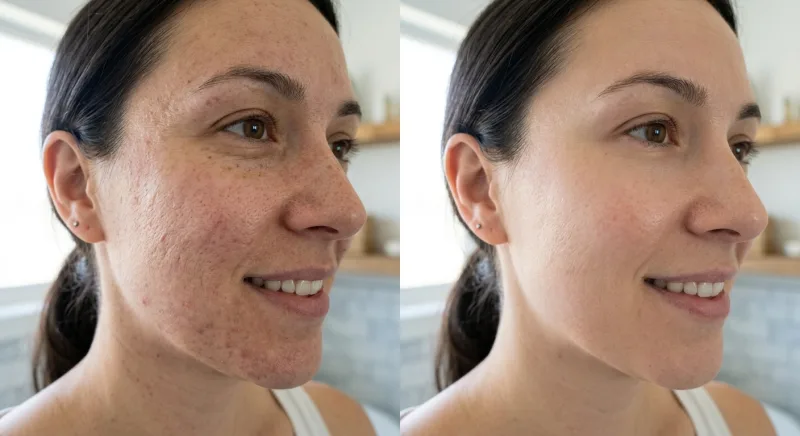
Azelaic acid fights the germs that clog pores and cause swollen breakouts, while also helping dead skin cells shed normally instead of blocking follicles. In a randomized clinical trial for mild-to-moderate acne, azelaic acid gel cut total lesion count by 60.6% versus only 19.9% with placebo over 45 days. (Indian Journal of Dermatology, Venereology and Leprology (PubMed), 2007)
That’s a real gain over doing nothing. The American Academy of Dermatology’s new acne guide backs azelaic acid benefits, since it can clear pores, kill germs, and fade dark spots left after a pimple heals. (American Academy of Dermatology)
Calms Rosacea and Redness
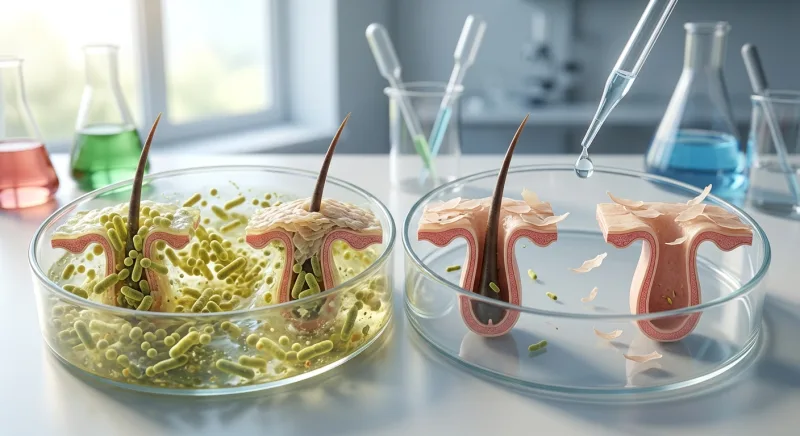
Rosacea causes ongoing facial redness, visible blood vessels, and swollen bumps, and azelaic acid benefits are backed by strong proof here. A broad review of 43 random trials found that azelaic acid greatly eased redness, bump counts, and overall treatment success in rosacea patients versus a fake cream after 12 weeks. (PubMed (systematic review))
That review also found it beat a common rosacea antibiotic cream on several scores. One set prescription form, Finacea Gel 15%, is FDA-approved to treat the swollen bumps and pus spots of mild to fair rosacea. (DailyMed (NIH/NLM) — FDA-approved drug label) (U.S. Food and Drug Administration)
Fades Dark Spots and Hyperpigmentation
Hyperpigmentation (patches of skin that turn darker than the skin around it, often after acne or sun exposure) responds well to azelaic acid because it slows the enzyme that makes extra pigment. In a 24-week study of 329 women with melasma, azelaic acid cream gave good or great results in 65% of cases, with no real difference versus a 4% hydroquinone cream, a common prescription lightening ingredient. (PubMed (National Library of Medicine), 1991)
Evens Skin Tone and Texture
| Skin Concern | How Azelaic Acid Helps | Typical Formulation Used |
|---|---|---|
| Acne and breakouts | Reduces acne-causing bacteria and unclogs pores | Gel or cream, over-the-counter or prescription |
| Rosacea redness | Calms inflammation and reduces visible blood vessels | Prescription-strength foam or gel |
| Dark spots and hyperpigmentation | Slows excess pigment-producing enzyme activity | Cream, often paired with sunscreen |
| Rough texture | Supports steady skin cell turnover | Lower-strength daily cream or serum |
How Does Azelaic Acid Compare to Other Active Ingredients?
Azelaic Acid vs. Glycolic Acid

Azelaic Acid vs. Salicylic Acid
Azelaic Acid vs. Retinoids
Retinoids (vitamin A-based drugs that speed up skin cell renewal) are seen as a top choice for acne and aging skin, but they often cause dryness and peeling. In direct trial tests, azelaic acid benefits show little or no gap in results versus tretinoin, a common retinoid, while tests against benzoyl peroxide and clindamycin rest on weaker proof. (Cochrane Database of Systematic Reviews (PMC, NIH)) (National Health Service (NHS))
That means azelaic acid can match a retinoid’s results for some people, with less irritation. If you’re weighing a retinol serum against azelaic acid, the choice often comes down to how much dryness your skin can take.
Azelaic Acid Benefits vs. Other Popular Acne Ingredients
Comparing azelaic acid benefits side by side with other acne fighters can help you pick the right one. Each ingredient works a bit differently, and some suit sensitive skin better than others. Here’s a quick look.
| Ingredient | Main Strength | Common Side Effects |
|---|---|---|
| Azelaic acid | Fades dark spots, calms redness, fights acne bacteria | Mild tingling, dryness |
| Benzoyl peroxide | Kills acne bacteria fast | Dryness, bleaching of fabric |
| Tretinoin | Speeds cell turnover, treats aging and acne | Peeling, sun sensitivity |
| Clindamycin | Reduces bacteria, low irritation | Possible resistance over time |
Azelaic Acid Benefits for Rosacea and Melasma Compared
Rosacea and melasma both cause facial redness or dark patches, but they need different care. Azelaic acid benefits show up in both conditions, though the results look a bit different for each one.
| Condition | Key Finding | Typical Treatment Length |
|---|---|---|
| Rosacea | Improved redness and bumps versus placebo across 43 trials | 12 weeks or more |
| Melasma | 65% saw good to excellent results, matching hydroquinone cream | 24 weeks |
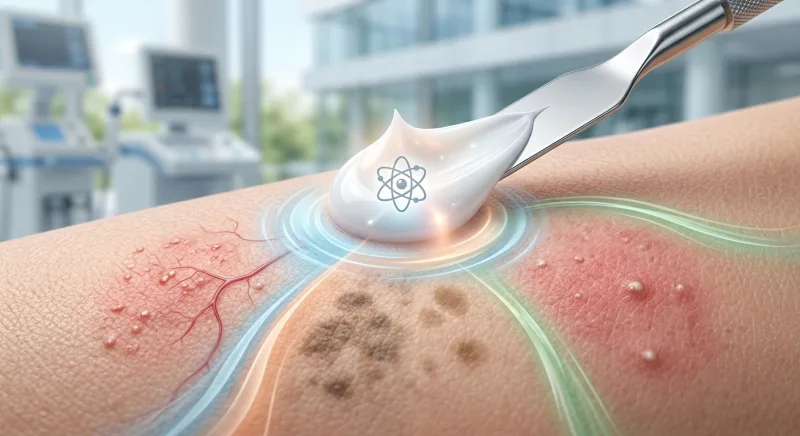
These numbers back up why azelaic acid benefits get mentioned for both skin issues. It’s one of the few ingredients that treats redness, bumps, and dark spots at the same time.
Side Effects and Safety Risks of Azelaic Acid
Update 1 · October 9, 2026
Most people handle azelaic acid well. The most common complaints are mild and fade with time, like burning, stinging, itching, dryness, or redness as skin adjusts. (NHS)
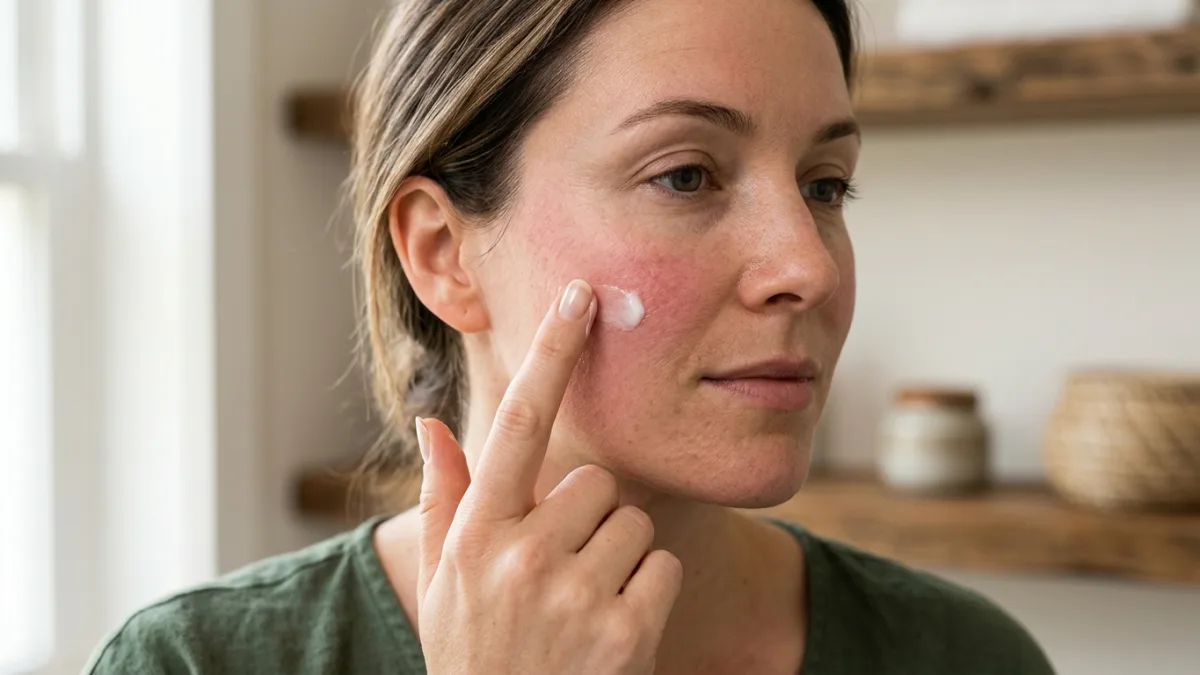
In FDA trials of the 15% gel form, burning, stinging, or tingling showed up in 29% of patients, making it the top reported issue. The stronger 20% cream version caused pruritus (itching), burning, stinging, and tingling in roughly 1-5% of users. A pharmacological review backs this up, noting these local reactions are usually mild to moderate and tend to ease early in treatment. (DailyMed / FDA, NIH, 2025) (DailyMed / FDA, NIH, 2024) (PMC, PubMed Central)
Rare but more serious effects can happen too. These include patches of lighter skin (depigmentation), small white spots, extra hair growth, flare-ups of asthma, and cold sore outbreaks. People with darker skin tones may notice slightly more burning and stinging than those using a plain moisturizer base, based on one controlled trial. The FDA label also warns of rare allergic reactions, like swelling of the face or eyes, trouble breathing, or hives, and says to stop use right away if these appear. (FDA, accessdata.fda.gov) (PMC, PubMed Central) (ScienceDirect) (DailyMed, NIH/FDA drug label) (FDA, FINACEA Gel prescribing information)
One rosacea trial using azelaic acid foam found headaches, dizziness, and migraines in both the treatment and placebo groups, suggesting these weren’t tied to the drug itself. For pregnancy, the FDA notes there isn’t enough research on topical azelaic acid in pregnant women to confirm it’s safe, so this is a point to raise with a doctor. (ClinicalTrials.gov) (U.S. Food and Drug Administration, FDA)
Read the complete guide: Your Skincare Ingredients Guide to Fewer Guessing Games
FAQ: Azelaic Acid Benefits
What are the main azelaic acid benefits for skin?
The main azelaic acid benefits include calming acne, fading dark spots, and easing rosacea redness. It works by fighting germs, cutting swelling, and slowing extra pigment growth. Many people use it because it treats several skin issues at once without harsh peeling or strong irritation.
How long until you notice azelaic acid benefits?
Most people notice azelaic acid benefits after about a month of steady use, per NHS guidance. Acne may get better within a few weeks, while dark spots and redness often take longer. Sticking with daily use matters more than the strength of the product you pick. (National Health Service (NHS))
Can azelaic acid benefits include treating rosacea?
Yes. Azelaic acid is FDA-approved to treat the bumps and pimples of mild to moderate rosacea. Studies show it cuts redness and breakouts better than a placebo, and it’s often used when other rosacea treatments feel too harsh or drying for sensitive facial skin. (U.S. Food and Drug Administration)
Do azelaic acid benefits work as well as tretinoin?
Studies show little gap in results between azelaic acid and tretinoin for treating acne. That means you can get like clearing power with less dryness and peeling. Many people pick azelaic acid first if their skin reacts badly to stronger retinoid creams. (Cochrane Database of Systematic Reviews (PMC, NIH))
Is azelaic acid safe for sensitive or reactive skin?
Yes, azelaic acid is often picked for sensitive skin because it works without harsh effects on reactive skin. Mild tingling or dryness can happen at first. Starting with a lower strength and using it every other day can help your skin adjust well over time. (Advances in Dermatology and Allergology (PMC, NIH))
Key statistics
- In a randomized clinical trial for mild-to-moderate acne vulgaris, azelaic acid gel reduced total lesion count by 60.6% versus only 19.9% with placebo over 45 days. (Indian Journal of Dermatology, Venereology and Leprology (PubMed), 2007)
- In a 24-week, double-blind study of 329 women with melasma, azelaic acid cream yielded 65% good or excellent results with no significant treatment differences versus 4% hydroquinone cream. (PubMed (National Library of Medicine), 1991)
- In a randomized controlled trial, treatment with azelaic acid nanocrystal (AZA-NC) hydrogel 10% achieved a success rate of 36.51% at week 8, compared with 30.37% for standard 20% azelaic acid cream, in patients with mild to moderate acne. (PMC (NCBI, National Institutes of Health), 2021)
Expert insights
It might help a little bit with the pigment that’s left over after an acne lesion clears, but for someone who has deeper cystic acne, [azelaic acid] isn’t going to penetrate that far into the skin
Bordone, board-certified dermatologist and assistant professor of dermatology at Columbia University Medical Center
That’s probably the biggest issue because if you get a rash going, it can leave dark spots instead of what you actually intended it to do, which is to lighten and brighten the skin
Farah, board-certified dermatologist at the University of Minnesota Medical School and M Health Fairview
References
- Azelaic acid has diverse mechanisms of action including antibacterial, anti-keratinizing, antimelanogenic, antioxidant and anti-inflammatory effects, and is FDA-approved for treating papulopustular rosacea while also showing significant efficacy in acne vulgaris and melasma. — Clinical, Cosmetic and Investigational Dermatology (PMC) (Peer-reviewed dermatology journal review article indexed on PubMed Central (NIH))
- A systematic review of 43 randomized controlled trials found that azelaic acid significantly improved erythema severity, inflammatory lesion counts, overall improvement, and treatment success in rosacea patients compared with vehicle after 12 weeks, and was more effective than metronidazole 0.75% for several outcomes. — PubMed (systematic review) (Peer-reviewed systematic review indexed on PubMed/NIH)
- FINACEA (azelaic acid) Gel, 15% is FDA-indicated for topical treatment of the inflammatory papules and pustules of mild to moderate rosacea, with the most common adverse reactions being burning/stinging/tingling, pruritus, scaling/dry skin, and erythema/irritation. — DailyMed (NIH/NLM) — FDA-approved drug label (Official FDA-approved prescribing label hosted by the National Library of Medicine)
- Azelaic acid is a dicarboxylic acid with anti-inflammatory and antioxidant properties, used topically to treat mild to moderate acne, rosacea, and lentigo maligna. — DermNet NZ (DermNet is a peer-reviewed, clinician-authored dermatology reference maintained and reviewed by dermatologists, widely used by health professionals for evidence-based skin condition information.)
- Azelaic acid’s therapeutic effects stem from anti-inflammatory, antioxidant, and antimicrobial (anti-Propionibacterium acnes) properties, and it is used for acne vulgaris, rosacea, and hyperpigmentation conditions without aggressive effects on reactive or sensitive skin. — Advances in Dermatology and Allergology (PMC, NIH) (Peer-reviewed journal article hosted on PubMed Central (National Institutes of Health), providing a comprehensive, evidence-based review of azelaic acid’s mechanisms and clinical applications.)
- In head-to-head clinical trial evidence, azelaic acid shows little or no difference in efficacy compared with tretinoin, while its effects relative to benzoyl peroxide and clindamycin are considered low- or very low-quality evidence. — Cochrane Database of Systematic Reviews (PMC, NIH) (Cochrane systematic review is considered a gold-standard, rigorously peer-reviewed synthesis of randomized controlled trial evidence, hosted on PubMed Central.)
- FINACEA (azelaic acid) Gel, 15% is FDA-approved for the topical treatment of inflammatory papules and pustules of mild to moderate rosacea. — U.S. Food and Drug Administration (Federal regulatory agency drug label (FDA))
- The American Academy of Dermatology’s updated acne guidelines recommend topical azelaic acid to unclog pores, kill bacteria, and fade dark spots that remain after an acne spot clears. — American Academy of Dermatology (Leading professional dermatology association issuing clinical guidelines)
- The NHS advises that azelaic acid is often used as an alternative acne treatment when benzoyl peroxide or topical retinoids cause irritating side effects, and it typically takes about a month of use before improvement is seen. — National Health Service (NHS) (UK national health service, public health guidance)
