
hair removal
Hair Removal Cream: How It Works, How to Use It Safely, and What to Try Next
Last updated: November 3, 2026
Hair removal cream (a depilatory) uses chemicals to break down the protein bonds in hair so it dissolves at the skin’s surface and wipes away. Most people see results last a few days longer than shaving, though skin type and body area both affect comfort and outcome.
A patch test always comes first.
What Is Hair Removal Cream and Does It Actually Work?
Hair removal cream is a cosmetic product that dissolves hair at the skin’s surface instead of cutting it. It sits under the broader label of depilatory (a product that removes hair by breaking it down chemically, rather than cutting or pulling it out).
People reach for hair removal cream because it needs no blade, no wax, and no special tools.
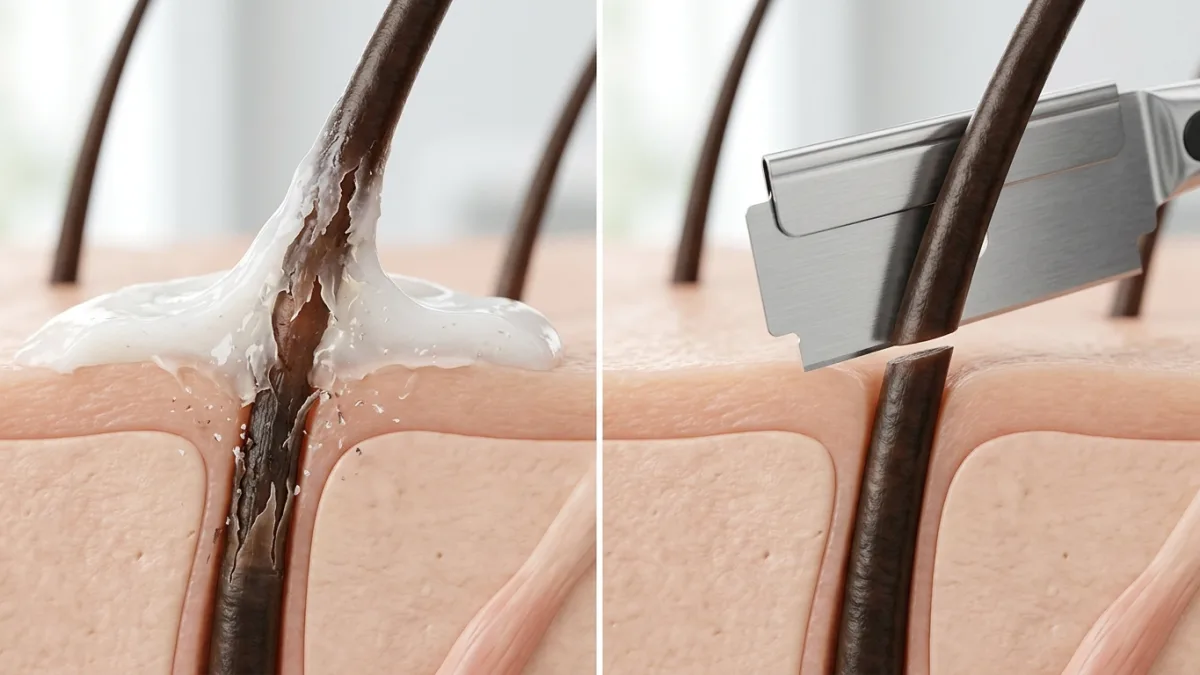
Yes, hair removal cream does work, and the science behind it is well documented. Depilatory creams work through thioglycolate salts that break down the disulfide bonds in keratin (the tough protein that makes up hair strands), weakening the hair so it can be wiped or washed away. This is a real chemical reaction, not a coating or a masking trick. (PMC (National Institutes of Health))
Hair removal creams are one of several at-home options, alongside shaving, waxing, plucking, and bleaching, that people use to manage unwanted hair growth. Each method has its own trade-offs in comfort, cost, and how long results last. Our full hair removal guide walks through all of them side by side, if you want the bigger picture before you commit to one method. (NHS)
How it differs from shaving and waxing
Depilatory creams work by dissolving unwanted hair, and results from this method can last longer than shaving. That’s the main reason people switch to hair removal cream from a razor. It also avoids nicks and razor burn, since there’s no blade touching the skin at all. (American Academy of Dermatology)
Still, hair removal cream isn’t magic. It works on the hair you already have, not on the follicle that grows the next one. That’s a key difference from laser-based options, which target the follicle itself.
For a deeper look at how that comparison plays out over months and years, our guide to ipl hair removal covers what actually happens to hair long-term.
How Does Hair Removal Cream Work on a Chemical Level?
Hair removal cream works by using an alkaline chemical to loosen and dissolve the protein structure of hair. The process sounds technical, but the idea is simple: soften the hair enough that it wipes away with no cutting tool needed.
Understanding the chemistry helps explain why timing and skin prep matter so much.
The active ingredients that break down hair
Thioglycolate, the key active ingredient in hair removal cream, is a potent depilatory agent that damages the hair’s cuticle and cortex, though the effect on skin is reversible. This ingredient is what separates hair removal cream from a simple lotion or scrub. It’s doing real chemical work on the hair’s internal structure, not just softening the surface. (PubMed)
Why timing matters more than people think
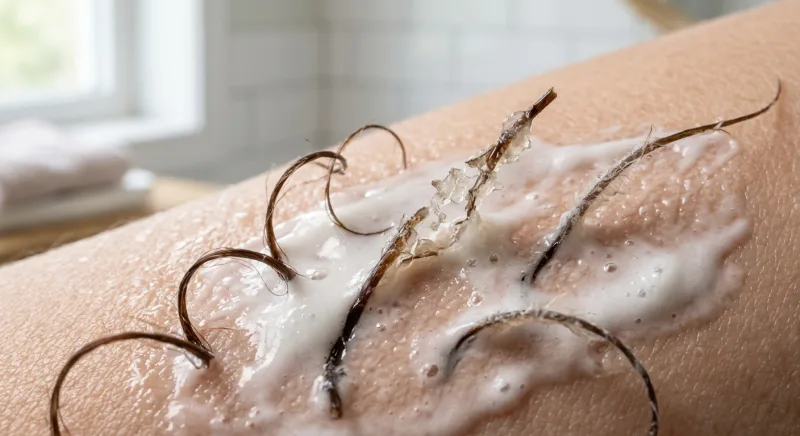
Timing is the single biggest factor in how safely hair removal cream performs. Leaving depilatory cream on longer than the manufacturer’s directed time, rather than the chemistry itself, is the primary cause of first-, second-, or third-degree chemical burns. In other words, the product isn’t inherently risky. Misusing the clock is what turns a normal application into a skin injury. (Cleveland Clinic)

Why pH affects both results and irritation
Cream hair removers must maintain a pH (a scale that measures how acidic or alkaline a substance is) between 12.0 and 12.5 to work quickly without burning skin, which by comparison has a natural pH of 4.5-5.5. That gap is enormous, and it’s the reason hair removal cream can feel strong on contact. The formula has to sit far outside skin’s normal comfort zone to dissolve hair fast enough to be practical. (Chemical & Engineering News (American Chemical Society), 2018)
This same high pH is also why irritation shows up more with hair removal cream than with a razor. Irritant contact dermatitis (a skin reaction caused by direct chemical exposure rather than an allergy), the type of skin reaction most often linked to chemical depilatories, accounts for 80% of all contact dermatitis reactions. That figure is a strong reminder that skin prep and timing aren’t optional extras. They’re the whole safety system for hair removal cream. (Cutaneous and Ocular Toxicology (Taylor & Francis), 2013)
Manufacturers walk a fine line with this chemistry. Too low a pH and the cream won’t dissolve hair fast enough to be useful. Too high, and irritation risk climbs, which is exactly why patch testing before full application matters so much with any hair removal cream.
How Do You Use Hair Removal Cream Safely, Step by Step?
Using hair removal cream safely comes down to four steps done in order: patch test, apply, time it, and rinse. Skipping any one of these raises your risk of irritation. None of the steps take special skill, but each one matters for a comfortable result.
Patch testing first
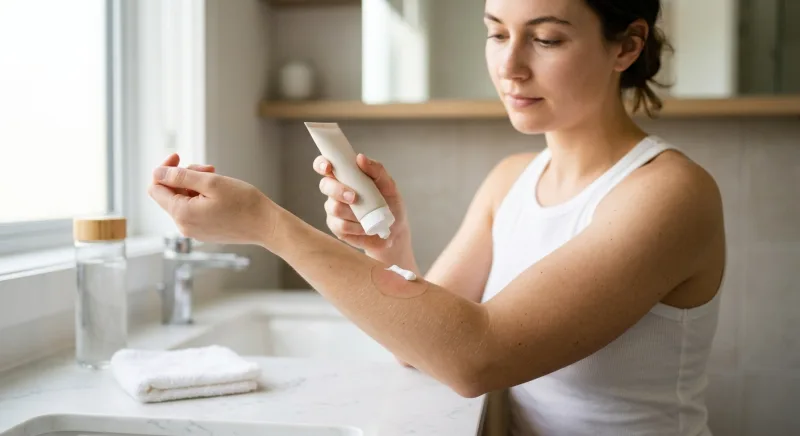
Patch testing is a non-negotiable safety step before full application, since depilatory creams can cause redness, irritation, or allergic reactions even on skin without pre-existing conditions. Apply a small amount to your inner arm, wait the full time listed on the box, then check the area over the next day. If nothing happens, you’re clear to use hair removal cream on the intended area. (Cleveland Clinic)
Application and wait time
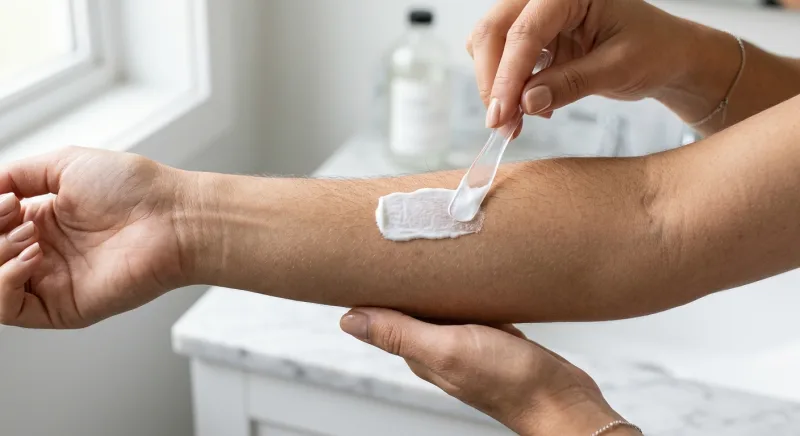
Spread an even layer of hair removal cream over dry, clean skin, covering the hair completely. Don’t rub it in or press it down; a light layer resting on top of the hair is enough. Set a timer for the exact minutes listed on the packaging, since going over that window is the main cause of burns, not the cream’s ingredients themselves. (Cleveland Clinic)
Removing the cream and rinsing
Use the dull edge of the spatula that comes in the box, or a damp cloth, to wipe the cream away along with the dissolved hair. Rinse the area well with lukewarm water, never hot, since hot water can heighten irritation on skin that’s just been through a chemical process.
Pat dry gently instead of rubbing.
Aftercare for calmer skin
Skip deodorant, perfume, or scented lotion on treated skin for several hours after using hair removal cream. Avoid hot showers, saunas, or direct sun on the area for the rest of the day.
A fragrance-free moisturizer helps calm skin that’s slightly sensitive after the process, and this simple habit reduces redness for most people.
- Do patch test at least a day before full use, every time you try a new formula
- Do follow the exact wait time on the box, not a guess based on past experience
- Do rinse with lukewarm water and pat skin dry rather than rubbing
- Don’t apply hair removal cream to broken, sunburned, or freshly waxed skin
- Don’t leave the cream on longer to “get a better result”
- Don’t layer on other actives, like retinol or exfoliating acids, the same day
Getting comfortable with hair removal cream on the body is a good first step before deciding whether it fits your longer-term routine. Some people stick with it for years. Others treat it as a bridge until they’re ready for a device-based approach, which we cover later in this guide.

Hair Removal Cream vs. Shaving vs. Waxing
Hair removal cream isn’t the only option on the shelf. Shaving, waxing, and depilatory creams all remove hair above the skin’s surface, but they work in different ways and leave different results. Here’s how they compare side by side.
| Feature | Hair Removal Cream | Shaving | Waxing |
|---|---|---|---|
| How it works | Dissolves hair at the surface using a chemical reaction | Cuts hair at the skin’s surface with a blade | Pulls hair out from the root with wax and cloth |
| How long results last | Several days to about a week | One to three days | Three to six weeks |
| Pain level | None, but can sting or burn if left on too long | Low, unless nicked or razor burn occurs | Moderate to high, especially the first few times |
| Regrowth texture | Soft, tapered tip | Blunt, can feel stubbly fast | Soft, tapered tip since hair regrows from root |
| Risk of skin reaction | Irritation or allergic reaction possible; patch test advised | Cuts, nicks, ingrown hairs | Redness, ingrown hairs, possible burns from hot wax |
Depilatory creams work through a chemical called thioglycolate, which breaks down the bonds holding hair protein together, weakening the strand enough to wipe or wash it away. Shaving and waxing are purely mechanical: one cuts hair, the other pulls it. Results from depilatory creams tend to last a bit longer than shaving, since the cream reaches slightly below the surface. (PMC (National Institutes of Health)) (American Academy of Dermatology)
All three methods sit in the same broad category of at-home hair removal, alongside plucking and bleaching. None of them are permanent, and none require special training. The right pick really depends on your pain tolerance, your schedule, and how your skin tends to react. (NHS)
Hair Removal Cream vs. Laser and Electrolysis
If you’re thinking long-term, it’s worth comparing hair removal cream against device-based options like laser and electrolysis. These methods work on a completely different level, targeting the hair follicle itself rather than the visible strand.
| Feature | Hair Removal Cream | Laser Hair Removal | Electrolysis |
|---|---|---|---|
| Target | Hair shaft above and slightly below the surface | Hair follicle, using light and heat | Individual hair follicle, using electric current |
| Permanence | Temporary, lasts days | Long-term reduction, not always permanent | Often considered permanent after full treatment course |
| Cost over time | Low, ongoing | High upfront, fewer sessions long-term | High upfront, many sessions needed |
| Regulatory oversight | Regulated as a cosmetic product | Regulated as a medical device | Regulated as a medical device |
| Skin tone/hair color limits | Works on all skin tones and hair colors | Works best on darker hair, lighter skin | Works on all hair colors and skin tones |
This is an important difference to understand before you invest in either path. The FDA regulates chemical depilatories, waxes, and shaving creams differently from laser and electrolysis devices, treating hair removal cream as a cosmetic rather than a medical device. That means the bar for approval, testing, and marketing claims is different too. (U.S. Food and Drug Administration)
None of this makes hair removal cream inferior. It just means the two categories solve different problems. Cream is fast, cheap, and needs no appointment. Laser and electrolysis take more time and money but aim for a longer-lasting outcome.
Is Hair Removal Cream Safer Than Other Methods?
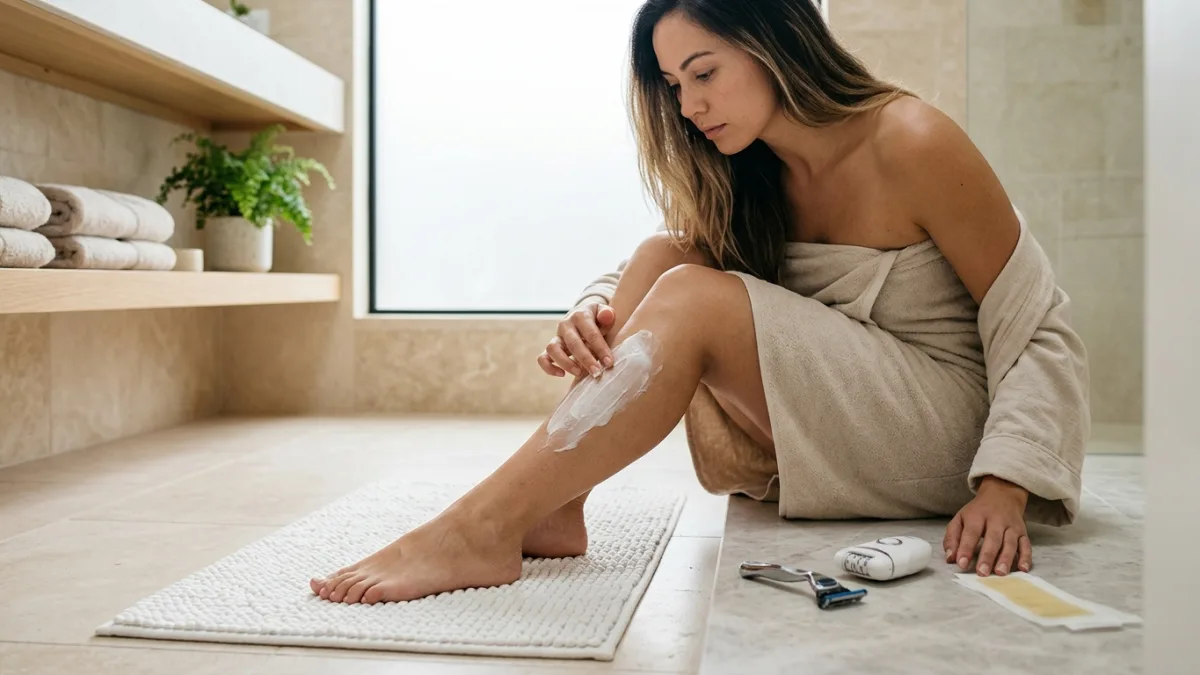
“Safer” depends on how your skin reacts and how closely you follow directions. Hair removal cream carries a real risk of irritation, since the active ingredient works by breaking down protein bonds in hair, and that chemical action can also affect skin if left on too long. (PubMed)
Most burns linked to depilatory cream aren’t caused by the formula itself. They happen when someone leaves the product on past the directed time, hoping for a smoother result. That single habit accounts for most of the first-, second-, or third-degree burns reported from this method. (Cleveland Clinic)
By comparison, shaving carries a steady, low-level risk of cuts and ingrown hairs. Waxing risks burns from hot wax and more noticeable redness. Laser and electrolysis carry small risks of pigment changes or scarring, especially without a trained provider.
No method is risk-free, but hair removal cream’s risks are largely tied to timing, not the product’s chemistry.
Does Hair Removal Cream Work as Well as Waxing?
Hair removal cream and waxing both beat shaving on how long results last, but they don’t work the same way. Waxing pulls hair from the root, so regrowth takes longer to show, often three to six weeks.
Cream dissolves hair at the surface, so regrowth appears sooner, usually within a week or two.
If pain is a deciding factor, hair removal cream has an advantage. It doesn’t pull hair out, so there’s no yank of the root. The tradeoff is a chemical process on the skin instead, which is why the pH of the formula matters so much.
Cream hair removers need a pH between 12.0 and 12.5 to break down hair fast enough to work, compared to skin’s natural pH of about 4.5 to 5.5. That gap is exactly why timing and patch testing matter so much with this method, and why waxing doesn’t carry the same chemical burn risk. (Chemical & Engineering News (American Chemical Society), 2018)
Can Hair Removal Cream Replace Laser Treatments?
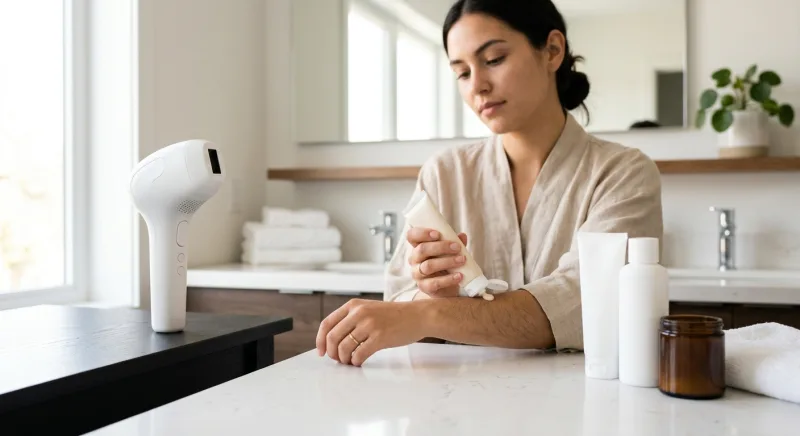
Hair removal cream and laser treatments aren’t really interchangeable. Cream works on the hair you already see, and results fade as new hair grows in. Laser targets the follicle itself, aiming to slow or reduce regrowth over time rather than just clearing the surface.
Some people use hair removal cream in between laser sessions, since it doesn’t disturb the follicle the way waxing or plucking can. Always check with your provider first, since chemical depilatories can still irritate skin that’s recovering from a recent laser session.
If your goal is long-term reduction, laser and electrolysis are built for that job. If your goal is quick, low-cost upkeep with no downtime, hair removal cream still holds its place. Many people end up using both, just for different needs.
Frequently Asked Questions
Is hair removal cream bad for your skin?
Used correctly, hair removal cream is safe for most people. Problems usually come from leaving it on too long or skipping the patch test. Irritant contact dermatitis is the most common reaction linked to these products, so following the timing on the label matters more than the formula itself.
Why does hair removal cream smell so strong?
The smell comes from sulfur compounds released as the cream breaks down hair. This happens because the active ingredient splits bonds inside the hair’s protein structure. Brands add fragrance to cover it, but a faint sulfur note during use is normal and not a sign the product has gone bad.
How long does hair removal cream last before hair grows back?
Most people see smooth skin for about three to seven days, sometimes longer than shaving gives them. Since the cream dissolves hair at the surface rather than removing the root, regrowth still follows your natural hair cycle.
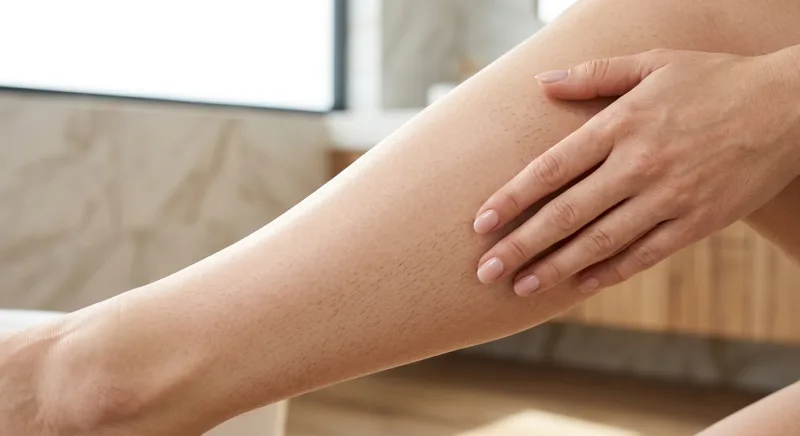
Results vary by body area, hair thickness, and how coarse your hair grows in.
Can I use hair removal cream on my face?
Some formulas are made for facial use, but regular body creams are too strong for facial skin. Always check the label first. Facial skin is thinner and more reactive, so a patch test matters even more here. If you have sensitive skin, ask a dermatologist before trying it near your eyes or lips. (PMC (National Institutes of Health))
Does hair removal cream work on coarse or curly hair?
Yes, though coarse or curly hair may need a few extra minutes of contact time within the label’s limit. The cream still breaks down the same protein bonds regardless of hair texture. If hair doesn’t wipe away easily, don’t reapply right away — irritated skin needs time to recover first.
What should I do if hair removal cream burns my skin?
Rinse the area right away with cool water and stop use completely. Avoid soap, scrubbing, or fragranced lotions on the spot for a few days. Most burns happen from leaving the product on past the directed time, not from the chemistry itself.
See a doctor if blistering or severe redness shows up.
Is hair removal cream better than shaving?
It depends on your priorities. Hair removal cream tends to leave skin smooth for longer than a razor does, and there’s no risk of nicks or razor burn. Shaving is faster and gentler for sensitive skin.

Neither method beats the other outright — it comes down to your skin type and routine.
Can pregnant or breastfeeding women use hair removal cream?
Skin can become more sensitive during pregnancy, so reactions are more likely even with products used safely before. There’s no strong evidence the ingredients harm a pregnancy, but many doctors suggest caution. A patch test is especially important now, and checking with your doctor first is always a smart move. (Cleveland Clinic)
| Factor | Hair Removal Cream | Laser/Electrolysis |
|---|---|---|
| Cost per session | Low | High |
| Downtime | None | Possible redness |
| Results duration | Days | Weeks to permanent |
| Skin irritation risk | Moderate | Low to moderate |
| Best for | Quick upkeep | Long-term reduction |
Key statistics
- Irritant contact dermatitis, the type of skin reaction most often linked to chemical depilatories, accounts for 80% of all contact dermatitis reactions. (Cutaneous and Ocular Toxicology (Taylor & Francis), 2013)
- Cream hair removers must maintain a pH between 12.0 and 12.5 to work quickly without burning skin, which by comparison has a natural pH of 4.5-5.5. (Chemical & Engineering News (American Chemical Society), 2018)
Expert insights
I don’t recommend attempting to remove it at home because it can potentially cause an infection, scarring or discoloration
Noelani González, clinical instructor in the department of dermatology at Mount Sinai
Prior to shaving, use warm water to rinse the skin, followed by a moisturizing shaving cream or gel
Hooman Khorasani, quadruple board-certified dermatologist in New York City
References
- Patch testing is a non-negotiable safety step before full application, since depilatory creams can cause redness, irritation, or allergic reactions even on skin without pre-existing conditions. — Cleveland Clinic (Nonprofit academic medical center providing clinician/aesthetician-reviewed consumer health guidance)
- Leaving depilatory cream on longer than the manufacturer’s directed time — rather than the chemistry itself — is the primary cause of first-, second-, or third-degree chemical burns. — Cleveland Clinic (Nonprofit academic medical center providing clinician/aesthetician-reviewed consumer health guidance)
- Depilatory creams work by dissolving unwanted hair, and results from this method can last longer than shaving. — American Academy of Dermatology (Professional medical organization of board-certified dermatologists; page content is attributed directly to AAD dermatologists)
- Hair removal creams are one of several at-home options (alongside shaving, waxing, plucking, and bleaching) that people use to manage unwanted hair growth. — NHS (UK National Health Service, a government health authority)
- The FDA regulates chemical depilatories, waxes, and shaving creams differently from laser and electrolysis devices, with depilatory creams falling under cosmetics oversight rather than medical device regulation. — U.S. Food and Drug Administration (Federal regulatory agency defining legal classification of cosmetic vs. device hair removal products)
- Depilatory creams work through thioglycolate salts that break down the disulfide bonds in keratin, weakening the hair so it can be wiped or washed away. — PMC (National Institutes of Health) (Peer-reviewed research article hosted on PubMed Central, a repository of the U.S. National Institutes of Health)
- Personal grooming of body hair, the broader category hair removal creams belong to, is an extremely common practice among U.S. adults. — PMC (National Institutes of Health) (Peer-reviewed study published via PubMed Central citing a nationally representative U.S. survey on grooming behavior)
- Thioglycolate, the key active ingredient in hair removal creams, is a potent depilatory agent that damages the hair’s cuticle and cortex, though the effect on skin is reversible. — PubMed (Peer-reviewed study indexed on PubMed, the NIH’s biomedical literature database)
