
Skincare routine
Body Scrub Benefits: Smoother Skin, Better Absorption, and Fewer Ingrown Hairs
Last updated: November 3, 2026
Body scrub benefits go beyond soft skin. Regular scrubbing lifts away dead cells, boosts blood flow, and helps lotions soak in better. It also lowers the odds of ingrown hairs after shaving or hair removal treatments.
Used one to three times a week, a body scrub preps skin for smoother, more even results from any grooming device.
What Are the Benefits of a Body Scrub?
The main body scrub benefits are smoother skin, better blood flow, and improved absorption of lotions and serums. Scrubbing also clears buildup that traps hairs under the skin. That makes it a natural step before shaving, waxing, or using a hair removal device.
Skin that’s freshly exfoliated tends to feel softer right away.
Smoother, softer skin
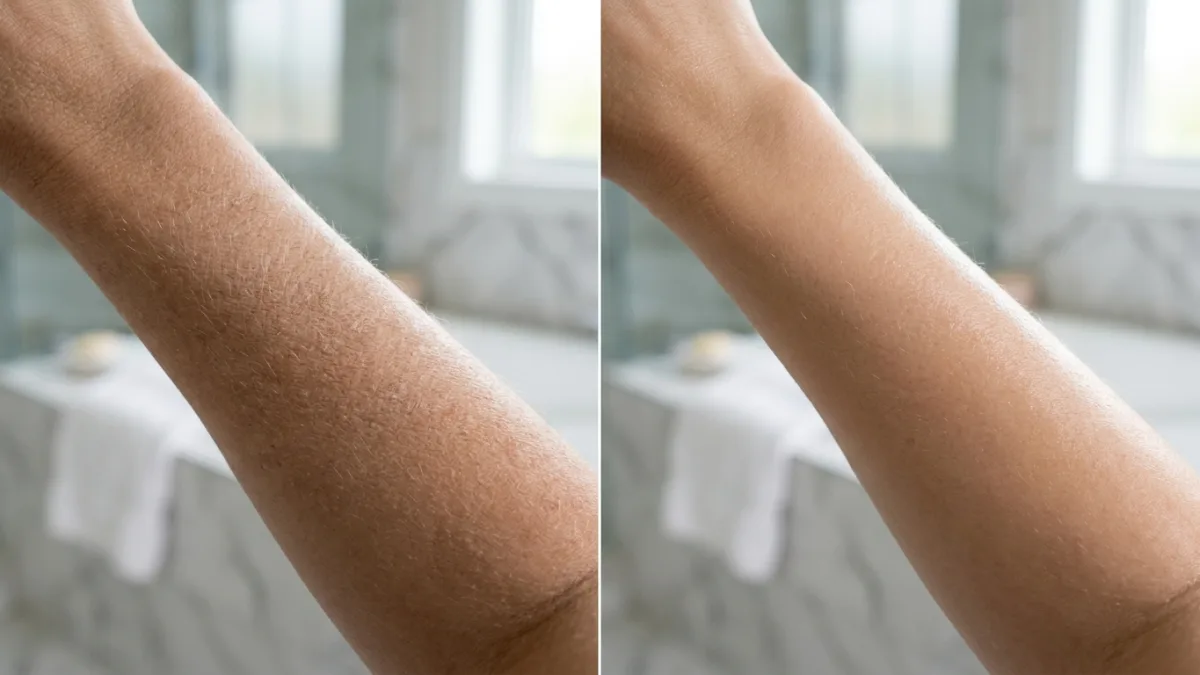
Smoother skin is the most obvious of all body scrub benefits. Rubbing away rough, flaky cells reveals fresher skin underneath. This happens because skin sheds cells on its own, but a scrub speeds up that process on the surface.
Over time, regular scrubbing keeps texture even and less prone to rough patches.
Better circulation and skin renewal
Massaging a scrub into skin gets blood moving near the surface. That extra flow can leave skin looking brighter right after a session. It also supports the skin’s own renewal work. Skin sheds dead cells from its outer layer through a steady natural cycle. In healthy skin, this shedding process takes about 15 to 25 days. (PMC (National Library of Medicine), 2024)
That renewal cycle runs whether or not you scrub, but exfoliation helps clear the way. Removing loose, dead cells from the surface can make skin feel smoother between natural shedding cycles. This is one of the quieter body scrub benefits people notice only after a few weeks of steady use.
Improved absorption of lotions and serums
Dead skin cells sit on top of the skin like a light barrier. Exfoliating away the outer layer changes how well lotions and serums soak in. This is why body scrub benefits often show up as better results from moisturizers used right after a scrub. Product tends to sink in rather than sit on the surface. (PubMed / NIH)
Prepping skin before hair removal
How Does Exfoliation Actually Work on Skin?
Exfoliation works by helping skin do what it already does naturally: shed dead cells from its outer layer. A scrub, brush, or chemical product speeds up that shedding. Understanding this process explains why body scrub benefits build up gradually rather than appearing overnight.
Physical vs. chemical exfoliation basics
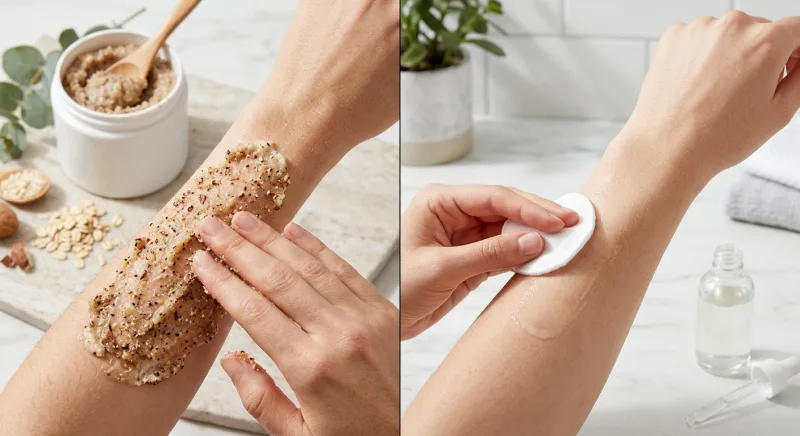
Physical exfoliation (using a textured product or tool, such as a scrub or brush, to manually rub away dead skin cells) works by friction. Chemical exfoliation uses mild acids to loosen the bonds between dead cells so they release on their own. Dermatology guidance notes that dry, sensitive, or acne-prone skin often does better with the gentler chemical route, while sturdier skin can handle physical scrubs. (American Academy of Dermatology (AAD))
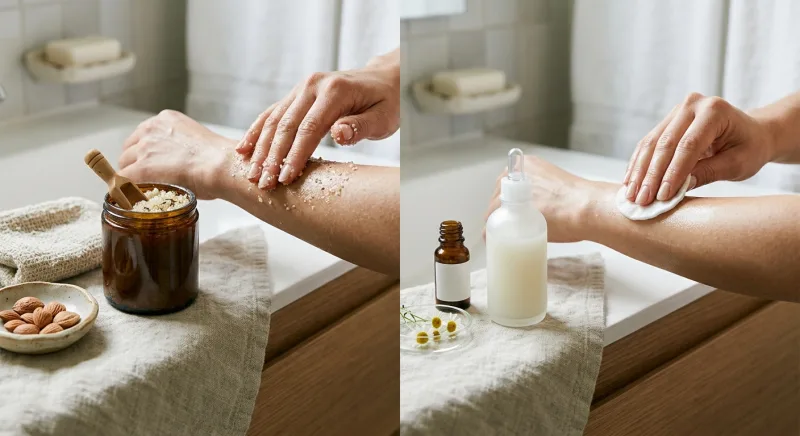
Common chemical exfoliants include alpha hydroxy acids (AHAs), like glycolic acid and lactic acid, which are found in many gentle body treatments. These acids can raise skin’s sensitivity to sunlight, so sunscreen matters more during and after use. Knowing this difference helps you pick which type delivers the body scrub benefits you actually want, without irritation. (U.S. Food and Drug Administration (FDA))
What happens to dead skin cells
Dead skin cells, called corneocytes, sit in the outermost skin layer before they shed. This shedding, called desquamation (the natural process where the outer layer of skin releases dead cells), happens on a steady cycle. Skin cells called keratinocytes constantly renew themselves as they move upward through the skin’s layers, which is part of why regular exfoliation supports overall skin turnover. (PMC (NIH)) (PMC (NIH)) (PMC (peer-reviewed dermatology research))
Some research puts full epidermal turnover, the complete cycle from new cell to shed cell, at around 45 days. Other studies estimate a range closer to 47 to 48 days. Either way, this shows exfoliation works with a slow biological clock, not against it. That’s why body scrub benefits build with consistent use, not a single session. (PubMed, 1977) (PubMed)
Does Body Scrub Help With Odor or Ingrown Hairs?
Yes, body scrub benefits include reducing buildup that holds onto odor and freeing hairs trapped under skin. Scrubbing clears sweat residue, oils, and dead skin that can trap bacteria.
It also lifts away the skin flakes that often block hair from growing out straight, which lowers the risk of ingrown hairs.
Odor and buildup removal
How scrubbing reduces ingrown hairs after shaving or IPL
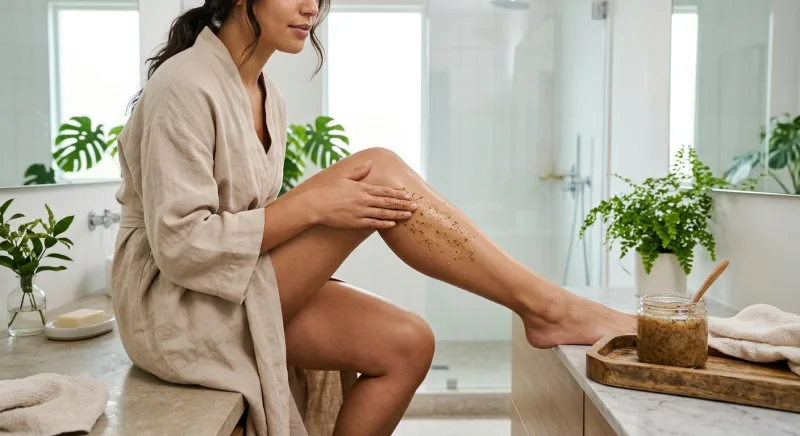
Ingrown hairs often form when dead skin blocks a hair from growing out normally. Regular exfoliation keeps that path clear. This matters most after shaving, epilating, or IPL sessions, when skin can be more reactive. Pairing a gentle scrub routine with these hair removal methods is one of the more useful body scrub benefits for anyone dealing with bumps or redness after grooming. (Wikipedia (Ingrown hair, citing WebMD))
Body scrub benefits: mechanical vs chemical exfoliation compared
Dermatologists note there are two main at-home routes, mechanical and chemical, and the right pick depends on your skin type. Dry, sensitive, or acne-prone skin often does better with gentler chemical options rather than gritty scrubs. (American Academy of Dermatology (AAD))
| Feature | Mechanical Scrub | Chemical Exfoliant |
| How it works | Physically buffs off dead cells with texture | Dissolves the bonds between dead cells with mild acid |
| Best for | Normal, oily, or thicker skin areas | Dry, sensitive, or acne-prone skin |
| Feel during use | Gritty, textured | Smooth, often gel or liquid |
| Risk of irritation | Higher if scrubbed too hard | Lower, but still possible with overuse |
| Sun sensitivity | Minimal | Can increase sun sensitivity, so sunscreen matters |
That sun point isn’t small. Acid-based exfoliants like glycolic acid and lactic acid can make skin more sensitive to sun, so protection is needed during and after use. (U.S. Food and Drug Administration (FDA))
For most people, a mixed approach works well. Use a mechanical scrub once or twice a week on tougher areas like elbows and heels. Save chemical exfoliants for the face or sensitive patches. This split lets you get body scrub benefits everywhere without overdoing it in one spot.
Body scrub benefits by skin type: what changes and what stays the same
Skin type changes how often you should scrub, and how gentle you need to be. But the core payoff, smoother texture and clearer pores, stays the same across most skin types. The table below breaks down what shifts.
| Skin Type | Recommended Frequency | Best Scrub Style | Main Body Scrub Benefits |
| Oily | 2-3 times weekly | Mechanical, slightly coarser grain | Clears excess oil buildup, reduces clogged pores |
| Dry | Once weekly | Chemical or oil-based scrub | Softer texture, better lotion absorption |
| Sensitive | Once every 7-10 days | Mild chemical exfoliant | Smoother skin without redness or stinging |
| Combination | 1-2 times weekly | Mix of both, targeted by area | Balanced texture across different zones |
| Acne-prone | 1-2 times weekly, gentle pressure | Chemical exfoliant, avoid harsh grains | Fewer clogged pores, less irritation |
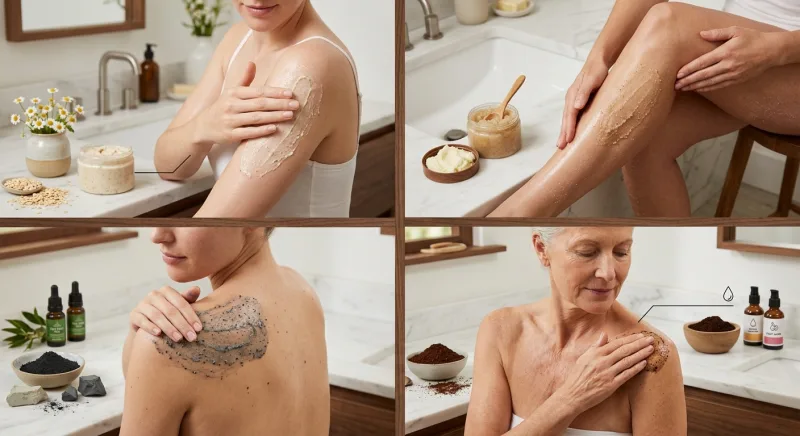
The pattern here matters more than the exact numbers. Skin that’s already reactive needs a lighter touch and more time between sessions. Skin that’s thicker or oilier can handle more frequent scrubbing. Either way, the goal is the same: support your skin’s own renewal process without pushing it too hard.
This matters because over-scrubbing is a real risk. Over-exfoliating with at-home products is a known factor behind the rise in sensitive skin now affecting a large share of people. Getting the frequency right is just as important as picking the right scrub type. (PubMed)
Body scrub benefits vs skipping exfoliation entirely
It helps to see the difference side by side. Some people skip scrubbing altogether, relying only on soap and water. Others build it into their weekly routine. The gap between these two habits shows up clearly over time.
| Habit | Skin Texture | Product Absorption | Ingrown Hair Risk |
| No exfoliation | Rougher, duller over time | Lotions sit on top, absorb slower | Higher, especially after shaving |
| Regular scrubbing | Smoother, more even | Better absorption into skin | Lower, path stays clear |
The absorption point is backed by research. Removing built-up dead skin changes how well lotions and serums soak in. That’s one of the clearest, most measurable body scrub benefits, since it affects every other product you put on afterward. (PubMed / NIH)
Skin also renews itself on a set schedule whether you scrub or not. Dead cells shed from the outer layer over about 15 to 25 days in healthy skin. Scrubbing doesn’t replace this process. It just clears the way so it can happen more smoothly, which is really the heart of most body scrub benefits people notice day to day. (PMC (peer-reviewed dermatology research))
Read the complete guide: How to Build a Skincare Routine That Actually Works in 2026
Frequently Asked Questions
What are the main body scrub benefits for skin?
The main body scrub benefits are smoother skin, better product absorption, and support for your skin’s own renewal cycle. Scrubbing lifts away dead cells sitting on the surface. This helps lotions soak in better and can leave skin feeling softer within a single use.
How often should I use a body scrub to see benefits?
Most people see body scrub benefits with two to three sessions a week. Skin’s outer layer sheds over several weeks on its own, so daily scrubbing isn’t needed. Spacing sessions out gives skin time to recover and lowers the risk of irritation. (PubMed (U.S. National Library of Medicine))
Can over-scrubbing cancel out body scrub benefits?
Yes. Scrubbing too often is a known cause of sensitive, irritated skin for many people. Instead of smoother skin, you get redness, tightness, or small tears. Cutting back to a few sessions a week usually restores the benefits without the downside. (PubMed)
Are chemical exfoliants better than physical scrubs?
Neither is universally better. Dry, sensitive, or acne-prone skin often does better with gentler chemical exfoliation, while sturdier skin types can handle physical scrubs well. Choosing the right method for your skin type is what actually delivers the benefits. (American Academy of Dermatology (AAD))
Do body scrub benefits include better sun protection?

Not directly, and with chemical exfoliants it can work the other way. Ingredients like glycolic and lactic acid can make skin more sensitive to sun. Sunscreen matters more, not less, once you start scrubbing regularly. (U.S. Food and Drug Administration (FDA))
How long until I notice results from body scrub benefits?
Some people notice softer skin right after one session. Deeper, more even results tied to full skin renewal take longer, since a complete turnover cycle can run 45 days or more. Stick with a steady routine rather than expecting instant, lasting change overnight. (PubMed, 1977)
Key statistics
- In healthy skin, the natural exfoliation process where dead skin cells are shed from the stratum corneum takes about 15 to 25 days. (PMC (National Library of Medicine), 2024)
- A total epidermal turnover time of 45 days has been derived for the outer skin layer, illustrating the natural cell renewal cycle that exfoliation and body scrubbing help support. (PubMed, 1977)
Expert insights
It’s the dermatologist’s equivalent to the basic black dress.
Mary P. Lupo, dermatologist, Clinical Professor of Dermatology at Tulane University School of Medicine
I am not a fan of loofahs since they live in the moist environment of your bath or shower which is just a breeding ground for bacteria
Brooke Jeffy, board-certified dermatologist
References
- There are two main at-home exfoliation methods—mechanical and chemical—and the right choice depends on skin type, with dry, sensitive, or acne-prone skin often better suited to gentler chemical exfoliation. — American Academy of Dermatology (AAD) (AAD is the leading professional association of board-certified dermatologists and publishes consumer skin-care guidance vetted by dermatologists.)
- Lack of natural exfoliation in the skin is a contributing cause of ingrown hairs, which most commonly appear where skin is shaved or waxed. — Wikipedia (Ingrown hair, citing WebMD) (Summarizes clinically sourced information on the dermatological mechanism behind ingrown hairs; used here as context pending a stronger primary citation.)
- In healthy skin, the natural turnover process in which dead corneocytes are shed from the stratum corneum takes about 15 to 25 days. — PMC (peer-reviewed dermatology research) (Peer-reviewed article hosted on PubMed Central (NIH), describing stratum corneum turnover physiology with citations to primary dermatology literature.)
- Chemical exfoliants like AHAs (glycolic acid, lactic acid) can increase skin’s sensitivity to the sun, so sun protection is needed during and after use. — U.S. Food and Drug Administration (FDA) (Federal regulatory agency guidance for industry on cosmetic labeling and safety)
- The epidermis has a measurable turnover time in the range of roughly 47-48 days, reflecting how skin cells rise through the layers and are eventually shed. — PubMed (Peer-reviewed dermatology research indexed on PubMed (NIH/NLM))
- Over-exfoliation from at-home products is a contributing factor behind the rise in sensitive skin now affecting a large share of the population. — PubMed (Peer-reviewed clinical study on exfoliation and sensitive skin published via NIH/NLM’s PubMed database)
- The epidermis undergoes a regular turnover process, with a full renewal cycle occurring over several weeks as new keratinocytes migrate from the basal layer to the skin surface. — PubMed (U.S. National Library of Medicine) (Peer-reviewed study indexed by the National Library of Medicine, a division of the NIH, establishing the foundational epidermal turnover time model.)
- Scientific evidence for dry brushing’s systemic effects (like lymphatic drainage) remains sparse, though it does produce a real local mechanical exfoliation and transient circulation effect on the skin. — News-Medical.net (Summarizes current peer-reviewed literature on dry brushing’s mechanism and evidence limitations, citing dermatology sources.)
- Exfoliating away the stratum corneum affects how well topical products like lotions and serums absorb into the skin. — PubMed / NIH (Peer-reviewed study indexed by the U.S. National Library of Medicine (NIH) on stratum corneum exfoliation and percutaneous penetration)
- Exfoliation works by helping the body’s natural desquamation process shed dead skin cells (corneocytes) from the outer skin layer. — PMC (NIH) (Peer-reviewed article hosted on PubMed Central, a U.S. National Institutes of Health repository, detailing the keratinization and desquamation process)
