
Hair care
Hair Gloss Treatment 101: What It Is, How It Works, and How to Use It at Home
Last updated: November 3, 2026
A hair gloss treatment is a lightweight formula you apply to hair to boost shine, smooth the outer layer of each strand, and sometimes refresh faded color.
It coats the hair shaft rather than changing it from inside, so a hair gloss treatment fades gradually over several weeks instead of growing out like permanent dye.
If your hair looks dull, frizzy, or a little brassy, a hair gloss treatment is often the fastest fix. It works on colored and natural hair alike.
This guide breaks down what a hair gloss treatment actually does, how it compares to a glaze or demi-permanent color, and how to fit one into a full at-home beauty routine.
What Is a Hair Gloss Treatment?
A hair gloss treatment is a temporary formula that smooths the hair’s outer layer and adds shine, with or without a hint of color. It sits on the surface of each strand rather than soaking deep inside.
That’s why a hair gloss treatment washes out over time instead of needing to grow out.
Shine comes down to how light bounces off your hair. Healthy hair has a smooth outer layer called the cuticle (the protective, overlapping scale layer that covers each strand and reflects light when it lies flat). When the cuticle is rough or lifted, light scatters and hair looks dull. (NIH/PMC (Systems Approach to Human Hair Fibers))
A hair gloss treatment smooths that scale layer down, so light reflects evenly instead of scattering. That reflection is what gives hair its glossy look after treatment. (Journal of Cosmetic Dermatology (via PMC/NIH))
In healthy, untreated hair, this cuticle layer can hold up for years before everyday wear breaks it down naturally, which is part of why undamaged hair tends to look shinier on its own. Coloring, perming, or straightening speeds up that wear, which is one reason chemically treated hair often needs extra help to look glossy. (PMC (NIH), 2023) (American Academy of Dermatology (AAD))
Not every hair gloss treatment is the same. Some are clear and add shine only. Others are tinted and gently adjust tone. Either way, a hair gloss treatment is considered a cosmetic step, not a chemical restructuring service.
How Gloss Differs From Hair Glaze
Hair gloss and hair glaze are often used to mean the same thing, and in most salons, they are. Both describe a coating treatment that adds shine and smooths the cuticle without changing your natural color much.
Some stylists use “glaze” to mean a slightly heavier, longer-lasting version of gloss, but there’s no strict industry rule that separates them.
The safest way to think about it: a hair gloss treatment and a glaze both work by coating the hair shaft. Ask your stylist which term their salon uses, since the products behind each name can vary.
How Gloss Differs From Demi-Permanent Color
Demi-permanent color penetrates the hair shaft slightly and lasts through many more washes than a typical hair gloss treatment. Hair coloring products generally fall into permanent, semi-permanent, and temporary categories, which differ mainly in how deep the dye goes into the strand. (American Cancer Society)
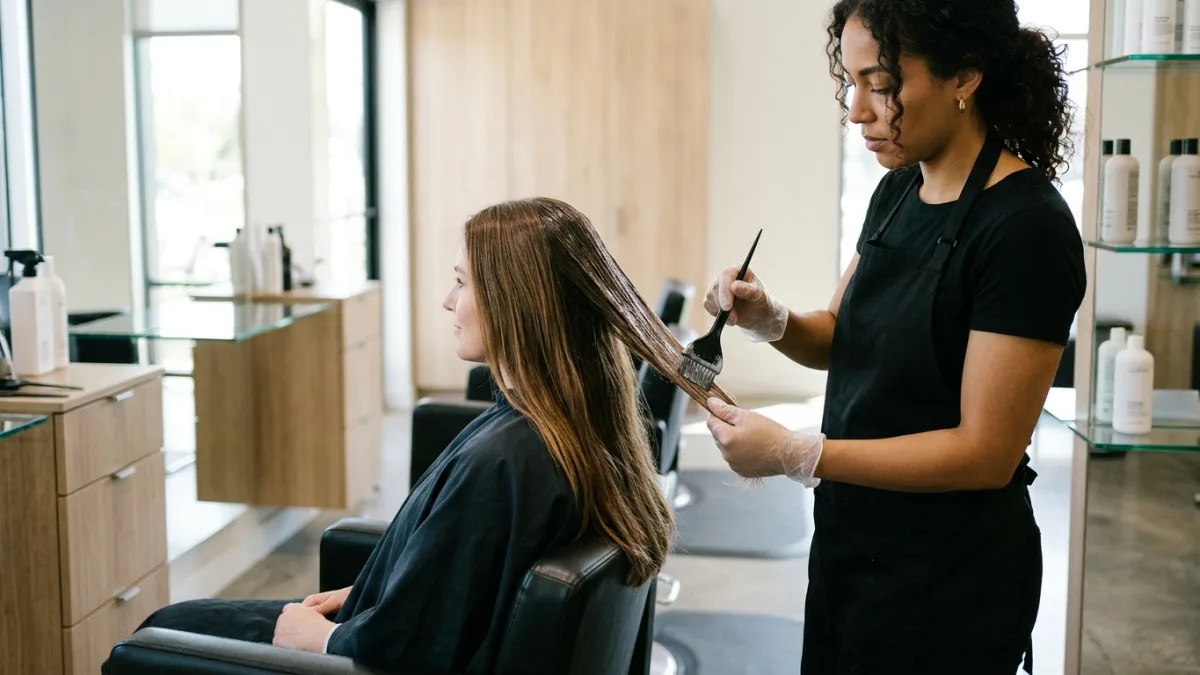
A hair gloss treatment sits closer to the temporary end of that scale. It’s meant for shine and light tone correction, not for a full color change. Demi-permanent color is the better choice if you want to cover more gray or shift your shade noticeably.
Color additives in both gloss and dye products sold in the United States fall under rules set by the Food and Drug Administration (the federal agency that regulates cosmetic color safety and labeling under the Federal Food, Drug, and Cosmetic Act). (U.S. Food and Drug Administration (FDA))
| Treatment | Duration | Application | Shine Effect |
|---|---|---|---|
| Hair gloss treatment | Several weeks, fades with washing | Applied at home or in salon, short processing time | High — smooths cuticle, adds surface shine |
| Hair glaze | Similar to gloss, sometimes slightly longer | Usually salon-applied | High — nearly identical mechanism to gloss |
| Demi-permanent color | Longer than gloss, several weeks to a couple months | Mixed with a low-volume developer, longer processing time | Moderate to high, plus visible color change |
How Does Hair Gloss Work?
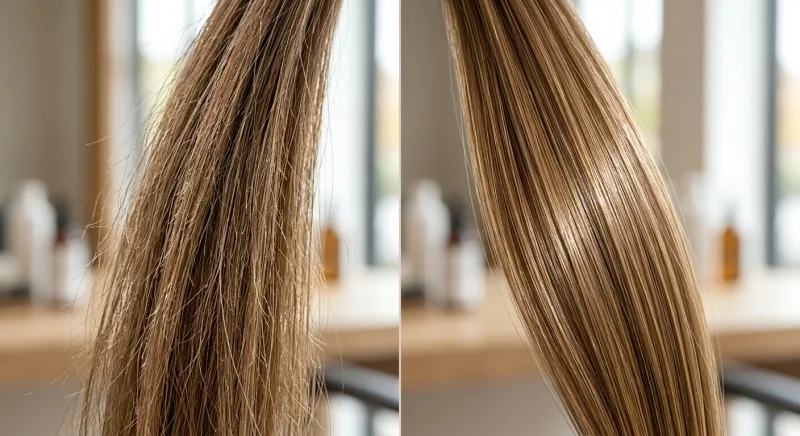
A hair gloss treatment works by coating and smoothing the cuticle, the outer layer of hair that controls how light reflects off the surface. Once that layer lies flat, hair looks shinier and feels softer. Some gloss formulas also deposit a small amount of pigment while they smooth.
Hair conditioners and similar cuticle-coating treatments are known to add softness, gloss, and smoothness while cutting down on frizz, and this is the same basic idea behind most gloss formulas. The difference is that a hair gloss treatment is built to intensify that effect and hold it for weeks rather than a single wash. (PMC (National Institutes of Health))
Shine itself is mostly a function of a smooth, intact cuticle allowing light to bounce off in a clean, direct way, while damage from sun, chemicals, or heat roughens that surface and dulls the look of hair. A hair gloss treatment temporarily reverses that dulling effect by resurfacing the strand. (PMC (National Library of Medicine)) (NIH/PMC (Systems Approach to Human Hair Fibers))
What’s Inside a Typical Formula
Most gloss formulas combine conditioning agents with a mild acid base and, in tinted versions, a small amount of color additive. The conditioning agents smooth the cuticle. The acid base helps the cuticle lie flatter after rinsing. None of this restructures the hair the way a chemical straightener does.
For comparison, chemical straightening treatments cause measurable protein loss in hair — about 2.5 micrograms per gram for most straighteners and 3.5 for one particular type, versus only about 1.12 in untreated hair. A hair gloss treatment does not work this way; it coats rather than chemically restructures, which is why it’s considered a gentler step. (PMC (NIH), 2023)
Clear vs. Tinted Gloss
Clear hair gloss adds shine only, with no color change, which makes it safe for any hair color or type. Tinted hair gloss adds a slight color deposit on top of shine, which can warm up, cool down, or refresh your existing shade.
Choose clear gloss if your color is already where you want it and you just want shine. Choose tinted gloss if your color has faded, turned brassy, or you want subtle tone correction between salon color appointments.
What Are the Benefits of Using Hair Gloss?
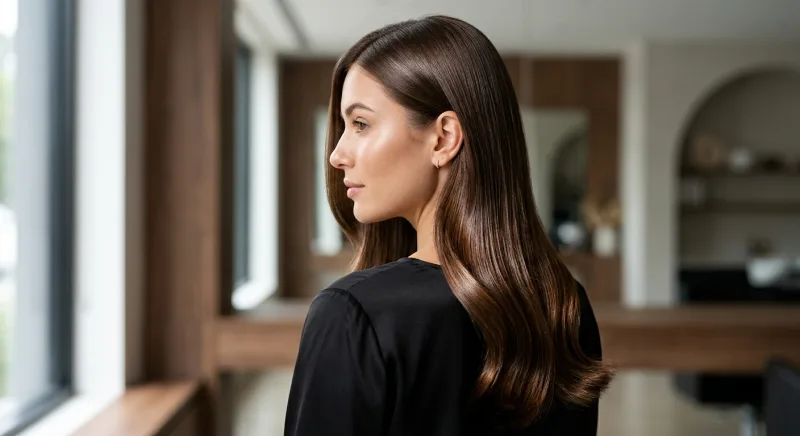
The main benefits of a hair gloss treatment are shine, smoother texture, and refreshed color, all from one quick step. It’s a low-commitment way to make hair look healthier without a trip to the salon or a permanent color change.
Shine and Light Reflection
Shine is the most noticeable result of a hair gloss treatment. Hair shine comes from how light reflects off the hair shaft, and that reflection depends on an intact, smooth cuticle. A hair gloss treatment flattens the cuticle so more light bounces off evenly. (Journal of Cosmetic Dermatology (via PMC/NIH))
Smoother, Less Frizzy Strands
A smoother cuticle also means less frizz. When the outer layer of hair lies flat, strands catch less on each other and hold moisture better. This is one reason a hair gloss treatment often leaves hair feeling softer to the touch, not just shinier to the eye.
Color Refreshing Between Salon Visits
Tinted gloss can revive faded color without a full re-dye. It’s a popular way to stretch time between salon visits, especially for anyone managing brassiness or dullness in colored hair. A hair gloss treatment won’t replace a color service, but it buys time between them.
How to Apply Hair Gloss at Home: A Step-by-Step Routine
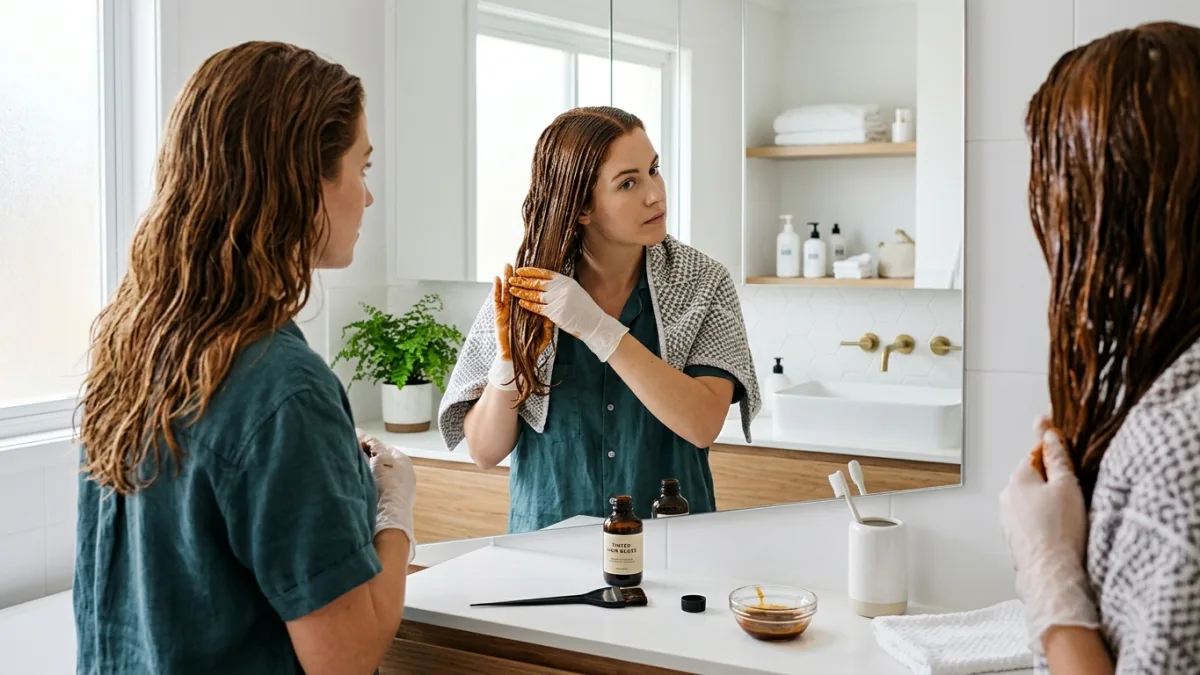
Applying a hair gloss treatment at home takes about the same effort as a deep conditioner. The key steps are prepping clean hair, applying evenly, timing the rinse, and following up with the right aftercare.
Prepping Your Hair
Start with clean, towel-dried hair. A hair gloss treatment needs a clean surface to coat evenly, so skip heavy conditioners right before applying it. Detangle first, since knots can block even coverage.
Application Technique
Section your hair into four parts before you start. Apply the hair gloss treatment from mid-length to ends first, since roots usually need less product. Work it through with a brush or your fingers for even coverage.
Rinse Timing and Aftercare
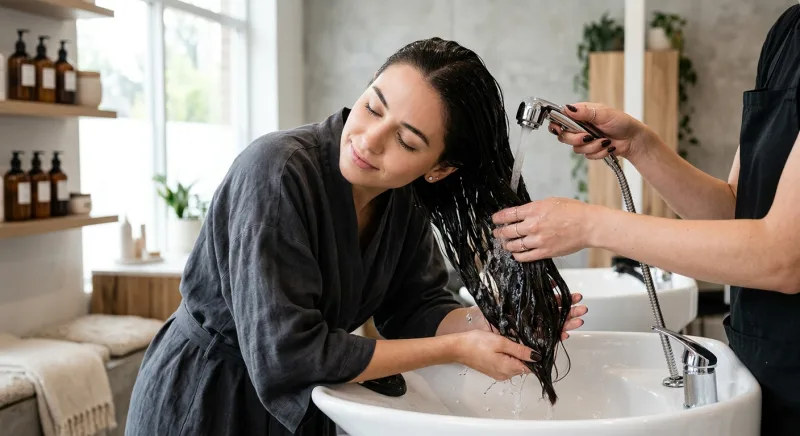
Follow the product’s stated processing time closely, since leaving a hair gloss treatment on longer than directed won’t add extra shine and may cause uneven results. Rinse with cool water to help seal the cuticle, then follow with a light conditioner if the formula calls for one. (Journal of Cosmetic Dermatology (via PMC/NIH))
Hair Gloss Treatment vs. Other Hair Color Services
It helps to see how a hair gloss treatment stacks up against other color services. Each option changes the hair shaft in a different way, and that changes how long it lasts and how much upkeep it needs. The table below breaks down the basics.
| Service | How It Works | Typical Lasting Power | Upkeep Needed |
|---|---|---|---|
| Hair Gloss Treatment | Coats and smooths the cuticle, adds mild or no lift | 2 to 6 weeks | Low; touch up as shine fades |
| Semi-Permanent Color | Sits in the outer layers of the hair shaft | 4 to 6 weeks | Low to medium |
| Permanent Color | Penetrates deep into the hair shaft to change color | Until hair grows out or is cut | Higher; root touch-ups needed |
| Bleach/Lightening | Strips pigment from deep within the hair shaft | Permanent until cut | High; ongoing care required |
Coloring, perming, or straightening hair changes the hair shaft over time, and that’s useful context here. A hair gloss treatment sits closer to the surface, which is part of why it fades faster but also why it’s gentler. Permanent color and bleach reach deeper, so they last longer but ask more of the hair’s structure. (American Academy of Dermatology (AAD))
Hair coloring products generally fall into permanent, semi-permanent, and temporary groups, and the difference comes down to how deep the dye goes into the hair shaft. A gloss treatment behaves a lot like a semi-permanent or temporary color, since it coats rather than penetrates. That’s why it’s often the safer starting point if you’re unsure how your hair will react to a bigger color change. (American Cancer Society)
Hair Gloss Treatment Options: Clear vs. Tinted
Not every hair gloss treatment does the same job. Some are clear and only add shine, while others carry a tint that can also correct tone or refresh faded color. Picking the right type depends on what you want the treatment to fix.
| Type | Main Purpose | Best For | Color Change? |
|---|---|---|---|
| Clear Gloss | Adds shine and smooths the cuticle | Anyone wanting extra shine with no color shift | None |
| Tinted Gloss | Adds shine plus a light layer of color | Refreshing faded color or toning brassiness | Subtle, temporary |
| Color-Depositing Gloss | Adds noticeable color plus shine | Covering dullness or gray, boosting vibrancy | Moderate, temporary |
Clear versions work by smoothing the cuticle so light reflects more evenly off the hair shaft, which is what gives hair that glassy look. They’re a good match if your color is fine but your shine has faded from heat styling or sun exposure. (Journal of Cosmetic Dermatology (via PMC/NIH))
Tinted and color-depositing versions do the same smoothing work, but they also lay down pigment. This makes them useful for gray coverage, since gray hair has no pigment of its own and there’s currently no medical fix that restores natural color once melanocytes stop producing it. A tinted hair gloss treatment won’t replace permanent color, but it can soften the look of gray between color appointments. (American Academy of Dermatology (AAD))
Choosing the Right Hair Gloss Treatment for Your Goals
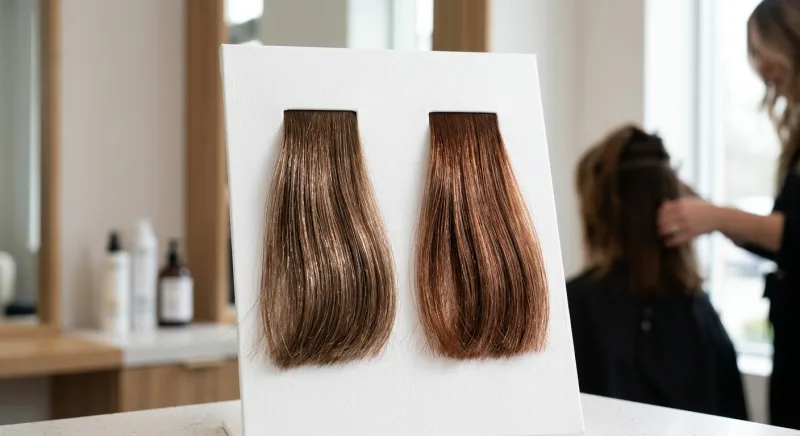
Start by asking what you actually want to fix. If your color is fine and you just want shine, go clear. If your color looks dull, brassy, or faded, a tinted option does more work in one step.
If gray is your main concern, a color-depositing formula can help it blend in.
It also helps to check the label for how the color additives are made. In the United States, color additives used in hair color and gloss or tint products are regulated by the FDA under federal cosmetic law, with coal-tar hair dyes treated as their own category with separate rules. Reading the label tells you what kind of product you’re actually using. (U.S. Food and Drug Administration (FDA))
Coal-tar-based dyes, including permanent, semi-permanent, and temporary versions, fall under specific labeling rules set by the FDA. This matters most for tinted and color-depositing glosses, since they carry more dye than a clear formula. If you have sensitive skin or a history of reactions, checking the ingredient list before you buy is worth the extra minute. (U.S. Food and Drug Administration (FDA))
Whichever type you pick, the shine payoff comes from the same place. A smooth, intact cuticle reflects light evenly, and that’s what makes hair look glossy rather than dull. Damage from heat, sun, or chemical processing roughens that surface, which is exactly what a hair gloss treatment is designed to fix, at least for a few weeks at a time. (NIH/PMC (Systems Approach to Human Hair Fibers))
Read the complete guide: A Hair Care Guide That Finally Makes Sense of Your Routine
FAQ
How long does a hair gloss treatment last?
Most gloss results last about four to six weeks. Since a hair gloss treatment coats or lightly stains the cuticle rather than changing hair from the inside, it fades with every wash. Using a gentle, sulfate-free shampoo helps stretch the shine and color a bit longer between sessions.
Can I do a hair gloss treatment at home?
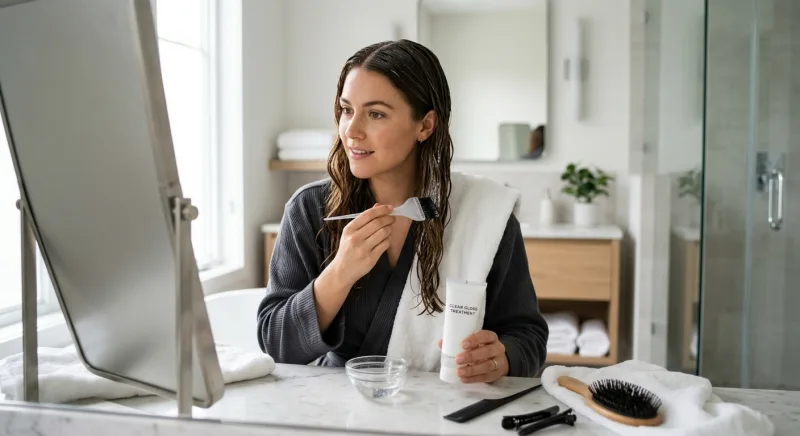
Yes, plenty of drugstore and salon-brand kits are made for home use. A hair gloss treatment is easier to apply evenly than permanent dye, since it does not require lifting your natural color. Still, a first-time user with damaged or previously colored hair may want a stylist’s help.
Does a hair gloss treatment cover gray hair?
A tinted gloss can soften the look of gray by adding a sheer layer of color, but it will not fully cover it like permanent dye does. Since gray hair lacks pigment, many people combine a color-depositing gloss with a base color for fuller, longer-lasting coverage.
Is a hair gloss treatment bad for your hair?
No, a hair gloss treatment is actually gentler than most chemical color or straightening services. It works on the surface of the cuticle instead of breaking it open, so it does not carry the same protein loss risk linked to stronger chemical treatments. (PMC (National Library of Medicine))
How is a hair gloss treatment different from a regular conditioner?
Conditioner smooths and softens, but a hair gloss treatment goes a step further by sealing the cuticle more fully and sometimes adding a sheer tint. This gives hair a mirror-like shine that regular conditioner alone usually can’t match, along with a temporary boost in color depth.
Can color-treated hair get a hair gloss treatment?
Yes, in fact colored hair often benefits the most. A hair gloss treatment can refresh faded color, even out tone, and smooth the cuticle roughened by earlier dyeing. Choose a shade close to your current color to avoid unwanted tint shifts.
How often should you repeat a hair gloss treatment?
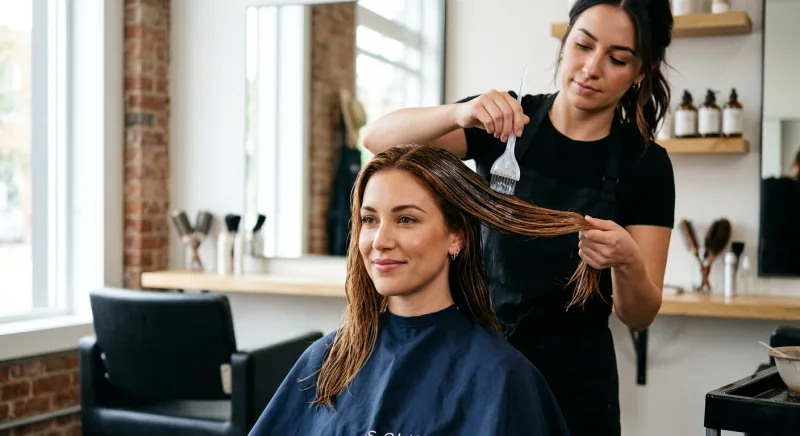
Every four to six weeks works well for most hair types, matching how long the shine tends to last. Fine or fragile hair may only need it monthly, while thicker or more damaged hair can handle a gloss treatment a bit more often without issues.
Does a hair gloss treatment work on all hair colors?
Clear gloss works on any hair color since it simply smooths the cuticle for shine. Tinted versions work best when matched to your existing shade, since a hair gloss treatment adds a sheer layer of color that blends with, rather than replaces, what’s already there.
Key statistics
- Research on hair care physicochemistry notes that in healthy, untreated hair, the protective cuticle layer targeted by many hair treatments can last up to 6 years before natural weathering breaks it down. (PMC (NIH), 2023)
- A comparative study of straightening hair treatments measured protein loss of about 2.5 μg/g for most chemical straighteners and 3.5 μg/g for glyoxylic acid, compared to only 1.12 μg/g in untreated (virgin) hair. (PMC (NIH), 2023)
Expert insights
It’s a demi-permanent treatment that enhances shine, revives color or simply adds vibrancy without altering your natural base
Jessica Ruby, hairstylist and owner of The Flamingo Lounge in Los Angeles
Beyond adding radiance, glosses seal the hair cuticle, reducing frizz and making hair easier to manage
Jennifer Korab, celebrity hairstylist
References
- Coloring, perming, or relaxing hair can damage the hair shaft over time, which is relevant context when explaining how gloss treatments work with the cuticle. — American Academy of Dermatology (AAD) (Professional dermatology association providing dermatologist-reviewed hair care guidance)
- Hair shine refers to the light reflection from the hair shafts and correlates with an intact cuticle, supporting the article’s explanation of how gloss creates a shiny appearance by smoothing the cuticle. — Journal of Cosmetic Dermatology (via PMC/NIH) (Peer-reviewed clinical study hosted on PubMed Central (NIH))
- Hair conditioners and similar cuticle-coating cosmetic treatments impart softness, gloss, and luster to hair while reducing frizz, which underlies why gloss treatments leave hair smoother and shinier. — PMC (National Institutes of Health) (Peer-reviewed review article on hair care physicochemistry hosted on NIH’s PubMed Central)
- Hair shine (gloss) is primarily a function of a smooth, intact cuticle facilitating specular reflection of light, while damage from UV, chemical, or physical stress disrupts this and dulls hair — explaining why gloss treatments work by smoothing the cuticle surface. — PMC (National Library of Medicine) (Peer-reviewed research article hosted on PubMed Central (NIH/NLM), a federal biomedical literature database)
- Gray hair results from melanocytes losing pigment-producing function over time, and there are currently no effective medical treatments to restore natural color to gray hair, so many people choose to cover gray hair with dye or color-depositing treatments instead. — American Academy of Dermatology (AAD) (Official patient-education resource from the American Academy of Dermatology, the leading US professional body for dermatologists)
- Color additives used in hair color and gloss/tint products sold in the US are regulated by the FDA under the Federal Food, Drug, and Cosmetic Act, with special rules distinguishing coal-tar hair dyes from other cosmetic color additives. — U.S. Food and Drug Administration (FDA) (Official U.S. federal regulatory agency fact sheet on cosmetic color additive law)
- Hair coloring products are generally classified into permanent, semi-permanent, and temporary types, which differ in how deeply the dye penetrates the hair shaft. — American Cancer Society (National health nonprofit citing established hair dye chemistry classifications used to explain how gloss/tinted color products differ from semi- and demi-permanent color.)
- The FDA classifies coal-tar-based hair dyes—including permanent, semi-permanent, and temporary formulas—under a distinct regulatory category subject to specific labeling requirements. — U.S. Food and Drug Administration (FDA) (Federal regulatory agency overseeing cosmetic color additives and hair dye labeling requirements.)
- Hair’s shine or luster is largely determined by the smoothness and condition of the cuticle, the outermost layer of the hair shaft, which affects how light is reflected off the surface. — NIH/PMC (Systems Approach to Human Hair Fibers) (Peer-reviewed study on the physical and structural determinants of hair luster published via PMC/NIH.)
