
Skin concerns
Dry Flaky Skin: Causes, Fixes, and How to Stop It Coming Back
Last updated: November 5, 2026
Dry flaky skin happens when the skin’s outer barrier loses moisture faster than it can hold on to it, causing dead skin cells to shed visibly. Common triggers include weather, hot showers, harsh soaps, aging, certain skin conditions, and hair removal methods that strip natural oils without proper aftercare.
If you’ve ever looked down and spotted white flakes on your arms or legs, you know how annoying dry flaky skin can be. It’s not just a look. It’s your skin telling you something is off with its outer layer.
This guide walks through what causes dry flaky skin, how to treat it, and how daily habits like shaving or using hair removal tools might be making it worse. We’ll also cover simple ways to build flaking prevention into your routine.
What Is Dry Flaky Skin and Why Does It Happen?
Quick Answer: The Core Cause of Flaking
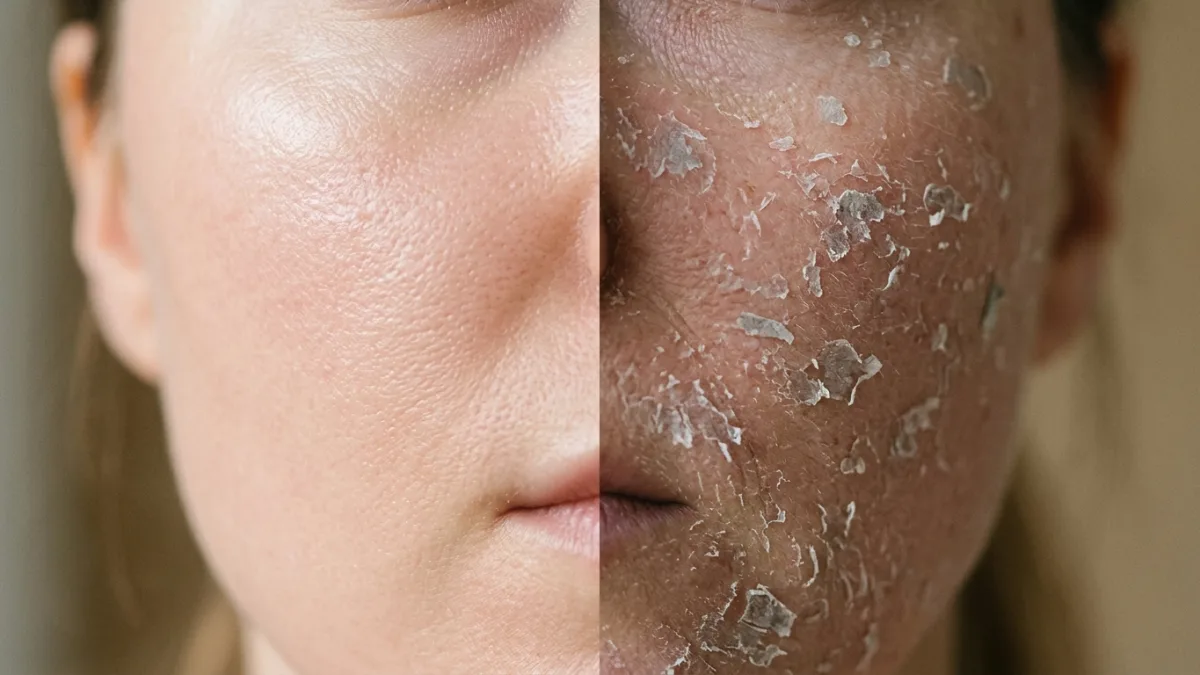
At its core, dry flaky skin comes from a weak or damaged skin barrier. Once that barrier is compromised, moisture leaves faster, skin cells don’t shed evenly, and you end up with rough, scaly patches instead of smooth skin.
Many things can weaken this barrier, from cold weather to harsh soap. Hair removal methods and everyday habits can add to the problem too. Whatever the trigger, the result is the same: dry flaky skin that needs care, not just cover-up.
Hair removal can pull moisture and natural oils from the skin’s surface. Waxing, shaving, and other methods often leave skin more vulnerable afterward. Choosing gentler tools matters, and pairing removal with proper aftercare helps skin recover instead of drying out further.
Dry, flaky skin isn’t rare or limited to any one group. It affects adults everywhere, regardless of age, climate, or skin type. Recognizing how widespread this concern is helps explain why the right routine and tools matter so much.
Dry Skin vs. Flaky Skin: What’s the Difference?
Dry skin feels tight, rough, or itchy but doesn’t always shed visibly. Flaky skin is a step further. It’s what happens when dryness gets bad enough that dead skin cells clump and peel off in small bits or flakes.
Think of dry skin as the early warning sign. Dry flaky skin is what shows up when that warning gets ignored for too long. Both point to the same root issue: a barrier that needs support.
What Causes Dry, Flaky Skin?
Dry flaky skin causes range from things you can’t control, like weather, to daily habits you can change today. Knowing which one applies to you makes treatment much easier.
Environmental & Weather Triggers
Cold air and low humidity pull moisture straight out of your skin. Indoor heating in winter makes this worse by drying out the air around you. Wind and sun exposure add to the damage, leaving skin rough and prone to flaking.
Hot Showers, Harsh Soaps, and Over-Cleansing
Hot water feels nice but it strips natural oils from your skin fast. Harsh soaps and frequent washing add to the problem, wearing down the skin barrier bit by bit. This is one of the most common yet fixable causes of dry flaky skin.
Hot showers and harsh soaps can strip the skin’s natural oils, leaving it feeling tight and dry. Over time, this can weaken your skin’s protective barrier, making flaking more likely. Choosing lukewarm water and gentle cleansers helps keep your skin balanced and comfortable.
Skin Conditions Linked to Flaking (Eczema, Psoriasis, Dermatitis)
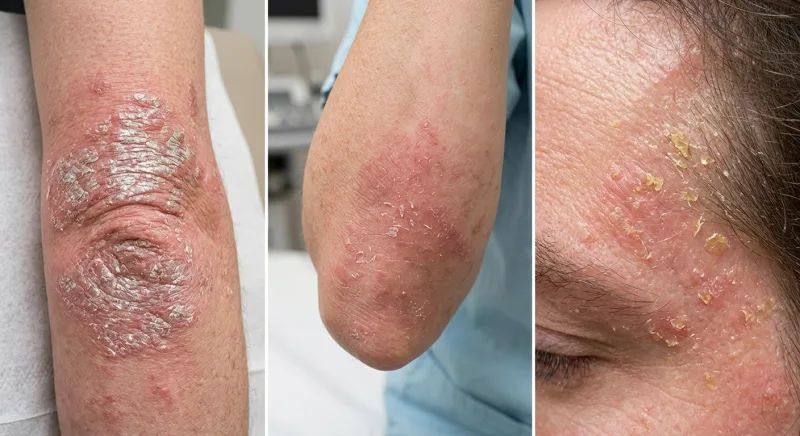
These conditions need proper diagnosis. If flaking sticks around despite good care, it’s worth asking a dermatologist whether one of these is behind it, as the Cleveland Clinic and the American Academy of Dermatology both note in their skin care guidance.
Flaking happens when dead skin cells build up faster than they shed naturally, often after irritation or dryness. Supporting your skin’s barrier with the right aftercare helps it recover and reduces visible flaking. Consistent care matters more than any single product used once.
Aging and Skin Barrier Changes
As skin ages, it naturally makes less oil and fewer of the fats that hold moisture in, called ceramides. This makes older skin more likely to develop dry flaky skin, especially in colder months or dry climates.
Underlying Habits That Make It Worse — Including Grooming and Hair Removal
Daily habits matter more than most people realize. Skipping moisturizer, over-exfoliating, or using the wrong products can all feed into dry flaky skin. Grooming habits count too.
Shaving, waxing, and other hair removal methods physically remove the top layer of skin along with hair. Done often, without the right prep or aftercare, this can wear down the skin barrier and leave skin more prone to flaking.
Hair removal methods like shaving, waxing, and epilation can leave skin feeling dry and prone to flaking as it heals. This happens because the top layer of skin is disturbed during the process. Following up with proper aftercare helps skin stay smooth and comfortable.
Shaving, waxing, and epilating all disturb the skin’s surface, which can leave it prone to dryness and flaking afterward. This is a common side effect of hair removal, regardless of method. Proper aftercare makes a noticeable difference in how smooth and comfortable skin feels afterward.
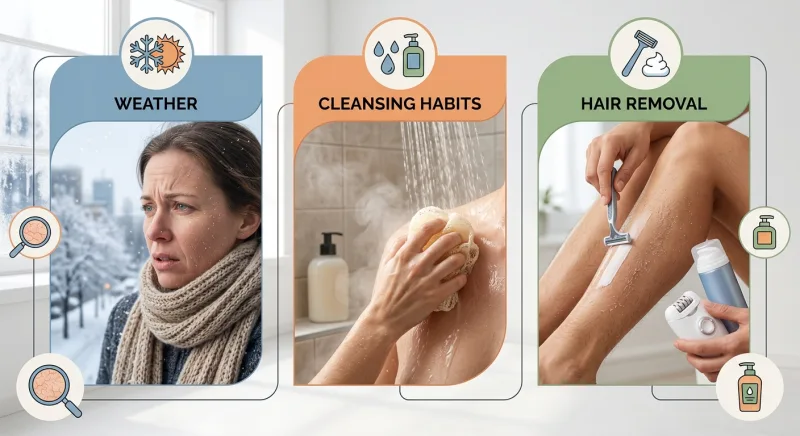
| Trigger Category | Typical Example | How It Contributes to Flaking |
|---|---|---|
| Weather | Cold air, low humidity, wind | Pulls moisture out of skin faster than it can be replaced |
| Cleansing habits | Hot showers, harsh soap, frequent washing | Strips natural oils and weakens the skin barrier |
| Skin conditions | Eczema, psoriasis, dermatitis | Disrupts normal skin cell turnover and moisture retention |
| Aging | Reduced oil and ceramide production | Leaves skin less able to hold onto moisture over time |
| Hair removal | Shaving, waxing, epilating without aftercare | Removes top skin layer and can irritate an already weak barrier |
How Do You Know If Your Flaky Skin Needs Medical Attention?
Most cases of dry flaky skin respond well to home care and don’t need a doctor’s visit. But some signs suggest it’s time to get checked out by a professional.
Signs You Can Manage at Home
Mild flaking, occasional tightness, and rough patches that improve with moisturizer usually don’t need medical care. If your dry flaky skin gets better within a week or two of consistent moisturizing and gentler habits, you’re likely on the right track.
Red Flags That Warrant a Dermatologist Visit

See a dermatologist if flaking comes with cracking, bleeding, oozing, or intense itching that disrupts sleep. Persistent dry flaky skin that doesn’t improve after weeks of consistent care also deserves a professional look rather than continued at-home treatment.
Sudden, widespread flaking with no clear cause, or flaking paired with fever or swelling, needs prompt attention. These can point to an underlying skin condition rather than simple dryness.

How to Treat Dry Flaky Skin Step by Step
Treating dry flaky skin comes down to restoring moisture and protecting the barrier while it heals. A simple, consistent routine works better than a pile of random products.
Choosing the Right Moisturizer
Look for a moisturizer with ceramides, glycerin, or hyaluronic acid. These ingredients help pull in moisture and rebuild the barrier. Thicker creams tend to work better than light lotions for dry flaky skin, especially on hands, legs, and elbows.
Gentle Cleansing Techniques
Swap hot water for lukewarm, and pick a fragrance-free, soap-free cleanser. Pat skin dry instead of rubbing, and apply moisturizer within a few minutes of washing to lock in water.
Exfoliation: When It Helps and When It Hurts
Gentle scrubbing can help clear away built-up flakes so moisturizer works better. But scrubbing too much on dry flaky skin makes things worse by hurting the skin’s outer layer even more. Stick to mild scrubs and don’t overdo it, especially on skin that is already sore.
Building a Simple Daily Routine
A daily beauty routine doesn’t need to be complicated to manage dry flaky skin. Consistency matters more than product count. Here’s a simple checklist to follow every day:
- Cleanse with lukewarm water and a gentle, fragrance-free cleanser
- Pat skin dry instead of rubbing
- Apply a barrier-repair moisturizer within minutes of washing
- Exfoliate gently, no more than a couple of times a week
- Use sunscreen daily to protect healing skin
- Drink water throughout the day to support skin from the inside

Choosing Ingredients: What Helps vs. What Makes Dry Flaky Skin Worse

Reading labels can feel overwhelming when your skin already feels tight and irritated. Some ingredients pull moisture into the skin, others seal it in, and a few common additives quietly make flaking worse. Knowing the difference saves money and frustration.
| Ingredient | Effect on Dry Flaky Skin | Best Used For |
|---|---|---|
| Hyaluronic acid | Draws water into the skin’s surface layer | Layering under moisturizer on damp skin |
| Ceramides | Rebuilds the skin barrier and reduces water loss | Daily moisturizers and night creams |
| Glycerin | Attracts and holds moisture, gentle for sensitive skin | Lotions and creams for everyday use |
| Petrolatum | Forms a protective seal over the skin | Nighttime use or severely cracked patches |
| Lactic acid (low %) | Gently loosens dead skin without over-drying | Occasional exfoliation, not daily use |
| Fragrance | Common irritant that can worsen flaking | Best avoided on compromised skin |
| Alcohol (denatured) | Strips natural oils and increases dryness | Best avoided in toners and sprays |
| Sulfates | Strong cleansing agents that can over-dry skin | Best avoided in daily cleansers |
A good rule of thumb: look for short ingredient lists with recognizable humectants and emollients near the top. If fragrance or alcohol appears early in the list, the product is likely too harsh for already-compromised skin.
Moisturizer Textures: Matching the Product to Your Skin’s Needs
| Texture | Water-to-Oil Ratio | Best For | Drawback |
|---|---|---|---|
| Lotion | High water, low oil | Mild dryness, warm weather | Needs frequent reapplication |
| Cream | Balanced water and oil | Moderate dryness, everyday use | May not be enough for severe flaking |
| Ointment | Low water, high oil | Severe dryness, cracked or peeling skin | Heavy texture, can feel occlusive |
| Gel-cream | High water, minimal oil | Combination or oily-dry skin | Less effective in very dry climates |
| Facial oil | No water, pure oil | Sealing in moisture as a final step | Can feel too rich for oily skin types |
Many people find success layering textures rather than picking just one. A lightweight cream in the morning followed by a heavier ointment at night can address dry flaky skin without feeling overwhelming during the day.
Lifestyle Factors That Quietly Worsen Dry Flaky Skin
- Hot showers and baths that exceed a few minutes
- Harsh laundry detergents left on clothing and bedding
- Low humidity from indoor heating or air conditioning
- Frequent hand washing without immediate moisturizing
- Diets low in omega-3 and omega-6 fatty acids
- Chronic stress and poor sleep quality
- Certain medications, including some acne and blood pressure treatments
Addressing even one or two of these factors alongside a proper skincare routine can speed up how quickly dry flaky skin improves. Small adjustments, like shortening shower time or switching to a fragrance-free detergent, often produce noticeable results within a couple of weeks.
When Dry Flaky Skin Signals Something More
- Flaking that doesn’t improve after two to three weeks of consistent moisturizing
- Redness, swelling, or warmth around the flaky patches
- Cracks deep enough to bleed or ooze
- Intense itching that disrupts sleep
- Flaking that spreads rapidly or appears in new areas
- Thick, silvery scales that may suggest psoriasis
- Yellowish, greasy flakes often linked to seborrheic dermatitis
Dry skin can at times point to a skin problem, not just dry air. Conditions like eczema or psoriasis often show up with flaking, so signs that stay or get worse are worth a talk with a skin doctor for the right diagnosis.
Building a Long-Term Plan for Healthier Skin
Treating dry flaky skin isn’t a one-time fix. Skin needs ongoing attention as seasons change, routines shift, and skin ages. A long-term plan focuses on maintaining the barrier rather than just reacting to flare-ups after they start.

Start by tracking what triggers flare-ups. Some people notice patterns tied to weather changes, new products, or stressful periods. Keeping a simple log, even a few notes on a phone, can reveal patterns that aren’t obvious in the moment.
Rotate heavier products into the routine as seasons shift. Many people need lighter formulas in summer and richer, oil-based products in winter. Reassess the routine every few months rather than sticking with the same products year-round regardless of conditions.
Market context
How the broader market shapes dry flaky skin in 2026
The figures below come from adjacent, well-documented markets. Each row names the subject it actually measures and links to its original source — these are related market indicators, not dry flaky skin claims.
| What it measures | Figure | Source |
|---|---|---|
| Composition of the stratum corneum (skin barrier’s outermost layer) | Approximately 90% of the stratum corneum, the skin’s outermost barrier layer, consists of large, flat corneocytes. | PMC (National Institutes of Health), 2024 |
| Xerosis (dry skin) prevalence among elderly patients (65+) in primary care | A national cross-sectional epidemiological study of patients aged 65 or older found that the prevalence of xerosis was 55.6%. | PubMed (Dermatology journal, Karger), 2011 |
| Occupational skin disease cases attributable to contact dermatitis in the United States | Research from CDC’s NIOSH indicates that contact dermatitis makes up 90–95% of occupational skin disease cases in the United States. | CDC/NIOSH, 2026 |
Read the complete guide: A Skin Concerns Guide That Finally Makes Sense of Your Routine
Frequently Asked Questions
What causes dry flaky skin suddenly?
Sudden dry flaky skin often follows a change in weather, a new soap or detergent, hot showers, or increased indoor heating. It can also signal a new medication side effect or an underlying condition.
If flaking appears abruptly and doesn’t improve with basic moisturizing, consider what changed recently in your routine or environment.
Is dry flaky skin a sign of a vitamin deficiency?
It can be, though it’s not the most common cause. Low levels of certain vitamins have been linked to skin dryness in some cases. A balanced diet supports overall skin health. Anyone concerned about diet-related causes should speak with a doctor before starting supplements.
How often should I moisturize dry flaky skin?
Most dermatologists suggest moisturizing at least twice daily, ideally right after washing while skin is still damp. Some people with severe dryness benefit from applying a richer product a third time, particularly before bed. Consistency matters more than the exact number of applications each day.
Can drinking more water fix dry flaky skin?
Drinking water helps skin health overall, but water alone rarely fixes flaking caused by a hurt skin barrier or outside factors like weather. Moisturizer put on the skin usually works better because it treats the surface right where the problem is.

Drinking enough water still matters as part of a bigger plan for skin and body health.
Should I exfoliate dry flaky skin?
Gentle scrubbing can help clear off flakes, but hard rubbing often makes soreness worse and hurts the skin’s outer layer even more. Pick mild, soft ways to scrub and do it only once or twice a week.
Always follow up with a rich moisturizer to protect the fresh skin underneath.
When should I see a dermatologist about dry flaky skin?
See a skin doctor if flaking stays even though you keep moisturizing, spreads to new spots, or comes with redness, itching, cracking, or pain. These signs may point to eczema, psoriasis, or another condition that needs its own treatment.
An early check often stops bigger problems and cuts down the time it takes to feel better.
Can stress cause dry flaky skin?
Yes, chronic stress can affect the skin barrier and worsen existing dryness. Elevated stress often disrupts sleep and routines that skin relies on for repair. Managing stress through sleep, exercise, or relaxation techniques may support skin recovery alongside topical treatments, especially when flaking seems to flare during high-stress periods.
Key statistics
- A prevalence study found dry skin (xerosis cutis) affected 41.2% of nursing home residents and 55.2% of hospital patients. (Nursing Open (Wiley) via NCBI PMC, 2018)
- A study of community-dwelling older adults found dry skin prevalence as high as 38.9%. (ScienceDirect (Clinics in Geriatric Medicine), 2010)
- A systematic review of skin conditions in aged populations reported xerosis cutis (dry skin) rates ranging widely depending on the study population. (ScienceDirect (Journal of Tissue Viability), 2023)
Expert insights
If kids learn to wash their face, moisturize, and wear sunscreen every day, they’re already ahead of the curve,
Garshick, Dermatologist (quoted in an American Academy of Dermatology guide to skincare)
References
- Hot showers and harsh soaps strip the skin’s protective oily layer (sebum), leading to dryness. — NHS Shropshire, Telford and Wrekin (UK National Health Service regional patient guidance)
- Cold, dry winter air and dry indoor air from heating or cooling systems are common causes of dry skin. — MedlinePlus (National Library of Medicine, NIH) (U.S. National Institutes of Health consumer health resource)
- Aging is a cause of dry skin because skin gets thinner and produces less natural oil as people get older. — MedlinePlus (National Library of Medicine, NIH) (U.S. National Institutes of Health consumer health resource)
- Underlying skin conditions such as atopic dermatitis, ichthyosis, or psoriasis can cause excessively dry, flaky skin that requires treating the underlying condition to heal. — American Academy of Dermatology (Leading U.S. professional dermatology association)
- Psoriasis typically causes patches of skin that are dry and covered in scales, which can crack and bleed in severe cases. — NHS (UK National Health Service official condition guidance)
