
Skincare routine
Eye Cream Benefits: What It Really Does for Your Skin in 2026
Last updated: November 3, 2026
Eye cream benefits include lighter hydration than a regular face cream, a smoother look to fine lines, less puffiness, and a brighter under-eye tone. Results depend on the ingredients used and what’s causing your concern, whether that’s aging, dryness, or genetics.
Daily, consistent use matters far more than any single application for real, lasting change.
What Are the Real Benefits of Eye Cream?
The real benefits of eye cream are hydration, a softer look to fine lines, reduced puffiness, and a more even skin tone under the eyes. It won’t erase deep wrinkles or fix genetic dark circles overnight.
But used daily, it supports the thin, fragile skin in this area in ways a basic face cream often can’t match.
Quick answer: who actually needs one
Anyone noticing dryness, tiredness, or early fine lines around the eyes can benefit from eye cream. People over 30 often see the most obvious payoff, since skin thins and loses bounce with age.
But younger skin benefits too, especially if it’s exposed to sun, screens, or frequent hair removal near the brow line.
How eye cream differs from regular moisturizer
Eye cream is built for skin that’s thinner and more reactive than the rest of your face. Regular moisturizer is often too heavy or contains fragrance and actives that can sting or irritate this area.
Eye cream uses lighter textures and gentler versions of active ingredients, dosed to avoid puffiness, milia, or stinging around the eyes.
- Lightweight hydration that won’t migrate into your eyes
- A smoother, softer look to fine lines and crepey texture
- Less morning puffiness with cooling or caffeine-based formulas
- A brighter, more even tone under the eyes over time
- A barrier-support step that pairs well with sun and sleep habits
These eye cream benefits build gradually. Nobody wakes up transformed after one night. But used alongside sleep, sun protection, and gentle grooming habits, eye cream benefits compound over weeks, not days.
Why the Under-Eye Area Needs Special Care
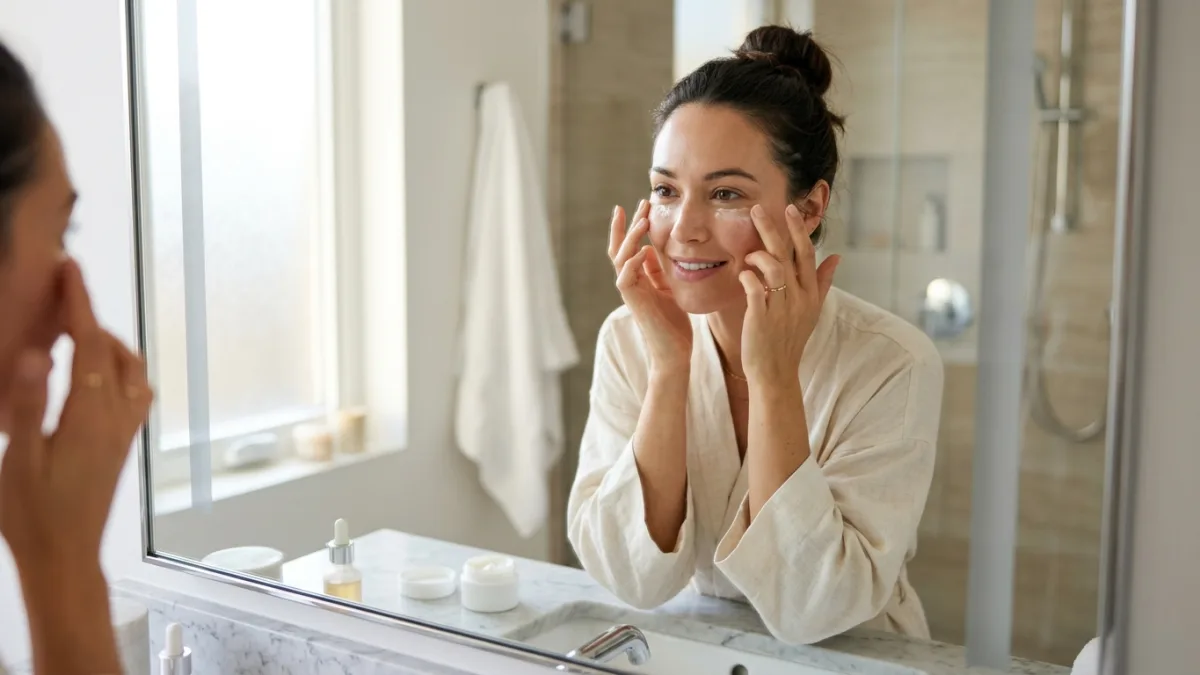
The under-eye area needs special care because its skin is structurally different from the rest of your face. It’s thinner, has fewer oil glands, and moves constantly with blinking and expression. That combination makes it prone to dryness, fine lines, and visible blood vessels earlier than other areas.
Thinner skin, fewer oil glands
Skin under the eyes has far fewer oil-producing glands (small structures in skin that release natural oils to keep it soft and protected) than skin on the cheeks or forehead. Without that natural oil layer, it dries out faster and shows fine lines sooner.
This is one reason eye cream benefits show up faster here than elsewhere on the face.
Common stressors: sleep, screens, sun, hair removal
Poor sleep, long screen time, sun exposure, and repeated hair removal near the brows all add stress to this delicate zone. Squinting at screens creates repetitive creasing. Sun exposure breaks down the skin’s support fibers faster here than elsewhere.
Frequent tweezing or waxing near the brow line can also cause small amounts of friction and redness.
That’s where gentle, precise grooming tools make a real difference. Devices designed for sensitive areas reduce tugging and repeated passes, which lowers irritation near the eyes. Pairing careful grooming with a soothing eye cream afterward gives this fragile skin a better chance to recover and stay smooth.

Hydration and Barrier Support
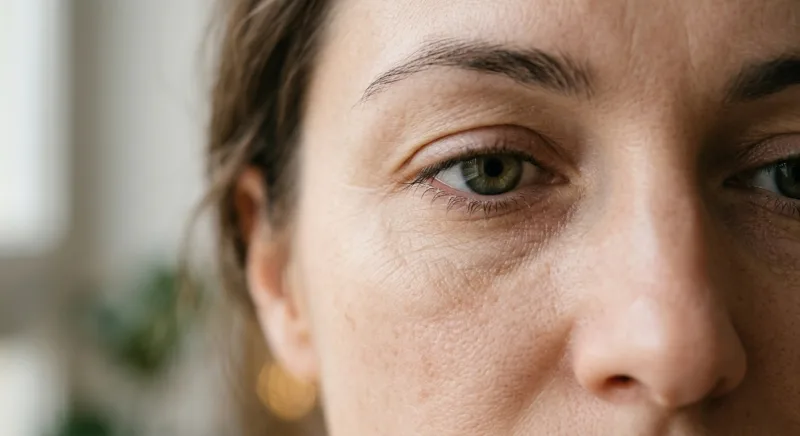
Moisture is one of the most reliable eye cream benefits, because thin skin loses water faster than thicker skin elsewhere on the face. Ingredients like Hyaluronic Acid (a water-binding molecule that can hold many times its weight in water) help draw water into the skin’s top layer.
This plumps fine lines for a while and softens dry patches.
Barrier support matters just as much as hydration itself. The skin barrier is the outermost layer that keeps moisture in and irritants out. When it’s compromised, from cold weather, over-washing, or harsh actives, skin looks dull and feels tight. A well-formulated eye cream can help reinforce this barrier over time.
Hydrated skin also reflects light more evenly, which is part of why dehydrated under-eyes look darker and more tired. This is a cosmetic effect, not a structural fix, but it’s one of the more visible, fast-arriving eye cream benefits people notice within days of starting a routine.
Fine Lines and Early Signs of Aging
Fine lines around the eyes respond to eye cream mainly through hydration and ingredients that support collagen, the protein structure that keeps skin firm. As we age, collagen and elastin production slows down, and skin becomes thinner and less elastic.
Eye cream can’t rebuild lost structure, but it can soften the surface appearance of fine lines.
What eye cream can and can’t do
Eye cream can plump, hydrate, and smooth the look of fine lines caused by dryness. It can’t remove deep, etched wrinkles or replace treatments like injectables or laser resurfacing.
Retinol (a Vitamin A derivative that speeds up skin cell turnover) is one of the few ingredients with real evidence behind it for texture and fine lines, but it needs a gentle, low-strength version for this area.
Realistic timelines for visible change
How long it takes varies a lot between people, depending on skin type, ingredient strength, and how often it’s used. Hydration-based eye cream benefits often show up within days, since the plumping is quick.
Ingredients that target deeper texture, like retinol or peptides, usually need weeks of steady, unbroken use before change can be seen.
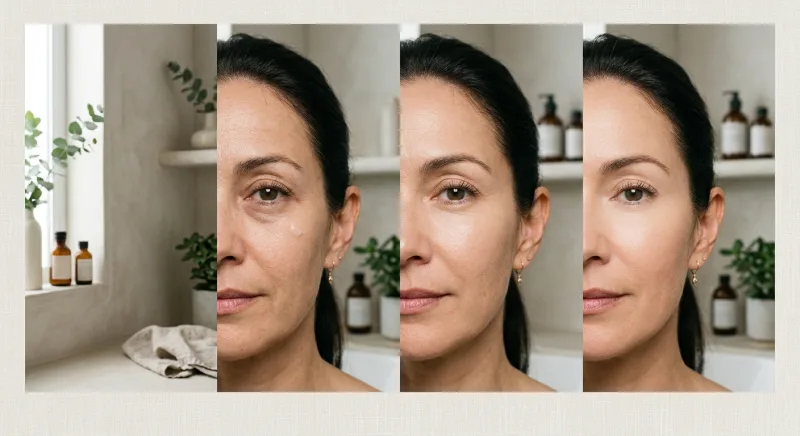
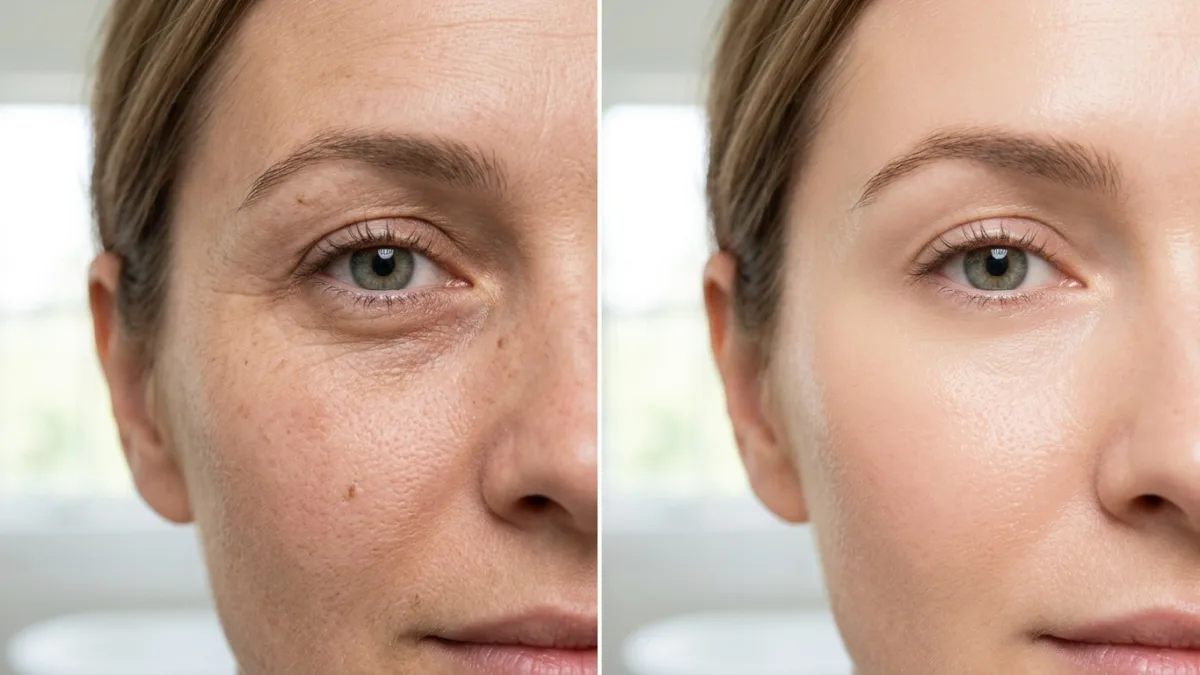
Peptides (short chains of building blocks that tell skin to make more supportive proteins) are often paired with retinol in gentler mixes made for the eye area. This mix is common because it balances results with a lower risk of irritation.
Patience is the real need here, not a stronger product.
Dark Circles: What Eye Cream Can Actually Fix
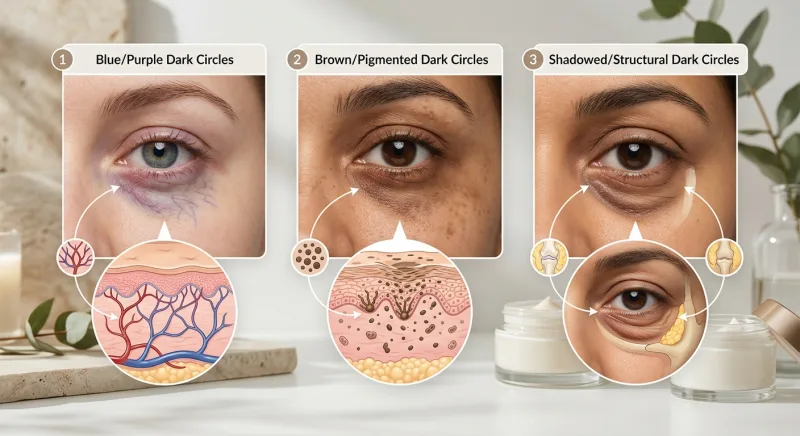
Eye cream can actually fix dark circles caused by dehydration and dullness, but not all dark circles come from the same source. Some are pigmentation-based, some come from visible blood vessels, and some are just shadows cast by structural hollows.
Knowing which type you have changes what to expect from any cream.
Pigmentation vs. vascular vs. shadow-based circles
Pigmentation-based circles come from excess melanin and often respond to brightening ingredients like Vitamin C (an antioxidant that helps fade dark spots and even out skin tone). Vascular circles come from visible blood vessels showing through thin skin, and respond better to caffeine, which temporarily constricts vessels.
Shadow-based circles come from bone structure and don’t respond to topical products at all.
| Dark Circle Type | Main Cause | Does Eye Cream Help? |
|---|---|---|
| Pigmentation-based | Excess melanin, sun exposure | Yes, with brightening ingredients over time |
| Vascular | Visible blood vessels through thin skin | Partially, with caffeine or cooling formulas |
| Shadow-based (structural) | Bone structure, volume loss | No, needs non-topical treatment |
This is where a lot of disappointment comes from. People expect one eye cream to fix every type of dark circle, when only some causes respond to skincare at all. Matching the product to your actual cause makes eye cream benefits far more predictable and realistic.
Puffiness and De-Bagging the Eyes
Puffiness responds to eye cream mainly when it’s short-term, caused by fluid buildup rather than changes in the skin’s structure. Cool metal tips and caffeine-based creams both help tighten blood vessels and cut down visible swelling.
Long-term puffiness from fat shifting under the skin needs a whole different kind of care.
Cooling and caffeine-based formulas
Caffeine is one of the better-studied ingredients for short-term puffiness, since it tightens blood vessels and cuts fluid buildup near the surface. Cool tips on the applicator add a physical effect on top of that.
Together, these give some of the fastest-noticed eye cream benefits, often within minutes rather than weeks.
Lifestyle factors that worsen puffiness
Salty food, poor sleep, allergies, and crying can all worsen puffiness the next morning. Sleeping flat lets fluid pool under the eyes overnight. None of these are fixed by eye cream alone, but combining good habits with the right formula gives more consistent, lasting eye cream benefits.
Eye cream benefits by skin concern: which formula fits you
Not every eye cream targets the same problem. Understanding which eye cream benefits matter most for your specific concern helps narrow down ingredient lists faster. Someone battling dark circles needs a different approach than someone focused purely on fine lines.
The table below breaks down common concerns, the ingredients most tied to fixing them, and the real eye cream benefits you can expect from steady use.
| Skin Concern | Key Ingredients to Look For | Expected Eye Cream Benefits | Realistic Timeline |
|---|---|---|---|
| Dark circles (pigmentation) | Vitamin C, niacinamide, licorice root extract | Gradual brightening, more even tone | — |
| Dark circles (vascular/blue tone) | Retinol, peptides, vitamin K | Thicker skin barrier, less visible blood vessels | — |
| Puffiness and fluid retention | Caffeine, green tea extract, cooling metal applicators | Temporary de-puffing, tighter appearance | Minutes to a few hours |
| Fine lines and crepiness | Retinol, peptides, hyaluronic acid | Smoother texture, plumper skin | — |
| Dryness and flaking | Ceramides, squalane, shea butter | Improved comfort, less tightness | Days to two weeks |
This kind of side-by-side view makes it easier to match a product to a goal. Chasing all five concerns with one jar rarely works. Prioritizing the concern that bothers you most tends to produce more satisfying eye cream benefits overall.
How eye cream benefits compare to other under-eye solutions
Eye cream is not the only way to deal with under-eye concerns. Skin procedures, at-home tools, and even plain concealer all promise like results. It helps to see how eye cream benefits stack up against these other choices before you decide where to spend your money.
Cost, downtime, and how long results last vary a lot between these choices. Eye cream benefits tend to be small but low-risk, while procedures offer bigger changes with bigger commitments. The table below lays out these trade-offs plainly.

| Solution | Downtime | Permanence | Main Trade-off |
|---|---|---|---|
| Eye cream | None | Temporary; requires ongoing use | Gradual, gentle eye cream benefits with low risk |
| Under-eye fillers | Mild swelling for days | Lasts months to a year | Dramatic results but higher cost and risk of migration |
| Laser resurfacing | Days to weeks of redness | Long-lasting improvement in texture | Effective but requires recovery time |
| Cooling rollers or devices | None | Temporary, similar to cold compress | Complements eye cream benefits but does not replace them |
| Concealer | None | Immediate but purely cosmetic coverage | Masks concerns without any skin-level improvement |
Many people combine two or three of these approaches rather than choosing just one. A cooling roller in the morning, eye cream at night, and concealer for special occasions is a common routine. None of these replace the steady, cumulative eye cream benefits that come from a well-matched daily formula.
Eye cream benefits: separating marketing claims from realistic outcomes
Words on the box can be misleading. Words like “erase,” “eliminate,” and “instant transformation” set hopes that most mixes cannot meet. Knowing what eye cream benefits are truly possible helps you avoid letdown and wasted money.
No topical product permanently removes under-eye hollows caused by fat pad loss or bone changes with age. That kind of structural change usually requires filler or surgery. Eye cream benefits work within the skin’s surface layers, not the deeper structures beneath.
Genetics also play a large role in how deep-set someone’s dark circles or hollows appear. Two people using the identical product can see very different results. This does not mean the formula failed; it means eye cream benefits are always filtered through individual anatomy.
That said, brushing off eye cream fully ignores real, measurable gains many people see. Hydration, short-term de-puffing, and slow brightening are true eye cream benefits backed by science on ingredients. The key is holding hopes that match what skin care put on the skin can truly do.
Eye cream benefits and the role of consistency
Consistency matters more than product price when it comes to visible results. Using an eye cream three times a week produces weaker eye cream benefits than using it nightly. Skin renewal is a slow, cumulative process that rewards routine over intensity.
Many users give up after a week or two, right before ingredients like retinol or peptides begin showing their full effect. Patience is often the missing ingredient. Sticking with one formula for a full cycle typically reveals more honest eye cream benefits than jumping between products.
Photo tracking is a useful way to notice gradual change. Weekly photos taken in the same lighting can reveal shifts invisible in daily mirror checks. This method often confirms that eye cream benefits were happening all along, just too slowly to notice day to day.
Choosing the right eye cream benefits for your budget
Price does not always predict performance. Some budget formulas contain the same core ingredients as luxury versions, just with less elaborate packaging. Comparing ingredient lists rather than price tags is the smarter way to shop for eye cream benefits.

Higher-priced products sometimes add more study, new ways to deliver ingredients, or higher amounts of active ingredients. These can mean stronger eye cream benefits for certain concerns, mainly fine lines and firmness. But this is not a fixed rule across every brand.
- Check the ingredient list for actives like retinol, peptides, or vitamin C rather than relying on marketing terms.
- Look for third-party testing or dermatologist review claims, and verify what they actually cover.
- Sample sizes or travel sizes let you test eye cream benefits before committing to a full-size purchase.
- Remember that natural or organic labeling does not automatically mean gentler or more effective.
Budget-conscious shoppers can still access strong eye cream benefits without overspending. The goal is matching ingredients to your specific concern, not chasing the most expensive jar on the shelf.
Common mistakes that reduce eye cream benefits
Even a well-made product can fall short if put on wrong. Small mistakes in how it’s applied are oddly common and quietly limit the eye cream benefits people hope to see.
Using too much product is one frequent mistake. A pea-sized amount for both eyes is usually sufficient; more can lead to product sitting on the skin without absorbing. This wastes product and does not increase eye cream benefits proportionally.
Rubbing too aggressively is another issue. The under-eye skin is thin and fragile, and vigorous rubbing can cause irritation or even contribute to fine lines over time. A gentle tapping motion with the ring finger protects the skin while still delivering full eye cream benefits.
Applying too close to the lash line can cause product to migrate into the eyes, leading to irritation or puffiness from the response itself. Keeping application slightly further out, along the orbital bone, avoids this problem while preserving eye cream benefits.
Skipping sunscreen is a mistake that undoes long-term progress. Sun exposure breaks down collagen and worsens dark spots, directly working against the eye cream benefits built up through nightly use. Daytime SPF around the eyes protects that investment.
Read the complete guide: How to Build a Skincare Routine That Actually Works in 2026
Frequently Asked Questions
What are the main eye cream benefits?
The main eye cream benefits include less puffiness, softer fine lines, more moisture, and better skin tone. Steady use over several weeks tends to bring the best results, most of all when paired with sunscreen and gentle use.
How long does it take to see results?
Most people see gains in wetness within days, while firmness and dark spot changes take longer. Patience and daily steadiness matter more than switching products a lot.

Can eye cream really reduce dark circles?
Some dark circles respond well to targeted ingredients like caffeine or vitamin K, while others are caused by genetics or bone structure and won’t fully fade. Eye cream benefits here are often gradual rather than dramatic.
Is it necessary to use a separate eye cream?
The eye area’s skin is thinner and more delicate than the rest of the face, so a formula designed specifically for it can offer better results. Regular face moisturizer may be too heavy or irritating for this sensitive zone.
Should eye cream be applied morning and night?
Using it twice a day often boosts eye cream benefits the most, most of all when a hydrating mix is used in the morning and one aimed at treatment at night. Always follow morning use with sunscreen to guard the results.
Can eye cream cause irritation?
Irritation can occur if the formula is too rich, applied too close to the lash line, or used excessively. Choosing fragrance-free options and applying a small amount gently can help avoid puffiness or redness.
Do natural or organic eye creams work as well?
Natural mixes can give real gains, most of all for wetness, but how well they work depends on the exact active ingredients (the parts that do the work) rather than the “natural” label alone. Checking for proven active ingredients makes sure the product still gives real results.
At what age should someone start using eye cream?
There’s no strict age to start, but many skin doctors suggest starting in the mid-twenties to help stop problems early. Early use helps keep skin moist and firm before signs of aging show up.
References
- The skin under the eyes is thinner than skin on the rest of the face and contains fewer sweat and sebaceous (oil) glands, which weakens its ability to retain moisture and maintain a strong skin barrier. — Frontiers in Aging (Frontiers Media) (Peer-reviewed academic journal article published on frontiersin.org, an authoritative domain for scientific research on periorbital skin physiology)
- A 12-week clinical study of a topical eye formulation found measurable improvements in under-eye skin, including decreased transepidermal water loss, increased hydration, and expert-graded reductions in fine lines, puffiness, and dark circles. — PMC (National Institutes of Health / PubMed Central) (Peer-reviewed clinical study hosted on PubMed Central, the NIH’s free full-text archive of biomedical literature)
