
Skincare routine
Korean Skincare in 2026: The Complete Beginner’s Guide to K-Beauty Routines
Last updated: November 5, 2026
Korean skincare is a beauty way of thought that focuses on skin health, built on gentle layering: cleansing, toning, treating, moisturizing, and sun protection. Rather than chasing quick fixes, Korean skincare puts weight on wetness, barrier repair, and prevention through steady multi-step routines.
It's made to fit each skin type and concern, not a one-size-fits-all fix, and it favors patience and long-term skin health over quick results.
If you’ve scrolled past glass skin selfies or wondered why K-beauty shelves have ten steps instead of three, you’re not alone. Korean skincare has become a global reference point for how people think about daily beauty care.
This guide breaks down what it actually involves, how to build a routine, and how it fits alongside modern grooming tools.
What Is Korean Skincare and Why Is It So Popular?
Korean skincare is an approach to daily beauty care that prioritizes long-term skin health over instant results. It treats skin as something to nurture, not fix. This mindset shift is a big reason Korean skincare has spread well beyond South Korea.
The philosophy behind K-beauty
The core idea behind Korean skincare is prevention rather than correction. It focuses on keeping the skin barrier strong so problems like dryness or irritation don’t start in the first place. Hydration is treated as a foundation, not an afterthought.
This way of thinking also values doing the same thing daily. Korean skincare routines are meant to be repeated daily, with small changes as the seasons or your skin's needs change. It's less about big change and more about steady upkeep.
How it differs from Western skincare routines
Western routines often focus on fewer, stronger products aimed at solving one specific issue quickly. Korean skincare spreads that same goal across multiple lighter layers. Each product does a smaller job, but together they add up.
Texture order matters more in Korean skincare too. Products go from thinnest to thickest, letting each layer absorb before the next goes on. This layering habit is one of the clearest signatures of a Korean skincare routine.
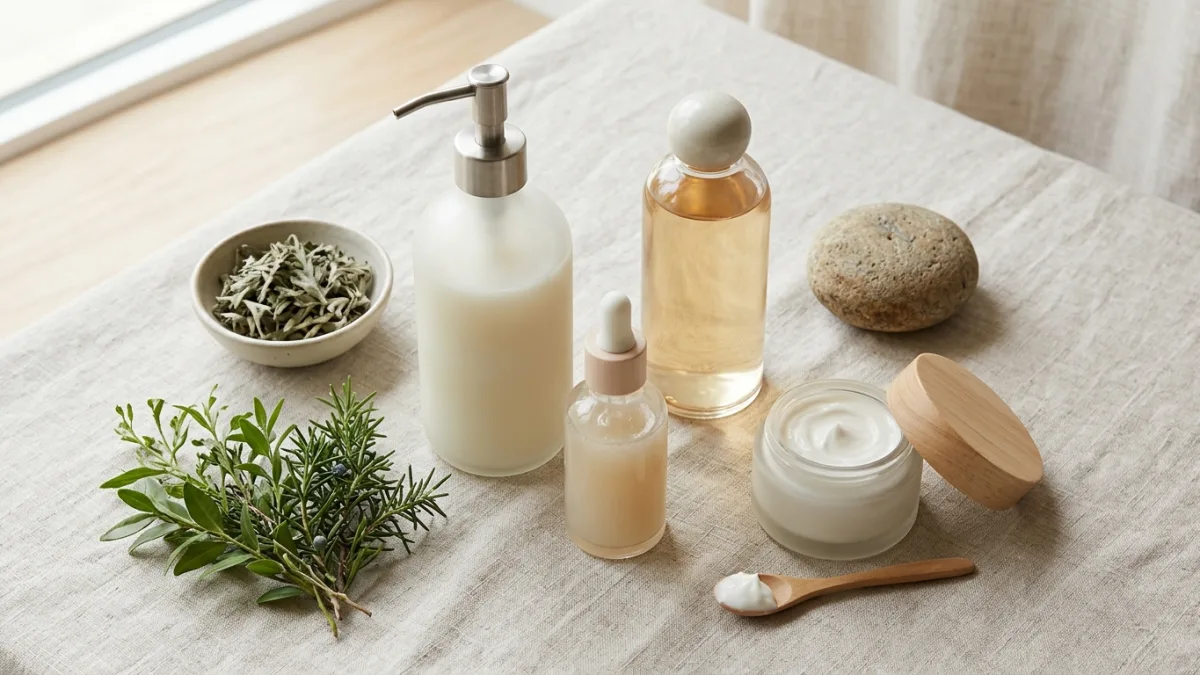
The Core Steps of a Korean Skincare Routine
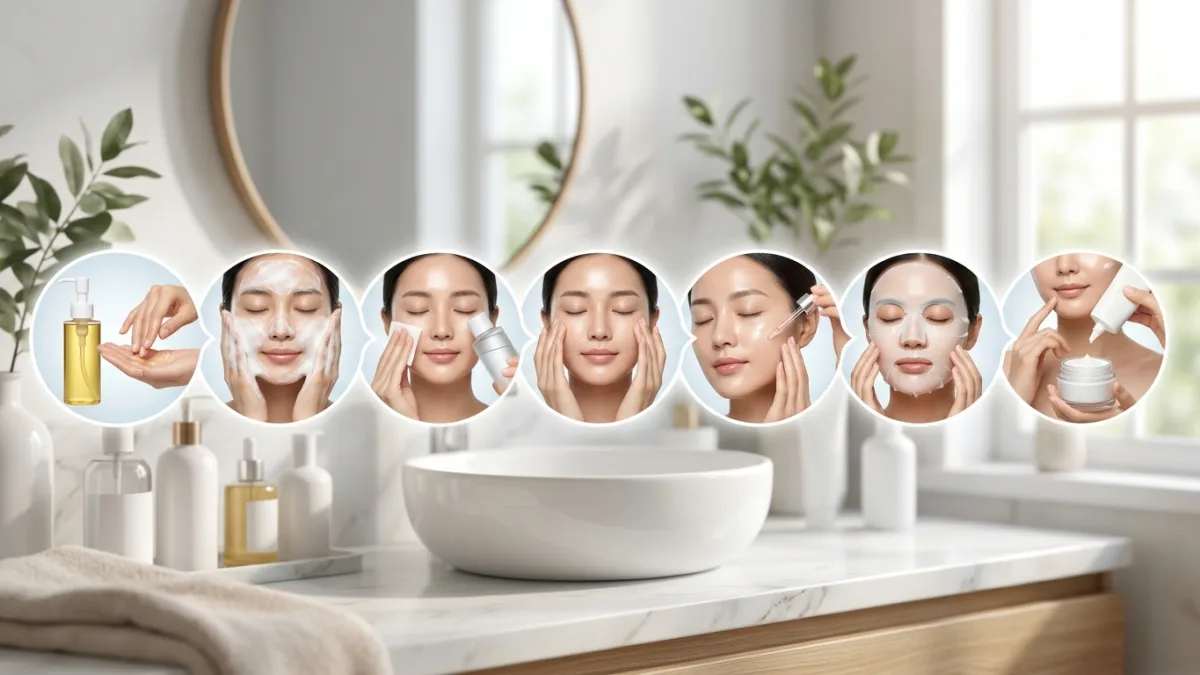
A Korean skincare routine typically follows five key stages: cleansing, toning, treating, moisturizing, and sun protection. Each stage has a clear purpose. Skipping one usually means the next steps don’t work as well.
Cleansing (double cleanse method)
Double cleansing, a cornerstone of korean skincare, means using an oil-based cleanser first, followed by a water-based one. The oil cleanser lifts sunscreen, makeup, and sebum. The water-based cleanser then removes sweat, dirt, and any leftover residue.
This two-step way is a key part of korean skincare because it cleans well without over-drying skin. Most korean skincare routines start here every night, though morning washing is often simpler.
Layering style sets korean skincare routines apart from the usual one-step Western way. Rather than leaning on one strong product, each light layer adds moisture or targeted care. The result is skin that feels balanced rather than stripped or overdone.
Toning and essence
Toner in Korean skincare isn’t about shrinking pores. It rebalances skin pH after cleansing and preps it to absorb the next products. Essence follows, adding a lightweight layer of hydration and active ingredients.
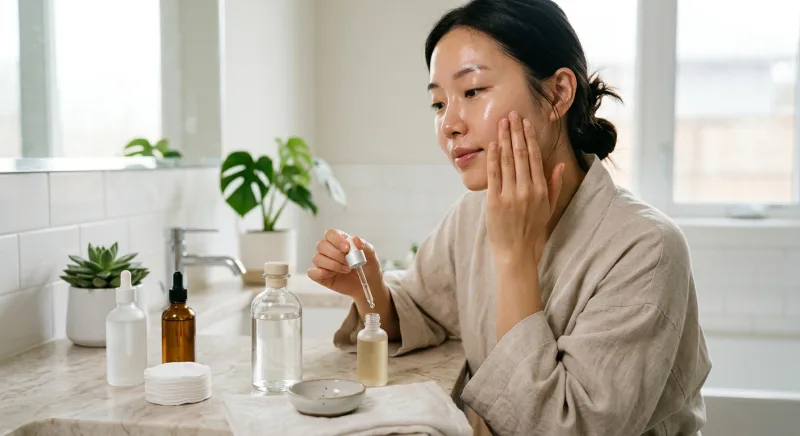
Essence is often described as the bridge between skincare basics and treatment products. It’s a defining feature that sets Korean skincare apart from simpler three-step routines.
Serums and ampoules
Serums and ampoules give strong doses of active bits for set needs, like brightening or firmness. Ampoules are usually stronger, used in short spells rather than every day forever. Both fit in after essence and before moisturizer.
Moisturizing and sealing in hydration
Moisturizer seals in everything put on before it. In Korean skincare, this step often uses rich creams with ceramides, a fat found in skin that helps build up the skin's outer wall. Some routines add a sleep mask on top for extra sealing overnight.
Sun protection as the final step
Sunscreen is non-negotiable in Korean skincare. It’s applied every morning as the last step, protecting all the work done in earlier layers. Without it, other steps lose much of their long-term value.
| Step | Product Type | Purpose |
|---|---|---|
| 1 | Oil cleanser | Removes makeup, sunscreen, and sebum |
| 2 | Water-based cleanser | Clears sweat, dirt, and residue |
| 3 | Toner | Rebalances skin pH |
| 4 | Essence | Adds lightweight hydration and actives |
| 5 | Serum/ampoule | Targets specific concerns |
| 6 | Moisturizer | Seals in hydration, supports barrier |
| 7 | Sunscreen (AM) | Protects skin from UV damage |
Where does grooming fit into all this? Exfoliation, whether from acids or physical tools, works best on freshly cleansed skin. If you use at-home hair removal devices, timing matters too, which we’ll cover shortly.
How Does Korean Skincare Fit Into a Full Beauty and Grooming Routine?
Korean skincare works best as one part of a wider daily beauty routine, not an isolated ritual. Skin health and hair removal are connected. Well-prepped skin responds better to grooming tools, and good aftercare protects results.
Why skin prep matters before hair removal
Clean, buffed skin lets hair removal tools work more smoothly. A Korean skincare routine already builds in gentle washing, which helps clear away buildup before you reach for an epilator or IPL handset.
Skipping prep can mean more friction, missed hairs, or irritation. Treating skincare and grooming as one connected routine, rather than separate chores, tends to give more comfortable results.

Combining skincare with grooming tools (IPL, epilators, trimmers)
A full daily beauty routine more and more includes modern hair removal and grooming tech along with skincare, not in place of it. Bellxi stocks top women's grooming and advanced hair removal devices, including painless IPL laser handsets, precise trimmers, and epilators.
Bellxi carries every device type for every skin type, which matters because Korean skincare already teaches you to match products to your skin’s needs. The same logic applies to choosing a grooming device.
Bellxi ships within 24 hours and backs every order with a 30-day risk-free guarantee. That makes it easier to try a new device as confidently as you’d try a new step in your Korean skincare routine.
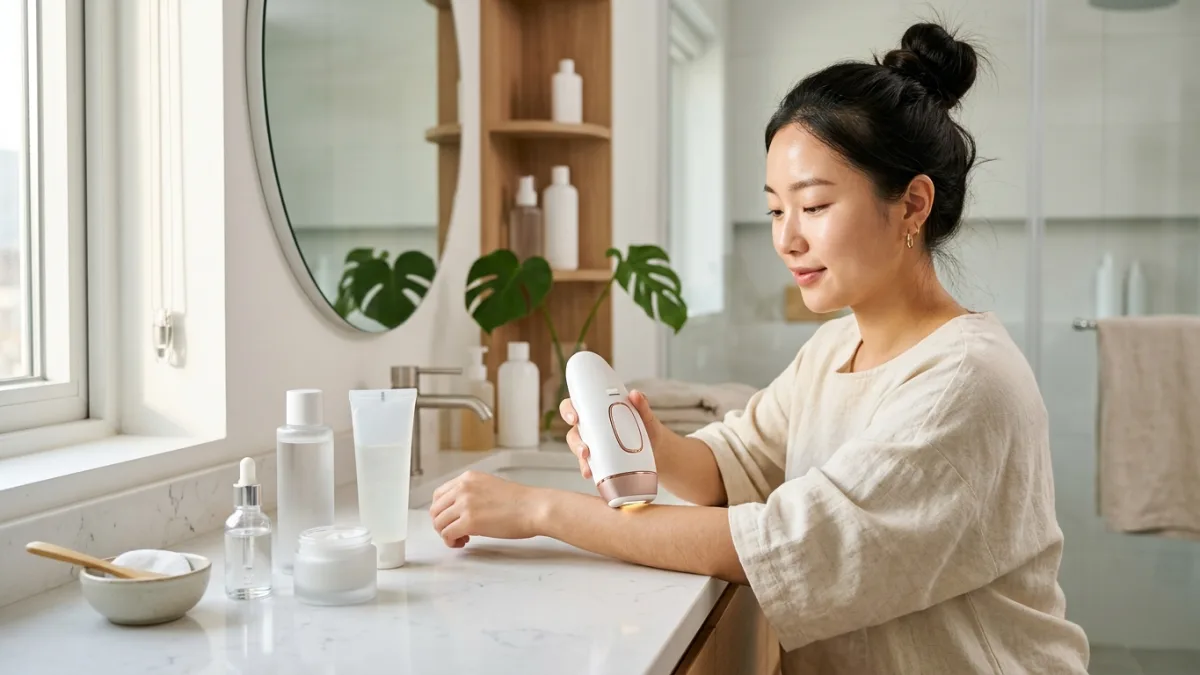
Building a routine this way means fewer separate steps to remember. You can discover your smoothest self by pairing consistent Korean skincare with the right grooming tools, rather than treating them as unrelated tasks.
Comparing Korean Skincare Routines by Skin Concern
Korean skincare isn’t a single fixed routine. It shifts depending on what your skin needs most. Someone managing acne follows a different order of steps than someone focused on hydration or early signs of aging.
The table below breaks down how a typical routine adjusts based on three common concerns. Use it as a starting point, then adjust based on how your skin responds over the following weeks.
| Skin Concern | Key Step Priority | Recommended Texture | Frequency |
|---|---|---|---|
| Acne-Prone Skin | Gentle double cleansing, lightweight hydration | Gel or watery essence, oil-free moisturizer | Twice daily, spot treatment as needed |
| Dry or Dehydrated Skin | Layered hydration, occlusive sealing | Cream-based moisturizer, hydrating sheet masks | Twice daily, masks 3-4 times weekly |
| Aging or Uneven Texture | Exfoliation, targeted serums, sun protection | Ampoules with active ingredients, rich sunscreen | Serums nightly, sunscreen every morning |
Notice that every concern still relies on the same core structure. Cleansing, hydrating, and protecting stay constant. What changes is texture, order emphasis, and how often you repeat certain steps.
This flexibility is part of why Korean skincare has stayed popular for so long. It isn’t a rigid formula. It’s a framework you adapt as your skin’s needs change with seasons, age, or lifestyle.
Korean Skincare vs. Western Skincare: Key Differences
People often ask how Korean skincare really differs from a typical Western routine. On paper, both aim for healthy skin. In practice, the mindset and the way it's done differ in a few key ways.
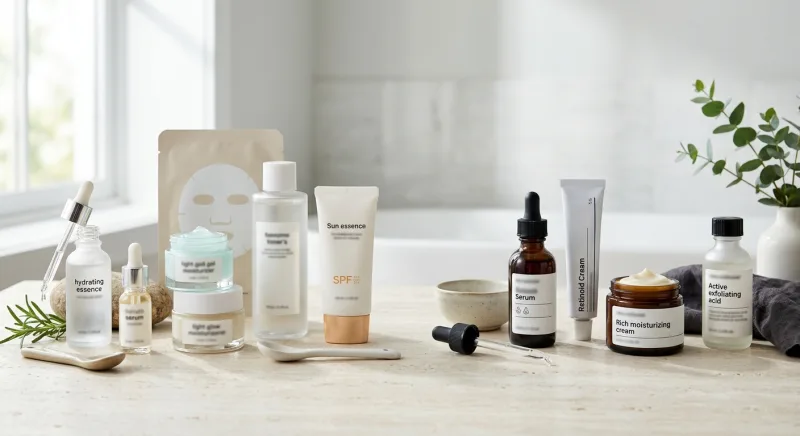
Western routines tend to favor fewer, stronger products. Korean routines favor layering light mixes in order. Neither way is wrong, but they lead to different day-to-day feels and results over time.
| Category | Korean Skincare Approach | Typical Western Approach |
|---|---|---|
| Number of Steps | Often 7-10 layered steps | Usually 3-5 steps |
| Cleansing Method | Double cleanse (oil then water-based) | Single cleanse, typically water-based |
| Product Texture | Lightweight, layerable liquids and essences | Heavier creams and single-purpose treatments |
| Core Philosophy | Prevention and long-term skin health | Targeted correction of specific issues |
| Sun Protection Habit | Daily, non-negotiable, often reapplied | Common but sometimes skipped daily |
The double cleanse is one of the most visible differences. Removing sunscreen, makeup, and oil-based debris first lets the second cleanse actually clean the skin instead of pushing residue around.
Another difference is how each approach treats sunscreen. Korean skincare treats daily sun protection as a must, not a choice, even on cloudy days or when staying mostly indoors.
Korean skincare and Western skincare treat daily sunscreen habits in different ways. Korean skincare treats putting sunscreen on again as a must-do last step. It fits right into the day. Western routines often save sunscreen for beach days or summer months.
Neither system beats the other. Many people now mix both, taking the layering method from Korean skincare while keeping a few strong Western actives like retinoids or high-percentage acids.
Why the Order of Steps Actually Matters
One thing people don't think enough about is order. Putting products on in the wrong order can block soak-in or weaken the power of the active parts you paid for.
The general rule in Korean skincare is to move from thinnest to thickest consistency. Watery textures go first so they can penetrate before heavier creams create a barrier on top.
- Oil cleanser to dissolve makeup, sunscreen, and sebum
- Water-based cleanser to remove remaining residue and sweat
- Exfoliant, used two to three times weekly, not daily
- Toner to rebalance skin and prep for absorption
- Essence to deliver lightweight hydration and active ingredients
- Serum or ampoule targeting a specific concern
- Sheet mask, optional, a few times per week
- Eye cream for the thinner skin around the eyes
- Moisturizer to lock in all previous layers
- Sunscreen every morning, reapplied if outdoors for long periods
Not everyone needs all ten steps daily. Many people simplify this into a five or six step version and save sheet masks or extra serums for a few nights each week.
The key part is keeping the order right, not the total count. Even a simple routine works better when you put thin layers on before thick ones.
Common Mistakes That Undermine a Korean Skincare Routine
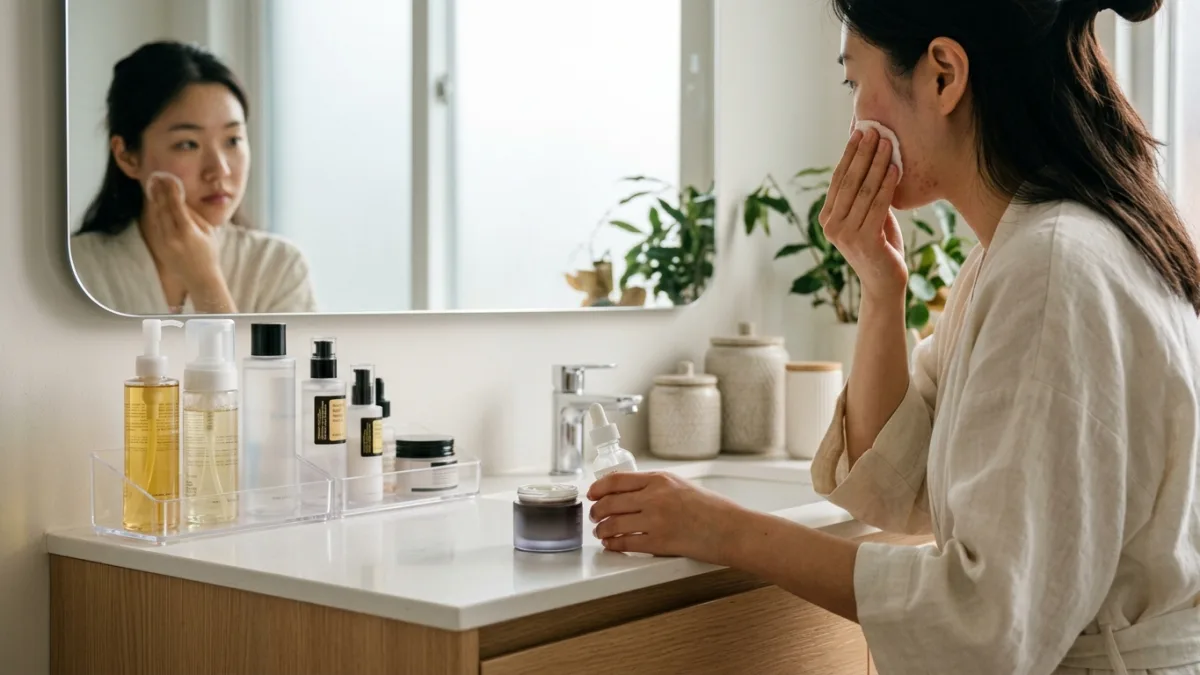
Even well-intentioned routines can fail if a few habits go unchecked. Most mistakes aren’t about buying the wrong products. They’re about how those products get used day to day.
Over-scrubbing is one of the most common problems. Because korean skincare sells so many scrubbing toners and acids, it's tempting to use several at once, which can hurt the skin's outer layer.
Skipping sunscreen is another common mistake, mainly among people who link sun care only with beach days. Daily UV exposure, even indoors near windows, adds to visible aging over time.
Skipping daily sunscreen lets damage quietly build up under the surface. Fine lines, uneven tone, and loss of firmness often trace back to sun exposure left unchecked over the years. Steady protection now helps keep skin healthy and good-looking later.
Piling on too many new products at once makes it hard to identify what’s causing irritation if a reaction occurs. Introducing one new item at a time protects your ability to troubleshoot.
Finally, expecting overnight results leads many people to abandon a routine too early. Skin cycles take weeks, not days, to show visible change from a new product or habit.
Building a Routine That Fits Your Actual Schedule
A ten-step Korean skincare routine sounds appealing in theory, but daily life doesn’t always allow for it. Mornings are rushed. Evenings get cut short by fatigue or plans.
The good news is that Korean skincare can be made smaller without losing its core good points. A simple morning routine might use just face wash, moisturizer, and sunscreen, still going from thin to thick.
Evenings can carry more weight since there's usually more time free. Double cleansing, a treatment serum, and a richer moisturizer cover the basics without needing every extra step.
Weekends or slow days are a good time to add sheet masks, deeper skin scrubs, or more serums. This keeps the full routine ready without needing it every single day.
Doing the same thing each day matters more than doing a lot of things. A simple five-step routine done daily will beat a fancy ten-step routine that gets skipped three times a week.
Market context
Number of cosmetic product places signed up with the FDA under MoCRA — Right now, over 14,000 cosmetic product places are signed up with the FDA under the Modernization of Cosmetics Regulation Act (MoCRA). U.S. Food and Drug Administration (FDA), 2025
NIH funding for child skin disease study — The NIH backed 307 grants totaling $388 million across 10 main skin conditions in its 2021-2022 funding look-back. NCBI/PMC (Pediatric Dermatology journal), 2025-08-17
Adjacent-market figures — each names the subject it measures, not korean skincare directly.
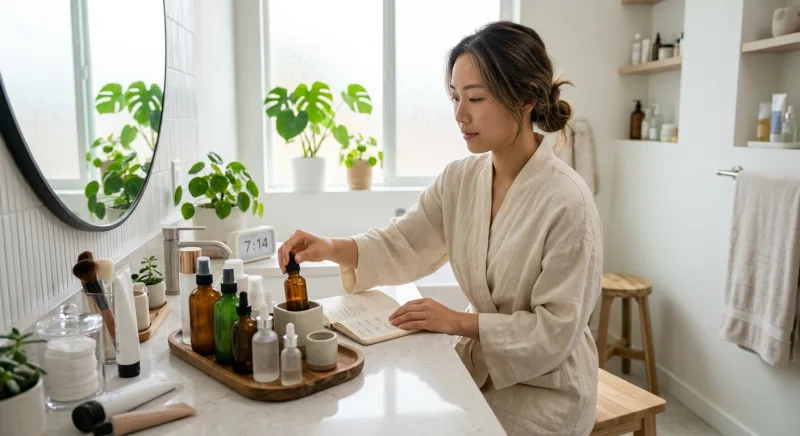
Read the complete guide: How to Build a Skincare Routine That Actually Works in 2026
Frequently Asked Questions
Do I really need ten steps for Korean skincare to work?
No. The ten-step idea is a marketing simplification, not a rule. Many Korean skincare users follow four to six steps daily and save extras like sheet masks for occasional use. Consistency with a shorter routine beats sporadic effort with a longer one.
What is double cleansing and is it necessary?
Double cleansing means using an oil-based cleanser first, followed by a water-based one. It removes sunscreen, makeup, and daily buildup more thoroughly than a single wash. It’s most useful in the evening; mornings often only need a gentle water-based cleanse.
Double cleansing, a key part of Korean skincare, uses an oil-based cleanser followed by a water-based one to lift both makeup and dirt. This two-step method leaves skin fully clean without stripping away its natural moisture balance.
Can Korean skincare products work for sensitive skin?
Many Korean skincare brands favor mild, low-irritation mixes. These often include calming things like centella asiatica or rice extract. Still, sensitivity differs from person to person. Testing new products on a small patch of skin stays key for this reason. A look at survey data on sensitive skin found something worth noting.
Roughly 60-70% of women and 50-60% of men report some skin sensitivity. This shows why patch testing new ingredients matters for so many people. (PMC (NIH National Library of Medicine), 2019)
How long before I see results from a Korean skincare routine?
Most changes you can see in wetness or feel of skin show up within a few weeks of steady use. Deeper problems like acne scars or dark spots usually take longer, often several months. Patience and steady use matter more than switching products often.
Is sunscreen really the most important step?
Yes. Sunscreen guards against UV harm, which adds to early aging, uneven tone, and rougher texture over time. Even the best serum routine loses worth without daily sun care. It's seen as the must-do last step in any korean skincare routine.
Should I introduce new products one at a time?
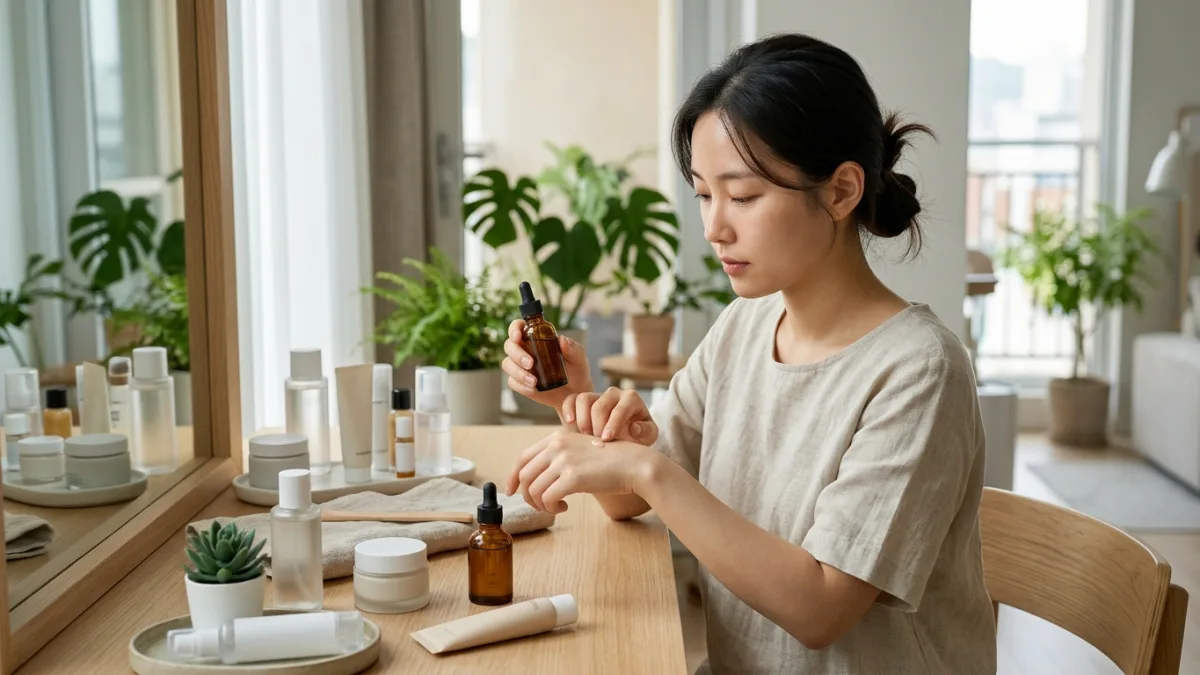
Yes, introducing one new product at a time makes it easier to identify what causes irritation or improvement. Wait one to two weeks before adding another. This slower approach protects skin barrier health and avoids overwhelming your routine with too many active ingredients at once.
Can men follow a Korean skincare routine too?
Yes. Korean skincare rules work no matter your gender since they focus on wetness, shielding, and a healthy skin layer. Many brands aim ads at men, but most product lines work well for anyone willing to follow the basic wash, treat, and moisturize steps.
Layering light, hydrating steps helps refill the skin barrier, boosting its natural power to hold onto moisture. This approach, at the heart of Korean skincare, helps skin stay smooth and strong over time by letting each layer soak in fully before the next.
Korean skincare has grown from a niche interest into a global beauty staple, shaping product trends and routines far beyond its home market. Its influence now touches shelves and routines worldwide, reflecting a lasting shift in how people approach skincare.
What’s the biggest mistake beginners make with Korean skincare?
Overloading the routine too quickly is the most common mistake. Adding multiple actives, exfoliants, or new serums at once can irritate skin and make it hard to track results. Starting simple, then building gradually, leads to better long-term outcomes and fewer setbacks.
Key statistics
- An SPF 30 sunscreen filters out about 97% of the sun’s UVB rays. (American Academy of Dermatology, 2026)
- An AAD survey found that only about half of U.S. adults use sunscreen regularly, and far fewer do so on cloudy days. (American Academy of Dermatology, 2025)
- South Korea’s cosmetics exports rose 20.3% in 2024 to a record $10.2 billion, ranking the country third globally. (Korea.net (official website of the Republic of Korea), 2025)
Expert insights
Many people realize that sun exposure contributes to skin aging, yet there is a significant gap in understanding how to prevent it,
Elizabeth Houshmand, MD, FAAD, a board-certified dermatologist in Dallas, Texas
More is not more in this case, and consistency matters more than a 10-step routine.
Marisa Garshick, MD, FAAD, a board-certified dermatologist in New York City
References
- The core of sun protection in any skincare routine is a broad-spectrum, water-resistant sunscreen with SPF 30 or higher. — American Academy of Dermatology (Professional medical association whose recommendations are the U.S. clinical standard for dermatologic sun-protection guidance)
- Sunscreens labeled ‘Broad Spectrum’ must pass an FDA test procedure that measures UVA protection relative to UVB protection. — U.S. Food and Drug Administration (Federal regulatory agency governing sunscreen safety and labeling standards)
- South Korea has become one of the world’s top cosmetics exporters, with basic skincare products as the dominant export category. — Korea Herald / Korea.net (Republic of Korea government-affiliated press) (Reports government trade-ministry (MFDS) export data on Korean cosmetics)
- Dermatologists recommend cleansing, moisturizing, and daily sunscreen as the foundational, non-negotiable steps of any skincare routine. — American Academy of Dermatology (Professional dermatology association publishing clinician-reviewed skincare guidance)
