
Skincare routine
Moisturiser for Dry Skin: The Complete 2026 Guide to Ingredients, Texture, and Routine
Last updated: November 5, 2026
The best moisturiser for dry skin blends three ingredient types. Humectants like hyaluronic acid draw in water. Emollients like ceramides smooth the skin’s surface. Occlusives like shea butter seal moisture in. Rich creams and balms usually work better than light lotions for very dry or flaky skin.
This is especially true in cold or low-humidity months.
Dry skin is one of the most common skin complaints, and it gets worse with weather changes, over-cleansing, and grooming habits. Choosing the right moisturiser for dry skin isn’t just about picking a nice-smelling cream. It’s about understanding what your skin barrier actually needs.
This guide breaks down the science behind moisturiser for dry skin, the ingredients that matter, and how to apply products for the best results. We’ll also cover something most guides skip: how shaving, waxing, and IPL affect skin dryness.
What Is the Best Type of Moisturiser for Dry Skin?
The best moisturiser for dry skin is one that combines hydration, repair, and sealing power in a single formula. No single ingredient does all three jobs. That’s why formulation matters more than marketing claims.
Quick answer: what dry skin actually needs
Dry skin needs water pulled into the surface, lipids to repair gaps in the barrier, and a sealing layer to stop that moisture escaping. A good moisturiser for dry skin does all three at once, rather than relying on one trick ingredient.
Think of it like a three-step system. Humectants attract water. Emollients fill in cracks between skin cells. Occlusives sit on top and reduce water loss. Together, they make an effective moisturiser for dry skin.
If your current moisturiser for dry skin only has one of these elements, it’s likely why your skin still feels tight by midday. Formulation balance matters more than price point or brand name.
Dermatologists often explain that an effective moisturiser for dry skin works in layers: humectants draw water in, emollients smooth and soften, and occlusives lock hydration in place. Choosing products that combine these roles helps skin stay balanced and resilient.
Cream vs. lotion vs. balm vs. oil at a glance
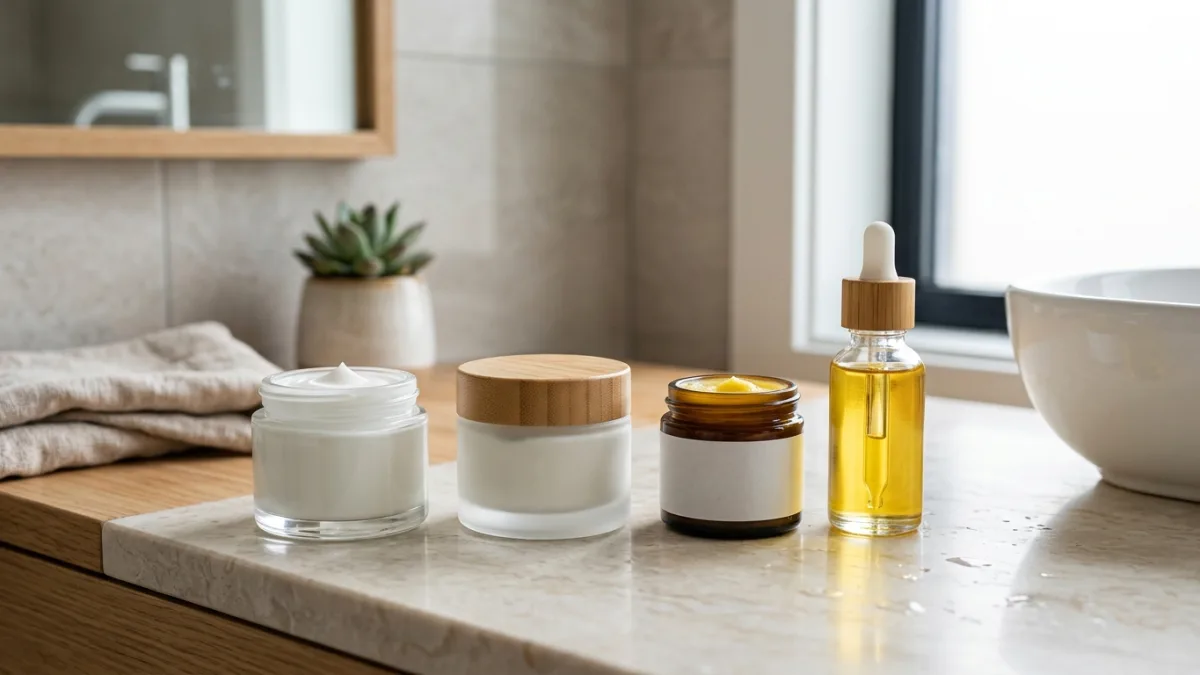
Texture affects how well a moisturiser for dry skin actually performs. Heavier textures generally hold more oil and deliver longer-lasting hydration than thin, water-based lotions.
Lotions absorb fast and feel light, but they often lack enough emollient and occlusive content to work well as a moisturiser for dry skin. Creams strike a middle ground. Balms and oils offer the heaviest, most occlusive coverage.
| Texture | Best For | Feel on Skin | Typical Key Ingredients |
|---|---|---|---|
| Lotion | Mild dryness, oily-combination skin | Light, fast-absorbing | Glycerin, water, light emollients |
| Cream | Moderate to significant dryness | Medium weight, cushioned | Ceramides, hyaluronic acid, fatty acids |
| Balm | Severe dryness, flaking, cracked skin | Heavy, thick, slow-absorbing | Shea butter, petrolatum, plant oils |
| Oil | Layering over cream, very dry patches | Slippery, occlusive finish | Squalane, jojoba, plant-derived oils |
Choosing between these textures depends on how dry your skin gets and where you live. Someone in a humid climate may only need a cream, while someone in a dry winter region may need a balm-level moisturiser for dry skin.
“There’s definitely not a one-size-fits-all for all skin types” — Rebecca Kazin, MD, FAAD, board-certified dermatologist in Bethesda
Why Does Skin Get Dry in the First Place?
Skin gets dry when it loses water faster than it can replace it, usually due to a damaged or thin skin barrier. Environmental stress, over-cleansing, and aging all contribute to this problem.
Common causes of dry skin
Cold weather, indoor heating, and low humidity all pull moisture from skin. Hot showers and harsh soaps strip natural oils too. Many people notice their skin feels tighter, rougher, and more prone to flaking once winter sets in.
Dry skin is one of the most common complaints people bring to dermatologists, cutting across ages, skin tones, and seasons. It affects daily comfort, appearance, and confidence, making a reliable moisturiser for dry skin a priority for many adults year-round.
Aging skin produces less oil over time, which is why moisturiser for dry skin becomes more important as people get older. Genetics, certain skin conditions, and even diet can play a role too.
Frequent hair removal, harsh exfoliation, and some medications also dry out skin faster than normal. Anyone using retinoids or acne treatments often needs a stronger moisturiser for dry skin to compensate.
How skin barrier damage leads to moisture loss
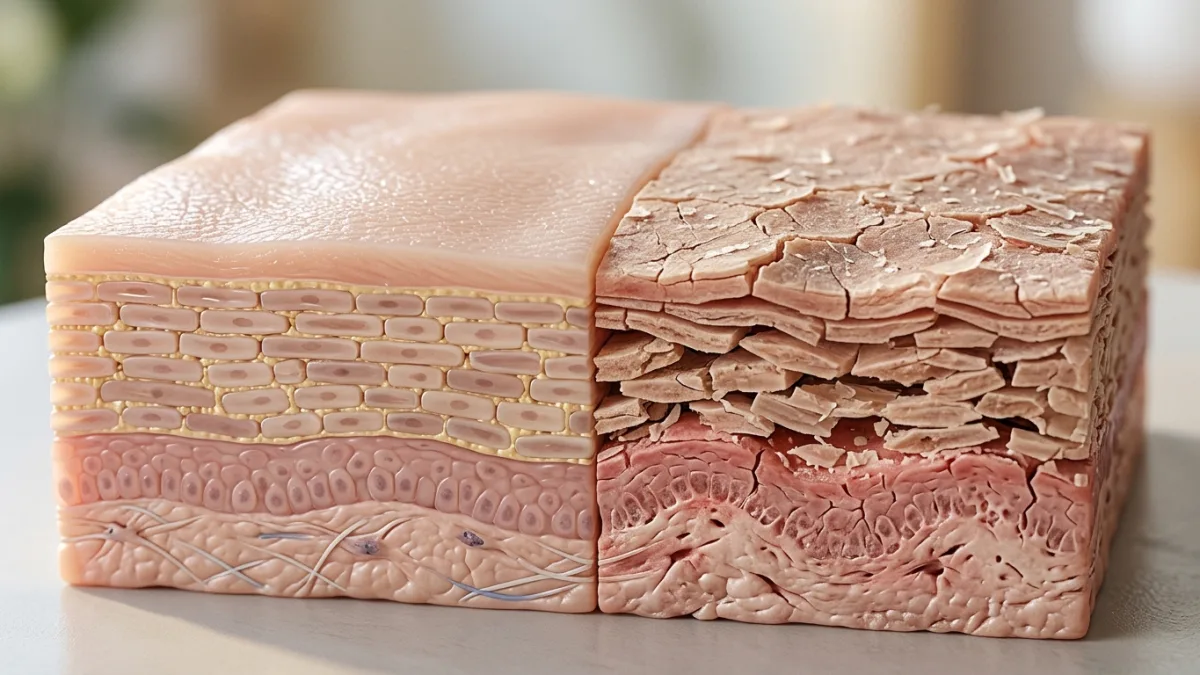
The skin barrier is a thin outer layer made of cells and lipids that keeps water in and irritants out. When it’s damaged, water escapes through a process called transepidermal water loss.
hair removal methods like shaving, waxing, and IPL can leave skin feeling tighter and drier afterward. Removing hair also removes a layer of natural protection, which is why applying a moisturiser for dry skin afterward matters so much for comfort and skin health.
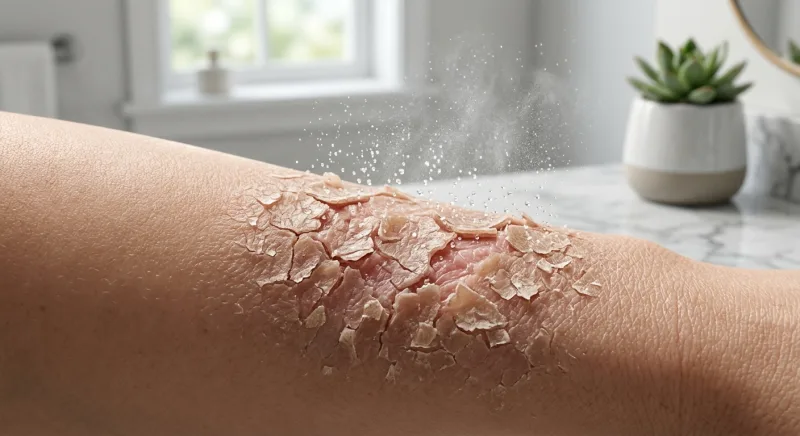
A compromised barrier feels tight, flaky, or rough. It may also sting when you apply products that were previously fine. This is your skin signaling it needs a repair-focused moisturiser for dry skin.
Skin naturally loses moisture throughout the day, and a compromised barrier only speeds this up. Repair takes patience and consistency, not overnight fixes. Choosing the right tools for your routine helps support that recovery over time, rather than working against it.
Repairing the barrier takes consistency. Using the right moisturiser for dry skin daily, rather than only when skin feels tight, gives the barrier time to rebuild its natural defenses.
What Ingredients Should You Look for in a Moisturiser for Dry Skin?
The best moisturiser for dry skin contains humectants, emollients, and occlusives working together. Each ingredient category plays a distinct role, and skipping one weakens the overall formula.
Humectants (hyaluronic acid, glycerin)
Humectants pull water into the outer skin layer from the air and deeper tissue. Hyaluronic acid and glycerin are two of the most common humectants in a moisturiser for dry skin.
Hyaluronic acid can hold large amounts of water relative to its weight, making it a popular hydration booster. Glycerin is cheaper but just as effective at drawing moisture into skin.
Humectants alone can backfire in very dry climates if there’s no occlusive layer on top. Without sealing, they can pull moisture from deeper skin layers instead of the air, leaving skin drier.
Emollients (ceramides, fatty acids)
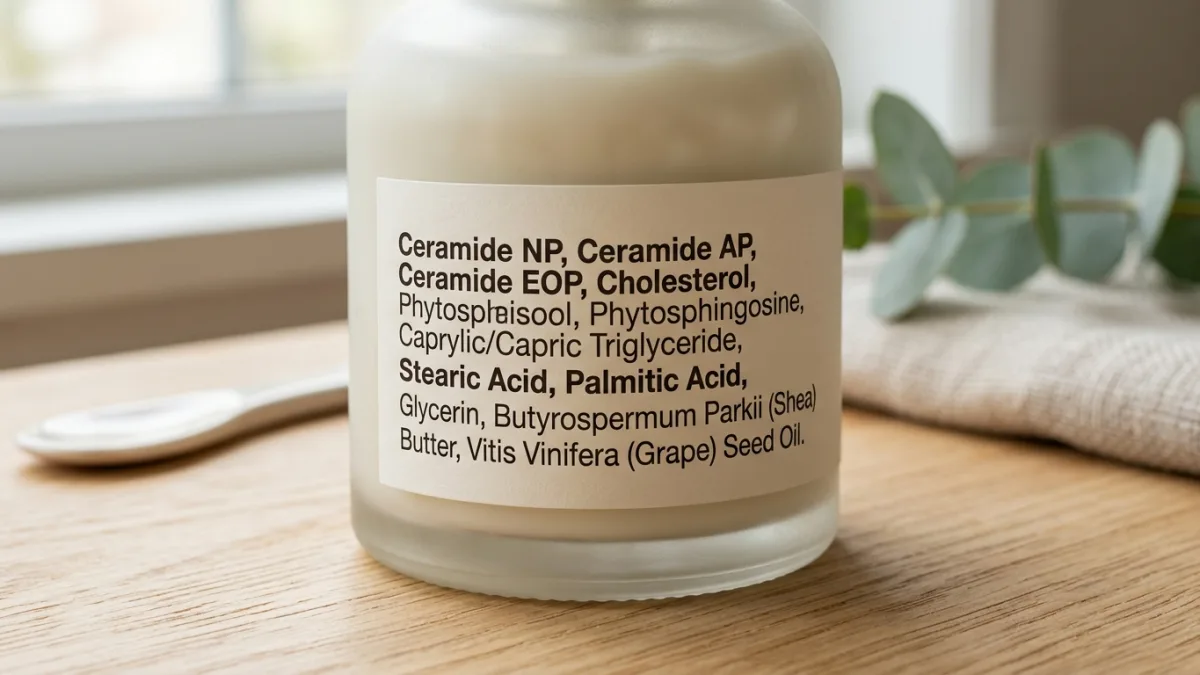
Emollients fill gaps between skin cells and smooth the surface. Ceramides are natural lipids that make up a large part of the skin barrier. They are a key ingredient in barrier-repair moisturiser for dry skin.
Fatty acids like linoleic acid also support the barrier and reduce roughness. Together, ceramides and fatty acids help skin feel smoother within days of consistent use.
Occlusives (petrolatum, shea butter, dimethicone) Moisturiser for dry skin
Occlusives form a physical seal on the skin surface to prevent water evaporation. Petrolatum is considered one of the most effective occlusives available, and it’s common in balm-style moisturiser for dry skin.
Shea butter and dimethicone are lighter alternatives that still lock in moisture without feeling as heavy. These work well for daytime use under makeup or clothing.
Ingredients to avoid if you have dry or sensitive skin
Some ingredients strip moisture or irritate already-compromised skin. Avoiding these helps any moisturiser for dry skin work better and prevents further barrier damage.
- Denatured alcohol, which evaporates quickly and dries out skin
- Fragrance, a common irritant for sensitive or eczema-prone skin
- Sulfates in cleansers used before moisturising, which strip natural oils
- High concentrations of exfoliating acids without adequate hydration support
- Menthol or witch hazel, which can sting compromised skin barriers
Checking labels for these ingredients takes seconds but can prevent weeks of irritation. A simpler formula is often a safer choice for reactive, dry skin.

Moisturiser Textures: Which One Suits Your Dry Skin?
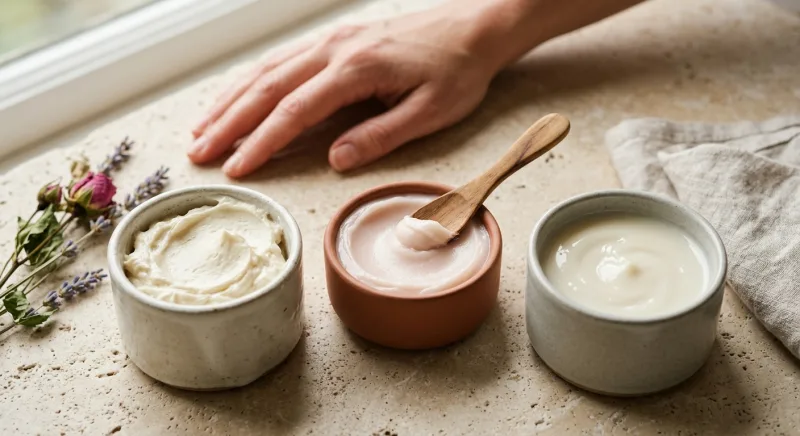
Not all moisturisers feel or perform the same way. Texture affects how a product spreads, absorbs, and layers under makeup or sunscreen. Choosing the right texture can make a hydrating routine feel effortless rather than heavy or greasy.
A moisturiser for dry skin generally needs a richer texture, but climate, skin sensitivity, and personal preference all play a role. Comparing the main texture categories helps narrow down what will actually get used consistently.
| Texture Type | Best For | Feel on Skin | Considerations |
|---|---|---|---|
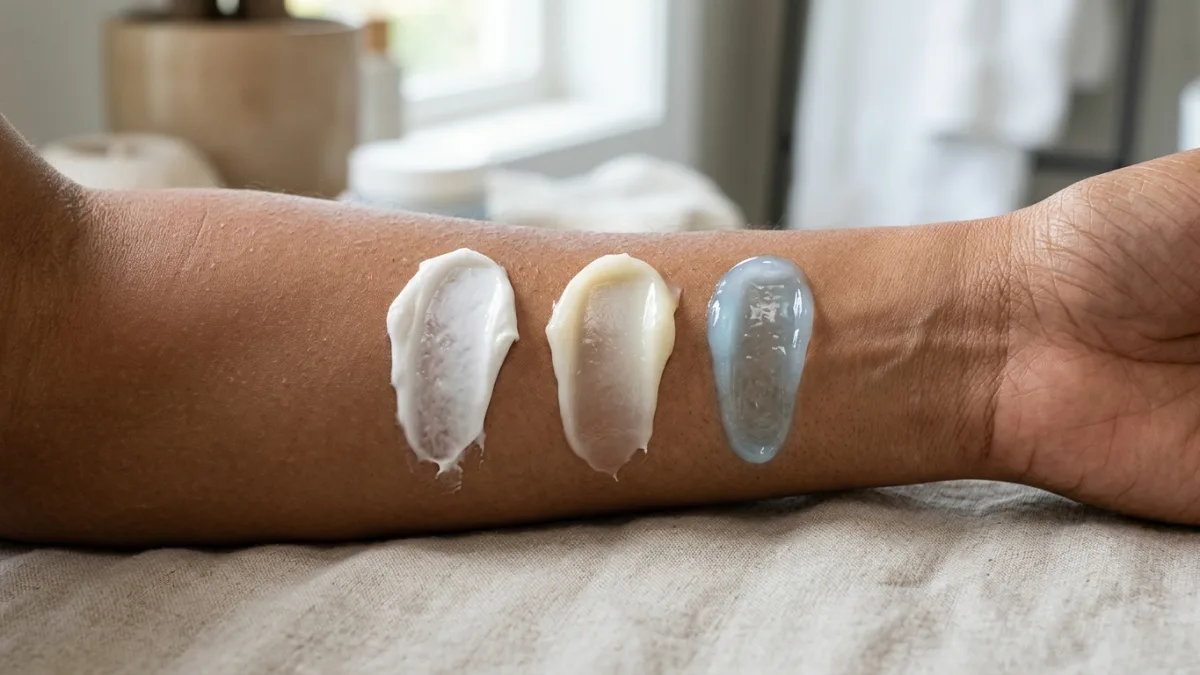
| Cream | Moderate to severe dryness | Rich, cushioned, slow to absorb | May feel heavy in humid weather |
| Balm | Very dry or flaking patches | Thick, occlusive, sits on skin | Best for night use or targeted spots |
| Lotion | Mild dryness or combination skin | Lightweight, fast-absorbing | May need reapplication in dry climates |
| Gel-cream | Dry skin in humid climates | Cool, gel-like, absorbs quickly | Less occlusive, may underperform in winter |
| Oil-based | Severely dry or mature skin | Silky, nourishing, slower to sink in | Can feel too rich for oilier skin types |
Many people find that switching textures seasonally works better than sticking to one product year-round. A cream that feels perfect in January might feel suffocating by July.
Day vs Night Moisturisers: Do You Need Both?
Skin repairs itself differently during the day compared to at night. Daytime moisturisers usually focus on protection, hydration, and compatibility with sunscreen and makeup. Nighttime formulas tend to prioritise deeper repair and richer occlusion while skin is at rest.
For dry skin specifically, this distinction matters more than for other skin types. Skin loses more water overnight, so a heavier, barrier-focused formula at bedtime can make a noticeable difference by morning.
Skin behaves differently depending on the time of day. During waking hours it faces more exposure and stress, while overnight it shifts into a calmer, more restorative state. Matching your grooming and hair removal routine to these natural rhythms can make a real difference.
| Feature | Day Moisturiser | Night Moisturiser |
|---|---|---|
| Primary Goal | Hydrate and protect | Repair and replenish |
| Texture | Lighter, fast-absorbing | Richer, more occlusive |
| SPF Included | Often, or paired separately | Not applicable |
| Key Ingredients | Hyaluronic acid, antioxidants, SPF | Ceramides, ureas, occlusives like petrolatum |
| Application Layering | Under makeup or sunscreen | As final step before sleep |
Using two different formulas isn’t strictly necessary for everyone. Some people with dry skin do fine with one rich moisturiser used morning and night, especially in colder months. Others notice better results tailoring each application to the skin’s needs at that time of day.
If budget or simplicity is a concern, prioritising a good night moisturiser is often more impactful. That’s when skin does most of its repair work, and a heavier formula has time to absorb fully without interfering with makeup or sunscreen.
How to Apply Moisturiser for Maximum Hydration
Even a well-formulated moisturiser underperforms if applied incorrectly. Application technique affects absorption, product longevity, and how long hydration actually lasts throughout the day.
- Apply to slightly damp skin rather than completely dry skin
- Use gentle upward, outward strokes instead of rubbing vigorously
- Layer thinner products first, then seal with a heavier moisturiser
- Wait a few seconds between layers to let each one settle
- Don’t forget the neck, which shows dryness and ageing signs too
Applying moisturiser within a few minutes of cleansing helps trap water already on the skin’s surface. This is sometimes called the “damp skin” method, and it’s a simple way to boost hydration without changing products at all.
Applying products to slightly damp skin generally helps them absorb more easily than on completely dry skin. This simple timing adjustment can make your routine feel more effective without adding extra steps or products to your daily regimen.
Amount matters too. Using too little product is one of the most common reasons dry skin doesn’t improve, even with a good formula. A generous, even layer covering the entire face and neck is usually necessary, not just a small dab in the centre of the cheeks.
Building a Simple Skincare Routine Around Your Moisturiser
A moisturiser works best as part of a routine, not as a standalone fix. For dry skin, the products used before and after moisturising can either support or undo its benefits.
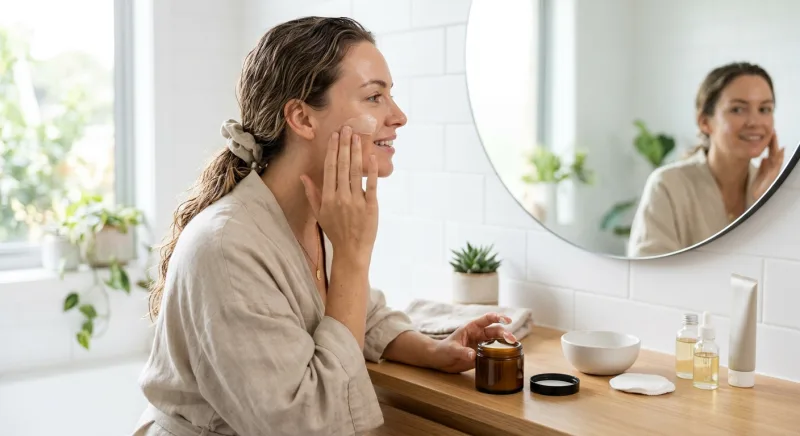
A basic morning routine for dry skin might include a gentle cleanser, a hydrating serum, moisturiser, and sunscreen. At night, the same cleanser can be followed by a richer moisturiser or an occlusive balm, depending on how dry the skin feels that day.
- Cleanse with a non-foaming, fragrance-free cleanser
- Apply a hydrating toner or essence if used
- Layer a hyaluronic acid or humectant-rich serum
- Seal with moisturiser while skin is still damp
- Finish with sunscreen in the morning
Adding too many active ingredients at once can overwhelm dry, sensitive skin. It’s often better to introduce one new product at a time and observe how skin responds over a week or two before adding another.
Lifestyle Factors That Affect Dry Skin Beyond Moisturiser
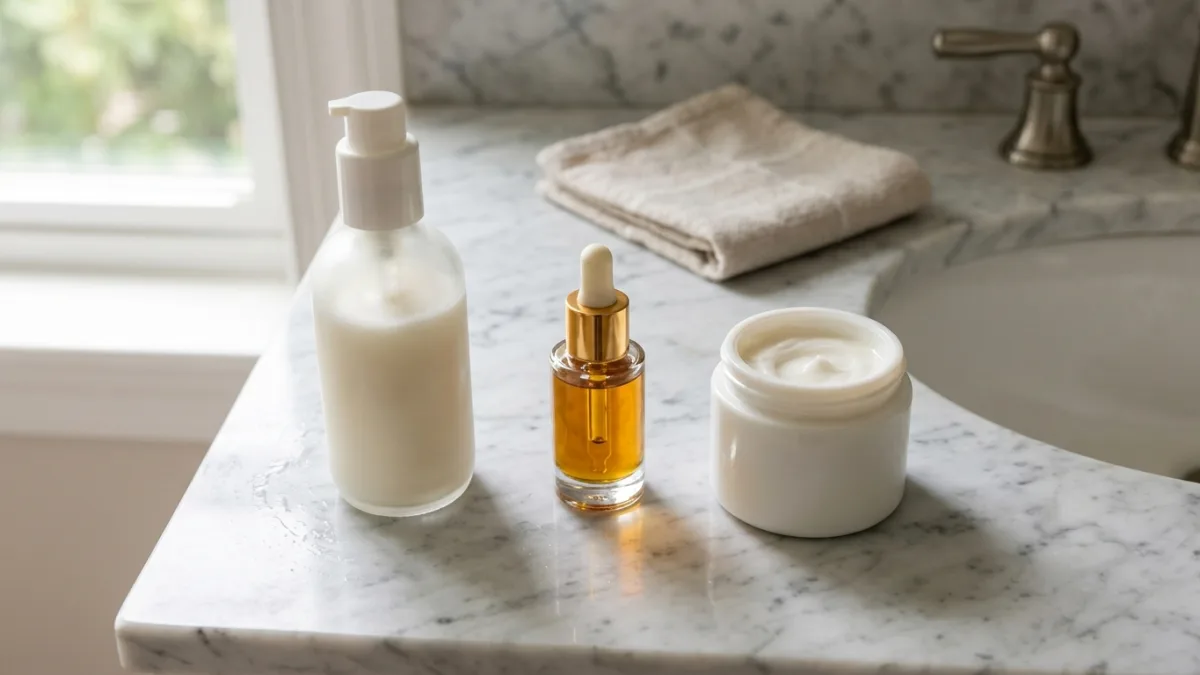
Moisturiser addresses the surface, but dry skin is also influenced by habits and environment. Ignoring these factors can limit how effective even the best product turns out to be.
- Long, hot showers strip natural oils faster than lukewarm ones
- Indoor heating and air conditioning both reduce ambient humidity
- Low water intake can contribute to overall skin dehydration
- Harsh soaps used on hands and body worsen dryness elsewhere
- Wind and cold exposure without protection accelerate moisture loss
A humidifier in the bedroom is a small change that often makes a noticeable difference, especially during winter months. Running one overnight can help skin retain moisture instead of losing it while sleeping in dry, heated air.
Diet also plays a supporting role, though it’s not a substitute for topical care. Foods rich in essential fatty acids, along with adequate water intake, support the skin’s barrier from the inside.
Staying hydrated supports your skin from the inside out, complementing whatever routine you follow on the surface. Pairing good hydration habits with the right grooming and hair removal tools helps your skin look and feel its smoothest.
When to See a Dermatologist About Dry Skin
Most dry skin responds well to consistent moisturising and a few lifestyle adjustments. But some cases point to an underlying condition that needs professional attention rather than another product swap.
- Dryness that doesn’t improve after weeks of consistent moisturising
- Cracked, bleeding, or painful patches of skin
- Persistent redness, itching, or swelling
- Skin that feels dry alongside other symptoms like fatigue or hair thinning
- A sudden change in skin texture with no clear cause
Conditions like eczema, psoriasis, or thyroid imbalances can present as chronic dry skin. A dermatologist can identify whether over-the-counter moisturisers are enough or whether a prescription treatment is needed.
Everyday dryness usually responds well to consistent care and the right products. Persistent redness, itching, or discomfort that doesn’t improve may signal something more, and is worth discussing with a dermatologist rather than treating as routine dryness.
Read the complete guide: How to Build a Skincare Routine That Actually Works in 2026
Key statistics
- Eczema, a persistent or recurrent dry skin condition, affects about one in five children and up to one in ten adults in the UK. (NHS Cheshire and Merseyside, 2024)
- A ceramide-based moisturizer significantly increased skin hydration at 24 hours compared with three reference over-the-counter moisturizers. (Clinical, Cosmetic and Investigational Dermatology (PMC/NIH), 2018)
Expert insights
There’s definitely not a one-size-fits-all for all skin types,
Rebecca Kazin, MD, FAAD, a board-certified dermatologist in Bethesda
References
- Creams and ointments tend to work better than lotions for healing dry skin because they hold more moisture in the skin. — American Academy of Dermatology (AAD) (Professional medical association representing board-certified dermatologists)
- A moisturizer containing ceramides helps seal in moisture and can reduce the visible whitish or grayish appearance of dry skin on darker skin tones. — American Academy of Dermatology (AAD) (Professional medical association representing board-certified dermatologists)
- Moisturizer should be applied while skin is still damp after a shower or bath for best results. — American Academy of Dermatology (AAD) (Professional medical association representing board-certified dermatologists)
- An ointment is the thickest type of moisturizer and is the most effective for remedying dry skin, while gels and lotions are lighter and less occlusive. — American Academy of Dermatology (AAD) (Professional medical association representing board-certified dermatologists)
- Dermatologists recommend selecting moisturizers with active ingredients such as urea, ceramides, lactic acid, or glycerol to heal excessively dry skin. — American Academy of Dermatology (AAD) (Professional medical association representing board-certified dermatologists)
Market context
Skin barrier function (TEWL and stratum corneum hydration) comparison across healthy, psoriatic, and atopic dermatitis skin — A cross-sectional clinical study of 314 participants (157 healthy individuals, 92 psoriasis patients, and 65 atopic dermatitis patients) found transepidermal water loss was significantly higher and stratum corneum hydration significantly lower at diseased skin sites compared with healthy skin. PMC (National Library of Medicine) / MDPI Journal of Clinical Medicine, 2021
12-month period prevalence of atopic dermatitis in resource-rich countries — A systematic review and meta-analysis found the 12-month period prevalence of atopic dermatitis in resource-rich countries to be 9.2% (95% CI 8.4–10.1%). Scientific Reports (Nature), 2022
Adjacent-market figures — each names the subject it measures, not moisturiser for dry skin directly.
You may also be interested in: Korean Skincare in 2026: The Complete Beginner’s Guide to K-Beauty Routines
You may also be interested in: Lip Balm 101: How to Pick, Apply, and Actually Fix Dry Lips in 2026
You may also be interested in: Female Waxing 101: Types, Prep, Aftercare, and How Often to Wax in 2026
