
hair removal
Sugaring Hair Removal: The Gentler Truth Behind Smooth Skin
Last updated: November 3, 2026
Sugaring hair removal uses a warm paste made from sugar, lemon, and water to pull hair out from the root. It’s applied by hand and removed in the same direction hair grows, causing less irritation than waxing for many people.
It suits most skin types, with results lasting three to six weeks.
If you’ve tried shaving every other day and you’re tired of the stubble, sugaring hair removal might sound like the answer. It’s not new. People have used sugar paste for hair removal for centuries. But it’s having a real moment right now, and for good reason.
This guide walks through how sugaring hair removal actually works, how it stacks up against waxing, and where it fits next to modern tools like at-home IPL handsets. We’ll also cover cost, aftercare, and who should think twice before booking a session.
What Is Sugaring Hair Removal?
Sugaring hair removal is a way to pull hair out at the root using a thick paste made from sugar, lemon juice, and water. Unlike wax, the paste goes on at room or body heat, so there’s no risk of a burn. It’s classed medically as a form of epilation (removing the hair shaft, the follicle, and the root bulb together), grouped with plucking, threading, waxing, lasers, and Intense Pulsed Light, with every method except electrolysis being short-term. (PubMed (Journal of Cutaneous Medicine and Surgery))
That distinction matters. Sugaring hair removal doesn’t destroy the follicle (the small pocket under the skin where each hair grows) the way electrolysis does. It just removes what’s already grown, root and all, which is why hair eventually comes back.
How the Sugar Paste Works on Hair
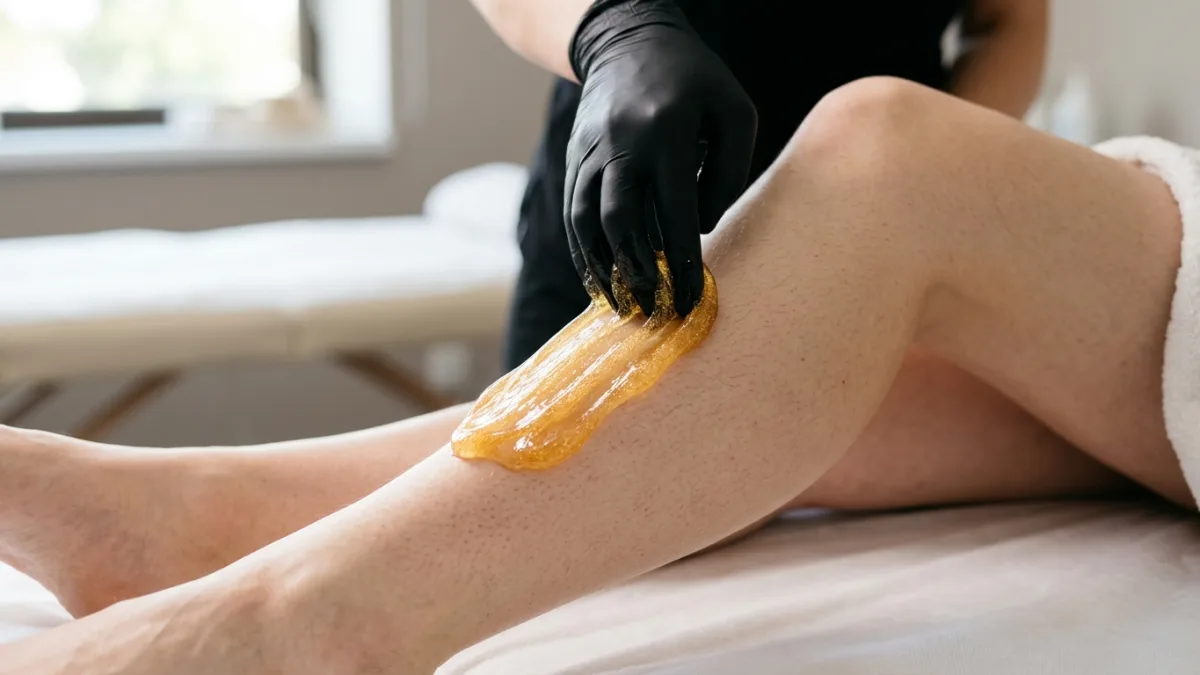
The paste gets molded into the skin against the direction hair grows, then flicked off in the same direction the hair naturally grows. That flicking motion is the whole trick behind sugaring hair removal.
Because the paste moves with the hair’s natural growth pattern, it tends to snap fewer hairs at the surface, which can mean less breakage and fewer ingrown hairs later on.
Sugaring vs. Waxing: The Core Difference
Waxing pulls hair out from the root by spreading wax on the skin and ripping it off quickly, with results that can last four to five weeks before regrowth shows up again. Sugaring hair removal aims for a similar result but with a different application method and, often, a softer feel on the skin. (American Academy of Dermatology (AAD))
Both fall under the broader umbrella of hair removal methods that pull hair from the root rather than cutting it at the surface. The main difference comes down to ingredients, technique, and how each interacts with sensitive skin. We’ll break that down fully in the next section.
Sugaring vs. Waxing: Which Is Actually Better for You?
Pain Level Compared
Most people say sugaring hair removal feels less painful than waxing, largely because hair is pulled the way it grows instead of against it.
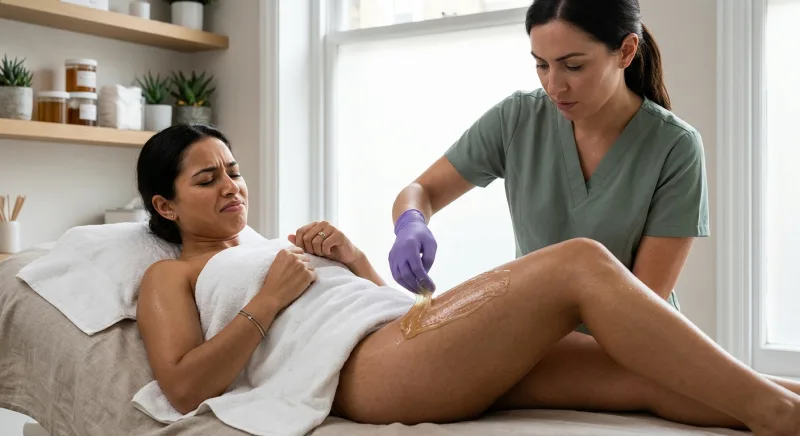
How much pain you can take still plays a big role either way.
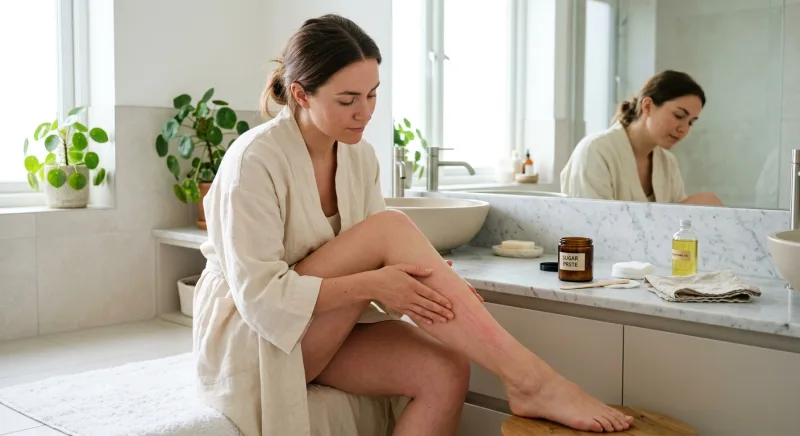
Skin Type & Sensitivity Considerations
Skin studies on hair removal in sensitive spots have looked closely at risks tied to each method, including redness and ingrown hairs, and have worked on ways to stop them. That’s true whether you’re comparing sugaring hair removal to waxing, shaving, or laser-based options for a sensitive spot like the bikini line. (PubMed (Journal der Deutschen Dermatologischen Gesellschaft))
Results Longevity Compared
Sugaring hair removal results usually last three to six weeks, depending on your hair growth cycle and the area treated. Waxing lasts about the same four to five weeks. Neither is permanent, since both ways only remove hair that’s already grown rather than shutting down the follicle itself. (American Academy of Dermatology (AAD))
| Method | Pain Level | Best For | Prep Needed |
|---|---|---|---|
| Sugaring | Low to moderate | Sensitive or reactive skin | Hair grown to a short length |
| Waxing | Moderate | Coarse or dense hair | Hair grown to a short length |
| IPL (Intense Pulsed Light) | Low, mild warmth | Longer-term regrowth reduction | Shaved area, multiple sessions |
| Epilating | Moderate | Quick at-home sessions | Clean, dry skin |
What Body Areas Can Be Sugared?
Who Should Avoid Sugaring or Ask a Professional First?
Most people can safely try sugaring hair removal, but a few groups should check with a doctor or licensed technician first. This means anyone on certain acne drugs, anyone with active skin issues, and anyone pregnant with very sensitive skin. It’s a quick chat that can stop an uncomfortable reaction later. (Healthline (citing dermatology guidance))
Pregnancy, Periods & Piercings
Pregnancy brings shifts in hormones and skin that can make skin more reactive and touchy overall, which matters when picking any hair removal method, sugaring hair removal included. Many people still get sugared all through pregnancy with no issue, but it’s worth telling your technician first so they can change their approach if needed. (American College of Obstetricians and Gynecologists (ACOG))
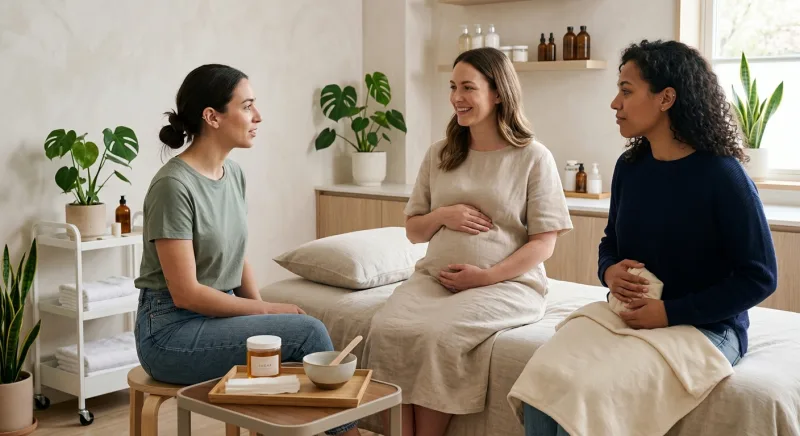
Periods don’t usually stop sugaring, though some find skin more sensitive that week. Fresh piercings in the area being treated should be avoided until fully healed, since the paste can catch on jewelry or irritate the spot. (American College of Obstetricians and Gynecologists (ACOG))
Skin Conditions and Medications to Flag
People on isotretinoin (a strong prescription acne drug) should not wax or use like hair-pulling methods such as sugaring hair removal, and should wait six months after stopping it, since the drug makes skin thin and prone to scars. Active eczema, sunburn, or open cuts in the area are also good reasons to wait. (American Academy of Dermatology (AAD))
Anyone prone to ingrown hairs or folliculitis (swollen, sometimes infected hair follicles) should say so before a session. Hair removal ways like waxing or plucking already raise the risk of ingrown hairs, which can sometimes turn into infection or small cysts, so sugaring hair removal isn’t automatically risk-free just because it’s gentler. (Cleveland Clinic)
Sugaring vs. Waxing vs. Shaving: A Side-by-Side Look
| Method | How it works | Typical regrowth time | Common downsides |
|---|---|---|---|
| Sugaring hair removal | Paste pulls hair out at the root, applied against growth and removed with growth | 3 to 4 weeks | Needs some hair length to grip; can still cause ingrown hairs |
| Waxing | Wax pulls hair out at the root, often removed against growth | 4 to 5 weeks | Can burn skin if too hot; more pulling force on skin |
| Shaving | Blade cuts hair at the skin’s surface | 1 to 3 days | Fast regrowth; higher chance of razor bumps and stubble |
Sugaring Hair Removal and Ingrown Hairs: What the Research Says
This isn’t a small or rare problem for everyone. One older study found that pseudofolliculitis barbae, the medical name for ingrown hair bumps caused by hair removal, may affect 45% of Black servicemen. (PubMed (National Library of Medicine), 1979)
More recent studies back this up and show the range may be even wider. Guesses for how common this condition is among African-American groups run from 45% up to 83%, depending on the study. (PMC (National Library of Medicine), 2024)
There’s also a genetic piece to this puzzle. People with one specific change in a gene called K6hf, which helps build the inner structure of hair, have six times the chance of developing these ingrown hair bumps. (PMC (National Library of Medicine), 2019)
None of this means sugaring hair removal causes ingrown hairs on its own. But it does mean the risk exists across nearly every hair-pulling method, and some people carry a higher genetic chance of dealing with it no matter what method they pick. (PubMed (Journal der Deutschen Dermatologischen Gesellschaft))
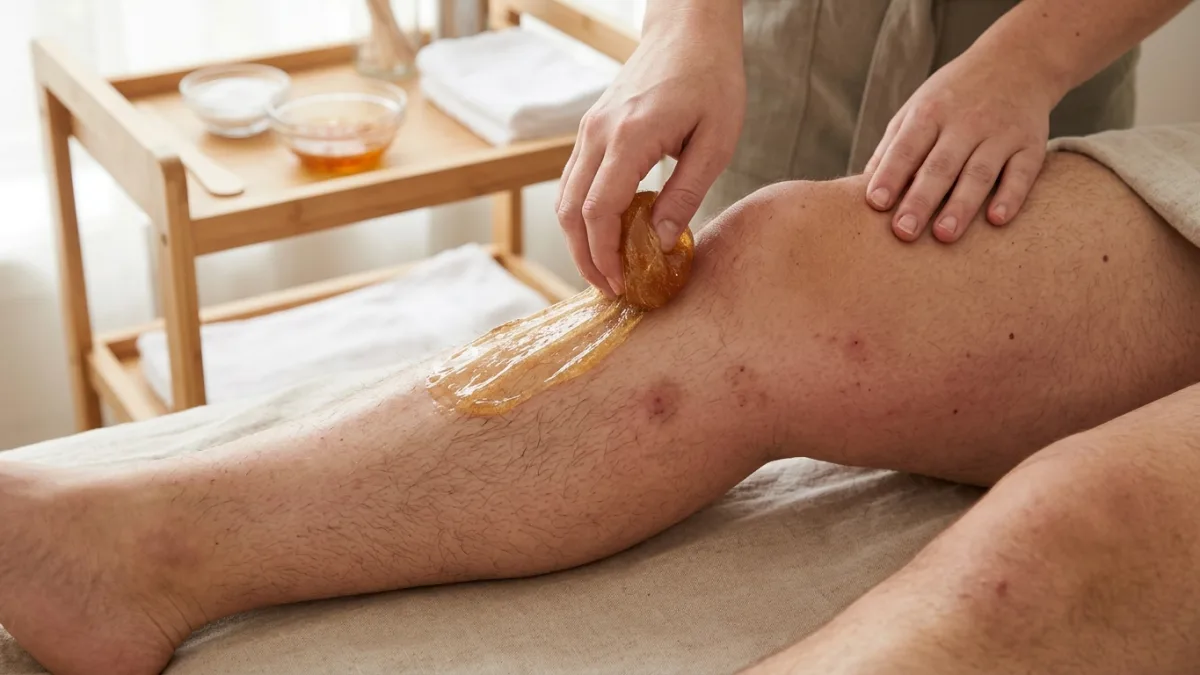
Dermatologists who study hair removal in sensitive areas have looked closely at these risks. Reviews of genital-area hair removal methods have weighed the specific problems each method causes, along with ways to prevent issues like irritation and ingrown hairs before they start. (PubMed (Journal der Deutschen Dermatologischen Gesellschaft))
If ingrown hairs keep showing up no matter how careful you are, that’s a sign worth paying attention to. Health guidance on this points to a simple fix: switch methods. Moving from a hair-pulling method to a cream, or to a longer-term option like laser treatment, often clears up the problem. (NHS)
Sugaring Hair Removal During Pregnancy and Other Special Situations
Pregnancy changes the skin in ways that matter for any hair removal method. Hormone shifts during pregnancy can make skin more reactive and more sensitive than usual. That’s worth keeping in mind before booking a sugaring hair removal session while pregnant. (American College of Obstetricians and Gynecologists (ACOG))
Some drugs also change how skin handles hair removal, and this is one of the firmest rules skin doctors give. Anyone on a strong acne drug called isotretinoin should skip waxing, sugaring, and like hair-pulling methods. This rule holds for six months after stopping the drug too, since skin stays thin and prone to scars in that time. (American Academy of Dermatology (AAD)) (Healthline (citing dermatology guidance))
This matters because sugaring hair removal, like waxing, pulls skin along with the hair. On skin already thinned or weak from drugs, that pull can cause tearing or lasting marks that would not happen on healthy skin. (American Academy of Dermatology (AAD))
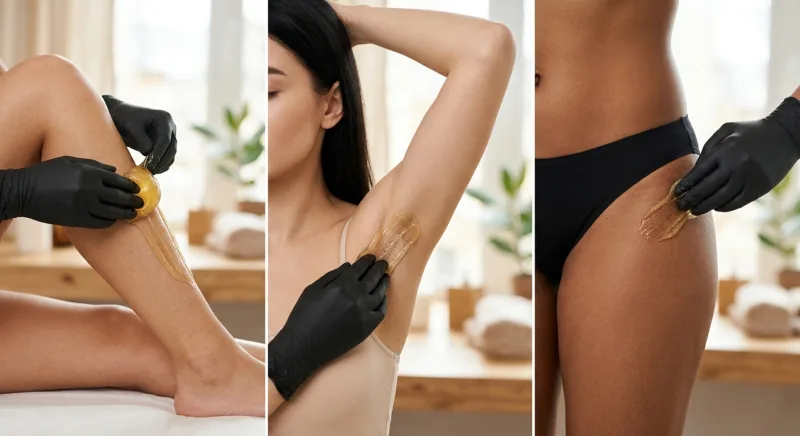
Sugaring Hair Removal by Body Area: A Quick Comparison
| Body area | Sensitivity level | Notes |
|---|---|---|
| Legs | Low to moderate | Thicker skin, generally the easiest starting point for first-timers |
| Underarms | Moderate | Thin skin and often-changing hair direction; needs a skilled hand |
| Bikini and genital area | High | Higher risk of irritation and ingrown hairs; benefits from careful aftercare |
| Face | High | Thin, sensitive skin; smaller sections worked at a time |
Areas with thin skin and thick hair growth, like the bikini line, tend to carry more risk for irritation. That’s exactly where the grouping of sugaring as a form of epilation, or full hair removal from root to follicle, matters most. It’s grouped with waxing, threading, and plucking as a short-term method, unlike electrolysis, which permanently destroys the follicle. (PubMed (Journal of Cutaneous Medicine and Surgery))
Frequently Asked Questions
Is sugaring hair removal better than waxing?
Both pull hair from the root, so results last close to the same length of time. Sugaring paste is applied at room temperature, which feels gentler on sensitive skin. Waxing removes hair for 4 to 5 weeks before it grows back, and sugaring lasts about as long, so pick based on comfort. (American Academy of Dermatology (AAD))
Does sugaring hair removal hurt less than waxing?
Many people find sugaring hurts less because the paste only grips hair, not skin. It’s also removed in the direction hair grows, which lowers the chance of breakage. Pain still depends on the area, your pain threshold, and how well you prep skin before your appointment or home session.
Can sugaring hair removal cause ingrown hairs?
Yes, any method that pulls hair from the root, including sugaring, can lead to ingrown hairs. Risk goes up in coarse, curly hair spots like the bikini line. Regular gentle exfoliation between sessions helps a lot. Switching methods, like trying a hair removal cream, can also help if ingrown hairs keep coming back. (NHS) (Wikipedia (Ingrown hair), corroborated by dermatology sources)
Who should avoid sugaring hair removal?
People taking isotretinoin, a strong acne drug, should skip sugaring and like hair-pulling methods, and wait six months after stopping the drug. Skin is more weak and prone to scarring during that time. Anyone with active skin infections, sunburn, or open cuts in the area should also wait. (American Academy of Dermatology (AAD))
Is sugaring hair removal safe during pregnancy?
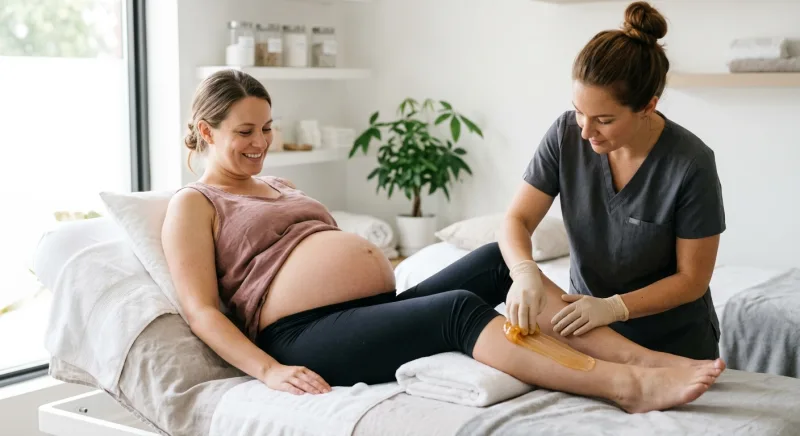
Sugaring is mostly seen as a safe choice during pregnancy, but skin gets more reactive and sensitive due to hormone shifts. A patch test before a full session is wise. Going to a trained pro who knows how to adjust pressure and touch for sensitive skin can lower the chance of irritation. (American College of Obstetricians and Gynecologists (ACOG))
How often do I need sugaring hair removal sessions?
Most people book sugaring hair removal every four to six weeks, once hair has grown back enough to grip. Areas with finer hair, like the face, may need more frequent visits.
Sticking to a steady schedule actually trains hair to grow back finer and sparser over time, making each session easier.
Can sugaring hair removal cause folliculitis or infection?
It’s possible, though not common with proper technique. Pulling hair from the root can irritate follicles, and if germs get in, it can turn into folliculitis or, rarely, a cyst. Keeping the area clean before and after, and skipping tight clothes right after your session, cuts this risk a lot. (Cleveland Clinic)
Key statistics
- Pseudofolliculitis barbae (ingrown hairs from hair removal) possibly affects 45% of all Black servicemen, according to a study published in a peer-reviewed dermatology journal. (PubMed (National Library of Medicine), 1979)
- Prevalence estimates for pseudofolliculitis barbae range between 45% and 83% among African-American populations across different studies. (PMC (National Library of Medicine), 2024)
- Individuals with a specific single nucleotide substitution in the K6hf keratin gene have a six-fold increased chance of developing pseudofolliculitis barbae (ingrown hair bumps from shaving/hair removal). (PMC (National Library of Medicine), 2019)
Expert insights
Sugaring is great for most skin types
Dr. Annie Chiu, board-certified cosmetic and general dermatologist
it’s best to consult a dermatologist before and stop all use of retinoids at least a week before you do any kind of hair removal
Erum Ilyas, board-certified dermatologist
References
- Waxing pulls hair out from the root by applying wax to the skin and quickly removing it, with results that can last 4 to 5 weeks before regrowth. — American Academy of Dermatology (AAD) (Professional dermatology association whose public patient-education pages reflect dermatologist-reviewed guidance on hair removal methods.)
- Waxing (and similar hair-pulling methods) is generally considered safe during pregnancy, but pregnant people should use extra caution, check for skin conditions like open cuts, rashes, or melasma, and avoid waxing over affected areas. — Healthline (citing dermatology guidance) (Includes sourced dermatologist commentary on which skin conditions should not be waxed and pregnancy-specific precautions.)
- Shaving, waxing, and other hair-removal methods that break hairs unevenly or fail to account for natural exfoliation can lead to ingrown hairs, which are more prevalent in people with coarse or curly hair. — Wikipedia (Ingrown hair), corroborated by dermatology sources (General reference summarizing the clinical mechanism of ingrown hairs; use for context only, not as primary citation for medical claims.)
- Sugaring is classified medically as a form of epilation (removing the hair shaft, follicle, and bulb), grouped alongside plucking, threading, waxing, lasers, IPL, and electrolysis, with all methods except electrolysis being temporary. — PubMed (Journal of Cutaneous Medicine and Surgery) (Peer-reviewed literature review indexed on PubMed/NIH)
- Dermatological analysis of genital-area epilation and depilation methods has examined method-specific risks and undesirable effects, and developed prophylactic strategies to avoid complications such as irritation and ingrown hairs. — PubMed (Journal der Deutschen Dermatologischen Gesellschaft) (Peer-reviewed dermatology journal study indexed on PubMed/NIH)
- People should not wax or use similar hair-pulling removal methods (like sugaring) while taking isotretinoin, and for six months after stopping it, due to increased skin fragility and scarring risk. — American Academy of Dermatology (AAD) (Professional medical association representing dermatologists, providing patient-facing clinical guidance on isotretinoin)
- Hair removal methods like waxing or plucking increase the risk of developing ingrown hairs, which can sometimes progress to infection (folliculitis) or cysts. — Cleveland Clinic (Major academic medical center providing patient education reviewed by clinical staff)
- Pregnancy causes hormonal and physiological skin changes that can make skin more reactive and sensitive, which is relevant when considering hair removal during pregnancy. — American College of Obstetricians and Gynecologists (ACOG) (Leading professional medical organization for obstetrics and gynecology)
- If one hair removal method is causing ingrown hairs, switching to a different method, such as a hair removal cream, or a longer-term option like laser treatment, can help. — NHS (UK National Health Service official patient guidance)
