
Skincare ingredients
6 Vitamin C Serum Benefits Backed by Real Skin Studies
Last updated: November 18, 2026
Vitamin C serum brightens skin tone, fades dark spots, boosts collagen (the protein that keeps skin firm and bouncy), and helps defend against sun and pollution damage. It also calms redness and softens the look of under-eye circles.
Most skin types tolerate it well, though sensitive skin may need a lower strength to start.
What Does Vitamin C Serum Actually Do for Your Skin?
Vitamin C serum works as an antioxidant that fights free radicals (loose molecules from sun and dirt in the air that break down healthy skin cells) behind dullness, dark spots, and early fine lines. It also plays a direct part in building new collagen. Vitamin C put on the skin guards against photoaging, unwanted immune loss from ultraviolet light, and even skin cancer risk from sun harm, while boosting collagen and fading spots. (The Journal of Clinical and Aesthetic Dermatology (PMC))
That one process explains most of what people love about vitamin c serum benefits. It is not one trick — it is one ingredient working on many fronts at once: tone, texture, firmness, and shield.
The short answer
The short answer is that vitamin C serum brightens, guards, and firms skin. It works as an antioxidant that helps stop sun-related skin harm and helps collagen form, per skin doctor guidance. Vitamin c serum benefits build over weeks, not overnight, since collagen renewal and spot fading both take time. (American Academy of Dermatology)
Who should (and shouldn’t) use it
Most adults can add vitamin C serum to a morning routine with no issue. People with very touchy or eczema-prone skin may want to start slow. Skin doctors suggest testing any new active, including vitamin C serum, on a small patch of skin for about a week before use on the whole face. (American Academy of Dermatology)
This matters because there are thousands of things that can cause a skin allergy, and testing first helps you catch irritation early, most of all if your skin is sensitive. (American Academy of Dermatology (AAD))

The Core Benefits of Vitamin C Serum, Explained
Brightening and evening skin tone
Fading dark spots and hyperpigmentation
A look at 31 controlled trials with 741 people found vitamin C cuts sun-caused skin spots based on dose, with a 10% strength showing the strongest lightening effect. That is strong proof for fading dark spots, not just general glow. (Journal of Clinical and Aesthetic Dermatology (PMC), 2019) (The Journal of Clinical and Aesthetic Dermatology (PMC))
Supporting collagen production
Vitamin C helps the body build and firm up collagen fibers while slowing collagen breakdown, which keeps skin firm for longer. A randomized double-blind trial of a 5% vitamin C cream on sun-aged skin, tracked over 6 months, found a clear, visible gain in skin feel and surface shape. (The Journal of Clinical and Aesthetic Dermatology (PMC)) (Experimental Dermatology (PubMed), 2003)

Defending against sun and environmental damage
Vitamin C serum will never replace sunscreen, but it adds a layer of antioxidant defense against the free-radical harm that daily sun and pollution cause. This is one reason vitamin c serum benefits are usually talked about along with daily SPF (sun protection factor) use, not in place of it. (American College of Osteopathic Family Physicians (ACOFP))
Reducing the look of under-eye circles
Calming redness and irritation
In a trial, patients rated the vitamin C-treated side of the face as 84.2% more improved than the placebo side, while photo checks favored the vitamin C side in 57.9% of subjects. That gap points to real, plain calming and evening effects beyond placebo. (PubMed (Traikovich SS, 1999), 1999)
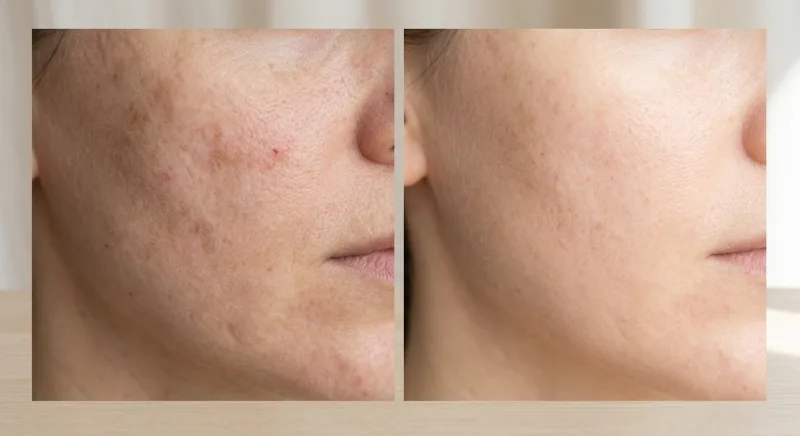
| Skin Concern | Vitamin C Benefit That Helps |
| Dull, uneven tone | Brightening and melanin regulation |
| Dark spots or sun spots | Dose-dependent pigment fading |
| Fine lines and sagging | Collagen support and stabilization |
| Daily sun and pollution exposure | Antioxidant defense (paired with SPF) |
| Tired-looking under-eyes | Brighter, firmer surrounding skin |
| Redness and blotchiness | Visible calming, evening effect |
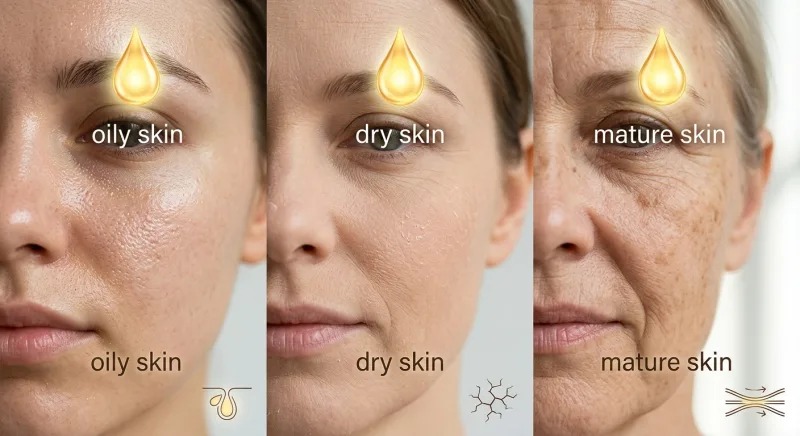
Does Vitamin C Serum Work for Every Skin Type?
Oily and acne-prone skin
Dry and sensitive skin
Dry and sensitive skin can still enjoy vitamin c serum benefits, but a lower strength and a cream-based mix cut the risk of sting or flaking. Patch testing matters most here, since sensitive skin reacts fastest to new actives. (American Academy of Dermatology (AAD))
Mature skin

Older skin tends to gain most from the collagen-boost side of vitamin C serum, since natural collagen output slows with age. Pairing it with a hyaluronic acid cream, covered more in a guide on hyaluronic acid, can help hold in water while the vitamin C works on firmness.
Vitamin C serum benefits vs. other brightening ingredients
Vitamin C isn’t the only ingredient that promises brighter, more even skin. Niacinamide often comes up as a rival pick, and knowing how they differ helps you choose the right one. The table below lines up the two side by side.
| Feature | Vitamin C serum | Niacinamide |
|---|---|---|
| Main way it works | Acts as an antioxidant and boosts collagen production | Blocks pigment transfer between skin cells |
| Best known for | Brightening, fading dark spots, firming skin | Calming redness, reducing oil, evening tone |
| Speed of visible results | Weeks to a few months | Weeks to a few months |
| Skin sensitivity risk | Can sting on sensitive skin, especially at high strength | Generally gentle, low irritation |
| Pairs well with | Sunscreen, hyaluronic acid | Most actives, including vitamin C |
Niacinamide works through a different path than vitamin C. It stops pigment from moving up to the skin’s top layer, rather than fighting damage as an antioxidant. That means it’s often gentler, which is why some people with touchy skin turn to niacinamide first. (PubMed (National Library of Medicine))
That said, niacinamide isn’t just a weaker stand-in. Studies have found niacinamide gives a lightening effect on melasma that holds up about as well as hydroquinone, a common strong prescription lightening ingredient. So for spot worries alone, niacinamide can be a real rival. (PMC (National Institutes of Health))
Still, if your main goal is firmer skin and sun-damage repair, not just tone, the full range of vitamin c serum benefits gives it an edge. It covers more ground: pigment, texture, and collagen support all in one product. (The Journal of Clinical and Aesthetic Dermatology (PMC))
Many people don’t have to pick one or the other anyway. Vitamin C in the morning and niacinamide layered in, or used at night, is a common routine. Both work well together when brought in slow and patch-tested first. (American Academy of Dermatology (AAD))
Vitamin C serum benefits by strength and form
Not all vitamin C serums are built the same. Strength and form change how well a serum works, and how likely it is to irritate skin. Here’s a quick comparison of common types you’ll see on shelves.
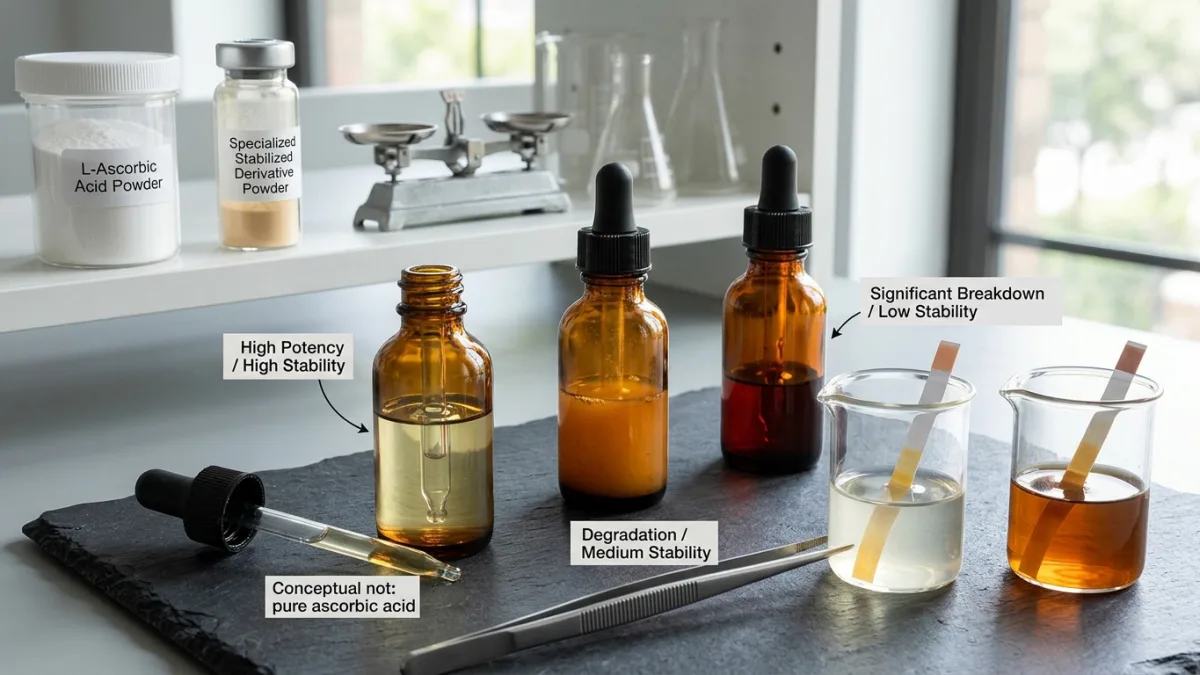
| Form of vitamin C | Typical strength | Stability | Best for |
|---|---|---|---|
| Pure ascorbic acid | 10–20% | Low, breaks down fast once opened | Experienced users wanting strongest results |
| Sodium ascorbyl phosphate | 5–10% | High, more shelf-stable | Sensitive or beginner skin |
| Magnesium ascorbyl phosphate | 5–10% | High, more shelf-stable | Sensitive or beginner skin |
| Vitamin C derivatives blended with ferulic acid | 10–15% | Moderate to high with proper packaging | Those wanting extra antioxidant support |
Pure ascorbic acid, the plain form of vitamin C, tends to give the strongest results but is also the least stable. It tends to break down in water-based mixes, which is one reason serum color darkening happens over time and matters for shelf life. (PMC (National Library of Medicine))
That poor stability is just why milder forms were made. Things like sodium ascorbyl phosphate and magnesium ascorbyl phosphate last longer in a bottle, making them common picks for sensitive-skin mixes. (PubMed (National Library of Medicine))
If you’re weighing vitamin c serum benefits against tolerance, strength isn’t the whole story. A vitamin C serum with 10%–20% ascorbic acid concentration is recommended as an effective middle ground, since under 10% won't convey benefits but over 20% risks irritating the skin. (Cleveland Clinic, 2024)
Studies back up this dose-based pattern too. A big look at dozens of trials found vitamin C lightens sun-related spots in a dose-based way, meaning higher strengths tend to work better, and 10% strength showed the strongest skin-lightening effect overall. (Journal of Clinical and Aesthetic Dermatology (PMC), 2019)
That doesn’t mean more is always better for everyone. Someone with rosacea or eczema-prone skin may do better starting at 5% and building up. The goal is steady, lasting use, not the highest number on the label.
How to choose based on your main goal
- Fading dark spots or sun damage: look for a higher-strength ascorbic acid serum, ideally paired with sunscreen every morning.
- Firming and fine lines: prioritize formulas that highlight collagen support, since this is one of the best-documented vitamin c serum benefits for aging skin.
- Sensitive or reactive skin: start with a gentle derivative like sodium ascorbyl phosphate at a lower strength.
- General prevention and glow: a mid-strength, stable formula used daily is often enough to see a difference.
Whatever your goal, patch testing still counts. Skin doctors say to try a new product on a small patch of skin for about a week before putting it on your whole face. This one small step can save you a week of irritation later. (American Academy of Dermatology)
It’s also worth noting that skin type and skin goal can shift over time. Someone who started with a mild form in their twenties may move to a stronger ascorbic acid formula later, once their skin builds tolerance and their goals shift toward firmness and deeper pigment fixing.
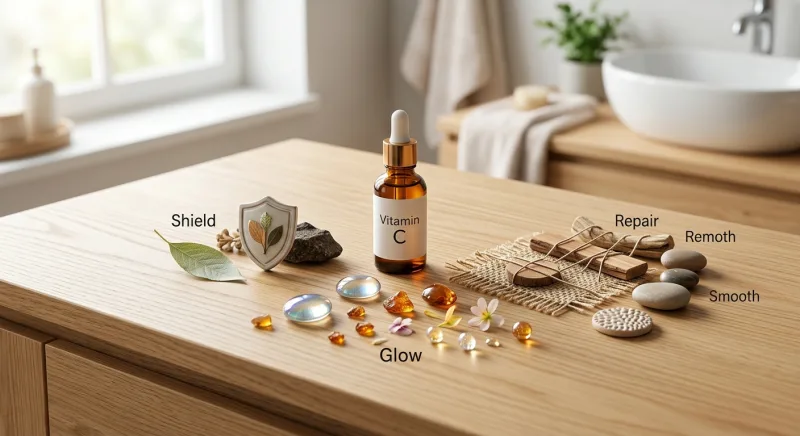
The clearest point across the studies is this: vitamin c serum benefits aren’t one single effect, but a mix of shield, glow, and repair working together. Picking the right strength and form just helps you get there with less trial and error. (The Journal of Clinical and Aesthetic Dermatology (PMC))
Read the complete guide: Your Skincare Ingredients Guide to Fewer Guessing Games
Does Vitamin C Serum Boost Hydration and Skin Moisture?
Update 1 · November 18, 2026
Vitamin C isn’t just for brightening. It also helps skin hold on to water. One clinical study found that 83% of people felt their skin was more hydrated right after just one use of a vitamin C serum. (PubMed / Clinical, Cosmetic and Investigational Dermatology, 2018)
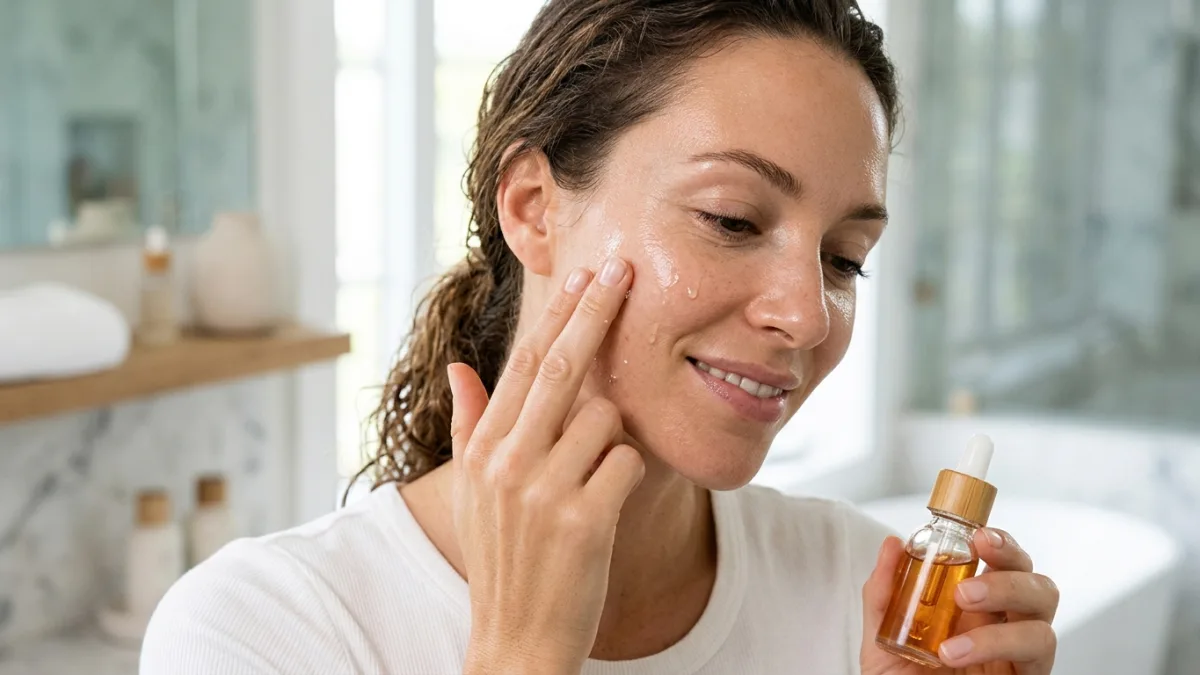
The hydration effect doesn’t fade fast, either. In women between 21 and 67 years old, one dose of an L-ascorbic acid (a pure, active form of vitamin C) serum raised skin moisture for 6 hours straight. (PubMed, 2018)
This isn’t just a surface effect. Vitamin C helps skin cells make more ceramides, fats that help your skin’s outer layer trap water and stay strong. It also helps build the fatty barrier layer in your skin’s top layer, which keeps water from slipping away. (PMC, National Institutes of Health) (Linus Pauling Institute, Oregon State University)
Other research backs this up. Lab tests show vitamin C creams can raise skin moisture in real-world use, while studies on skin cells confirm it boosts ceramide levels to keep the skin barrier working well. (PubMed, National Library of Medicine) (National Library of Medicine, PMC – Physiological, Pathological, and Circadian Factors Impacting Skin Hydration)
Animal studies add more proof. Skin treated with vitamin C held more moisture and lost less water through the skin, both signs of a stronger barrier. Some researchers think this better hydration is also why vitamin C soaks into skin so well in the first place. (PMC – Inhibitory effect of vitamin C on intrinsic aging in human dermal fibroblasts and hairless mice) (PubMed – Characterization of skin permeation of vitamin C)
Frequently Asked Questions
What are the main vitamin C serum benefits for skin?
The main vitamin C serum benefits are sun harm shield, brighter tone, fewer dark spots, and firmer skin over time. It works as an antioxidant, helping guard against sun-related harm while backing the skin’s own collagen, a protein that keeps skin firm. (American Academy of Dermatology)
How long does it take to see results?
Most people notice a brighter look within a few weeks. Deeper changes, like fewer fine lines or fading dark spots, tend to take longer. One trial on a 5% mix found clear gains in skin texture and structure after six months of steady use. (Experimental Dermatology (PubMed), 2003)
Can I use vitamin C serum every day?
Yes, most people can use it daily, usually once in the morning after washing and before sunscreen. This timing helps it add extra shield against daytime sun. If your skin feels sensitive, start every other day and build up slowly. (American Academy of Dermatology) (American College of Osteopathic Family Physicians (ACOFP))
Should I patch test before trying it?
Yes. Skin doctors say to test any new product, including a vitamin C serum, on a small patch of skin for about a week first. This helps catch redness or soreness before it hits your whole face, key for sensitive skin types. (American Academy of Dermatology)
Is vitamin C serum better than niacinamide for brightening?

They work in different ways rather than one just being better. Vitamin C acts mainly as an antioxidant, while niacinamide blocks pigment moving to skin cells. Some use both, since niacinamide has even shown strong lightening results against other treatments in melasma studies. (PMC (National Institutes of Health))
Why does my vitamin C serum turn dark or change color?
Vitamin C reacts with air and light over time, a process called oxidation, which can turn a clear serum yellow or brown. This doesn’t always mean it’s unsafe, but it usually means it’s less effective. Store it in a cool, dark spot in a sealed bottle. (PMC (National Library of Medicine))
What is the biggest overall benefit of using vitamin C serum long term?
Over time, the biggest vitamin C serum benefits come from steady, combined shield and repair. Regular use helps guard against future sun harm while slowly bettering tone, firmness, and old marks, making it one of the most well-studied items for aging, sun-worn skin. (The Journal of Clinical and Aesthetic Dermatology (PMC))
Key statistics
- In the same trial, patient self-appraisal questionnaires showed the vitamin C-treated side of the face was rated 84.2% more improved than the placebo-treated side, while photographic assessment showed the vitamin C side was preferred over placebo in 57.9% of subjects. (PubMed (Traikovich SS, 1999), 1999)
- A Bayesian meta-analysis of 31 randomized, controlled clinical trials involving 741 volunteers found that vitamin C reduces UV daylight-induced skin pigmentation in a dose-dependent manner, with 10% concentration showing the strongest skin-lightening effect. (Journal of Clinical and Aesthetic Dermatology (PMC), 2019)
- A randomized double-blind trial of a 5% vitamin C cream for photoaged skin, run over 6 months, found a clinically apparent improvement in photodamaged skin including modifications of skin relief and ultrastructure. (Experimental Dermatology (PubMed), 2003)
Expert insights
It’s one of top active ingredients we, as dermatologists, recommend for topical skin rejuvenation,
Dr. Shasa Hu, associate professor of dermatology and cutaneous surgery at the University of Miami Miller School of Medicine
References
- Topical vitamin C protects against photoaging, ultraviolet-induced immunosuppression, and photocarcinogenesis, and has an antiaging effect by increasing collagen synthesis, stabilizing collagen fibers, and decreasing collagen degradation, while also decreasing melanin formation to reduce pigmentation. — The Journal of Clinical and Aesthetic Dermatology (PMC) (Peer-reviewed dermatology journal article indexed on PubMed Central, a U.S. National Library of Medicine (NIH) repository)
- Vitamin C serums can be applied in the morning or at night following use of a thorough cleanser, and for added UV protection sunscreen may be applied after the vitamin C serum has completely dried; instability of vitamin C can cause the formula to oxidize and turn yellow, so products should be stored in cool, dark environments. — American College of Osteopathic Family Physicians (ACOFP) (Peer-reviewed clinical practice article from a professional physicians’ organization journal)
- Vitamin C in topical formulations is prone to oxidation, which is why serum color darkening and packaging/storage practices matter for shelf life and efficacy. — PMC (National Library of Medicine) (Peer-reviewed research article hosted on NIH’s PubMed Central)
- Before adding a new skincare product like a vitamin C serum to a routine, dermatologists recommend patch-testing it on a small area of skin for about a week before full use. — American Academy of Dermatology (Official guidance from the American Academy of Dermatology, citing a board-certified dermatologist)
- Vitamin C works as an antioxidant that helps prevent sun-related skin damage and supports collagen formation. — American Academy of Dermatology (Official patient education resource from the American Academy of Dermatology)
- Vitamin C serum or cream is a science-backed ingredient shown to reduce skin aging and dark spots, and should be applied in the morning after cleansing, before sunscreen. — American Academy of Dermatology (Professional medical association representing board-certified dermatologists, citing dermatologist-recommended guidance directly from AAD members)
- Ascorbic acid (pure vitamin C) is inherently unstable in aqueous solution, and derivatives such as sodium ascorbyl phosphate and magnesium ascorbyl phosphate were developed because they are more stable forms suitable for cosmetic products. — PubMed (National Library of Medicine) (Peer-reviewed pharmaceutical stability study indexed by the U.S. National Library of Medicine (NIH))
- Niacinamide brightens skin through a different mechanism than vitamin C, inhibiting the transfer of melanosomes from melanocytes to keratinocytes rather than acting mainly as an antioxidant. — PubMed (National Library of Medicine) (Peer-reviewed clinical and in-vitro study on niacinamide’s mechanism, indexed by NIH’s National Library of Medicine)
- Patch testing a new skincare product on a small area of skin before full use can help predict allergic or irritant reactions before applying it to the whole face. — American Academy of Dermatology (AAD) (Official guidance from the American Academy of Dermatology, a professional dermatology association, quoting a board-certified dermatologist)
- There are thousands of substances that can cause an allergic skin reaction, which is why patch testing new actives like vitamin C serum is recommended, especially for sensitive skin. — American Academy of Dermatology (AAD) (Official patient-education page from the American Academy of Dermatology)
