
Sun protection
Sunscreen Stick 101: How to Pick, Apply, and Actually Get Sun Protection That Works
Last updated: November 5, 2026
A sunscreen stick is a solid, wax-based SPF product you glide right onto skin for mess-free, portable sun protection. It works well for touch-ups, kids, and sensitive spots like the face, but only if you use enough of it and cover skin evenly.
Get those two things right, and a sunscreen stick can protect skin just as well as lotion.
If you’ve ever tossed a lotion bottle back in your bag because it leaked, you get why the sunscreen stick exists. It’s solid, so it travels clean. It goes on fast, so kids sit still. And it’s precise enough for a nose, ears, or part line.
But a sunscreen stick only works if you use it the right way.
This guide walks through what a sunscreen stick actually is, how well it protects skin, how to apply it, and how it fits into a full grooming routine — including the moments right after hair removal, when skin needs the most care.
What Is a Sunscreen Stick and How Does It Work?
A sunscreen stick is SPF protection packed into a solid wax base you swipe on like a large lip balm. Sun protection factor, or SPF, measures how well a product shields skin from the sun’s burning rays.
The wax and oil base carries active sunscreen ingredients and melts slightly as it warms against skin, leaving a protective layer behind.
That base is usually a blend of waxes, oils, and butters — think beeswax or candelilla wax mixed with things like coconut oil or shea butter. This blend is what makes a sunscreen stick solid at room temperature but soft enough to spread once it touches warm skin.
Mineral vs. Chemical Stick Formulas
Every sunscreen stick uses one of two filter types: mineral or chemical. Mineral formulas use zinc oxide or titanium dioxide, which sit on skin’s surface and physically reflect sun rays away.
Chemical formulas use carbon-based compounds that soak into the top skin layer and convert sun energy into heat, which then leaves the skin.
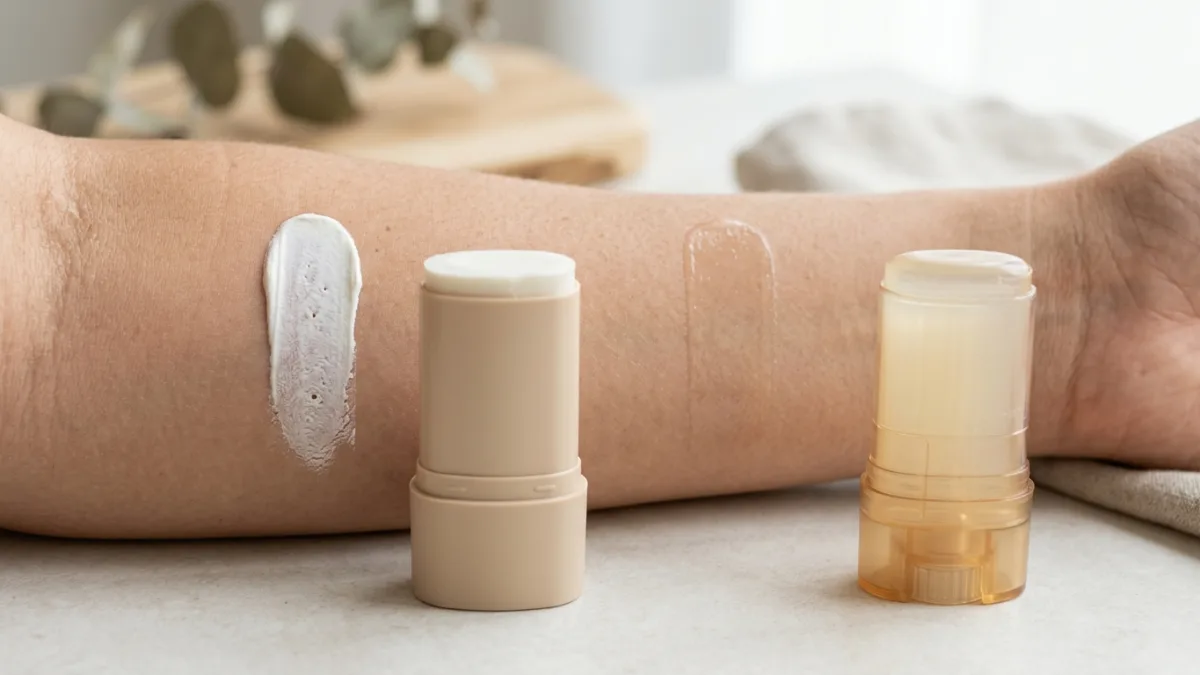
Mineral sunscreen stick formulas tend to feel thicker and can leave a faint white tint, especially on deeper skin tones. Chemical versions usually feel lighter and blend in clear, but they can irritate sensitive skin more than mineral options do.
Mineral formulas sit on top of skin and can leave a visible white cast, especially on deeper tones. Chemical formulas absorb clear but may feel harsher on sensitive or reactive skin types.
How Sticks Differ from Sprays and Lotions
A sunscreen stick, spray, and lotion all carry the same job: deliver SPF actives evenly across skin. The difference is the base. Lotions use water and emulsifiers, sprays use propellants or thin liquid carriers, and a sunscreen stick uses solid wax.
Are Sunscreen Sticks Actually Effective?
Yes, a sunscreen stick can protect skin just as well as lotion, as long as you apply enough of it. The format isn’t the problem — the amount most people rub on is.
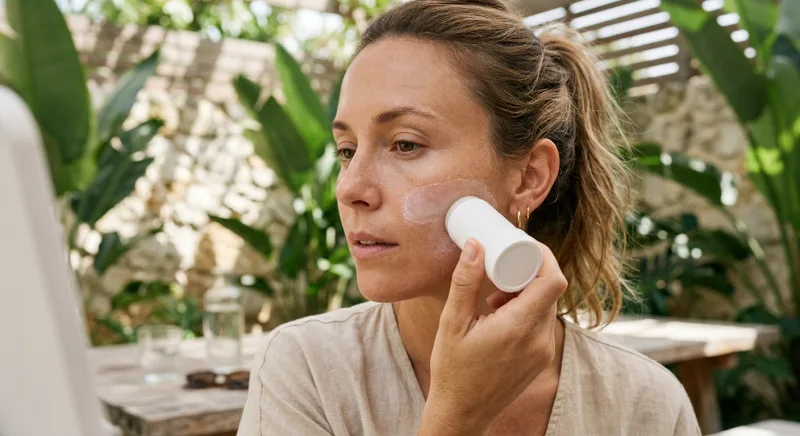
A sunscreen stick needs several firm passes over each area, not one quick swipe, to reach its labeled SPF level.
Apply sunscreen generously to cover exposed skin fully. Most people apply far less than needed, leaving gaps in protection. Aim for a thick, even layer across the face, neck, and body before heading outside.
Stick sunscreens require several firm swipes back and forth over each area, not just one pass. Skipping spots or applying too thin a layer means you likely aren’t reaching the SPF printed on the label.
Applied thoroughly and reapplied often, stick sunscreens can protect skin just as effectively as lotions. The key difference lies in application habits, not the format itself, so thorough coverage matters most.
Stick sunscreens can match lotion protection, but only when applied generously. Because sticks feel drier and glide less, most people swipe on too little, leaving skin under-protected without realizing it.
Coverage and Application Thickness Concerns
The biggest worry with any sunscreen stick is thin, patchy coverage. Because the product is solid, it’s tempting to glide it on once and call it done. That single pass usually leaves gaps, especially over textured skin or facial hair.
Most people apply far less sunscreen than the label’s tested amount assumes. That gap between intended and actual coverage means real-world SPF protection often falls short of what the number promises.
Under-applying any sunscreen — stick, lotion, or spray — lowers the real-world SPF you get. A sunscreen stick rated SPF 50 might only give you a fraction of that protection if you don’t go over each spot several times.
Skin doctors often warn that sunscreen sticks need more careful use than lotions do. Going over the same spot several times helps make sure skin really gets the coverage a stick can give.
When a Stick Is (and Isn’t) Enough Protection
A sunscreen stick works great for small, precise areas: nose, ears, cheekbones, part lines, and tops of feet. These spots burn easily and benefit from direct, controlled application. A stick also holds up well for quick outdoor touch-ups during the day.
How Do You Apply a Sunscreen Stick Correctly?
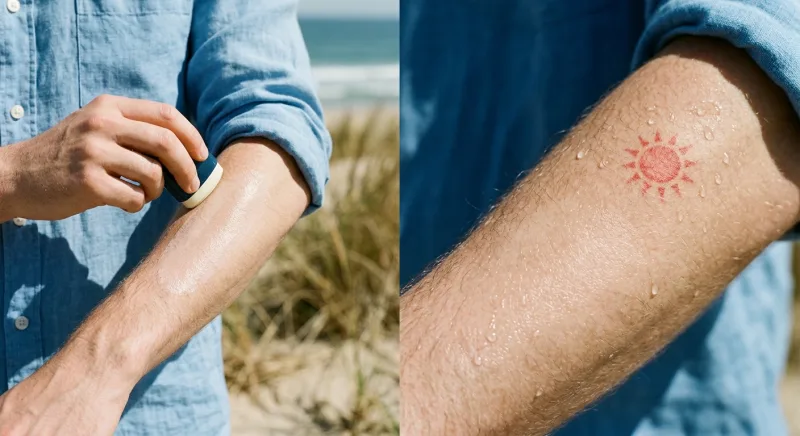
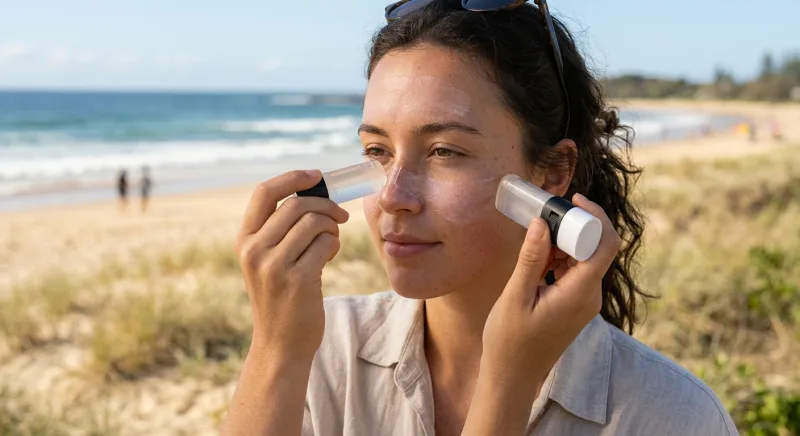
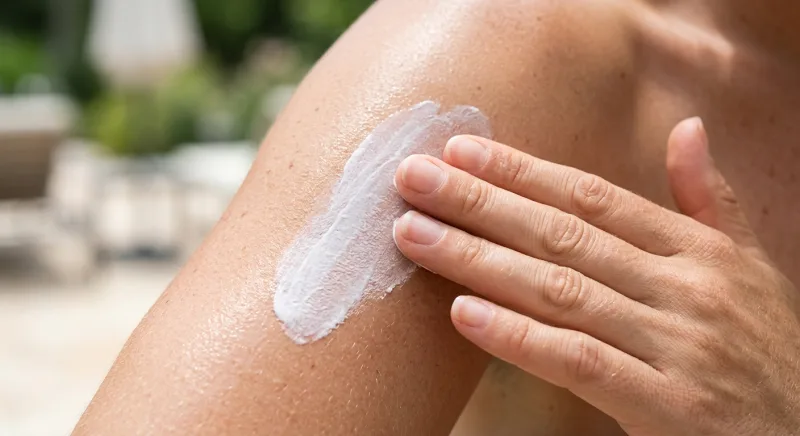
You apply a sunscreen stick by gliding it directly onto dry skin in several passes, then rubbing it in with clean fingers until it disappears. Skipping the rub-in step is the most common mistake, since it leaves streaks and uneven spots that burn.
Skin doctors widely agree that how a product is made matters less than how it’s put on. A stick sunscreen put on fully and more than once can work as well as any lotion on the market.
Step-by-Step Application Technique
Follow these steps every time you use a sunscreen stick, whether it’s your face, neck, or hands:
- Start with clean, dry skin — sunscreen glides better without oil or sweat in the way.
- Glide the sunscreen stick over each area four to five times, slightly overlapping each stroke.
- Rub the product in with clean fingertips until you no longer see a white or shiny layer.
- Check easy-to-miss spots: ears, hairline, back of neck, and tops of feet.
- Let it set for a minute or two before applying makeup or heading outside.
- Reapply on the same schedule you’d use for lotion or spray SPF.
How Much Product You Actually Need
There’s no single perfect number, since face size and stick width vary. As a general rule, go over each area of the face and neck at least four times with a sunscreen stick before rubbing it in.
Thin, one-pass application is the main reason people don’t get the SPF listed on the label.
Reapplication Timing
Reapply any sunscreen, including a sunscreen stick, about every two hours when you’re outside. Reapply sooner after swimming, heavy sweating, or toweling off, since all three remove protective layers. A sunscreen stick makes this easy because there’s no wet product to fumble with.
What Are the Pros and Cons of Sunscreen Sticks?
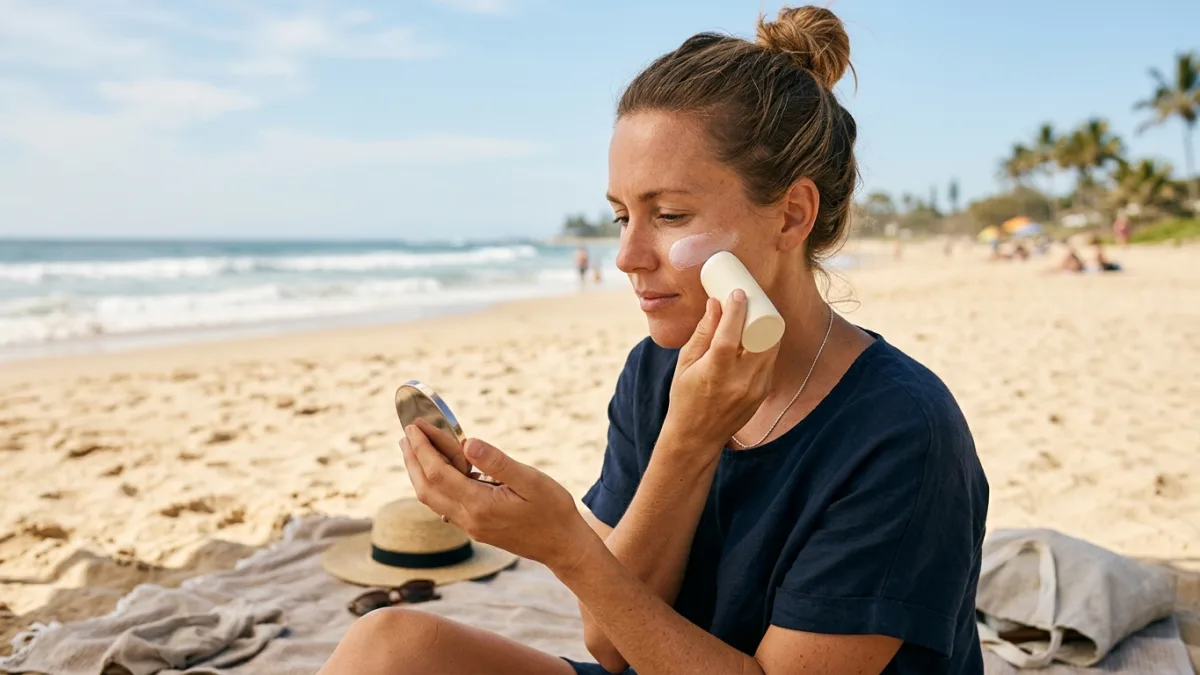
A sunscreen stick offers real convenience, but it comes with trade-offs worth knowing before you buy. Portability and precision are the big wins. White cast and coverage speed on large areas are the common complaints.
Benefits: Portability, No-Mess, Kid-Friendly Use
A sunscreen stick travels well because it can’t spill, leak, or count against liquid limits in carry-on bags. It’s also fast for antsy kids who won’t sit still for lotion rubbing. Many parents keep a sunscreen stick in a diaper bag or backpack for exactly this reason.
Drawbacks: White Cast, Uneven Coverage, Cost per Use
Mineral sunscreen stick formulas can leave a visible white tint, particularly on deeper skin tones. Covering large areas takes more strokes and more time than lotion. A sunscreen stick also tends to run out faster per use than a bottle, since sticks hold less product overall.
| Pros of a Sunscreen Stick | Cons of a Sunscreen Stick |
|---|---|
| Mess-free, no spills or drips | Can leave a white cast, especially mineral formulas |
| Travel-friendly, avoids liquid restrictions | Slower to cover large body areas |
| Precise for face, ears, and part lines | Less product per stick than a lotion bottle |
| Easy for kids to self-apply | Needs several passes to reach labeled SPF |
| Good for quick midday touch-ups | Can feel waxy or heavy in humid weather |
Sunscreen Stick vs. Spray Sunscreen
Spray sunscreen feels quick, but it comes with its own tradeoffs. A sunscreen stick offers more control over exactly where product lands. Sprays can drift in wind, missing spots or coating nearby surfaces instead of skin. For targeted areas like the face, sticks tend to win on accuracy.
Sprays do have an edge for speed on large areas like legs and backs. They also work well for reapplying over sandy or wet skin without smearing. But inhalation concerns have prompted warnings on some spray labels, especially around children’s faces.
A sunscreen stick avoids the inhalation question entirely, since nothing gets aerosolized. That makes sticks a common pick for parents applying sunscreen to a child’s face. Sprays still dominate for full-body coverage on the go, where speed matters more than precision.
| Feature | Sunscreen Stick | Spray Sunscreen |
|---|---|---|
| Application speed on large areas | Slower | Faster |
| Precision around eyes and hairline | High | Low |
| Inhalation risk | None | Possible, especially for children |
| Performance on wet or sandy skin | Can drag or pill | Applies smoothly |
| Wind interference | None | Can cause missed spots |
| Best use case | Face, ears, touch-ups | Full-body quick reapplication |
How to Apply a Sunscreen Stick Correctly
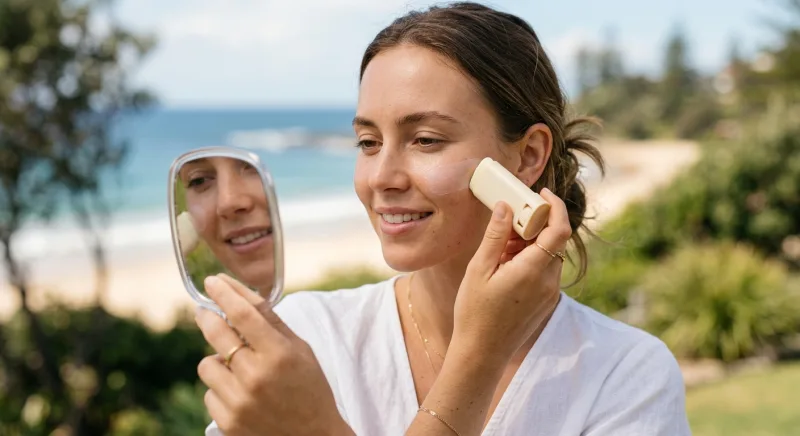
Technique matters more with a sunscreen stick than with lotion. Because the applicator delivers a thin layer per swipe, one pass rarely provides enough coverage. Going over each area several times before rubbing it in helps ensure fuller, more even protection.
Editor note — not published.
- Glide the stick directly onto skin in a crosshatch pattern, not just one direction.
- Reapply the stick four to five times over the same area before blending.
- Use fingertips afterward to spread product evenly and reduce white residue.
- Pay extra attention to ears, hairline, and the back of the neck.
- Store the stick upright and away from direct heat to preserve its shape.
Skipping the multiple-pass step is the most common mistake people make with a sunscreen stick. A single swipe often delivers a fraction of the labeled SPF. Building up layers, even though it takes a few extra seconds, closes that gap significantly.
Mineral vs. Chemical Sunscreen Sticks
Not all sunscreen stick formulas work the same way on skin. Mineral versions, built around zinc oxide or titanium dioxide, sit on top of the skin and reflect UV rays. Chemical versions absorb into the skin and convert UV radiation into heat, which then releases.
Mineral sunscreen sticks tend to cause less irritation, making them a common choice for sensitive skin or young children. They also tend to leave more of a visible cast, particularly on deeper skin tones. Formulators have improved tinted mineral sticks recently to address this complaint.
Chemical sunscreen sticks usually blend in more easily and feel lighter on the skin. Some formulas raise worries about ingredients getting into the blood. Regulators keep looking at certain chemical filters used in these products.
| Factor | Mineral Sunscreen Stick | Chemical Sunscreen Stick |
|---|---|---|
| Main active ingredients | Zinc oxide, titanium dioxide | Avobenzone, octocrylene, others |
| How it works | Reflects UV rays | Absorbs and converts UV rays |
| Skin sensitivity risk | Lower | Higher for some users |
| Visible white cast | More common | Rare |
| Time to become effective | Immediate | Needs about 20 minutes before exposure |
| Common recommendation for kids | Frequently preferred | Used with caution under age two |
Choosing the Right Sunscreen Stick for Your Needs
The best sunscreen stick depends on skin type, activity level, and where it will be applied. Someone playing sports outdoors needs sweat resistance more than someone commuting to an office. A parent buying for a toddler will prioritize mineral formulas over chemical ones.
Skin tone also plays a role in which sunscreen stick feels comfortable day to day. Tinted mineral sticks have grown popular for reducing cast while keeping the mineral benefits. Anyone with acne-prone skin should look for labels marked noncomedogenic to avoid clogged pores.
- Choose SPF 30 or higher for daily outdoor exposure.
- Pick water-resistant formulas for swimming, sweating, or humid climates.
- Look for tinted mineral sticks if white cast is a concern.
- Check for fragrance-free labeling if skin reacts easily to added scents.
- Consider stick size and shape for portability in bags or pockets.

Price varies widely across brands, and higher cost does not always mean better protection. Reading the active ingredient list matters more than marketing claims on the packaging. A sunscreen stick that matches lifestyle and skin needs will get used more consistently than one that sits in a drawer.
Market context
How the broader market shapes Sunscreen Stick in 2026
The figures below come from adjacent, well-documented markets. Each row names the subject it actually measures and links to its original source — these are related market indicators, not Sunscreen Stick claims.
| What it measures | Figure | Source |
|---|---|---|
| Annual treatment burden of skin cancer in the United States | An examination of Medical Expenditure Panel Survey data suggests that each year, about 6.1 million adults are treated for basal cell and squamous cell carcinomas in the United States at a cost of about $8.9 billion. | CDC, 2026 |
| FDA’s Stayed 1999 Final Monograph for OTC sunscreen SPF labeling | The FDA’s Stayed 1999 Final Monograph established a minimum SPF value of 2 and a maximum labeled SPF value of 30+ for over-the-counter sunscreen drug products. | Federal Register (FDA), 2019-02-26 |
| Cosmetic-related adverse event reports submitted to the FDA’s CFSAN Adverse Event Reporting System (CAERS) | From 2004 to 2016, a total of 5,144 cosmetic-related adverse events were submitted to the FDA, averaging 396 events per year. | JAMA Internal Medicine via PMC (National Library of Medicine), 2017 |
Read the complete guide: Sunscreen SPF Benefits: Why Daily Protection Matters for Your Skin
Frequently Asked Questions
Is a sunscreen stick as effective as lotion?
A sunscreen stick can be just as effective as lotion when applied thoroughly and reapplied often. Effectiveness depends on coverage, not format. Skipping spots or applying too thin a layer reduces protection with either type, so careful, even application matters most.
How much sunscreen stick should I apply?
Most people underapply sunscreen sticks. Glide the stick over each area three to four times, then rub it in until no white residue remains. For the face, several passes across the forehead, cheeks, nose, and chin usually provide adequate coverage.
Can I use a sunscreen stick on my whole body?
Yes, sunscreen sticks work on the body, though larger areas like legs and arms take longer to cover than with a lotion or spray. Many people use sticks for the face, ears, and shoulders while pairing them with a lotion for larger body areas.
How often should I reapply sunscreen stick?
Put on more every two hours while you’re out in the sun, and right after swimming, sweating a lot, or drying off with a towel. Even water-resistant formulas work less well over time, so setting a reminder helps keep protection steady all day outdoors.
Do sunscreen sticks expire?
Yes, sunscreen sticks expire, typically within two to three years of manufacture. Check the printed expiration date or period-after-opening symbol on the packaging. Using expired sunscreen may not provide the SPF protection listed on the label, so replacing old sticks each season is wise.
Are mineral or chemical sunscreen sticks better?
Neither kind is always better; the right pick depends on skin sensitivity and personal taste. Mineral sticks suit sensitive or acne-prone skin, while chemical formulas often go on more clearly. Both give good protection when the active ingredients meet the SPF levels doctors suggest.
Can children use sunscreen sticks?
Many sunscreen sticks are made for kids, often with mineral filters and no added scent. Check the label for age advice, since some formulas are not meant for babies under six months. Asking a child’s doctor helps confirm the right product for young or sensitive skin.
Why does my sunscreen stick leave a white cast?
White cast usually comes from mineral filters like zinc oxide sitting on the skin’s surface. Rubbing longer after application, warming the stick between fingers first, or choosing a tinted mineral formula can reduce this effect, especially on deeper skin tones.
Key statistics
- Under FDA testing regulations, sunscreen products (including sticks) must be tested by applying a specified amount of 2 mg per square centimeter of skin to determine the labeled SPF value. (U.S. Food & Drug Administration, 2024)
- The American Academy of Dermatology recommends using at least 1 teaspoon of sunscreen on the face alone — about the amount needed to cover the length of the index and middle fingers. (American Academy of Dermatology, 2024)
References
- Zinc oxide and titanium dioxide are the only two sunscreen active ingredients the FDA currently recognizes as GRASE (safe and effective). — U.S. Food and Drug Administration (Federal regulatory agency (FDA) official guidance page)
- Dermatologists say the best sunscreen is the one a person will actually wear, which is why stick and spray formats are recommended for families, especially those with young children. — American Academy of Dermatology (Professional medical association representing board-certified dermatologists)
- For facial coverage, at least 1 teaspoon of sunscreen — about the amount that covers the length of the index and middle fingers — should be applied. — American Academy of Dermatology (Professional medical association representing board-certified dermatologists)
- Sunscreen should be reapplied at least every two hours while outdoors, and immediately after swimming or sweating. — American Academy of Dermatology (Professional medical association representing board-certified dermatologists)
You may also be interested in: Skin Minimalism: The Simple Guide to Fewer Products, Better Skin
You may also be interested in: Glass Skin: The Complete Guide to Korea’s Smoothest Skincare Trend
