
Skincare routine
Skin Minimalism: The Simple Guide to Fewer Products, Better Skin
Last updated: November 5, 2026
Skin minimalism is a skincare approach that favors fewer, better products over long, layered routines. It focuses on giving skin what it truly needs rather than piling on extra steps.
Skin minimalism also stretches beyond creams and serums, reaching into grooming and hair removal, where fewer tools can do more for your whole routine.
If you’ve ever stared at a bathroom shelf packed with bottles, you already know the problem. Skin minimalism is the answer a lot of people are quietly switching to in 2026. It’s not about doing less for the sake of less. It’s about doing what works, and skipping what doesn’t.
What Is Skin Minimalism?
The core principle: fewer products, better results
How it differs from traditional multi-step routines
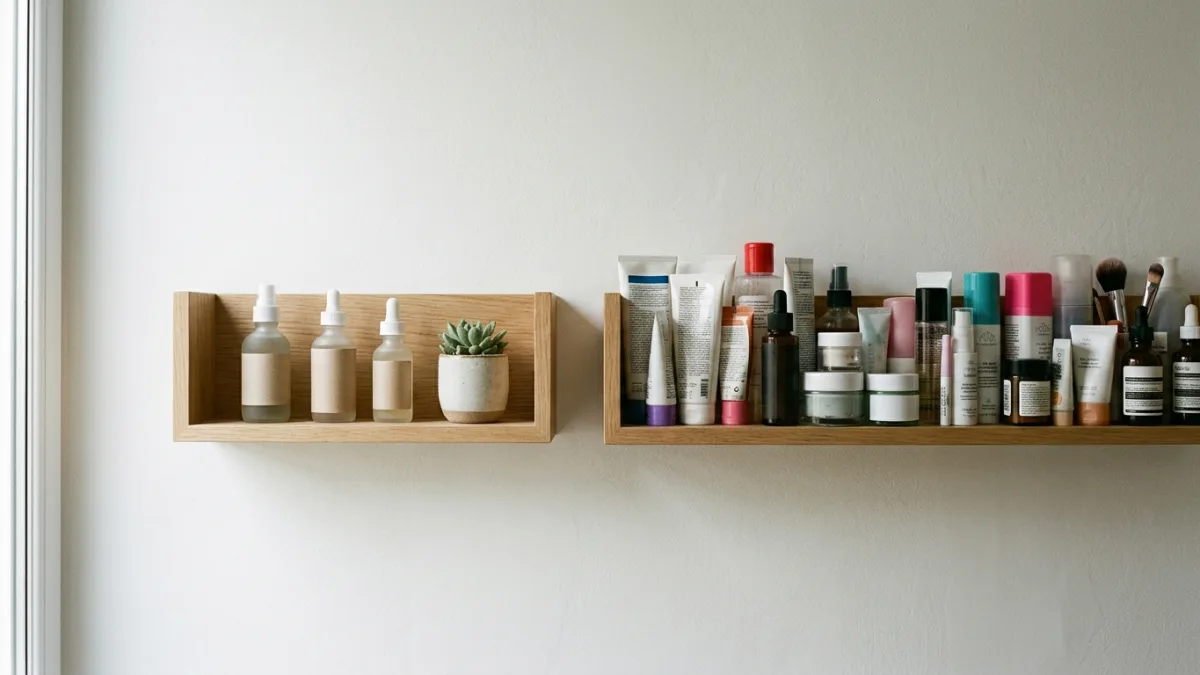
Why Skin Minimalism Is Gaining Momentum
Skin barrier fatigue from over-layering products
Layering too many active ingredients can overwhelm skin’s natural defenses. When actives stack without rest, skin often reacts with redness, dryness, or sensitivity. Giving skin room to recover between potent products supports a healthier barrier over time.
Budget and time-saving appeal
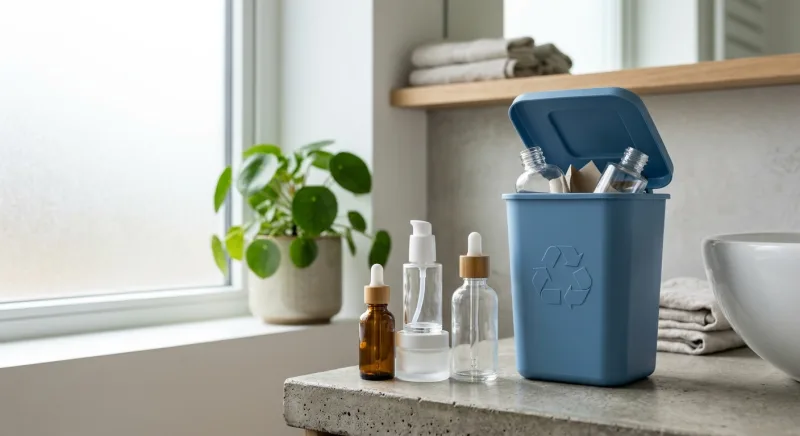
Sustainability and reduced waste
How Does Skin Minimalism Apply Beyond Skincare Products?
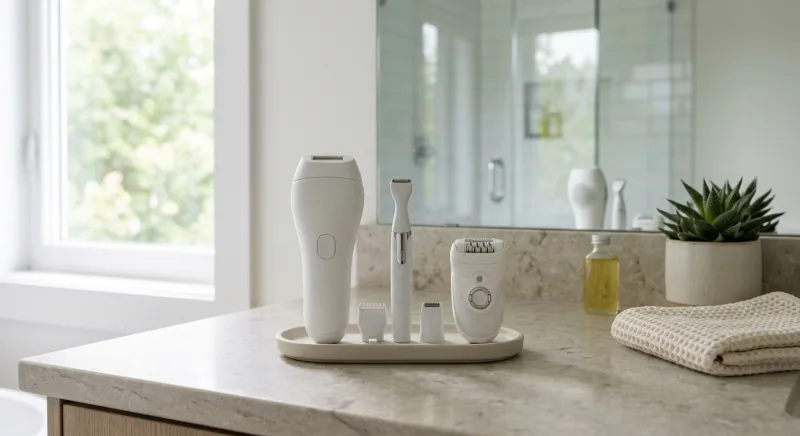
Minimalism is reshaping grooming too, not just skincare. Bellxi‘s philosophy centers on stocking every device type for every skin type, from painless IPL handsets to precision trimmers and epilators. The goal is one routine, fewer decisions, and a smoother daily result.
Rethinking grooming and hair removal routines
This is where skin minimalism connects grooming to skin health directly. Fewer tools touching your skin, used correctly, often means less irritation overall. That’s the same barrier-friendly logic behind trimming down a skincare shelf.
Skin minimalism reflects a broader shift toward simpler, more intentional beauty routines. Rather than citing shifting trend labels, the focus stays on what actually works: fewer, better tools for real results.
Consolidating tools instead of stacking products
Maximalist Routine vs Minimalist Routine: A Side-by-Side Look
Seeing the two approaches side by side makes the difference obvious. A maximalist routine often looks impressive on a shelf. A routine built on Skin Minimalism works quietly in the background, without the clutter or the guesswork.
| Factor | Maximalist Routine | Minimalist Routine |
|---|---|---|
| Number of products | 10-15+ items | 3-6 items |
| Time per day | — | Under 10 minutes |
| Risk of irritation | Higher, due to ingredient overlap | Lower, fewer variables to react |
| Cost over time | Higher, frequent repurchasing | Lower, fewer but better-chosen items |
| Storage space needed | Large, multiple shelves or drawers | Small, single organized space |
| Consistency of use | Often inconsistent due to complexity | Easier to maintain daily |
The comparison isn’t about judging anyone’s shelf. It’s about noticing where extra steps add real value, and where they just add clutter. Skin Minimalism trims the excess without asking skin to do less than it needs.
Comparing Ingredient Lists: Simple vs Complex Formulas
Ingredient lists tell their own story. A short list often shows a formula built around a few active, useful ingredients. A long list often shows filler, scent, or the same actives copied across different products.
Reading labels side by side helps tell marketing talk from real function. Skin Minimalism encourages this kind of check before anything goes into a cart or onto a shelf.
| Element | Simple Formula | Complex Formula |
|---|---|---|
| Ingredient count | 5-10 ingredients | 20+ ingredients |
| Active ingredients | 1-2 targeted actives | Multiple actives, often overlapping |
| Fragrance/dye use | Minimal or none | Common addition |
| Ease of troubleshooting reactions | Easier to identify cause | Harder to isolate the trigger |
| Shelf stability | Often more stable | Varies by preservative system |
| Price per use | Generally lower | Generally higher |
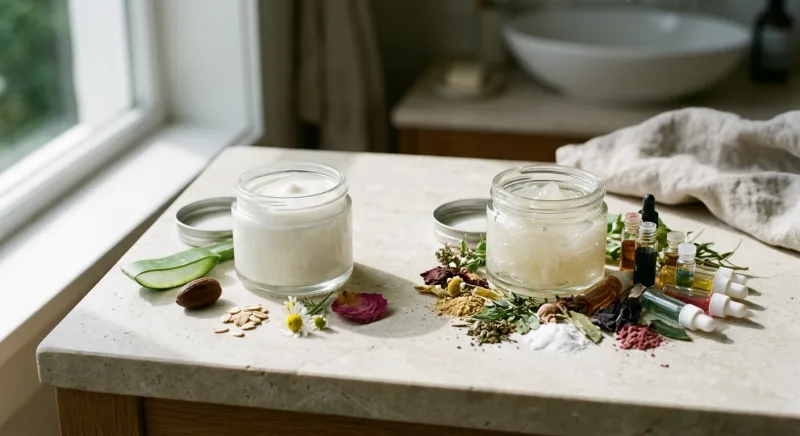
None of this means mixed formulas are always bad. Some skin problems truly do better with mixed formulas. The point of comparing them is to be aware, not to say no to anything with a longer label.
Multi-Use Devices vs Single-Use Devices
Grooming tools follow the same logic as Skin Minimalism in skincare products. A single-use device solves one problem well. A multi-use device solves several, often at a similar price point and with far less counter space required.
This distinction matters more as bathroom storage gets tighter and routines get busier. Fewer devices mean fewer charging cables, fewer manuals, and fewer decisions before getting ready each morning.
| Feature | Single-Use Device | Multi-Use Device |
|---|---|---|
| Function | One task only | Several related tasks |
| Storage footprint | Adds to overall clutter | Replaces multiple items |
| Upfront cost | Lower per unit | Higher per unit, lower combined |
| Learning curve | Simple, single function | Slightly more settings to learn |
| Long-term value | Limited to one use case | Adapts as needs change |
| Maintenance | One device to clean/charge | One device instead of several |
Bellxi’s approach fits neatly into the multi-use column. Handsets designed for more than one grooming task reduce the total number of things sitting on a counter or packed for travel.
Building a Minimalist Routine Without Losing Effectiveness
Cutting products doesn’t have to mean cutting results. The goal is choosing fewer things that do more, rather than removing steps that skin genuinely relies on. This requires some thought, not just discarding items at random, which is the essence of practicing Skin Minimalism.
Start by finding which products treat a real, current concern. Everything else becomes a candidate to drop, at least for a while, to see how skin acts without it.
- Keep a cleanser, a moisturizer, and sun protection as the non-negotiable base.
- Add one targeted active at a time, waiting to judge its effect before introducing another.
- Remove duplicate products that promise the same outcome through different ingredients.
- Choose multi-function tools over single-purpose gadgets where possible.
- Reassess the routine every few months instead of adding new products reactively.
This process takes patience. Skin doesn’t always respond instantly to fewer products, and that lag can feel uncomfortable at first. Staying consistent through that adjustment period is often where the real benefit of Skin Minimalism shows up.
Signs a Routine Has Become Too Complicated
Some signals suggest a routine has grown past what skin actually needs. Recognizing these signs early prevents wasted money and unnecessary irritation down the line.
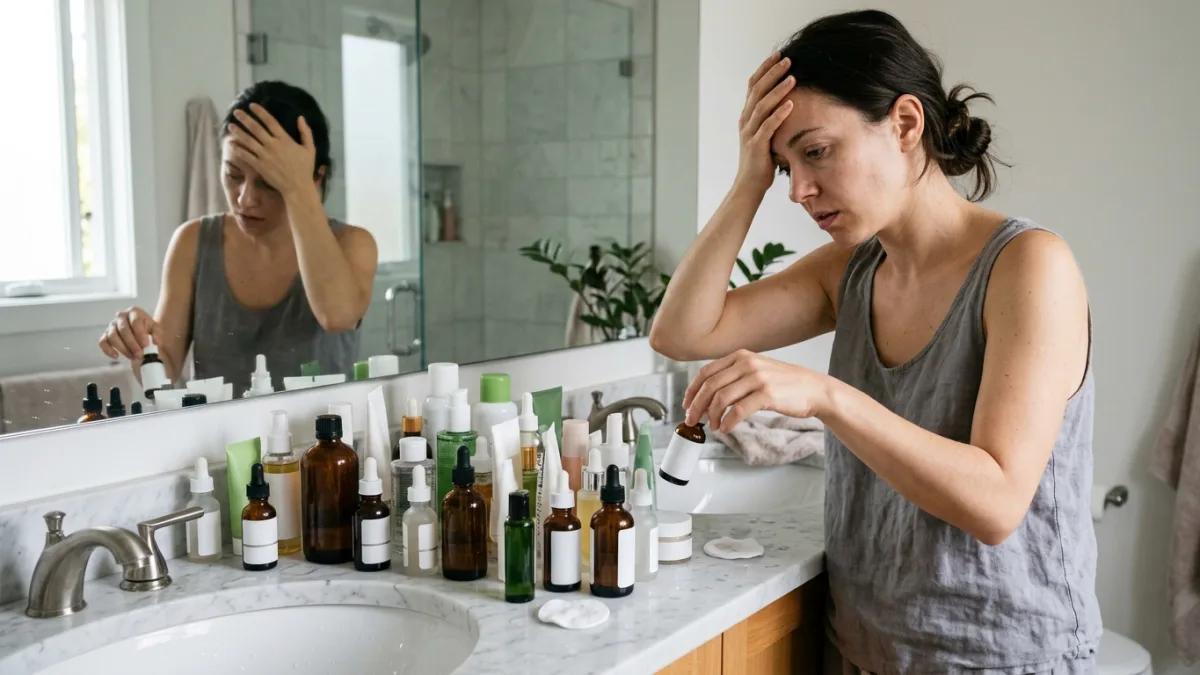
- Skin reacts unpredictably, and it’s unclear which product caused it.
- The routine takes longer than a few minutes to complete each day.
- Several products claim to solve the exact same concern.
- New products get added before old ones are even finished.
- The bathroom shelf no longer fits without stacking or overflow.
Any one of these signs is worth a second look. Together, they usually mean it’s time to simplify rather than add another product to the mix.
How to Transition Into a Minimalist Skin Routine
Switching to skin minimalism doesn’t require throwing everything out at once. A gradual approach lets skin adjust and makes it easier to spot what’s actually working.
Start by finding out which products get used each day versus now and then. Daily products usually show the most about a routine’s true base.
- Set aside anything unused in the past month.
- Keep a cleanser, moisturizer, and sunscreen as the non-negotiable base.
- Remove one extra product every few days rather than all at once.
- Watch skin’s response for at least two weeks before adding anything back.
- Note any changes in texture, breakouts, or sensitivity along the way.
This slower pace also helps with the psychological side of cutting back. Many people feel anxious removing products, worried skin will suffer without them.
Skin tends to settle once a routine is simplified, as fewer products mean less potential for irritation. Instead of chasing a precise timeline, focus on consistency and let your skin guide the pace of change.
What a Minimalist Routine Typically Includes
Skin minimalism doesn’t mean using only one product. It means choosing a small set that covers the essentials without redundancy.
Most pared-down routines share a similar structure, adjusted slightly based on skin type and climate.
| Step | Purpose | Frequency |
|---|---|---|
| Cleanser | Removes dirt, oil, and residue | Morning and night |
| Moisturizer | Supports the skin barrier | Morning and night |
| Sunscreen | Protects against UV damage | Morning only |
| Treatment (optional) | Targets a specific concern | As needed, 2-3 times weekly |
The optional treatment step is where most personal choice happens. It might be a retinoid, an exfoliant, or a spot treatment, depending on what a person wants.
Everything else stays constant. This consistency is part of what makes minimalist routines easier to stick with long-term.
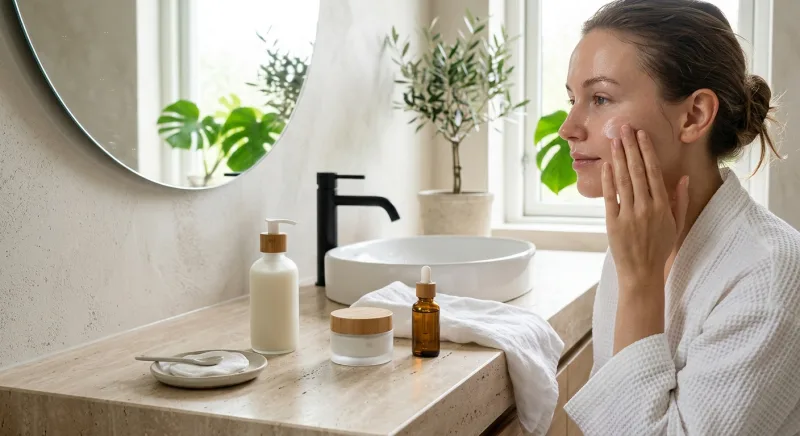
Choosing Products That Do More With Less
Not all products are created equal when it comes to minimalism. Some are formulated to handle multiple needs at once, which reduces the total number required.
A moisturizer with SPF, for example, can join two steps into one. A cleanser that also lightly buffs away dead skin might remove the need for a separate scrub.
When evaluating a product for a minimalist routine, a few questions can help.
- Does this product serve more than one function?
- Is the ingredient list free of unnecessary fillers or fragrances?
- Does it work well with the other products already in use?
- Is there evidence it addresses the intended concern effectively?
- Can it replace something else currently in rotation?
Reading labels becomes second nature after a while. Ingredient lists reveal a lot about whether a product adds real value or simply repeats what’s already covered.
Common Mistakes When Simplifying a Routine
Cutting back on skincare sounds simple, but a few missteps can undo the benefits. Being aware of these helps the transition go more smoothly.
One common mistake is dropping sunscreen along with other products. Sunscreen isn’t optional in a Skin Minimalism approach — it’s one of the few steps with clear, well-proven benefits.
Another mistake is changing everything at once instead of step by step. This makes it harder to know which change caused a reaction, good or bad.
- Dropping sunscreen because it feels like an extra step.
- Replacing several products with new ones all in the same week.
- Ignoring skin type when choosing a minimal set of products.
- Expecting overnight results from a simplified routine.
- Adding a new product back in without waiting to observe skin’s response.
Patience matters here. A minimalist routine still needs time to show its full effect, just like any other approach to skincare.
More women are choosing simpler, streamlined beauty routines over crowded product lineups. This shift favors fewer, more versatile tools that deliver results without the clutter of excess steps.
Skin Minimalism for Different Skin Types

A simple routine isn’t one-size-fits-all. The main steps stay the same, but the exact products you pick should fit your own skin needs.
Oily skin types might lean toward lightweight, gel-based moisturizers and oil-free sunscreens. Dry skin types often benefit from richer creams that reinforce the barrier more effectively.
Sensitive skin often does best with fragrance-free formulas and fewer active ingredients overall. Skin that’s part oily, part dry may need slightly different products for different parts of the face.
No matter the type, the main idea stays the same: fewer products, picked with care, tend to work better than a crowded shelf of mismatched items.
Market context
How the broader market shapes Skin Minimalism in 2026
The figures below come from adjacent, well-documented markets. Each row names the subject it actually measures and links to its original source — these are related market indicators, not Skin Minimalism claims.
| What it measures | Figure | Source |
|---|---|---|
| NIH funding for pediatric dermatology research across 10 skin conditions | The NIH supported 307 grants totaling $388 million across 10 pediatric dermatology skin conditions. | Pediatric Dermatology (NCBI/PMC), 2025 |
| FDA cosmetic product facility registrations under MoCRA | As of the FDA’s update, there are over 15,000 unique, active cosmetic product facility registrations under MoCRA. | U.S. Food and Drug Administration (FDA), 2026 |
| Share of average U.S. household spending devoted to personal care products and services | Personal care products and services (such as cosmetics, skincare, hair care, oral hygiene, haircuts, and manicures) accounted for 1.2 percent of average U.S. household spending in 2024. | U.S. Bureau of Labor Statistics, 2026 |
Read the complete guide: How to Build a Skincare Routine That Actually Works in 2026
Frequently Asked Questions
What is skin minimalism exactly?
Skin Minimalism is a skincare approach that focuses on using fewer, carefully chosen products instead of long, hard routines. It puts core steps first, like cleansing, moisturizing, and sun protection, while limiting extra active ingredients that may irritate or overload the skin’s outer layer.
How many products should a minimalist routine include?
Most simple routines use three to five products: a cleanser, moisturizer, sunscreen, and now and then one extra treatment. The exact number depends on each person’s skin needs, but the goal is always to keep it simple, not to add more.
Is skin minimalism suitable for acne-prone skin?
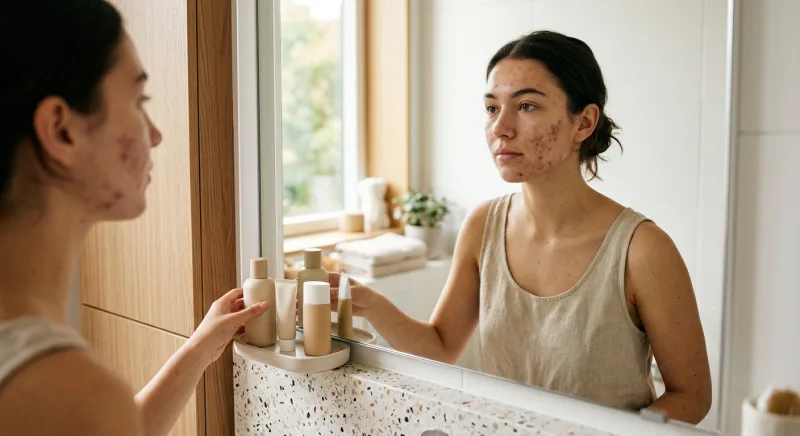
Yes, many people with acne-prone skin gain from minimalism because fewer products mean fewer things that might irritate. A simple routine lets the skin’s outer layer heal, which can cut breakouts caused by overuse of harsh actives.
Will minimalism work for anti-aging goals?
Skin Minimalism can help with anti-aging goals when it includes proven basics like sunscreen and a moisturizer that fits your skin. Adding one extra treatment, such as a retinoid (a vitamin A skin treatment), can deal with certain problems without overloading the skin.
How long does it take to see results?
Results vary depending on skin type and concerns, but many people notice more comfort and less irritation within a few weeks. Long-term gains, like a stronger barrier and a more even tone, usually show up after several months of steady care.
Can I still use serums in a minimalist routine?
Yes, serums can fit into a minimalist routine if they serve a clear purpose. The key is choosing one or two serums that address specific concerns rather than layering multiple products with overlapping ingredients.
Does skin minimalism mean spending less money?
Often, yes. Using fewer products naturally cuts spending, though minimalism isn’t only about cost. It’s about picking good formulas that work well together, which can also stop you from wasting money on products that don’t suit your skin.
How do I start transitioning to a minimalist routine?
Start by identifying your skin type and main concerns, then remove products that don’t address them directly. Gradually simplify your routine over a few weeks, monitoring how your skin responds before making further adjustments.
Expert insights
More is not more in this case, and consistency matters more than a 10-step routine.
Marisa Garshick, MD, FAAD, board-certified dermatologist in New York City
References
- Dermatologists advise simplifying a skincare routine and focusing on the basics rather than piling on excess products. — American Academy of Dermatology (AAD) (AAD is the leading professional association of board-certified dermatologists and publishes official patient care guidance.)
- Using too many skincare products, especially multiple anti-aging products at once, can irritate the skin. — American Academy of Dermatology (AAD) (AAD is the leading professional association of board-certified dermatologists and publishes official patient care guidance.)
- A basic effective routine can be built around a gentle cleanser, sunscreen, and moisturizer. — American Academy of Dermatology (AAD) (AAD is the leading professional association of board-certified dermatologists and publishes official patient care guidance.)
- A board-certified dermatologist notes that skincare doesn’t need to be complicated to be effective and that consistency with fewer products matters more than a multi-step routine. — American Academy of Dermatology (AAD) (AAD is the leading professional association of board-certified dermatologists and publishes official patient care guidance, quoting a named board-certified dermatologist.)
- Moisturizers work by increasing the skin’s water content and restoring the skin’s innate protective barrier function, which is central to the concept of skin barrier health referenced in skin-minimalism discussions. — StatPearls / National Center for Biotechnology Information (NCBI), NIH (Published under the NIH’s National Center for Biotechnology Information as a peer-reviewed medical education resource.)
You may also be interested in: Glass Skin: The Complete Guide to Korea’s Smoothest Skincare Trend
You may also be interested in: Moisturiser for Dry Skin: The Complete 2026 Guide to Ingredients, Texture, and Routine
