
Hair care
Hair Oils Explained: Benefits, Types, and How to Use Them in 2026
Last updated: November 5, 2026
Hair oils are lightweight or rich formulas that coat or soak into each strand to cut frizz, add shine, and guard against heat and breakage. They work by sealing in moisture or feeding the hair shaft directly.
The right pick depends on your hair type, texture, and main concern, like dryness or damage.
If you have ever stood in front of a shelf full of hair oils and felt lost, you are not alone. Bottles promise shine, growth, repair, and frizz control, often all at once.
This guide breaks down what hair oils really do, how to pick one, and how to use it right. We will also look at where hair oils fit into your wider beauty routine, alongside tools like trimmers and IPL devices.
What Are Hair Oils and What Do They Actually Do?
How hair oils differ from serums and creams
Serums often feel lighter and dry fast, making them great for quick daily use on top of styled hair. Creams add moisture without much shine. Hair oils, by contrast, bring richer texture and stronger shine, and they tend to last longer on the strand.
Hair oils, serums, and creams each serve a distinct role in a routine, differing in texture, weight, and how they sit on hair and skin. Choosing the right one depends on your hair type and desired finish.
Because hair oils are more concentrated, a little goes a long way. Using too much can weigh hair down fast, especially on fine or thin strands. Knowing this difference helps you avoid grabbing the wrong product for your hair type.
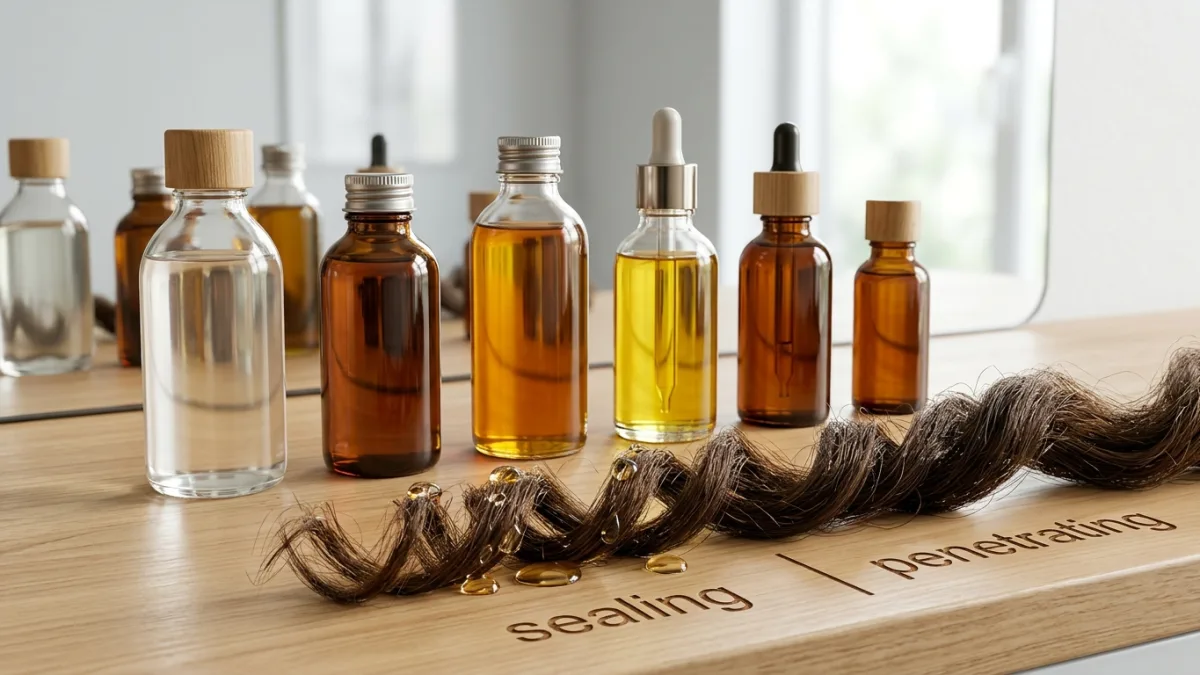
Sealing oils vs. penetrating oils
Common hair oils tend to fall into two broad groups: those that absorb into the strand and those that coat the surface. Knowing this distinction helps you pick oils suited to your hair’s needs.
Keratin is the dominant protein making up the hair shaft, giving each strand its strength and structure. Understanding this helps explain why the right grooming tools and routine matter for healthy-looking hair, from root to tip.
Oils generally work in one of two ways, either soaking into the hair strand or forming a protective layer on top. This simple distinction can guide smarter choices in your daily beauty routine.
Knowing which type of hair oil you are using changes how and when you should apply it. Sealing oils work best on damp or freshly washed hair, right after conditioner. Penetrating oils often work better as a pre-wash treatment, left on before you shampoo.
| Oil Behavior | Examples | Best Use Case |
|---|---|---|
| Sealing oils (sit on surface) | Argan oil, sunflower oil, sweet almond oil | Smoothing frizz and adding shine after washing |
| Penetrating oils (absorb into shaft) | Coconut oil, olive oil | Pre-wash treatments for dryness and damage |
| Heavier oils | Castor oil, coconut oil | Coarse, curly, or very dry hair |
| Lightweight oils | Jojoba oil, argan oil | Fine or flat hair that gets greasy fast |
What Are the Real Benefits of Using Hair Oil?
Hair oils offer several real benefits, from taming frizz to guarding against heat damage. The right hair oil can also support a healthier scalp, which matters more than people often realize. Not every benefit is instant, but most show up with steady use.
Frizz control and shine
Hair oils smooth the outer layer of each strand, which cuts down on frizz almost right away. A smoother surface also reflects more light, which is why hair looks shinier after applying hair oil. This effect works on nearly every hair type.

Heat and styling protection
A thin layer of hair oil can act as a buffer between your strands and hot tools. It will not fully block heat, but it can slow moisture loss during styling. This makes hair oil a smart step before blow-drying or straightening.
Heat styling can leave hair feeling dry or brittle over time. Many people use hair oil beforehand as a protective layer against everyday styling stress. Pairing oil with mindful heat use supports smoother, healthier-looking strands.
Scalp health and hair growth support
Massaging hair oil into the scalp can boost blood flow and ease dryness or flaking. A healthier scalp gives hair a better base to grow from. Consistent, gentle massage is a simple habit worth adding to any routine.
It is worth being honest here. Hair oil supports scalp comfort and strand strength, but it does not directly speed up hair growth from the root. Think of it as care for the environment hair grows in, not a growth drug.

How Do You Choose the Right Hair Oil for Your Hair Type?
Choosing the right hair oil starts with knowing your hair type and biggest concern. Fine hair needs something light. Coarse or curly hair can handle richer formulas. Damaged or color-treated hair needs oils that support repair without stripping color.
Fine or flat hair
Fine hair gets weighed down fast, so lightweight hair oils work best. Jojoba oil and argan oil absorb quickly without leaving a greasy film. Apply only to the ends, never near the roots, to avoid a flat, oily look.
Curly or coily hair
Curly and coily hair tends to be drier, since natural scalp oils travel less easily down tight curls. Richer hair oils, like coconut or castor oil, help lock in moisture and define curl pattern. These hair oils can be used more generously here.

Dry or damaged hair
Color-treated hair
Color-treated hair needs gentle hair oils that will not strip pigment or add extra dryness. Argan oil and jojoba oil are popular choices since they are light and low in harsh acids. Avoid oils with added alcohol, which can fade color faster.
- Fine or flat hair: use lightweight hair oils like jojoba or argan, applied only to ends
- Curly or coily hair: use richer hair oils like coconut or castor, applied generously
- Dry or damaged hair: use penetrating hair oils, focused on mid-shaft to ends
- Color-treated hair: use gentle, alcohol-free hair oils to protect pigment
- Oily scalp, dry ends: apply hair oil only from mid-shaft down, skip the roots
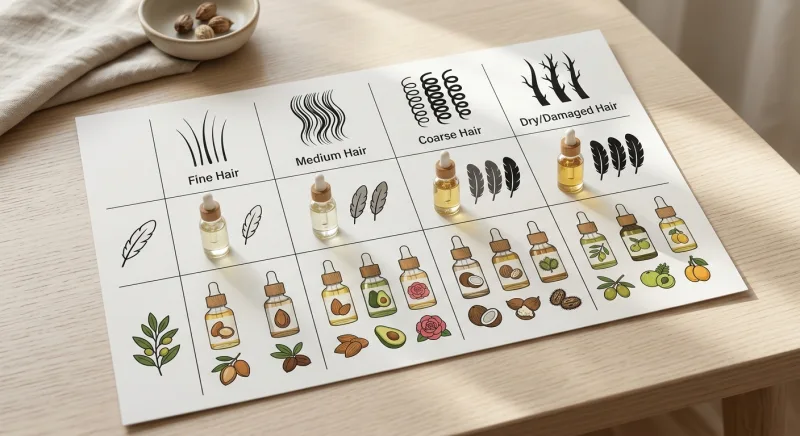
Comparing Popular Hair Oils Side by Side
Choosing between hair oils gets easier once you see their properties compared directly. Each oil has a distinct weight, absorption speed, and best-use case. The table below breaks down common options so you can match one to your hair type quickly.
Choosing the right oil often comes down to hair porosity and texture. Lighter oils tend to suit fine or low-porosity hair, while richer oils work well for coarser, thirstier strands. Matching oil to hair type helps avoid buildup or dullness.
| Hair Oil | Texture/Weight | Absorption Speed | Best For | Common Use |
| Argan Oil | Light | Fast | Fine to medium hair, frizz control | Leave-in, styling finisher |
| Coconut Oil | Heavy | Slow | Thick, curly, or coily hair | Pre-wash treatment, deep conditioning |
| Jojoba Oil | Light | Fast | Oily scalp, fine hair | Scalp balancing, light moisture |
| Castor Oil | Very heavy | Very slow | Damaged ends, thinning edges | Spot treatment, growth support |
| Argan-Jojoba Blend | Medium | Moderate | Normal to dry hair | Daily leave-in conditioner |
| Grapeseed Oil | Very light | Very fast | Fine, oily hair | Shine serum, heat protectant base |
Notice the pattern: lighter oils absorb faster and suit finer strands. Heavier oils sit longer on hair, which benefits coarser or drier textures. Matching weight to hair density prevents both greasiness and lack of moisture.
Natural vs Synthetic Hair Oils
Not all hair oils come from plants. Some products labeled “hair oil” are silicone-based or blended with synthetic emollients. Both categories can work well, but they behave differently on the hair shaft and scalp.
Natural oils tend to absorb into the hair shaft, while silicone-based oils coat the surface for shine and smoothness. Each approach offers a different feel and finish, so choice often comes down to personal preference and hair goals.

Hair oils, serums, and creams each bring something different to a routine. Oils nourish and add shine, serums smooth and protect the surface, and creams blend water and oil for lightweight hydration. Together they suit different needs and hair types.
The table below outlines key differences to help you decide which category fits your routine and goals.
| Feature | Natural Hair Oils | Synthetic Hair Oils |
| Source | Plant-derived (coconut, argan, jojoba, olive) | Lab-formulated (dimethicone, cyclomethicone) |
| Penetration | Can absorb into hair shaft | Coats hair surface only |
| Shine Effect | Moderate, natural-looking | High, glass-like finish |
| Buildup Risk | Low to moderate | Higher with frequent use |
| Nutrient Content | Contains vitamins, fatty acids | None, purely cosmetic |
| Best Use Case | Long-term hair health, scalp care | Quick styling, humidity control |
| Removal | Washes out with regular shampoo | May need clarifying shampoo |
Many people gravitate toward natural hair oil formulas for their simplicity and familiar ingredients. Others prefer synthetic blends for consistency and targeted results. Ultimately, the right choice depends on individual hair goals and preferences.
Hair oils remain a staple in many beauty routines, valued for their versatility. At Bellxi, we round out that daily routine with the complete range of modern hair removal and grooming tech, from painless IPL handsets to precision trimmers and epilators.
If you want lasting improvements to hair texture and scalp condition, natural oils are usually the better long-term investment. If you need a fast fix for frizz before an event, a silicone-based product may deliver quicker visual results.
How to Apply Hair Oils Correctly
Application technique matters as much as product choice. Using too much oil, or applying it to the wrong section of hair, can leave strands looking greasy instead of glossy. A few simple steps make a noticeable difference.
- Start with a small amount, roughly the size of a dime for shoulder-length hair
- Warm the oil between your palms before applying
- Focus application on mid-shaft to ends, avoiding the scalp unless treating dryness
- Comb through with a wide-tooth comb to distribute evenly
- Adjust amount based on hair length and thickness, adding more for coarser textures
For scalp treatments, part hair into sections and apply oil directly to the scalp with a dropper or applicator brush. Massage gently for a few minutes to boost circulation and help absorption.
When to Use Hair Oils in Your Routine
Timing affects how well hair oils perform. Some work best before washing, others as a finishing touch after styling. Knowing when to apply each type helps you get the most benefit without weighing hair down.

- Pre-wash treatment: apply thirty minutes to overnight before shampooing to protect strands
- Post-wash leave-in: apply to damp hair to lock in moisture
- Styling finisher: apply to dry hair for shine and frizz control
- Overnight mask: apply generously and cover with a cap for deep conditioning
- Scalp treatment: apply directly before bed and wash out in the morning
Pre-wash oiling works especially well for coarse or curly hair, since it creates a protective barrier before shampoo strips natural oils. Fine hair usually benefits more from small, post-wash applications rather than heavy pre-treatments.
Common Mistakes When Using Hair Oils
Even good products fail when used incorrectly. These mistakes are common and easy to fix once you know what to look for.
- Applying oil to the scalp when you have naturally oily roots
- Using too much product, leading to a heavy, weighed-down look
- Skipping patch tests before trying a new oil, risking irritation
- Applying oil to unwashed, product-laden hair, which blocks absorption
- Choosing an oil based on trends rather than your specific hair type
Correcting even one or two of these habits can significantly improve how your hair responds to oil treatments. Start small, observe results over a few weeks, and adjust amount or frequency as needed.
Hair Oils for Specific Concerns
Beyond general hair type, specific concerns like breakage, thinning, or dandruff call for targeted oil choices. Matching the oil to the problem, rather than just the hair texture, improves outcomes.
| Concern | Recommended Hair Oil | Why It Helps |
| Breakage | Castor oil, argan oil | Strengthens strands and reduces friction |
| Thinning or shedding | Rosemary-infused oil, castor oil | Supports scalp circulation |
| Dandruff or flaking | Tea tree-infused oil | Has cleansing, antimicrobial properties |
| Frizz | Argan oil, grapeseed oil | Smooths cuticle and reduces static |
| Split ends | Coconut oil, jojoba oil | Coats ends to reduce further splitting |
| Dull color | Argan oil, jojoba oil | Adds shine without stripping pigment |
A double-blind, randomized, placebo-controlled clinical trial found that rosemary-lavender and rosemary-castor hair oils significantly increased hair growth rate compared to a coconut oil control/placebo. (NCBI PMC (peer-reviewed, three-armed placebo-controlled RCT), 2025)
These pairings are starting points, not strict rules. Hair responds differently based on porosity, density, and existing damage, so some trial and adjustment is normal before finding your ideal match.
Common Mistakes to Avoid When Using Hair Oils
Even good oils can produce disappointing results when applied incorrectly. Most complaints about greasy strands or no visible change trace back to a handful of avoidable habits.
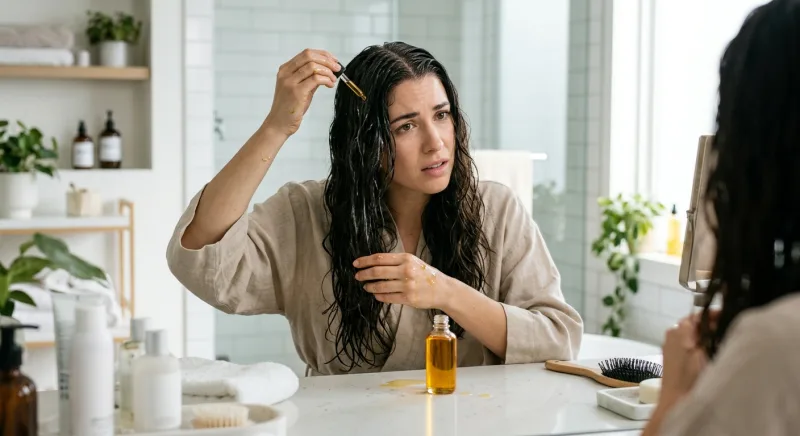
- Using too much product, especially near the scalp
- Applying oil to already-oily roots instead of focusing on mid-lengths and ends
- Skipping a patch test before trying a new oil
- Expecting overnight results from a single application
- Combining too many active oils at once without knowing how skin or scalp reacts
- Not adjusting oil type or amount for seasonal humidity changes
Correcting these habits often makes a bigger difference than switching products entirely. Consistency and proper technique tend to matter more than which specific oil sits on the shelf.
How to Store Hair Oils Properly
Natural oils degrade faster than synthetic formulas, especially when exposed to heat, light, and air. Proper storage protects both scent and effectiveness.
- Keep bottles away from direct sunlight and windowsills
- Store in a cool, dry cabinet rather than a steamy bathroom
- Close caps tightly after each use to limit oxidation
- Use dark glass bottles when decanting into travel containers
- Discard oils that smell sharp, sour, or noticeably different from when purchased
Most plant oils last several months to a year when stored well. Checking scent and texture occasionally helps catch spoilage before it affects hair or scalp.
Market context
PFAS-containing cosmetic products in FDA’s cosmetic listing database — PFAS-containing cosmetic products represented 0.41% of the total products listed in FDA’s mandatory cosmetic product listing database as of August 2024. U.S. Food and Drug Administration (FDA), 2026
Adjacent-market figures — each names the subject it measures, not Hair Oils directly.
Read the complete guide: A Hair Care Guide That Finally Makes Sense of Your Routine
Frequently Asked Questions
Can hair oils actually make hair grow faster?
Most oils don’t speed up growth directly, but they can support conditions that allow existing growth to thrive. Reduced breakage, better scalp circulation from massage, and less dryness all contribute to hair appearing longer and fuller over time.
How often should I oil my hair?
Frequency depends on hair type and goals. Fine or oily hair may only need light application once or twice weekly, while dry or coarse textures can handle daily use. Overnight treatments once a week work well for most people as a starting point.

Should I apply oil to wet or dry hair?
Both methods work, but for different purposes. Applying oil before washing helps protect strands from water absorption and reduces frizz. Applying to dry hair after styling adds shine and tames flyaways without altering the wash routine.
Can hair oils clog pores on the scalp?
Heavier oils like coconut or castor oil can build up near the scalp if overused, potentially trapping dirt and sebum. Lighter oils such as jojoba or grapeseed are less likely to cause this issue. Washing regularly helps prevent buildup regardless of oil choice.
Is it safe to mix multiple hair oils together?
Combining oils is generally safe and can address multiple concerns at once, such as pairing a lightweight carrier oil with a few drops of rosemary essential oil. Start with small amounts and watch for irritation, especially when introducing a new essential oil to the mix.
Do hair oils work on color-treated hair?
Yes, many oils are gentle enough for color-treated strands and can even help preserve vibrancy by reducing moisture loss. Argan and jojoba oils are popular choices since they add shine without stripping pigment or weighing hair down.
Can I leave hair oil in overnight every night?
Occasional overnight treatments are fine for most hair types, but nightly use may lead to buildup on pillowcases and scalp congestion. Limiting overnight applications to once or twice weekly, with lighter daytime use in between, usually gives better long-term results.
What’s the difference between essential oils and carrier oils for hair?
Carrier oils, like coconut or argan, are used in larger amounts and form the base of most treatments. Essential oils, like rosemary or peppermint, are concentrated plant extracts used in small drops mixed into a carrier oil to avoid skin irritation.
References
- The hair shaft’s cortex is composed of densely packed keratins, making keratin the main structural protein of hair. — ScienceDirect (Hair Keratin Overview) (Peer-reviewed medical reference topic page hosted on ScienceDirect, an Elsevier-indexed scientific database)
- Coconut oil penetrates into the hair cortex due to its low molecular weight, while mineral oil, a hydrocarbon, does not penetrate the hair shaft at all. — Journal of Cosmetic Science (Society of Cosmetic Chemists) (Original peer-reviewed research article (Rele & Mohile, 2003) published in the Journal of Cosmetic Science, the primary source for oil penetration data cited throughout the cosmetic science literature)
- The complex network of proteins in the hair shaft gives it rigidity and helps make it resistant to environmental stressors such as pollutants, weather, and ultraviolet light. — PMC (National Institutes of Health) (Peer-reviewed study archived on PubMed Central, a National Institutes of Health repository)
- The hair shaft’s cuticle layer fixes the growing hair to the follicle and provides strength and protection to the hair shaft. — StatPearls / NCBI Bookshelf (NIH) (Peer-reviewed medical reference hosted on the NCBI Bookshelf, part of the National Institutes of Health)
You may also be interested in: Natural Glowing Skin: What Really Works (And What’s Just Hype)
You may also be interested in: Hydrating Lip Oils: What They Are, How They Work, and How to Choose the Right One
