
Skincare ingredients
Retinol and Pregnancy: What’s Safe, What to Avoid, and What to Use Instead
Last updated: November 13, 2026
Most doctors say no to retinol and pregnancy together, as a safeguard. This is based on studies of high-dose vitamin A pills, not proof that your face cream causes harm. Retinol and pregnancy advice leans careful because how much soaks through skin is hard to measure exactly.
The safest move is to stop retinol and switch to gentler, pregnancy-safe swaps until after birth.
Is Retinol Safe to Use During Pregnancy?
The short answer is no, most experts say to avoid it. Retinol and pregnancy don’t mix well in the eyes of dermatologists and OB-GYNs, who tend to recommend stopping use once you know you’re expecting or are trying to conceive. This advice is precautionary.
It isn’t based on proof that your nightly serum causes birth defects.
The short answer
Retinol (a kind of vitamin A found in many store-bought anti-aging creams and serums) is grouped with other retinoids as something to skip while pregnant. The American College of Obstetricians and Gynecologists mostly says that retinoid drugs, whether prescription or over the counter, should be skipped during pregnancy. That advice treats retinol and pregnancy as one topic, along with stronger prescription versions. (American College of Obstetricians and Gynecologists (ACOG))
Why doctors advise caution
Doctors advise care because the strongest proof against retinoids comes from pills, not creams. A well-known study on isotretinoin (a prescription vitamin A pill used for bad acne, not the same as topical retinol) found a very high added risk for major birth defects among a group of pregnancies studied. That single study still shapes advice about retinol and pregnancy today, even though it looked at a pill, not a cream. (New England Journal of Medicine, 1985)
Retinol creams put on the skin are widely avoided in pregnancy as a safeguard tied to the known effects of the acne pill isotretinoin, even though skin soak-in is much lower and current proof hasn’t shown a clear rise in birth-defect risk. In other words, the caution around retinol and pregnancy is built on a related but different product. (PubMed (Nordic cohort study))
Here’s a quick side-by-side look at how different vitamin A ingredients are viewed during pregnancy, plus a few common swaps skin doctors bring up instead.
| Ingredient Type | Pregnancy Safety Status | Common Use |
|---|---|---|
| Retinol (over-the-counter) | Generally avoided as a precaution | Anti-aging, texture, fine lines |
| Tretinoin (prescription retinoid) | Generally avoided; stronger caution than retinol | Acne, sun damage, wrinkles |
| Adapalene (prescription retinoid) | Not recommended by most experts | Acne treatment |
| Oral isotretinoin | Contraindicated; restricted distribution program | Severe cystic acne |
| Azelaic acid | Considered safe by most experts | Acne, redness, pigmentation |
| Vitamin C | Considered safe | Brightening, antioxidant support |
What Is Retinol and How Does It Work on Skin?
Retinol vs. other vitamin A derivatives (tretinoin, retinaldehyde, adapalene)
Not all retinoids are the same strength, and that matters for retinol and pregnancy choices. Retinol is the mildest, sold with no prescription in most drugstores. Tretinoin is a strong, prescription-only retinoid, chemically closer to the active form your skin actually uses. Adapalene, another prescription retinoid used for acne, has little safety data in pregnancy and isn’t backed by most experts, with one known case report linking it to birth defects after exposure. (PMC (NIH) – Table of topical acne preparation safety in pregnancy)
Retinaldehyde falls in between retinol and tretinoin in strength. It turns into the active form faster than retinol does. None of these facts change the overall advice. Whether it’s retinol, tretinoin, or adapalene, doctors mostly say to pause all of them during pregnancy just to be safe.
How retinol is absorbed through skin
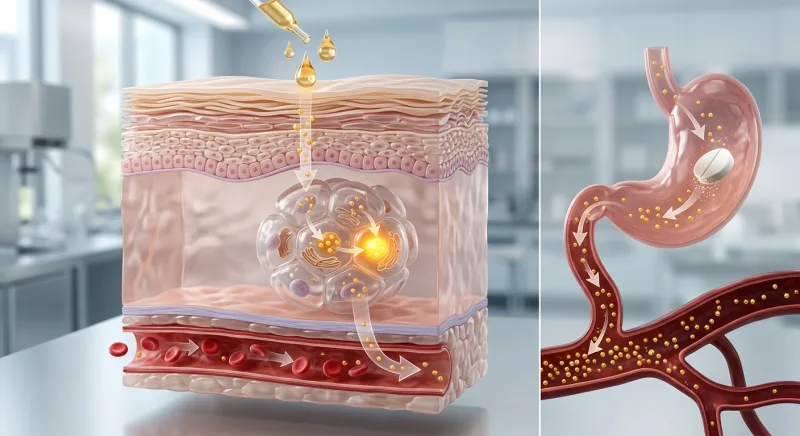
Retinol is taken in through the outer layers of skin, then partly turned into its active form inside skin cells. Very little reaches the blood compared to a pill you swallow. This is a key reason experts see topical retinol risk as different from pill-form retinoid risk, even while still urging care around retinol and pregnancy. (National Institutes of Health (PMC/NIH))
Man-made retinoids close in makeup to vitamin A are known to cause harm to a growing baby in the womb, with effects seeming to hit tissues formed early on. That finding is clearest for pill forms. It still shapes how careful doctors are about skin creams too. (New England Journal of Medicine)
What Are the Risks of Retinol During Pregnancy?
The real risk data comes almost fully from retinoid pills, not creams. Seeing this split is the clearest way to think about retinol and pregnancy safety. The pill form, isotretinoin, has proven, serious risks. Retinol cream is taken in by the skin far less and has much less direct proof of harm. (PubMed (Nordic cohort study))
Oral retinoids vs. topical retinol
The isotretinoin pill can badly harm a growing baby and can only be sold under a tightly controlled safety program, since it causes severe birth defects. This is the drug behind most of the strong warnings you’ll see about vitamin A and pregnancy. A specific pattern of birth defects tied to retinoid exposure carries a reported risk of 35% for a baby exposed past day 15 after conception, based on a review of isotretinoin research. That figure describes a drug taken as a pill, not a cream put on skin. (U.S. Food and Drug Administration (FDA)) (PMC (National Library of Medicine), 2016)
The first 1985 group study behind much of this worry found a relative risk of 25.6 for a group of picked major birth defects among 154 pregnancies exposed to isotretinoin. That number is stark, and it’s just why doctors still treat all retinoids, including retinol, with care today. (New England Journal of Medicine, 1985)
What research says about topical absorption levels
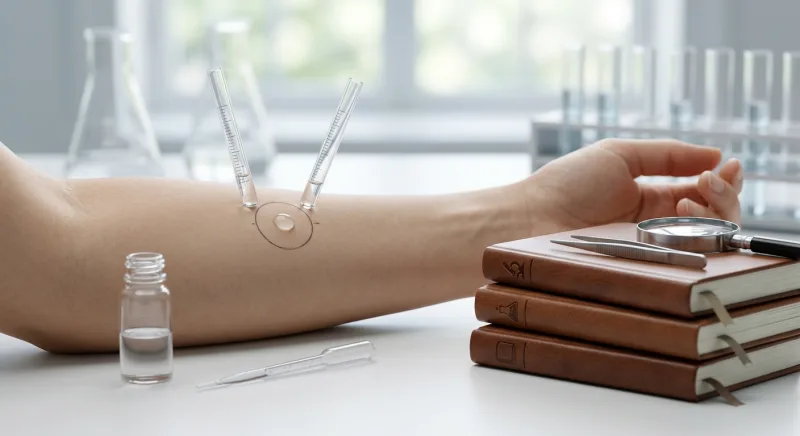
Very little retinol put on the skin soaks in. A small number of published case reports describe birth defects that match known harm from retinoid drugs, while two studies that tracked women from early pregnancy found no higher risk of major birth defects. This mixed picture is part of why retinol and pregnancy advice stays careful rather than alarming. (National Institutes of Health (PMC/NIH))
Scientists haven’t published an exact absorption number for over-the-counter retinol and pregnancy specifically. Without that number, experts go by the wider pattern: low absorption, few case reports, no clear sign of harm from use on the skin alone. (National Institutes of Health (PMC/NIH))
Why doctors err on the side of caution
Doctors err on the side of care because the cost of being wrong is high, and pregnancy is a hard time to study directly. Nobody runs tests exposing pregnant women to a drug already linked to birth defects.
So the guidance around retinol and pregnancy is built on care, not proof, and that’s a fair trade-off.
Given how serious the known risk from oral retinoids is, most doctors would rather tell patients to stop them fully. This avoids any theoretical worry with skin products, even a small one. It’s an easy call. Plenty of safe swaps exist for the nine months it covers.

I Used Retinol Before Knowing I Was Pregnant — Should I Worry?
No, one thing to know is that this is very common, and it’s rarely a reason to panic. Many people use retinol as part of a normal routine before finding out they’re expecting.
Retinol and pregnancy overlap happens often, simply because early pregnancy isn’t always found right away.
Your doctor can look at just what you used, how often, and for how long. They’ve likely heard this exact question many times before. Worrying about retinol and pregnancy overlap rarely changes the result. Talking to your doctor, rather than looking up worst-case stories, is the better next step.
Retinol and pregnancy: which acne and anti-aging ingredients are safer swaps?
Once retinol is off the table, the next question is usually what to use in its place. Pregnancy doesn’t mean giving up a skincare routine fully. It means picking ingredients with a better-proven safety record for this specific span of time.
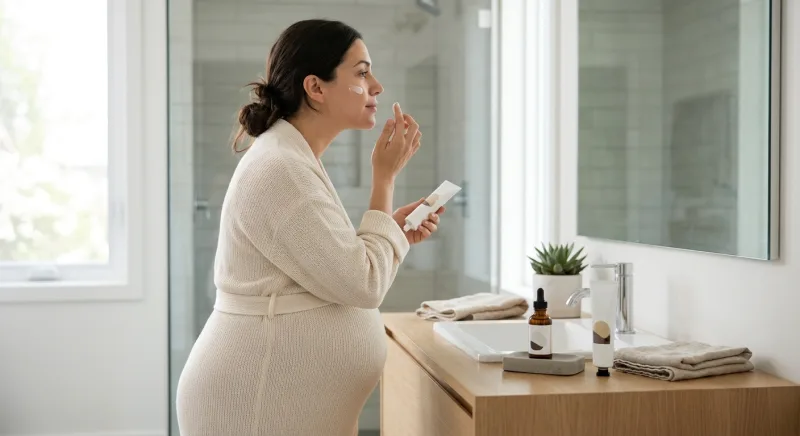
Azelaic acid is one of the most often suggested swaps. It treats acne, evens out skin tone, and softens texture without the retinoid action that worries doctors. Azelaic acid is thought to be safe to use during pregnancy, says the American Academy of Dermatology. (American Academy of Dermatology (AAD))
Part of why azelaic acid gets a green light is how little of it gets into the blood. It stays mostly on the skin’s top layer, not moving through the body. Azelaic acid is barely taken up by the body after use on skin, so use by the mother isn’t expected to expose a fetus in any real way. (PMC (NIH) – Table of topical acne preparation safety in pregnancy)
Adapalene is trickier, and worth noting on its own since it’s sold both by prescription and over the counter as Differin gel. It’s still a retinoid, close in makeup to the ones linked to birth defects at high doses. Adapalene should, in general, be stopped during pregnancy, say most experts. (American Academy of Dermatology (AAD))
The caution around adapalene isn’t just guesswork. Adapalene has little safety data for use in pregnancy and isn’t advised by experts, with one known case report of brain and eye defects in a baby after exposure. That single case doesn’t prove it caused the harm, but it’s enough for most doctors to advise against use. (PMC (NIH) – Table of topical acne preparation safety in pregnancy)
Vitamin C, niacinamide, and plain hyaluronic acid fill out a fair pregnancy-safe routine for most people. None of them carry the retinoid warnings tied to retinol and pregnancy talk, and all three are widely used in skincare made for pregnancy.
Gentle skin-smoothing acids like lactic acid are also seen as less risky than retinol-type ingredients.
Retinol and pregnancy: comparing ingredient risk levels
Seeing these ingredients side by side makes the retinol and pregnancy talk easier to have with a doctor. The table below groups common skincare actives by how they’re usually viewed for use during pregnancy.
| Ingredient | Category | General Pregnancy Guidance |
|---|---|---|
| Oral isotretinoin | Prescription retinoid | Contraindicated; restricted-distribution program required |
| Adapalene (topical) | Prescription/OTC retinoid | Generally advised to stop; limited safety data |
| Retinol (cosmetic) | OTC vitamin A derivative | Commonly avoided as a precaution |
| Azelaic acid | Non-retinoid acid | Considered safe by most dermatologists |
| Niacinamide | Vitamin B3 derivative | Generally considered low-risk |
| Vitamin C (topical) | Antioxidant | Generally considered low-risk |
| Hyaluronic acid | Humectant | Generally considered low-risk |
How retinol and pregnancy guidance differs from isotretinoin warnings
It’s worth telling apart two things that get lumped together online: cosmetic retinol and pregnancy issues linked to the prescription drug isotretinoin. They are related in makeup but not the same, and the proof behind each warning looks very different when it comes to retinol and pregnancy.
Isotretinoin is the drug behind the scariest headlines, and for good reason. It’s a prescription-only pill taken for bad acne, and it spreads through the body at much higher levels than any cream. Isotretinoin can cause severe birth defects and is sold only under a strict, watched-over safety plan. (U.S. Food and Drug Administration (FDA))
That restricted plan, known as iPLEDGE, requires regular pregnancy tests and strict birth control rules for anyone given the drug. It exists mainly because the risk of birth defects from oral isotretinoin is well known and severe. This is likely where the original retinol and pregnancy fear got its start in most people’s minds. (March of Dimes)

The data behind that fear is old but still often cited. A study in the New England Journal of Medicine on isotretinoin taken by mouth found that babies exposed to it had a much higher chance, 25.6 times, of a group of chosen major birth defects. (New England Journal of Medicine, 1985)
That same 1985 study tracked a set group of pregnancies exposed to the drug, and the numbers were stark for its time. In the key 1985 NEJM study on retinoids in pregnancy, taking isotretinoin was linked to an unusually high relative risk of 25.6 for a set of chosen major birth defects among the 154 pregnancies studied. (New England Journal of Medicine, 1985)
Timing matters a lot with this one drug. Exposure early in pregnancy, especially past a certain point in the baby’s growth, carries the highest known risk. Birth defects from this exposure hit a reported rate of 35% for a baby exposed beyond the 15th day after conception, per a PMC review on isotretinoin and birth defects. (PMC (National Library of Medicine), 2016)
That 35% figure is about the drug isotretinoin taken as a pill, not a nightly retinol serum. But it shows why the fear spread to cover all retinol and pregnancy talk, even the much weaker versions found in drugstore skin creams. (New England Journal of Medicine)
Researchers have also shown where in the body these effects tend to show up. Man-made retinoids close in makeup to vitamin A are known to cause harm to a growing baby in the womb, with defects seeming to hit tissues that come from early head and face growth cells. That split sets apart the clear risk from pills or prescriptions from the far less clear picture with skin creams. (New England Journal of Medicine)
Retinol and pregnancy: why the same caution applies to a much weaker product
So why does a cosmetic retinol cream get grouped with a drug that causes birth defects in over a third of early exposures? Mostly because of shared chemistry, shared caution, and a lack of large-scale human data proving otherwise. (U.S. Food and Drug Administration (FDA))
Medical advice tends to be careful when the risk touches a growing baby. Even without strong proof of harm from skin use, doctors often give the same warning for the whole retinoid group. ACOG mostly advises that retinoid drugs, whether prescription or over the counter, be skipped during pregnancy. (American College of Obstetricians and Gynecologists (ACOG))
That broad advice is a safe-side move, not something proven by big studies on topical retinol itself. Topical retinoids are widely avoided in pregnancy as a safe-side step, coming from the known birth-defect risk of the oral drug isotretinoin, even though the skin takes in much less of the topical form and current proof has not shown a clear rise in birth-defect risk. (PubMed (Nordic cohort study))
Some past studies actually point the other way. Though skin uptake of retinoids put on the skin is very low, a small number of published case reports of birth defects exist, while two studies done ahead of time on first-trimester use found no higher risk of major birth defects. (National Institutes of Health (PMC/NIH))
Retinol and pregnancy: comparing the strength of the evidence by product type
| Product Type | Absorption Level | Strength of Evidence for Harm |
|---|---|---|
| Oral isotretinoin | High, systemic | Strong; established teratogen with documented relative risk of 25.6 |
| Prescription topical retinoid (adapalene) | Low | Weak; limited data, isolated case reports |
| OTC cosmetic retinol | Very low | Very weak; no confirmed human cases directly tied to cosmetic use |
Reading this table, the gap between the acne pill isotretinoin (taken by mouth) and a drugstore retinol serum is large. Both fall under the same family of skin drugs. Only one has decades of known, severe outcomes behind it.
That gap doesn’t erase the advice to stop using retinol, but it does explain why the advice exists.
It also explains why so much online advice sounds scary without giving real numbers. People often see “retinoid” and think the isotretinoin data holds true for all of them. In truth, doctors stay careful partly because better studies on skin creams alone don’t yet exist at the size needed to rule out any risk fully. (New England Journal of Medicine)
None of this changes the plain advice. Retinol and pregnancy still don’t mix, at least not by current medical consensus. But knowing why can make the switch feel less like fear and more like a fair, well-backed step to be safe.
Read the complete guide: Your Skincare Ingredients Guide to Fewer Guessing Games
Frequently Asked Questions
Is retinol and pregnancy really as risky as isotretinoin and pregnancy?
No. Isotretinoin is a pill drug with a known, proven birth-defect risk, while retinol is a weaker form of vitamin A put on the skin. Most experts still say to avoid retinol and pregnancy don’t mix well as a safe-side step, but the two are not the same in strength, how much the body absorbs, or known danger. (PubMed (Nordic cohort study))
What should I do if I used retinol before I knew I was pregnant?
Try not to panic. Topical absorption is low, and current research hasn’t shown a clear increase in birth-defect risk from typical skincare use. Stop using it once you know, and mention it to your provider at your next appointment for reassurance. (PubMed (Nordic cohort study))
Can I use retinol while breastfeeding instead?
Data on retinol during breastfeeding is limited, much like the gap in pregnancy research. Many providers stretch the same caution used for retinol and pregnancy into breastfeeding too, since neither how much the body absorbs nor how much reaches the baby has been well studied. Ask your child’s doctor or your OB before starting again. (PMC (NIH) – Table of topical acne preparation safety in pregnancy)
What ingredients are considered safe alternatives to retinol during pregnancy?
Azelaic acid is seen as safe, since the body takes in very little of it. Vitamin C, niacinamide, and gentle skin-smoothing acids like lactic acid are also often suggested as swaps that help skin feel and look better without the same chance of risk. (PMC (NIH) – Table of topical acne preparation safety in pregnancy) (American Academy of Dermatology (AAD))
Is adapalene safer than retinol during pregnancy?
No. Adapalene is itself a topical retinoid, and most experts say to stop using it during pregnancy. There’s even one known case report linking adapalene use to birth defects. It should not be seen as a milder or approved swap when it comes to retinol and pregnancy. (American Academy of Dermatology (AAD)) (PMC (NIH) – Table of topical acne preparation safety in pregnancy)
Why do doctors recommend stopping retinol so early in pregnancy?
Because key growth in the baby happens before many people even know they’re pregnant. Doctors would rather patients stop early than risk exposure during that early window. This careful mindset shapes most advice on retinol and pregnancy, even without big studies on skin use alone proving harm. (PMC (NIH) – Table of topical acne preparation safety in pregnancy)
Does a single accidental use of retinol cause birth defects?
Not likely. The birth-defect risks found in studies come from an oral drug called isotretinoin, not from now-and-then use of topical retinol. Studies that tracked women who used topical retinoids early in pregnancy have not found more major birth defects. Still, stopping use from now on is the step doctors advise based on the evidence. (New England Journal of Medicine, 1985) (National Institutes of Health (PMC/NIH))

Should I tell my OB every skincare product I’m using?
Yes. Doctors would rather look at your full routine than have you guess which items matter. Bringing up retinol and pregnancy by name, along with any other active ingredients, helps your OB give advice made for you instead of plain warnings copied from a product label.
Key statistics
- A New England Journal of Medicine study on oral isotretinoin (a prescription vitamin A derivative, not topical retinol) found exposure was associated with an unusually high relative risk of 25.6 for a group of selected major malformations. (New England Journal of Medicine, 1985)
- Retinoic acid embryopathy — the pattern of birth defects linked to oral isotretinoin (a retinoid) — carries a reported risk of 35% for an embryo or fetus exposed beyond the 15th day after conception, according to a PMC review on isotretinoin teratology. (PMC (National Library of Medicine), 2016)
- In the foundational 1985 NEJM cohort study on retinoids in pregnancy, isotretinoin exposure was associated with an unusually high relative risk of 25.6 for a group of selected major malformations among the 154 pregnancies studied. (New England Journal of Medicine, 1985)
Expert insights
Although risk of birth defects from topical retinoid use is considered very low, it’s generally recommended to avoid them during pregnancy as a precaution
Lauren Penzi, board-certified dermatologist
References
- ACOG generally recommends that retinoid medications, whether prescription or OTC, be avoided during pregnancy. — American College of Obstetricians and Gynecologists (ACOG) (ACOG is the leading professional medical organization for obstetricians and gynecologists in the U.S. and publishes official patient guidance on skin conditions during pregnancy.)
- Topical retinoids are widely avoided in pregnancy as a precaution stemming from the known teratogenic effects of oral isotretinoin, even though topical absorption is much lower and current evidence has not shown a clear increase in birth-defect risk. — PubMed (Nordic cohort study) (Peer-reviewed study indexed on PubMed/NIH examining nationwide Nordic prescription and health registries for topical retinoid exposure and congenital malformation risk.)
- Although topical retinoid absorption through the skin is very low, a small number of published case reports of birth defects consistent with retinoid embryopathy exist, while two prospective studies of first-trimester use found no increased risk of major malformations. — National Institutes of Health (PMC/NIH) (Published in a peer-reviewed article hosted on PubMed Central (PMC), a repository maintained by the U.S. National Institutes of Health (NIH).)
- Isotretinoin is highly teratogenic and is approved for marketing only under a restricted-distribution risk evaluation and mitigation strategy (iPLEDGE REMS) because it causes severe birth defects. — U.S. Food and Drug Administration (FDA) (Federal drug regulatory agency responsible for approving and monitoring the safety of isotretinoin)
- Azelaic acid is thought to be safe to use during pregnancy, while adapalene (Differin gel) should generally be stopped during pregnancy per most experts. — American Academy of Dermatology (AAD) (National professional medical association representing dermatologists, cited domain aad.org)
- Oral retinoids other than isotretinoin can cause birth defects similar to those caused by isotretinoin, even though there is no formal risk-management program like iPLEDGE for them. — March of Dimes (National nonprofit organization focused on maternal and infant health, providing pregnancy-safety guidance on medications)
- Azelaic acid is minimally absorbed systemically after topical application, meaning maternal use is not expected to result in significant fetal exposure to the drug. — PMC (NIH) – Table of topical acne preparation safety in pregnancy (NIH-hosted peer-reviewed dermatology reference table summarizing pregnancy/lactation safety data for topical acne treatments including azelaic acid)
- Synthetic retinoids chemically similar to vitamin A are established human teratogens, with defects appearing to affect tissues derived from the cranial neural crest, distinguishing oral/prescription retinoid risk from topical exposure. — New England Journal of Medicine (Peer-reviewed study published in NEJM, a leading medical journal, on vitamin A and retinoid teratogenicity in a prospective cohort of over 22,000 pregnant women)
- Adapalene, a topical retinoid used for acne, has limited pregnancy safety data and is not recommended by experts, with a documented case report of fetal cerebral and ocular malformations after exposure. — PMC (NIH) – Table of topical acne preparation safety in pregnancy (NIH-hosted peer-reviewed reference table on dermatologic drug safety during pregnancy, citing published case report data)
