
Skincare tools & devices
Ultrasonic Skin Scrubber: What It Is, How It Works, and How to Use One
Last updated: November 5, 2026
An ultrasonic skin scrubber is a handheld device with a vibrating metal spatula that uses high-frequency sound waves to loosen dirt, oil, and dead skin cells. It helps deep-clean pores gently at home. There’s no harsh extraction or rough scrubbing involved.
This guide covers how an ultrasonic skin scrubber works, its benefits, and how to use one safely and correctly.
If you’ve scrolled past shiny metal wands in beauty ads, you’ve likely seen an ultrasonic skin scrubber in action. These small tools promise a deeper clean than soap and water alone. But what’s really going on under that flat metal tip?
Let’s break it down in plain terms, no jargon required.
This device fits neatly into a full beauty routine. Many women pair an ultrasonic skin scrubber with other grooming tools like IPL laser handsets, trimmers, and epilators. Together, these tools cover skin care and hair removal in one daily habit.
What Is an Ultrasonic Skin Scrubber?
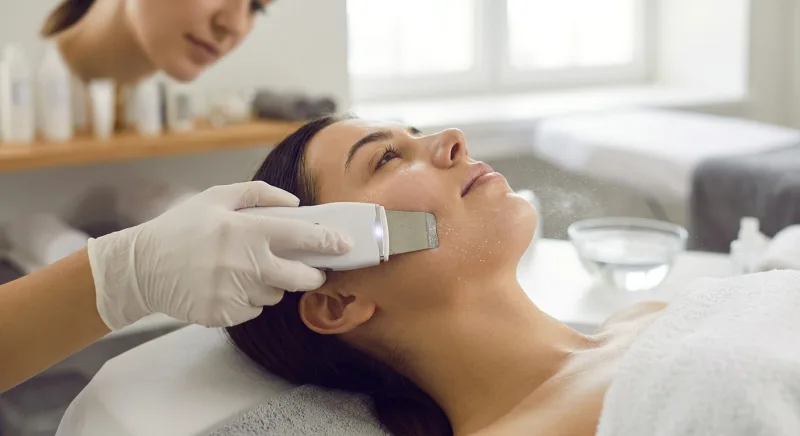
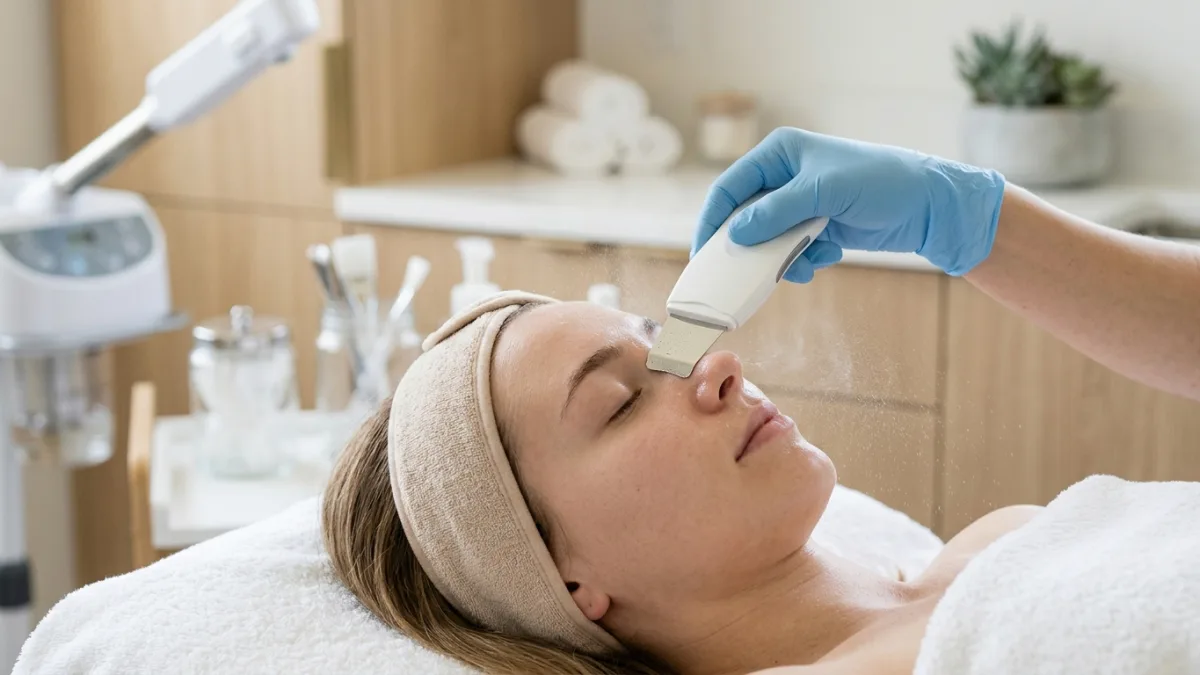
An ultrasonic skin scrubber is a small handheld tool with a flat, spatula-shaped metal tip. It vibrates at a very high speed to lift dirt, oil, and flaky skin from your pores. Unlike a washcloth, it doesn’t just wipe the surface.
It gets into the top layer of skin using gentle motion.
People reach for an ultrasonic skin scrubber when regular washing isn’t cutting it. Think of days when your skin feels clogged, dull, or rough to the touch. This tool aims to give your face a deeper clean without pinching, squeezing, or harsh rubbing.
How the Spatula-Style Tip Works
The flat edge on an ultrasonic skin scrubber looks a bit like a tiny butter knife. It’s smooth and rounded, made to glide across skin rather than scrape it. When turned on, this edge vibrates at an extremely rapid, near-silent rate that loosens buildup on the surface.
People with active acne, rosacea, or highly sensitive skin should be cautious with ultrasonic skin scrubbers. Vibration and pressure on inflamed or reactive skin can worsen irritation. Anyone with a diagnosed skin condition should check with a dermatologist before adding a scrubber to their routine.
Ultrasonic skin scrubbers vibrate at extremely high speed, far beyond what the eye can detect. This rapid motion is what allows the flat edge to loosen debris gently. The exact rate varies by device and model.
That fast motion pushes against the top layer of your skin. It helps loosen buildup that sits in pores, like sebum (the natural oil your skin makes) and dead skin flakes. The blade edge of an ultrasonic skin scrubber does the work; your hand just guides it.
Most people move the tip in short, slow strokes. You never need to press hard. In fact, pressing too hard can work against you, which we’ll cover later in this guide.
What It Removes From Your Skin
An ultrasonic skin scrubber is built to lift a few common culprits. These include trapped oil, dead skin cells, light makeup residue, and loosened debris sitting near the pore opening. It won’t dig deep like a professional extraction tool, and that’s the point.
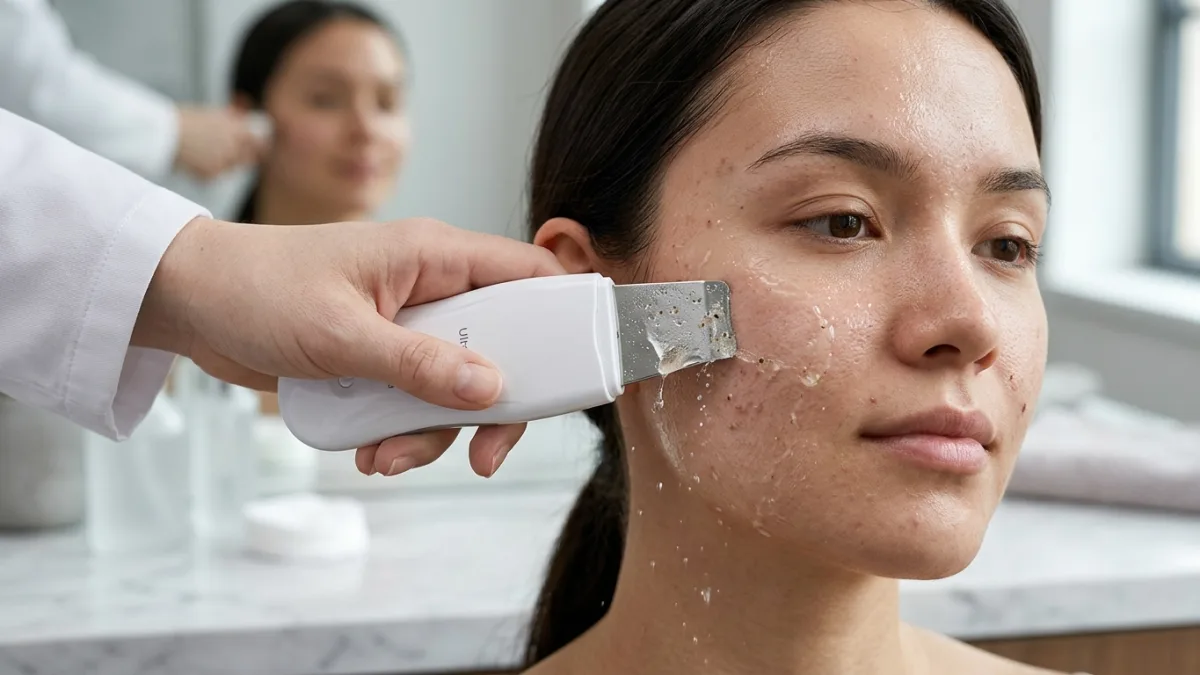
Many estheticians view ultrasonic skin scrubbers as a helpful at-home step rather than a replacement for professional extraction facials. Trained hands can reach deeper congestion safely, while a scrubber works well for regular surface maintenance between appointments.
- Excess sebum sitting on the skin’s surface
- Flaky, dead skin cells that dull your complexion
- Light residue from makeup or sunscreen
- Loosened debris near clogged pores
Because an ultrasonic skin scrubber works gently, it’s often used as a prep step. Many people use it right before applying serum or moisturizer, so the skin can better soak up what comes next.
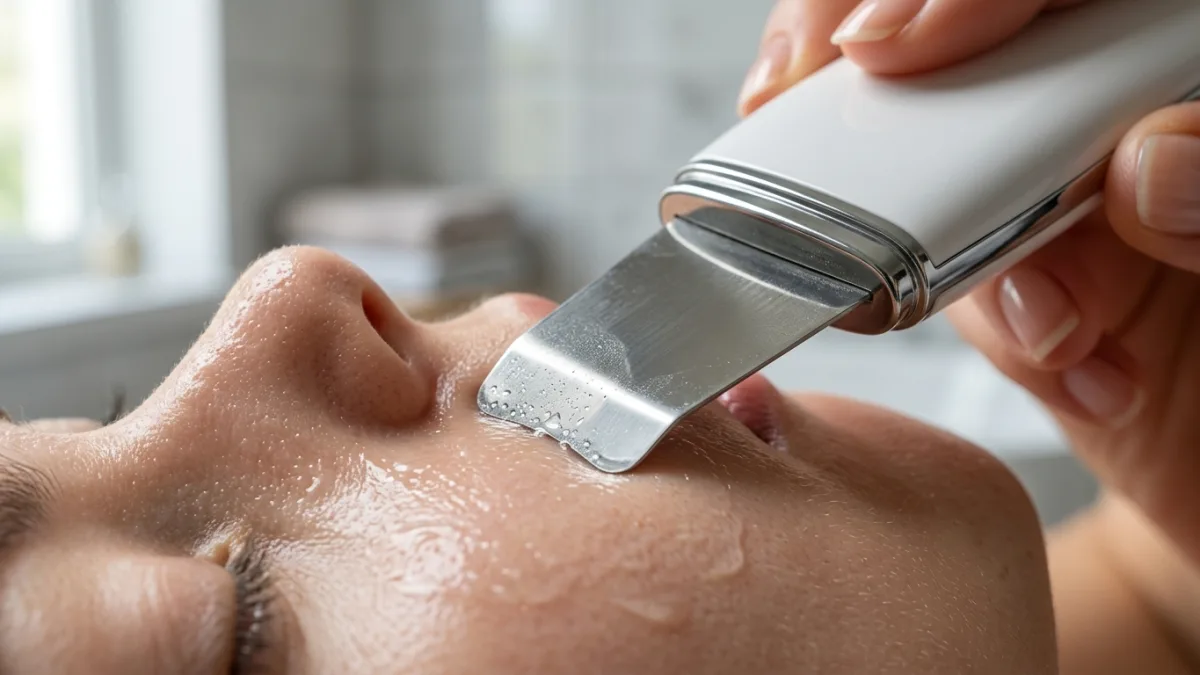
How Does an Ultrasonic Skin Scrubber Work?
An ultrasonic skin scrubber works by turning electrical energy into fast physical vibration. That vibration happens at a frequency higher than what the human ear can hear, which is why it’s called “ultrasonic.” The motion, not heat or suction, does the cleaning work.
Inside an ultrasonic skin scrubber sits a small part that vibrates when powered on. This part is usually a metal disc or crystal that flexes rapidly. That flexing motion travels down through the metal spatula tip and into your skin when you press it lightly against your face.
Ultrasonic Vibration Explained
Ultrasonic vibration simply means movement that happens too fast to hear. Your ultrasonic skin scrubber uses this rapid movement to gently shake loose whatever sits on top of your skin. It’s a bit like a tiny jackhammer, but soft enough that you barely feel more than a light buzz.
This buzzing motion works best with a wet surface. That’s why most people apply water, toner, or a hydrating mist before using an ultrasonic skin scrubber. The liquid acts as a go-between, helping the vibration travel evenly across your skin instead of just your palm.
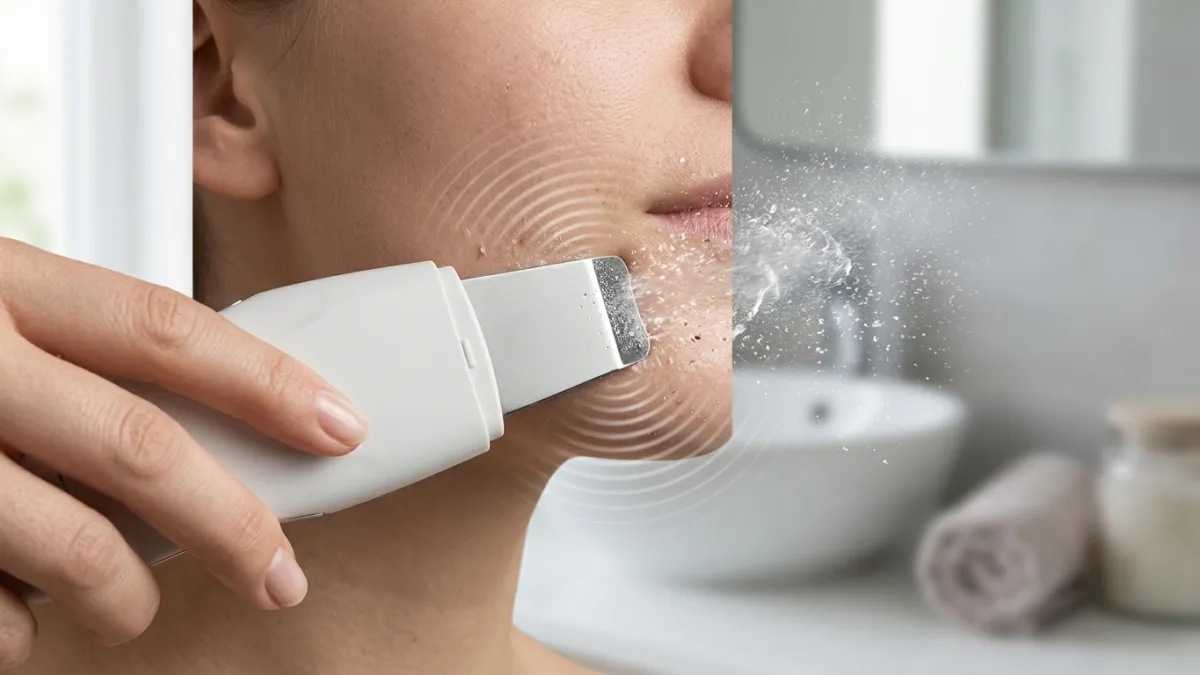
Without water or a liquid layer, an ultrasonic skin scrubber won’t work as well. The metal tip needs some moisture to glide smoothly and carry the vibration where it needs to go.
Cavitation vs. Mechanical Exfoliation
You may see the word “cavitation” used to describe how an ultrasonic skin scrubber works. Cavitation refers to tiny bubbles forming and bursting in liquid from rapid vibration. Some brands say this bubble action helps lift debris from pores during regular use.
Ultrasonic vibration works by gently loosening sebum and dead skin cells sitting on the skin’s surface. This mechanical action helps lift away buildup without scrubbing or harsh exfoliants, making it a gentler alternative for those seeking smoother, clearer-looking skin as part of a daily routine.
Mechanical exfoliation, on the other hand, is more straightforward. It just means physically loosening dead skin through motion, like the scraping action of the spatula tip itself. Both effects likely play a role, but the mechanical part is easier to observe and explain.
Either way, the ultrasonic skin scrubber’s real job is to make dirt and oil easier to wipe away. It softens the bond between debris and skin, so a light pass removes more than a plain rinse would.
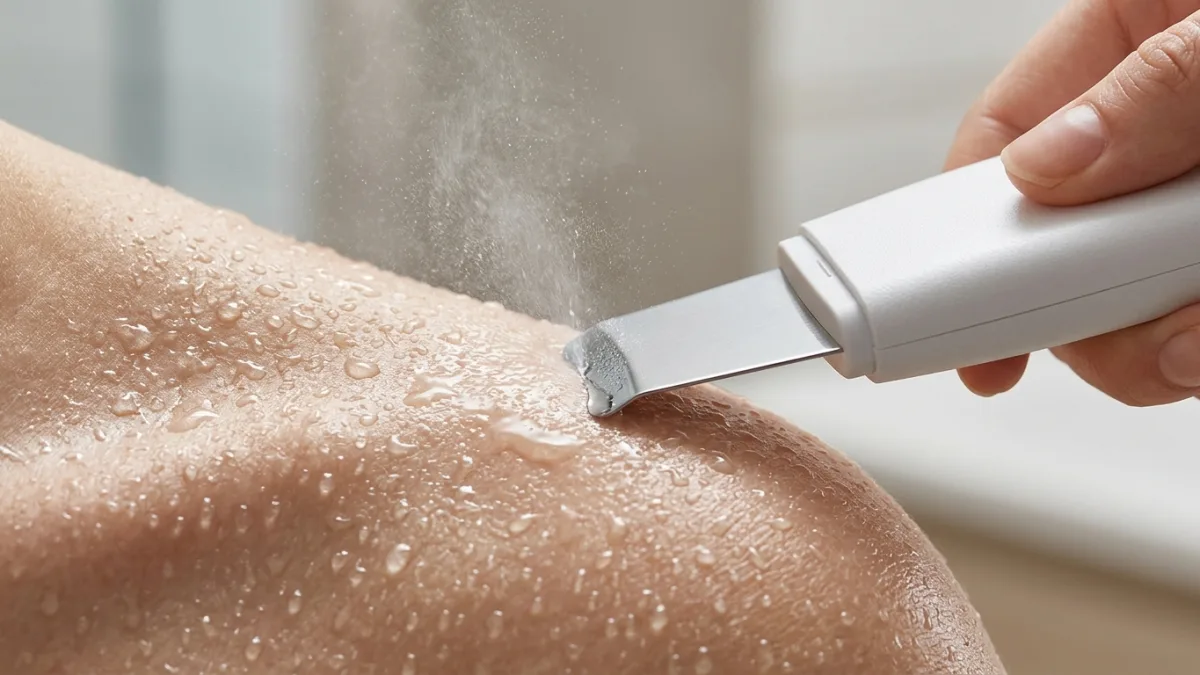
What Are the Benefits of Using One?
The benefits of an ultrasonic skin scrubber center on deeper cleaning, better product absorption, and a gentler option than pore extraction tools. It’s a small addition to a routine that can make a noticeable difference over time, especially for oily or congested skin.
Deeper Cleansing Than Manual Washing
Washing your face with your hands only goes so far. An ultrasonic skin scrubber reaches slightly further into the pore opening than fingers or a cloth can. The vibration loosens buildup that plain washing tends to leave behind.

This matters most for people with oily or combination skin. Extra sebum can sit in pores and lead to a dull look or clogged texture. Using an ultrasonic skin scrubber regularly as part of a routine may help keep that buildup in check.
Better Absorption of Serums
Skin care only works well if your skin can actually absorb it. A layer of dead skin or oil can block serums and moisturizers from soaking in fully. An ultrasonic skin scrubber clears that layer first, so your products aren’t fighting an uphill battle.
Many people use their ultrasonic skin scrubber right after cleansing and before applying serum. This order gives active ingredients a cleaner surface to reach, which may improve how well your routine performs overall.
Gentler Alternative to Pore Extraction
Pore extraction tools, like metal loop extractors, physically dig into the skin to push out blockages. That method can cause redness, irritation, or scarring if done wrong. An ultrasonic skin scrubber offers a softer path to a similar goal.
Instead of digging, an ultrasonic skin scrubber loosens debris so it lifts away more easily. It won’t replace a professional extraction for stubborn blackheads, but it’s a lower-risk option for regular home care.
At-home ultrasonic exfoliation devices are designed to work on the skin’s surface layer, targeting buildup without penetrating deeper tissue. This surface-level approach is part of why these tools are made for gentle, regular use as part of a daily routine.
This gentler approach fits well within a full grooming routine. Just as an epilator handles hair removal without harsh chemicals, an ultrasonic skin scrubber handles pore care without aggressive tools. Both aim for results without unnecessary irritation to the skin.
Ultrasonic Skin Scrubber vs. Comedone Extractor
Comedone extractors are small metal tools with a loop on one end. Users press the loop around a blemish and apply pressure to force out contents. This works fast, but it’s easy to press too hard.
An ultrasonic skin scrubber takes a slower, gentler route. It loosens buildup with vibration instead of direct pressure on the blemish itself. The table below lines up the two side by side.
| Feature | Ultrasonic Skin Scrubber | Comedone Extractor |
| Method | Vibration loosens debris | Direct pressure forces debris out |
| Risk of bruising | Low | Moderate to high if misused |
| Speed of results | Gradual, over repeated use | Immediate |
| Skill required | Minimal | Some practice needed |
| Best for | Regular maintenance, mild congestion | Stubborn, isolated blackheads |
| Sensation | Mild buzzing or tingling | Pinching or pressure |
Neither tool is strictly better in every case. Some people keep both on hand, using the scrubber for upkeep and the extractor for occasional stubborn spots. The choice often comes down to comfort with the sensation and the condition of the skin that day.
Ultrasonic Skin Scrubber vs. Facial Steamer
Facial steamers open pores using warm vapor. The heat softens debris and encourages sweat, which can loosen surface buildup over several minutes. It’s a passive process that requires no direct contact with the skin.
An ultrasonic skin scrubber, in contrast, works through direct contact and mechanical vibration. It doesn’t rely on heat at all. Many people actually pair the two, steaming first and scrubbing right after for a combined effect.
| Feature | Ultrasonic Skin Scrubber | Facial Steamer |
| Mechanism | Mechanical vibration | Heat and moisture |
| Session length | 5-10 minutes | 10-15 minutes |
| Contact with skin | Direct | None, vapor only |
| Heat exposure | None | Warm, can be intense |
| Portability | Compact, handheld | Bulkier, needs water reservoir |
| Common use case | Exfoliation and pore cleaning | Pore opening before treatments |
Using both tools together isn’t necessary for everyone. But for those chasing a deeper clean without harsh scrubbing, steaming beforehand can make the ultrasonic pass more effective. Skin that’s warm and slightly damp tends to release debris more readily.
Ultrasonic Skin Scrubber vs. Chemical Exfoliants
Chemical exfoliants use acids like glycolic or salicylic acid to dissolve dead skin cells. They work at a cellular level, breaking down the bonds that hold buildup in place. Results often build over days or weeks of consistent use.
An ultrasonic skin scrubber works immediately, in a single session. There’s no waiting period and no risk of chemical burns or unexpected reactions. That said, chemical exfoliants can reach a level of cellular turnover a physical tool can’t match.
| Feature | Ultrasonic Skin Scrubber | Chemical Exfoliants |
| Onset of results | Immediate | Gradual, days to weeks |
| Irritation risk | Low | Moderate, especially for sensitive skin |
| Cost over time | One-time device cost | Recurring product purchases |
| Sun sensitivity | None | Can increase sun sensitivity |
| Depth of action | Surface level | Surface to mid-layer |
| Suitable for daily use | Often yes | Depends on strength and skin type |
Some skincare routines use both without conflict. A chemical exfoliant handles the cellular side of renewal, while the scrubber physically clears away what’s already loosened. Combining the two isn’t required, but it can round out a routine that leans on more than one method.
Choosing Based on Skin Goals
Picking a tool often comes down to what a person is trying to fix. Someone dealing with occasional dullness might lean toward the scrubber alone. Someone managing frequent breakouts might combine it with a chemical exfoliant instead.
There’s no single correct combination. Skin type, budget, and tolerance for sensation all play a role in the decision. Testing one method at a time makes it easier to tell what’s actually working.
For most people starting out, the ultrasonic skin scrubber offers a low-commitment entry point. It doesn’t require ongoing product spending or downtime, which makes it easier to try before layering in anything else.
At-home grooming and hair removal devices have become a staple in modern beauty routines. More people are choosing convenient, in-home options over traditional salon visits, favoring tools that fit their schedule and budget while still delivering professional-style results from their own bathroom.
Market context
NIH funding for pediatric dermatology research on skin conditions — NIH-funded research supported 307 grants totaling $388 million across 10 pediatric skin conditions studied between 2024 and 2025. NCBI/PMC (Pediatric Dermatology journal), 2025
CPSC civil penalty against Johnson Health Tech Trading for failing to report a treadmill fall hazard — Johnson Health Tech Trading, Inc. agreed to pay a $16.875 million civil penalty for knowingly failing to immediately report a fall hazard defect in its Horizon T101-05 treadmills, as required under U.S. federal consumer product safety reporting rules. U.S. Consumer Product Safety Commission (CPSC), 2026-08-04
Adjacent-market figures — each names the subject it measures, not ultrasonic skin scrubber directly.
You may also be interested in: Korean Skincare in 2026: The Complete Beginner’s Guide to K-Beauty Routines
You may also be interested in: Blush Nails Guide 2026: How to Choose, Apply, and Style the Trend
Read the complete guide: Skincare Tools and Devices Guide: Stop Buying the Wrong One
