
Skincare routine
Natural Glowing Skin: What Really Works (And What’s Just Hype)
Last updated: November 5, 2026
Natural glowing skin comes from steady habits, not one magic product. Water, gentle scrubbing, a diet full of good nutrients, good sleep, and daily sun care all matter. Smooth, calm skin prep — including how you remove hair — also plays a bigger part than most people know.
Home remedies help, but staying steady is what truly builds lasting glow.
Everyone wants natural glowing skin, but most advice stops at “drink water and use sunscreen.” That’s true, but it’s not the whole picture. Your skin’s surface texture, how you groom it, and how light bounces off it all shape whether skin looks dull or radiant.
This guide covers the remedies worth your time, the ones to skip, and the daily habits that actually build natural glowing skin over weeks, not overnight.
What Actually Gives You Natural Glowing Skin?
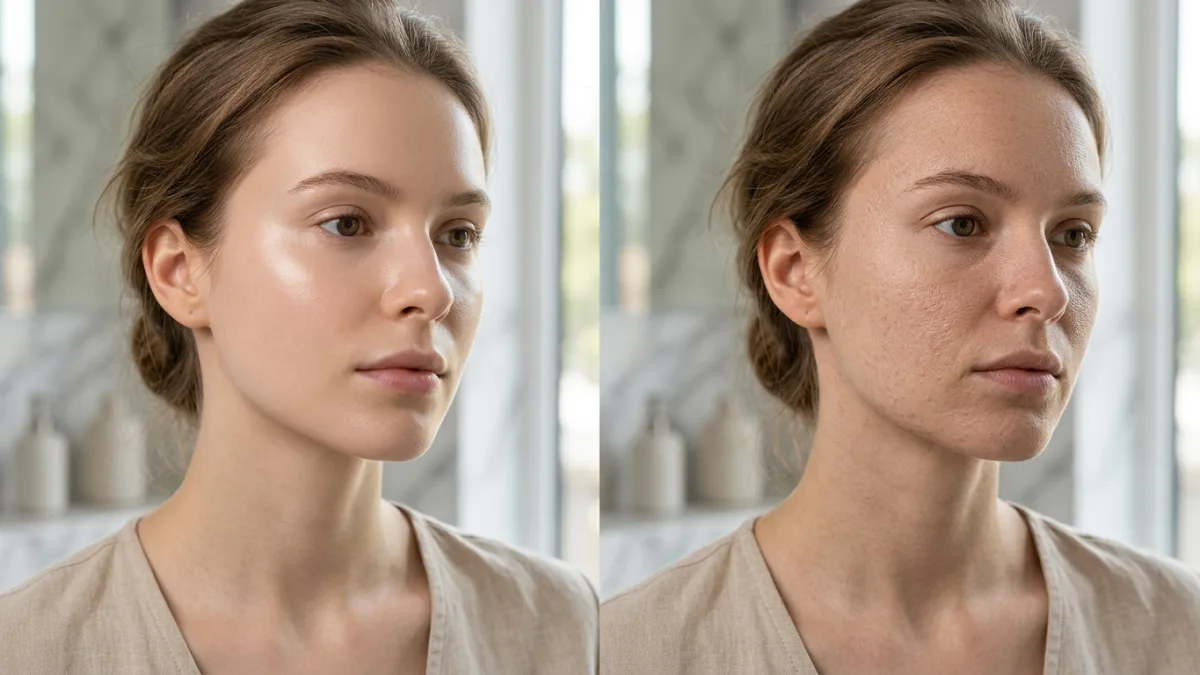
Natural glowing skin is skin that’s hydrated, smooth, and even in tone, so it reflects light evenly instead of looking patchy or dull. It’s not about a filter-like shine.
It’s about texture and moisture working together so light bounces off skin cleanly, the same way a polished surface catches light better than a rough one.
The Real Difference Between “Glow” and “Coverage”
Coverage hides texture. Glow comes from the texture itself being smooth and hydrated. Makeup can fake a highlight, but it can’t fix rough patches, dry flakes, or uneven bumps underneath. Real natural glowing skin holds up in daylight, without a single layer of product on top.
That’s why so many people chase glow with products but still feel like something’s missing. If the skin surface underneath is uneven, no amount of highlighter changes how light actually reflects off it. Fixing the surface matters more than covering it.
Why Hair Removal Method Affects Your Skin’s Glow
Here’s something most glow guides skip entirely: how you remove hair changes your skin’s surface. Razors and rough waxing can leave micro-cuts, redness, and bumps. That uneven texture scatters light instead of reflecting it smoothly, which makes skin look duller, even right after grooming.
Different hair removal methods can affect skin differently, with rougher techniques sometimes leaving skin more prone to irritation or bumps. Choosing a gentler method matters if smooth, glowing skin is the goal, since how you remove hair shapes how skin looks afterward.
Razors and waxing are common causes of redness, nicks, and sore skin. Gentler hair removal ways tend to be kinder to skin, cutting the chances of these everyday problems and helping skin stay calm and at ease.
Gentler hair removal methods leave skin smoother and calmer. Less irritation means fewer red patches and ingrown hairs, both of which disrupt how evenly light reflects off your skin. This is a simple, physical reason grooming choices connect directly to natural glowing skin, not just a skincare add-on.
Skin experts mostly agree that how hair is removed can change how skin looks and feels. Rough methods may leave skin uneven or sore, while gentler ways tend to help skin look smoother and more even over time.
Think of it this way: skincare builds the glow, but hair removal method decides whether that glow shows up evenly or gets interrupted by bumps and redness. Both pieces matter for the finished look.
Home Remedies for Glowing Skin That Actually Hold Up
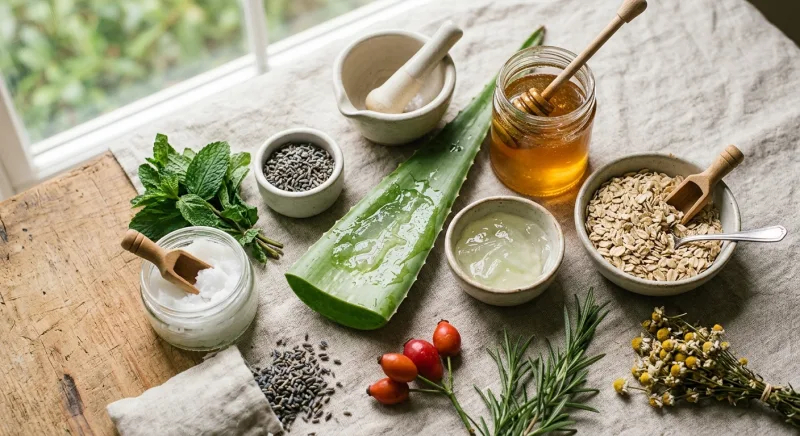
Some home remedies for glowing skin genuinely help, while others are just old habits that stuck around. The trick is knowing which ingredients calm and hydrate skin, and which ones quietly damage it. Here’s a shorter, more honest list than most roundups give you.

Ingredients Backed by More Than Tradition
Vitamin C, an antioxidant found in citrus and leafy greens, helps brighten skin tone over time when used consistently, whether through diet or topical products. Antioxidants in general help protect skin from daily damage that dulls its appearance.
Remedies to Skip (and Why)
Toothpaste, baking soda, and sugar scrubs show up in almost every glow tip list, but they can do more harm than good. Toothpaste contains ingredients meant for teeth, not skin, and can cause irritation or dryness. Skin deserves gentler care than kitchen shortcuts provide.
| Skin Type | Remedy | Why It Works |
|---|---|---|
| Oily | Honey mask | Draws moisture without adding heavy oil |
| Dry | Coconut oil | Deep moisture for flaky or tight skin |
| Sensitive | Aloe vera | Calms redness without harsh ingredients |
| Combination | Oats | Gently exfoliates without over-drying either zone |
Daily Habits That Build a Genuine Glow
Daily habits do more for natural glowing skin than any single remedy. Hydration, sleep, diet, sun protection, and stress management all work together, and skipping one weakens the rest. Think of these as the foundation glow sits on, not optional extras.
A healthy glow often builds gradually through everyday habits. Staying hydrated, eating well, and getting enough sleep all play a role in how skin looks and feels. Consistency, not quick fixes, tends to make the biggest difference over time.
Hydration and Sleep
Water alone doesn’t make natural glowing skin, but skin cells need moisture to stay full and smooth. Hyaluronic acid, a moisture-holding substance your body makes on its own, helps skin keep that moisture longer. Pairing water with a hydrating moisturizer covers both sides.
Staying hydrated supports your skin’s natural barrier and helps it look and feel its best. Pairing good hydration habits with the right grooming tools rounds out a smoothes-self routine, like the range available at bellxi.com.

Sleep is when skin repairs itself. Poor sleep shows up fast as dullness, puffiness, and uneven tone. Consistent, quality sleep supports the skin’s natural repair cycle, which is a quiet but major piece of natural glowing skin.
Restful sleep gives skin time to recover and can leave complexion looking fresher. Combine good rest with proper grooming care for best results, using devices built for every skin type.
Diet and Antioxidants

Sun Protection and Stress Management
Sunscreen protects skin from damage that speeds up dullness, dark spots, and uneven tone over time. Daily use, even on cloudy days, is one of the simplest ways to protect natural glowing skin long-term. Skipping it undoes a lot of the other work you’re putting in.
Stress raises cortisol, a hormone linked to inflammation and breakouts. Managing stress through rest, movement, or simple downtime supports calmer, more even-toned skin. It’s an overlooked piece of the natural glowing skin puzzle that has nothing to do with products at all.
- Drink water consistently throughout the day, not all at once
- Aim for regular, quality sleep to support skin repair
- Eat antioxidant-rich foods like berries, greens, and healthy fats
- Apply sunscreen daily, rain or shine
- Manage stress with rest, movement, or quiet downtime
Natural Glowing Skin vs. Makeup-Induced Glow: What’s the Difference
| Factor | Natural Glowing Skin | Makeup-Induced Glow |
|---|---|---|
| Source | Hydration, circulation, healthy skin barrier | Illuminating products applied topically |
| Longevity | Builds over weeks with consistent habits | Lasts only until makeup is removed |
| Texture underneath | Smooth, even, less reliant on coverage | May mask texture without improving it |
| Maintenance | Daily lifestyle and skincare habits | Reapplication throughout the day |
| Skin health impact | Supports long-term skin function | Neutral to slightly occlusive if not removed properly |
Neither approach is wrong. Many people combine both, using makeup for special occasions while building natural glowing skin as the everyday foundation. The key is knowing which one you’re actually working toward, so you choose products and habits that match your goal.
Common Mistakes That Sabotage Natural Glowing Skin
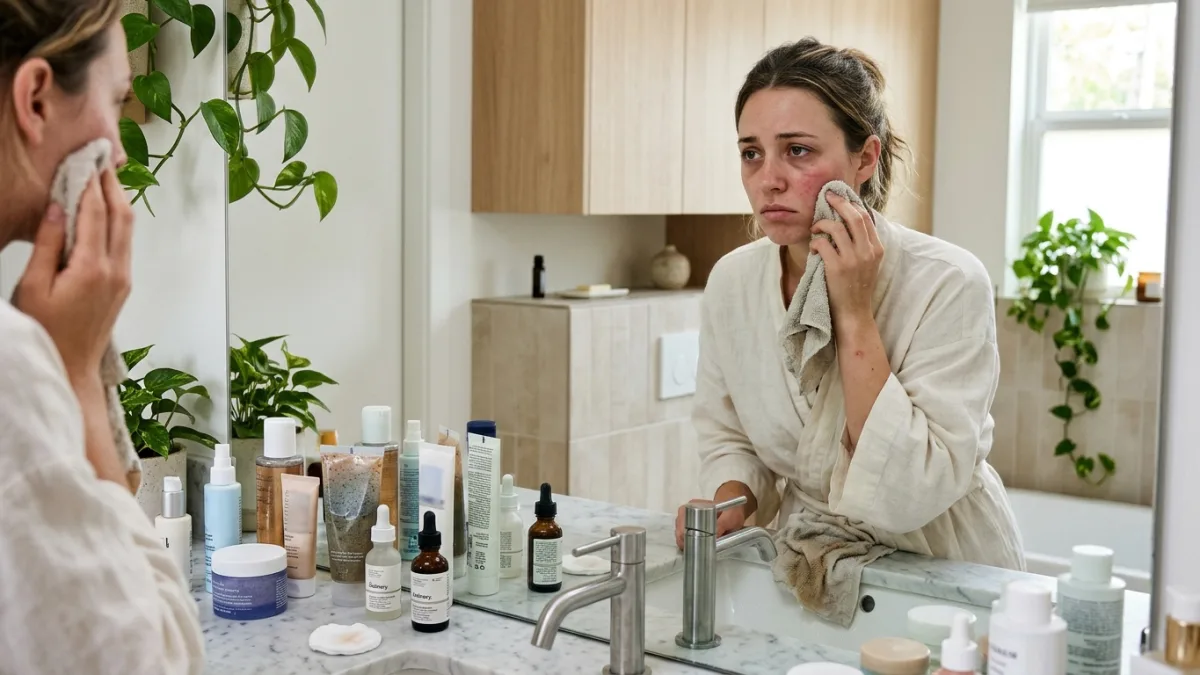
Even with good aims, small habits can quietly undo your progress. Scrubbing too much, skipping lotion because skin feels oily, or switching products too often are common causes. Spotting these patterns early can save months of worry and help you get back on track faster.
- Exfoliating more than two to three times per week
- Using hot water on the face during cleansing
- Trying too many new products at once
- Skipping sunscreen on cloudy or indoor days
- Picking at blemishes, which worsens inflammation and scarring
Each of these habits creates friction for the skin barrier. When the barrier is compromised, moisture escapes and irritation increases, making natural glowing skin harder to achieve regardless of how many products you own. Simplifying your approach often works better than adding more steps.
How Diet Choices Compare for Natural Glowing Skin
What you eat plays a measurable role in how skin looks and feels. Some foods support hydration and reduce inflammation, while others can trigger breakouts or dullness in sensitive individuals. Comparing common dietary patterns makes it easier to see what actually helps.
Well-hydrated skin tends to look smoother and more radiant. Supporting that glow with the right grooming routine, from painless IPL handsets to precision trimmers, helps you feel your smoothest every day.
| Diet Pattern | Effect on Skin | Supports Natural Glowing Skin? |
|---|---|---|
| High sugar, processed foods | Can increase inflammation and breakouts | No |
| Balanced diet with fruits and vegetables | Provides antioxidants and hydration | Yes |
| High water-content foods (cucumber, melon) | Supports hydration alongside water intake | Yes |
| Excess dairy (for some individuals) | May trigger breakouts in sensitive people | Sometimes, varies by person |
| Omega-3 rich foods (fish, flaxseed) | Supports skin barrier and reduces dryness | Yes |
Many skin-focused approaches point to diet as a factor in complexion. While individual reactions vary, a pattern of whole foods over processed options tends to support clearer, more resilient skin. Pay attention to how your own skin responds after meals.
Building a Simple Routine for Natural Glowing Skin
You don’t need a ten-step routine to see results. A simple, consistent approach often outperforms complicated regimens because it’s easier to stick with long-term. Focus on a few core steps done well rather than many steps done inconsistently.
- Cleanse gently morning and night
- Apply a hydrating serum or moisturizer while skin is damp
- Use sunscreen every morning as the final step
- Exfoliate lightly once or twice a week, not daily
- Add targeted treatments only as needed, not preemptively
This kind of routine helps the skin barrier instead of overloading it. Over time, staying steady matters more than using many products. Natural glowing skin tends to respond best to a few reliable habits repeated daily rather than frequent changes in products.
Natural Glowing Skin at Different Ages
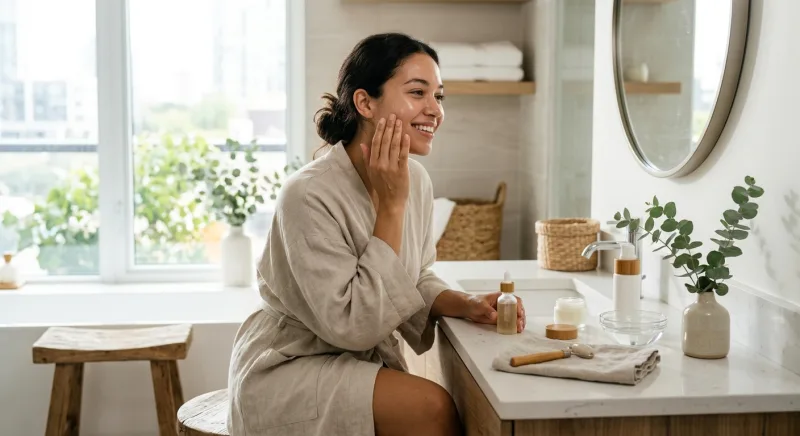
Younger skin often produces more natural oil, so lightweight hydration and sun protection may be enough. As skin matures, richer moisturizers and ingredients that support collagen become more relevant. Listening to how your skin changes each year helps you adapt rather than stick to an outdated routine.
No matter your age, the basics stay the same: water, sun care, gentle care, and healthy habits. These basics are the backbone of natural glowing skin at every stage of life, even as certain products or issues change over time.
When to Adjust Your Approach to Natural Glowing Skin
Sometimes skin stops responding the way it used to, even with a consistent routine. Weather changes, hormonal shifts, stress levels, and new products can all affect results. Recognizing when to adjust, rather than abandon your routine entirely, helps you stay on track toward natural glowing skin.
- Switch to richer moisturizer during colder, drier months
- Reduce active ingredients if skin feels irritated or tight
- Reassess diet and sleep if breakouts increase suddenly
- Patch test new products before full application
- Give any new routine at least four to six weeks before judging results
Patience is often the hardest part of this process. Natural glowing skin doesn’t appear overnight, and small setbacks don’t mean your routine has failed. Consistent small adjustments, rather than dramatic changes, tend to produce the most reliable long-term results.
Market context
How the broader market shapes Natural Glowing Skin in 2026
The figures below come from adjacent, well-documented markets. Each row names the subject it actually measures and links to its original source — these are related market indicators, not Natural Glowing Skin claims.
| What it measures | Figure | Source |
|---|---|---|
| Cross-sectional clinical study comparing skin barrier function (TEWL, stratum corneum hydration) across healthy, psoriatic, and atopic dermatitis skin | A cross-sectional clinical study assessing skin barrier function parameters such as transepidermal water loss and stratum corneum hydration included 314 participants across healthy, psoriatic, and atopic dermatitis groups. | Journal of Clinical Medicine (NCBI/PMC), 2021 |
| FDA safety assessment of PFAS ingredients used in cosmetic products under MoCRA | Based on mandatory cosmetic product listing data, the FDA identified 51 PFAS ingredients intentionally added to 1,744 cosmetic product formulations sold in the United States. | U.S. Food and Drug Administration, 2025-12-29 |
| Facial-skincare adverse event reports in the FDA openFDA Cosmetic Adverse Events database, analyzed in a dermatology disproportionality study | A disproportionality analysis of the FDA’s openFDA Cosmetic Adverse Events database identified a broad facial-skincare cohort comprising 2,927 adverse event reports. | Journal of Cosmetic Dermatology (NCBI/PMC), 2026-01-30 |
| Vitamin C deficiency prevalence (which impairs collagen synthesis in skin) | Vitamin C deficiency prevalence ranges from as low as 7.1% in the United States to as high as 73.9% in northern India, and it impairs collagen synthesis essential to skin structure. | StatPearls – NCBI Bookshelf (NIH), 2023 |
Read the complete guide: How to Build a Skincare Routine That Actually Works in 2026
Frequently Asked Questions

How long does it take to get natural glowing skin?
Most people notice early changes within four to six weeks of consistent care. Full results, including improved tone and texture, often take two to three months. Genetics, stress levels, and existing skin conditions can shift this timeline, so patience matters more than speed.
What foods help support natural glowing skin?
Foods rich in cell-protecting nutrients, healthy fats, and water tend to help skin health from within. Leafy greens, berries, nuts, and fatty fish are often suggested.
A 15-year study of 777 Australian adults found that older adults who ate a diet rich in these skin-protecting foods had less sun-related skin aging than those who ate few of them. (Journal of Investigative Dermatology (ScienceDirect), 2020-07-16) can offer more exact tips for your needs.
Can natural glowing skin be achieved without expensive products?
Yes. Sticking with it matters more than price. A simple routine with a mild cleanser, moisturizer, and sunscreen often works better than costly products used now and then. Many cheap options have the same key ingredients found in pricier ones, so a small budget doesn’t have to limit results.
Does sleep really affect natural glowing skin?
Sleep plays a noticeable role in how skin looks and feels. During rest, the body repairs itself, which can influence tone and texture. Poor sleep is often linked to dullness, puffiness, and slower recovery from irritation, making rest a quiet but important factor.
Is drinking more water enough for natural glowing skin?
Drinking water helps, but it isn’t the whole answer on its own. Water helps the whole body work well, which helps skin too. Pairing enough water with a good skincare routine, healthy diet, and sun care gives better and longer-lasting gains than water alone.

Can stress prevent natural glowing skin?
Ongoing stress can cause breakouts, dull skin, and sensitivity by changing hormone levels. While some stress can’t be avoided, long-term high stress may undo other good habits. Simple things like exercise, calm thinking, or better sleep can help lessen its visible mark on the skin.
What is the biggest mistake people make when trying to achieve natural glowing skin?
Overloading skin with too many new products at once is a common mistake. This can cause irritation and make it hard to tell what’s working. A slower, more deliberate approach usually leads to better and more sustainable results over time.
Do I need a dermatologist to get natural glowing skin?
Not always. Many people get healthy skin through steady basic care alone. But a skin doctor can help if you have ongoing problems like acne, sensitivity, or uneven tone. Expert help can speed up progress and stop needless trial and error.
Key statistics
- Dermatologists note that razor bumps typically become noticeably fewer within one month of changing shaving habits, and clear up completely after three months. (American Academy of Dermatology (AAD), 2024)
- Half of Gen Z adults reported getting sunburned in 2024, with a tenth experiencing burns severe enough to blister. (American Academy of Dermatology (AAD), 2025)
- The vast majority of Americans now say protecting their skin from the sun matters more to them than it did five years ago. (American Academy of Dermatology (AAD), 2022)
Expert insights
There really is no such thing as a safe or healthy tan.
Jane Grant-Kels, UConn Health dermatologist and nationally recognized skin cancer expert
References
- Daily sun protection with a broad-spectrum sunscreen of SPF 30 or higher is a core habit for healthy, protected skin. — American Academy of Dermatology (American Academy of Dermatology (AAD), the leading professional dermatology association, publishes official patient guidance on sunscreen labeling and SPF.)
- Sunscreen needs to be reapplied roughly every two hours when outdoors, or immediately after swimming or sweating, to stay effective. — American Academy of Dermatology (AAD is the primary US professional body for dermatology and publishes evidence-based sunscreen usage guidance.)
- Effective sun protection is more than sunscreen alone — it also includes seeking shade and wearing protective clothing. — American Academy of Dermatology (AAD is the leading dermatology professional association providing official public sun-protection guidance.)
- Exfoliation is the process of removing dead skin cells from the skin’s outer layer, and doing it safely is important so it doesn’t damage the skin. — American Academy of Dermatology (AAD provides board-certified-dermatologist-reviewed guidance on skincare routines, including exfoliation.)
You may also be interested in: Anti Aging Skin Care: What Actually Works in 2026
You may also be interested in: Eye Creams 101: What They Do, How to Use Them, and What Actually Works
